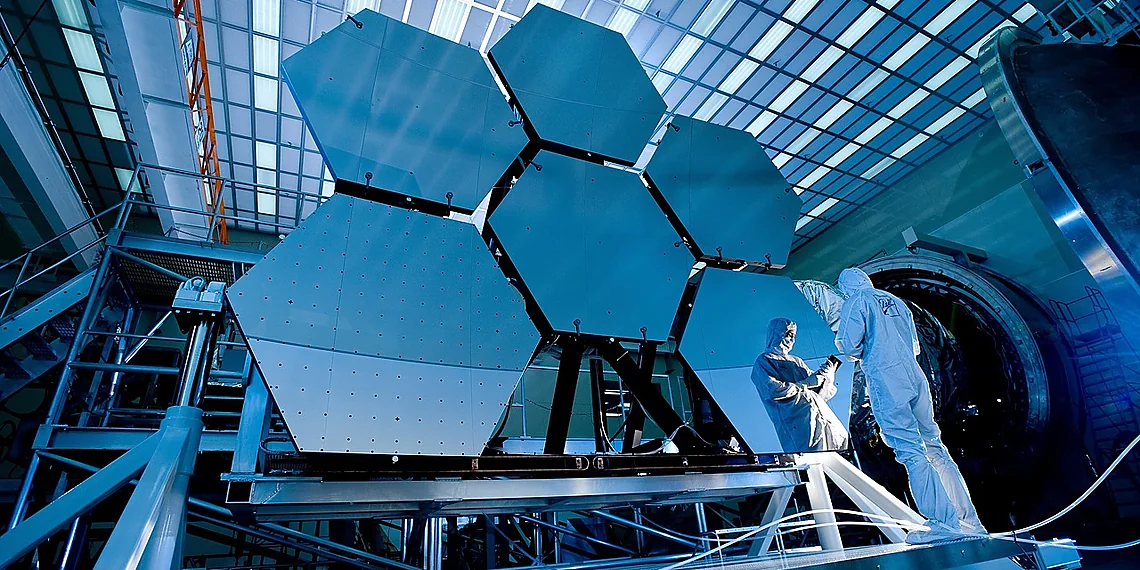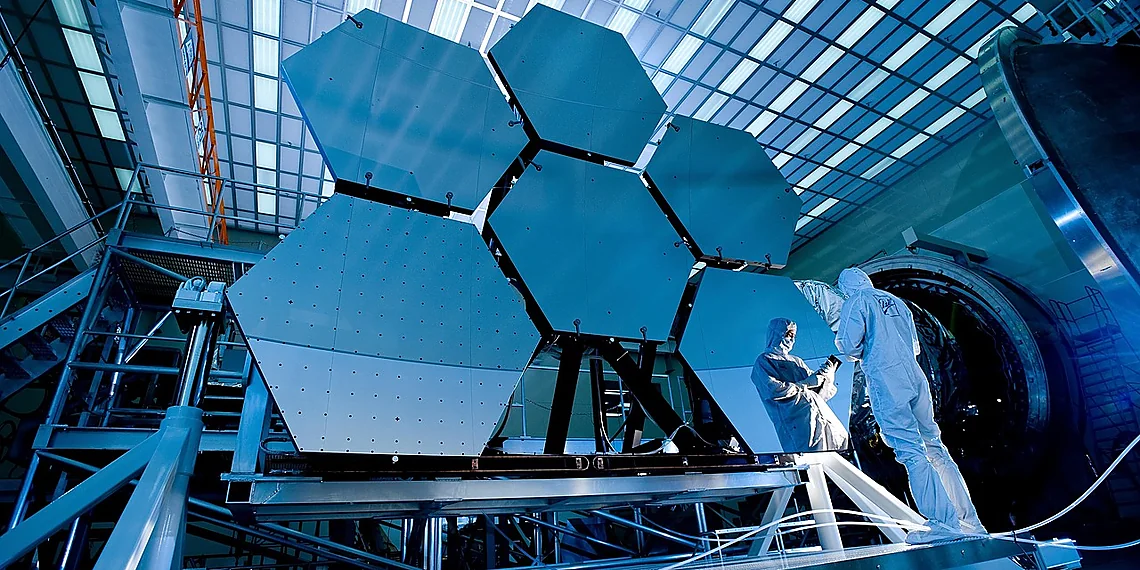


The search for life beyond Earth has captivated humanity for centuries, fueling countless stories and inspiring groundbreaking scientific endeavors. Now, we stand on the precipice of potentially answering that age-old question, thanks to incredible advancements in telescope technology and a growing understanding of distant worlds. Imagine a planet orbiting a star far from our own, possessing conditions conducive to life – it’s no longer just science fiction; it’s becoming an increasingly realistic possibility. One such world, TRAPPIST-1e, has recently become the focus of intense scrutiny, prompting renewed excitement and pushing the boundaries of what we can observe in the cosmos. This small, rocky planet resides within the habitable zone of its star, a region where liquid water could theoretically exist on its surface. The James Webb Space Telescope (JWST) is now turning its powerful gaze towards TRAPPIST-1e, hoping to unlock secrets hidden within its atmosphere. Detecting specific molecules – known as biosignatures – can provide crucial clues about whether life might be present. Methane, for example, is particularly intriguing; while it can be produced by geological processes, on Earth, a significant portion originates from biological activity. Analyzing these faint signals emanating from distant exoplanet atmospheres represents an unparalleled challenge, but the potential reward – confirmation of life beyond our planet – makes it undeniably worthwhile.
$separator$ 2023-10-27T18:49:53.692Z$separator$
Decoding TRAPPIST-1e: A Closer Look
TRAPPIST-1e occupies a fascinating position in the constellation Aquarius, residing approximately 39 light-years from Earth – close enough for detailed observation yet distant enough to inspire awe. The TRAPPIST-1 system itself is remarkable; it’s not just one planet, but seven rocky worlds orbiting an ultra-cool dwarf star named TRAPPIST-1. This configuration creates a miniature solar system of sorts, though vastly different from our own. While our sun boasts eight planets and a relatively sparse arrangement, the TRAPPIST-1 system packs its planets incredibly close together, with orbital periods ranging from just under two days for the innermost planet to nineteen days for the outermost.
TRAPPIST-1e is particularly compelling because it sits within the star’s habitable zone – that sweet spot where temperatures could potentially allow liquid water to exist on a planet’s surface. Its size is also encouraging; estimated to be about 0.92 times Earth’s radius, TRAPPIST-1e is likely rocky like our own planet, rather than a gas giant. This combination of factors – habitable zone location and terrestrial composition – makes it a prime candidate in the search for extraterrestrial life, driving significant interest from astronomers worldwide.
The close proximity of these planets also leads to unique orbital dynamics. They are tidally locked to their star, meaning one side always faces TRAPPIST-1 while the other remains perpetually dark. This could create extreme temperature differences between the two hemispheres, potentially impacting climate and habitability. Furthermore, because they orbit so closely, there’s a possibility of significant gravitational interaction between the planets themselves, which further complicates our understanding of their environments.
The recent JWST observations are crucial in attempting to unravel these complexities. While initial results have been ambiguous – hinting at possible methane detections that require further confirmation and careful analysis – they represent a monumental leap forward in our ability to probe the atmospheres of distant exoplanets like TRAPPIST-1e, bringing us closer to answering the profound question: are we alone?
The TRAPPIST System: Our Miniature Solar Neighbor
The TRAPPIST-1 system, located approximately 39 light-years from Earth in the constellation Aquarius, is truly remarkable. It consists of seven roughly Earth-sized planets orbiting an ultra-cool red dwarf star named TRAPPIST-1. Discovered in 2016 using the transit method (observing dips in the star’s brightness as planets pass in front), the system’s close proximity makes it relatively easy to study, providing a unique opportunity for detailed characterization of exoplanet atmospheres.
Unlike our Solar System, which features one star and several planets orbiting at increasing distances, TRAPPIST-1 is a tightly packed planetary arrangement. The seven planets are crammed within a region roughly the size of Mercury’s orbit around our Sun. This results in incredibly short orbital periods; the innermost planet completes an orbit in just 1.5 Earth days, while the outermost takes about 36 days. The red dwarf star itself is much smaller and cooler than our Sun, emitting significantly less light and heat.
While TRAPPIST-1’s configuration differs drastically from ours, its planets are intriguing because they are rocky and potentially capable of holding liquid water on their surfaces – a key ingredient for life as we know it. TRAPPIST-1e, in particular, resides within the star’s habitable zone, receiving an amount of stellar flux comparable to what Earth receives from our Sun, making it one of the most promising exoplanets yet discovered in the search for extraterrestrial life.
JWST’s Observations: A Glimmer of Methane?
Recent observations from the James Webb Space Telescope (JWST) have sparked considerable excitement within the scientific community, hinting at a possible methane atmosphere on the rocky exoplanet TRAPPIST-1e. The data, meticulously gathered by an international team of astronomers, revealed intriguing spectral signatures during transit events – moments when the planet passes in front of its star and starlight filters through its atmosphere. These signatures exhibited characteristics that could be attributed to methane (CH4), a molecule often associated with biological activity on Earth. While incredibly promising, these early results are far from conclusive and represent just the beginning of an intricate investigation into this distant world.
The challenges in interpreting JWST’s data surrounding TRAPPIST-1e are substantial. The detected spectral features are subtle and could potentially be caused by a number of factors other than methane. For instance, non-biological geological processes or even specific cloud compositions can mimic the absorption patterns associated with CH4. Furthermore, the signal is weak due to the planet’s small size and distance from Earth, increasing the risk of noise and systematic errors influencing the measurements. The current technology simply isn’t sensitive enough to definitively isolate a methane signature without accounting for these alternative explanations.
To further complicate matters, models attempting to recreate the observed spectral features often require unusual atmospheric conditions or combinations of molecules that are difficult to reconcile with our understanding of planetary formation and evolution. While some models do successfully incorporate methane, they also frequently necessitate other compounds whose presence is equally unconfirmed. This ambiguity highlights the critical need for additional observations at different wavelengths and across multiple transit events to rule out false positives and build a more robust picture of TRAPPIST-1e’s atmosphere.
Future JWST observations, planned with refined techniques and longer exposure times, are crucial in clarifying these initial findings. Scientists will be focusing on searching for additional atmospheric biosignatures alongside methane, as well as attempting to better constrain the planet’s cloud cover and overall atmospheric composition. Ultimately, confirming the presence of a methane atmosphere – and discerning whether it’s biogenic or abiotic in origin – will require an ongoing effort combining sophisticated data analysis with increasingly advanced observational capabilities.
The Data Speaks: What JWST Detected

Recent observations from the James Webb Space Telescope (JWST) have revealed intriguing spectral signatures in the transmission spectrum of TRAPPIST-1e. Specifically, astronomers detected absorption features at wavelengths indicative of methane (CH4). These dips in light intensity occur when methane molecules in a planet’s atmosphere absorb specific colors of starlight as it passes through. The initial data showed tentative evidence for these bands, although they were relatively weak and appeared alongside other complex spectral patterns.
However, definitively confirming the presence of methane presents significant challenges. JWST’s Near-Infrared Spectrograph (NIRSpec) is extremely sensitive, but the signal from TRAPPIST-1e is faint due to its small size and distance. The observed absorption features could be caused by other molecules or even non-atmospheric phenomena like surface reflections or stellar activity masking the true atmospheric signature. Further complicating matters, current models of exoplanet atmospheres are still being refined, making it difficult to accurately interpret the data and rule out alternative explanations.
To address these limitations, scientists require longer observation times and more sophisticated data analysis techniques. Future JWST observations, combined with theoretical modeling that incorporates a wider range of potential scenarios (including surface effects and variations in stellar activity), are crucial for disentangling the true atmospheric composition of TRAPPIST-1e. While methane’s presence is not yet confirmed, these initial findings highlight JWST’s capability to probe exoplanet atmospheres and pave the way for future discoveries.
Interpreting the Signals: Caution & Alternative Explanations
The recent JWST observations hinting at methane detection within TRAPPIST-1e’s exoplanet atmospheres have understandably generated considerable excitement regarding potential biosignatures. However, it’s crucial to temper this enthusiasm with a healthy dose of scientific caution. While the presence of methane *can* be indicative of biological activity – as it is on Earth – it’s far from definitive proof. The observed signal remains weak and requires further verification through additional JWST observations targeting different wavelengths and observing geometries, accounting for potential instrumental artifacts or calibration errors.
The possibility of non-biological methane production cannot be dismissed. Geological processes, particularly volcanism, are a known source of methane on many planets and moons within our own Solar System. TRAPPIST-1e, being a rocky exoplanet orbiting close to its star, could easily possess significant volcanic activity releasing methane directly into its atmosphere. Furthermore, photochemical reactions – where sunlight breaks down molecules in the atmosphere and recombines them in unexpected ways – can also generate methane from simpler carbon compounds. These processes don’t require life; they are purely physical and chemical phenomena.
Specifically regarding photochemical pathways, ultraviolet radiation from TRAPPIST-1 (a red dwarf star) could trigger reactions between water vapor and other atmospheric constituents to produce methane. The high levels of stellar activity associated with red dwarfs also complicate matters, as flares can significantly alter atmospheric chemistry in unpredictable ways. Understanding the precise composition of TRAPPIST-1e’s atmosphere – including the abundance of water vapor, carbon dioxide, and other key molecules – is essential for accurately modeling these photochemical processes and determining if they could account for the observed methane signal.
Ultimately, disentangling biological from geological or photochemical sources will require a comprehensive understanding of TRAPPIST-1e’s environment. Future JWST observations focusing on searching for other potential biosignatures alongside methane (such as oxygen or ozone) and characterizing the planet’s surface conditions will be vital in building this picture. Until then, while intriguing, the current methane detection necessitates careful scrutiny and consideration of multiple, non-biological explanations before drawing any firm conclusions about life beyond Earth.
Beyond Biology: Non-Biological Methane Sources
The detection of methane (CH4) on TRAPPIST-1e, while exciting due to its potential link to life, doesn’t automatically confirm a biosphere. Geological and atmospheric processes can also generate significant quantities of methane without any biological involvement. Volcanic activity is one prominent example; outgassing from volcanoes releases gases trapped within a planet’s interior, including methane. The intensity of volcanic activity on TRAPPIST-1e remains unknown, but if substantial, it could easily account for the observed methane levels.
Furthermore, non-biological chemical reactions in the atmosphere can produce methane. Photochemical processes involving sunlight interacting with other atmospheric compounds like carbon dioxide (CO2) and hydrogen (H2) can create CH4. While these reactions typically consume methane as well, a disequilibrium could arise if the rate of production significantly outweighs the rate of destruction, leading to detectable levels in the atmosphere. Understanding the abundance of other gases like CO2 and H2 is crucial for assessing this possibility.
Therefore, it’s essential to exhaustively investigate these non-biological methane sources before definitively attributing the signal to biological activity. Future JWST observations targeting specific wavelengths will help scientists better constrain the atmospheric composition of TRAPPIST-1e, allowing them to differentiate between geological and photochemical origins for the detected methane. Ruling out these abiotic explanations is a critical step in the search for life beyond Earth.
The Future of Exoplanet Exploration
The potential detection of methane on TRAPPIST-1e, while still preliminary, underscores a pivotal shift in our ability to probe exoplanet atmospheres and search for biosignatures. For years, the dream of characterizing these distant worlds felt tantalizingly out of reach. Now, with JWST’s unprecedented infrared capabilities, we’re entering an era where subtle atmospheric features – chemical compositions that might hint at life or geological processes – are becoming detectable. This isn’t just about finding methane; it’s about establishing the techniques and refining our models to accurately interpret the complex data coming from these observations.
However, interpreting JWST’s data is proving challenging. The current detection of methane hinges on specific spectral features that could also be explained by non-biological processes like volcanism or even atmospheric haze. To confidently confirm the presence – and abundance – of methane (or other potential biosignatures), we need significantly more observations under different conditions, including varying orbital phases to account for changing illumination angles. These phased observations will help distinguish between signals originating from specific regions on the planet versus a globally averaged atmospheric composition.
Future JWST observing campaigns are already planned to address these uncertainties. Longer integration times and targeting specific wavelength ranges are crucial for teasing out faint spectral signatures. Furthermore, combining JWST data with complementary observations from other telescopes – both ground-based and space-based – will be essential. For example, high-resolution spectroscopy can help disentangle atmospheric components and constrain the planet’s temperature profile. As our understanding of exoplanet atmospheres deepens, we’re also refining techniques like transmission spectroscopy and emission spectroscopy to maximize information extraction.
Ultimately, the TRAPPIST-1e findings highlight a broader trend in exoplanet research: moving beyond simply detecting planets to truly characterizing their environments. The next decade promises an explosion of data from JWST and other observatories, pushing the boundaries of what’s possible. While definitive proof of life may still be distant, each observation – even those that challenge our initial hypotheses – brings us closer to answering fundamental questions about whether we are alone in the universe.
Next Steps: Refining Our Understanding
Following the initial, intriguing detections of potential methane signatures in TRAPPIST-1e’s atmosphere by JWST’s NIRISS instrument, astronomers are planning follow-up observations to refine these findings and rule out alternative explanations. These future observations will focus on obtaining higher signal-to-noise spectra across a broader range of wavelengths, particularly targeting the 3.5 micrometer band where methane exhibits strong absorption features. Crucially, researchers intend to observe TRAPPIST-1e during different phases of its orbit around its star to account for potential variations in atmospheric signals due to stellar activity and changes in illumination.
Beyond JWST observations, synergistic studies utilizing ground-based telescopes like the Extremely Large Telescope (ELT) are also being planned. The ELT’s unprecedented light-gathering power will allow for complementary measurements of TRAPPIST-1e’s thermal emission and potentially detect other atmospheric constituents that could help constrain its composition and temperature profile. These combined observations are vital because current JWST data is susceptible to contamination from the star itself, requiring sophisticated modeling and analysis techniques to disentangle planetary signals. Advancements in these analytical methods, including improved stellar activity models and more accurate transit light curve analyses, are continuously being developed.
The evolving field of exoplanet characterization is moving towards increasingly complex observational strategies and data interpretation. Future research will likely incorporate Bayesian statistical approaches to rigorously quantify the uncertainties associated with atmospheric retrievals and better distinguish between genuine detections and false positives. Furthermore, scientists are exploring techniques like transmission spectroscopy combined with phase curve analysis to gain a more complete understanding of exoplanet atmospheres – allowing them to map temperature variations and potentially identify regional differences in composition across these distant worlds.
The recent James Webb Space Telescope observations of TRAPPIST-1e have undeniably injected fresh excitement into the search for life beyond our solar system, even if definitive answers remain elusive.
While the tentative detection of methane presents a tantalizing possibility, it’s crucial to remember that abiotic processes can also generate this molecule; further data and rigorous analysis are essential before we jump to any conclusions about biological activity.
The ongoing research surrounding TRAPPIST-1e underscores the incredible power of next-generation telescopes like JWST in probing exoplanet atmospheres with unprecedented detail, revealing subtle chemical signatures that could hold clues to habitability.
This is just one small step in a monumental journey – a quest to understand whether we are alone and to characterize potentially habitable worlds orbiting distant stars; future observations promise even more nuanced insights into these fascinating systems and their compositions. The complexity of interpreting signals from exoplanet atmospheres demands continued scrutiny and innovative analytical techniques, ensuring that any potential biosignatures are thoroughly vetted against non-biological explanations. Ultimately, the pursuit of life elsewhere is a collaborative endeavor requiring dedication and precision across multiple scientific disciplines. We’re on the cusp of potentially revolutionary discoveries that could reshape our understanding of the universe and our place within it. Stay tuned for more updates as JWST continues its groundbreaking work – the future promises an era of unprecedented exploration! Follow along with ByteTrending to stay informed about upcoming observations and join the conversation; your curiosity and engagement are vital to advancing this incredible field of research.
Continue reading on ByteTrending:
Discover more tech insights on ByteTrending ByteTrending.
Discover more from ByteTrending
Subscribe to get the latest posts sent to your email.