


The search for life beyond Earth has always captivated humanity, and increasingly sophisticated tools are bringing us closer to answering that age-old question.
One of the most exciting frontiers in this quest is characterizing exoplanet atmospheres – essentially, analyzing the chemical composition of planets orbiting distant stars.
However, detecting these faint atmospheric signatures presents a monumental challenge: starlight often overwhelms the signals emanating from these small, faraway worlds, making it incredibly difficult to isolate what’s truly coming from their surfaces.
Enter the TRAPPIST-1 system, a remarkable collection of seven Earth-sized planets orbiting a single star, offering an unprecedented opportunity for atmospheric study due to its proximity and planetary alignment. Several of these planets reside within the habitable zone, fueling speculation about potential liquid water and, perhaps, life itself; understanding their exoplanet atmospheres is crucial in assessing this possibility..”,
The TRAPPIST-1 Challenge
The TRAPPIST-1 system stands out as a uniquely valuable laboratory for exoplanet research, primarily due to its extraordinary planetary architecture. It hosts seven known planets, all roughly Earth-sized and orbiting an ultracool red dwarf star just 40 light-years away. Crucially, three of these planets – e, f, and g – reside within the star’s habitable zone: the region around a star where temperatures could allow for liquid water to exist on a planet’s surface. The presence of multiple potentially rocky worlds in this ‘Goldilocks zone’ provides an unprecedented opportunity to compare planetary characteristics and assess the prevalence of conditions suitable for life beyond our solar system. Studying these planets offers vital insights into how common Earth-like environments might be throughout the galaxy.
However, analyzing the atmospheres of TRAPPIST-1’s planets presents significant technical challenges. Ultracool dwarf stars like TRAPPIST-1 emit a substantial amount of infrared radiation, which can easily overwhelm the faint light reflected from their orbiting planets. This ‘stellar contamination’ makes it incredibly difficult to isolate and analyze the atmospheric signals coming directly from the exoplanets themselves. Furthermore, these stars are known for their frequent flares – sudden bursts of energy that can drastically alter planetary atmospheres, potentially stripping them away or introducing complex chemical compounds that obscure any signs of habitability.
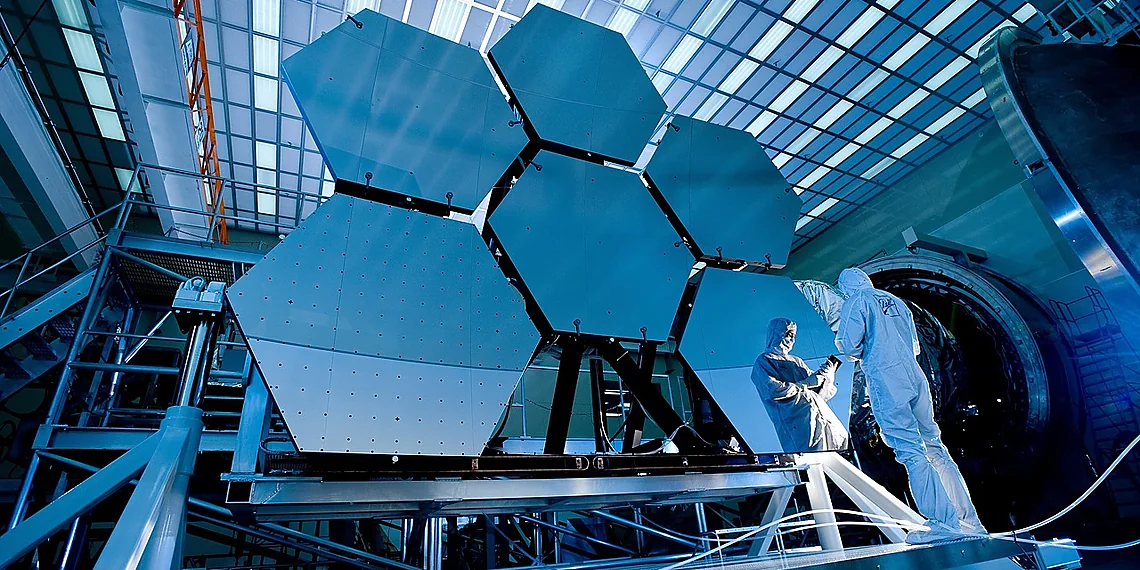
The close proximity of the planets within the system exacerbates this problem. Their orbital periods are so short that they transit (pass in front of) their star frequently, but these transits occur very close together, making it hard to distinguish signals from individual planets during observations. This requires extremely precise instruments and sophisticated data processing techniques to tease out the faint atmospheric signatures buried within a noisy background of stellar activity and overlapping planetary signals. The James Webb Space Telescope (JWST) is playing a pivotal role in attempting to overcome these hurdles.
Despite these difficulties, the potential rewards are immense. Successfully characterizing even a single TRAPPIST-1 planet’s atmosphere would represent a monumental leap forward in our understanding of exoplanet atmospheres and offer unprecedented insights into the possibility of life beyond Earth. The ongoing efforts using JWST demonstrate the ingenuity and determination of researchers pushing the boundaries of observational astronomy to unlock the secrets held within this fascinating planetary system.
Why TRAPPIST-1 Matters
The TRAPPIST-1 system holds immense significance within exoplanet research primarily because it hosts seven known planets, all roughly Earth-sized, orbiting an ultra-cool red dwarf star just 40 light-years away. What’s truly remarkable is that at least three of these planets – e, f, and g – reside within the habitable zone. The ‘habitable zone,’ often referred to as the ‘Goldilocks zone,’ represents the orbital region around a star where temperatures could allow for liquid water to exist on a planet’s surface; a crucial ingredient for life as we know it.
The close proximity and relatively small size of the TRAPPIST-1 planets make them ideal targets for atmospheric study, particularly with advanced telescopes like the James Webb Space Telescope (JWST). Unlike many other exoplanets that are too distant or large to analyze effectively, these worlds offer a higher probability of detecting faint signals from their atmospheres during planetary transits – when they pass in front of their star.
However, analyzing TRAPPIST-1’s atmospheres presents unique challenges. The red dwarf star emits significantly less light and more flares than our Sun, which can overwhelm the subtle atmospheric signatures of the planets and introduce contaminating signals. Researchers are developing sophisticated techniques to filter out this stellar noise and isolate the true composition of these potentially habitable exoplanet atmospheres.
The Stellar Contamination Problem
For years, analyzing the atmospheres of exoplanets like TRAPPIST-1e has been an incredibly complex challenge. While we’ve identified this potentially rocky and Earth-sized world within its star’s habitable zone, extracting meaningful data about its atmospheric composition hasn’t been straightforward. A significant hurdle in these efforts stems from what scientists call ‘stellar contamination.’ Essentially, the immense activity of TRAPPIST-1 – a red dwarf star known for its frequent flares and numerous starspots – generates signals that can easily overwhelm or mimic the faint light reflecting off a planet’s atmosphere.
Imagine trying to hear someone whispering during an incredibly loud concert. The music is so dominant, it drowns out any subtle sounds from the person speaking. Similarly, TRAPPIST-1’s flares, sudden bursts of energy and radiation, and its starspots (cooler, darker regions on the star’s surface) emit light across various wavelengths. This light blends with the minuscule amount of starlight filtering through or reflecting off TRAPPIST-1e’s atmosphere, making it extraordinarily difficult to isolate the planet’s atmospheric signature from the star’s own activity.
The technical limitations are substantial. Previous observations relied on transit spectroscopy – analyzing how a planet’s light changes as it passes in front of its star. However, during these transits, the stellar flares and spots introduce artificial variations that can be misinterpreted as atmospheric features. For example, a flare might temporarily darken a region of the atmosphere, leading researchers to incorrectly conclude there’s an unusual chemical compound present when it’s simply the effect of the flare itself. Distinguishing between these true atmospheric signals and the ‘noise’ created by stellar activity requires extremely precise measurements and sophisticated data processing techniques.
Furthermore, red dwarf stars like TRAPPIST-1 are inherently more active than our Sun, meaning this contamination problem is particularly acute when studying planets orbiting them. This has historically led to significant uncertainties in atmospheric models and interpretations of observational data for exoplanets within the TRAPPIST-1 system, hindering our ability to determine if these worlds truly possess conditions conducive to life.
Understanding Stellar Noise

Imagine trying to hear someone whisper during a loud concert – that’s essentially what astronomers face when studying exoplanet atmospheres, particularly those orbiting small, active stars like TRAPPIST-1. This ‘concert noise,’ in astronomical terms, is called stellar contamination. It refers to the signals emitted by the star itself – light and other radiation – that can easily overwhelm or mimic the faint signatures of a planet’s atmosphere. These signals aren’t constant; they vary as the star experiences activity like sunspots, flares, and even changes in its surface temperature.
TRAPPIST-1, an ultracool red dwarf, is notoriously active. Its surface features, such as dark spots (starspots) similar to our Sun’s sunspots but potentially much more numerous and intense, create regions of varying brightness across the star’s face. As these spots move in and out of view from Earth, they cause fluctuations in the total light we receive. These fluctuations can be misinterpreted as changes in a planet’s atmospheric composition when analyzing transmission spectra – the method used to probe exoplanet atmospheres.
Historically, these stellar activity signals have made it incredibly challenging to accurately characterize TRAPPIST-1e’s atmosphere and those of its sibling planets. Early observations with instruments like Hubble and Spitzer were severely hampered by this contamination. Current research using the James Webb Space Telescope (JWST) is attempting to mitigate this issue through advanced data processing techniques, which involve modeling stellar activity patterns and subtracting them from the observed light curves to reveal the underlying planetary signals. However, it remains a significant technical hurdle.
JWST’s Innovative Solution
Analyzing exoplanet atmospheres has long been hampered by a significant challenge: stellar contamination. The faint light reflected from an exoplanet is often dwarfed by the intense glare of its host star, making it incredibly difficult to discern atmospheric signatures. For planets orbiting red dwarf stars like TRAPPIST-1e, this problem is particularly acute. However, the James Webb Space Telescope (JWST) is revolutionizing this field with a novel observing strategy specifically designed to overcome these limitations and unlock unprecedented insights into exoplanet atmospheres.
The key to JWST’s success lies in its innovative data processing techniques combined with a meticulously planned multi-cycle observational program. Instead of relying on single, short observations, researchers are employing a technique known as ‘phase curve mapping’. This involves collecting data over multiple orbital phases of the exoplanet, essentially watching how the reflected light changes as the planet rotates. By averaging these measurements and using sophisticated algorithms to subtract stellar variability, scientists can gradually filter out the overwhelming stellar noise and reveal the faint planetary signal buried within.
Furthermore, JWST’s transit spectroscopy capabilities are being utilized in a new way. During a transit – when the exoplanet passes in front of its star – starlight filters through the planet’s atmosphere, allowing astronomers to analyze the wavelengths of light that are absorbed by different molecules. The multi-cycle approach allows for more precise measurements during these transits, minimizing the impact of stellar activity which fluctuates over time. This accumulated data is then meticulously processed, using advanced statistical methods, to isolate any atmospheric absorption features and build a detailed chemical profile.
This combined strategy – phase curve mapping alongside refined transit spectroscopy within a multi-cycle framework – represents a paradigm shift in exoplanet atmospheric analysis. By addressing the pervasive issue of stellar contamination head-on, JWST is opening a new era for understanding the composition and potential habitability of planets like TRAPPIST-1e, bringing us closer to answering the fundamental question: are we alone?
A Multi-Cycle Approach
Analyzing exoplanet atmospheres is notoriously challenging due to the overwhelming brightness of their host stars. The faint light reflected or emitted by a planet like TRAPPIST-1e can easily be drowned out by stellar noise – variations in the star’s own output that mimic planetary signals. To overcome this hurdle, the James Webb Space Telescope (JWST) is employing a novel multi-cycle observing program specifically designed for TRAPPIST-1e and other similar targets. This approach recognizes that a single observation isn’t sufficient; instead, it relies on accumulating data over multiple observing cycles to effectively average out stellar variability.
The JWST’s strategy incorporates several key observational techniques. Transit spectroscopy involves analyzing the starlight filtered through TRAPPIST-1e’s atmosphere as the planet passes in front of its star. Subtle changes in the spectrum reveal which molecules are present. Complementing this is phase curve mapping, which measures the changing brightness of the planet as it orbits, revealing how light reflects from different parts of its surface and atmosphere. By combining multiple transit spectra and phase curves collected over extended periods – sometimes spanning years – astronomers can statistically subtract stellar noise and isolate the true planetary signal.
Data processing is equally crucial. Sophisticated algorithms are used to model and remove known sources of stellar variability, including starspots and pulsations. The multi-cycle approach also allows for careful cross-validation; discrepancies between observations taken at different times can highlight either genuine atmospheric changes or residual stellar contamination that requires further refinement in the analysis. This iterative process is significantly improving our ability to detect faint biosignatures and characterize exoplanet atmospheres previously obscured by stellar noise.
Looking Ahead: What This Means for Exoplanet Research
The successful analysis of TRAPPIST-1e’s atmosphere, even with the challenges posed by stellar contamination, represents a significant leap forward for exoplanet research and opens a new era in characterizing distant worlds. This breakthrough isn’t just about understanding one planet; it demonstrates the viability of techniques that can be applied to a far wider range of potentially habitable exoplanets orbiting different types of stars. The methodologies refined and validated through this process – particularly those involving careful stellar background subtraction and advanced spectral analysis – are now ready to be deployed across numerous other systems, dramatically increasing our chances of finding truly Earth-like worlds.
Looking ahead, the ability to reliably analyze exoplanet atmospheres allows us to move beyond simply identifying planets within habitable zones. We can now begin to actively search for biosignatures—indicators that might suggest the presence of life. While detecting definitive proof of life remains a monumental challenge, characterizing atmospheric composition provides crucial clues. Scientists will be keenly looking for compounds like oxygen (O2), methane (CH4), and ozone (O3) – though it’s important to remember that these aren’t always indicators of biological activity as they can also arise from non-biological processes. The detection of unusual combinations or unexpected abundances of these, or other molecules, will become increasingly valuable.
Future observations promise even more detailed insights. As JWST continues its mission and next-generation telescopes like the Extremely Large Telescope (ELT) come online, we can anticipate finer spectral resolution and sensitivity. This means distinguishing between subtle atmospheric features becomes possible, allowing us to probe deeper into planetary atmospheres and potentially identify trace gases that might be indicative of unique geological or biological processes. The possibility of detecting complex organic molecules – precursors to life as we know it – is also within the realm of future exploration.
Ultimately, the TRAPPIST-1e atmospheric analysis serves as a proof-of-concept for a broader revolution in exoplanet science. It validates that even small, faint planets orbiting distant stars can be studied in detail, and that we are developing the tools necessary to truly understand their potential habitability. The knowledge gained will not only inform our search for life beyond Earth but also deepen our understanding of planetary formation and evolution within our own solar system.
The Future of Atmospheric Characterization
The techniques developed to mitigate stellar contamination and analyze TRAPPIST-1e’s atmosphere are not unique to this system. They represent a significant advancement applicable to characterizing the atmospheres of numerous other exoplanets, particularly those orbiting smaller, cooler stars like red dwarfs. Many potentially habitable planets have been identified around these stars within their respective habitable zones, but until now, atmospheric study has been severely hampered by the overwhelming light and spectral features from the star itself. This new methodology provides a pathway to unlock the secrets held within these planetary atmospheres.
Looking forward, scientists can leverage this approach to investigate exoplanets in other systems with similar characteristics – planets orbiting M-dwarf stars that are close enough for detailed atmospheric analysis. The search for biosignatures will likely focus on identifying specific combinations of molecules that could indicate the presence of life. For instance, detecting an abundance of oxygen alongside methane (which readily reacts with oxygen) would be a strong indicator, as it suggests ongoing replenishment – potentially from biological processes. Other compounds like phosphine or dimethyl sulfide have also been proposed as potential biosignatures, although their detection and interpretation require careful consideration to rule out non-biological origins.
Beyond simple biomarker identification, future research will aim for more comprehensive atmospheric profiles. Scientists will seek to determine the presence of water vapor, carbon dioxide, ozone, and other key compounds to better understand planetary climate and habitability. The ability to precisely measure isotopic ratios within these molecules could even provide clues about a planet’s formation history and potential for sustaining life over long timescales – ultimately painting a more complete picture of whether an exoplanet truly possesses the conditions necessary for life as we know it.
The analysis of TRAPPIST-1e’s transmission spectrum, while still in its early stages, marks a pivotal moment for our understanding of potentially habitable worlds beyond our solar system. We’ve demonstrated that even with challenging observational conditions, the James Webb Space Telescope can yield incredibly valuable data concerning exoplanet atmospheres, opening doors to future investigations of similar targets. The subtle nuances revealed by JWST highlight the complexity involved in characterizing these distant environments and underscore the importance of continued refinement of our models and techniques. This initial glimpse into TRAPPIST-1e’s atmospheric composition reinforces the idea that detailed characterization is within reach, promising a wealth of discoveries to come as we apply these methods to an expanding list of exoplanets. The ability to probe for biosignatures in these alien skies represents one of the most exciting frontiers in science today. We are truly entering a new era where directly analyzing the chemical makeup of worlds orbiting other stars is becoming a reality, and TRAPPIST-1e serves as a powerful testament to this progress. To stay abreast of these groundbreaking developments, we strongly encourage you to follow future JWST observations and actively seek out updates on exoplanet discoveries – the universe’s secrets are waiting to be unveiled!
Keep an eye on NASA’s Webb Telescope website and subscribe to relevant astronomy news sources; there’s never been a better time to witness the unfolding story of worlds beyond our own.
Continue reading on ByteTrending:
Discover more tech insights on ByteTrending ByteTrending.
Discover more from ByteTrending
Subscribe to get the latest posts sent to your email.