

The universe holds secrets vast beyond our current comprehension, whispering clues about its origins and ultimate fate. For decades, astronomers have grappled with the enigmatic force driving the accelerating expansion of space – dark energy – and a new era of discovery is dawning thanks to an ambitious project poised to revolutionize our understanding. Meet the Nancy Grace Roman Space Telescope, a game-changer designed to observe vast swathes of the cosmos with unprecedented clarity. This isn’t just another telescope; it’s a dedicated mission focused on tackling some of cosmology’s biggest questions. Roman will employ a wide-field survey technique, allowing us to peer deeper into space and time than ever before. A key element of this investigation involves meticulously mapping what are known as cosmic voids – the enormous, relatively empty regions between galaxies that play a crucial role in understanding large-scale structure formation. These seemingly barren spaces actually provide invaluable insights into the distribution of matter and energy across the universe. By precisely measuring these voids, we can refine our models of dark energy and gain a clearer picture of how the universe is evolving. Prepare to journey beyond the familiar as we explore the Roman Space Telescope’s mission and unlock the mysteries held within these gigantic, empty spaces.
The telescope’s unique design allows it to survey billions of galaxies, creating a three-dimensional map of the universe with an unparalleled level of detail. This expansive view is essential for identifying and characterizing cosmic voids, which are often too subtle to detect with smaller telescopes. Roman’s ability to observe such vast areas simultaneously will allow scientists to statistically analyze these voids in ways previously impossible, leading to more robust conclusions about dark energy’s influence. Understanding the relationship between the size and distribution of these voids can reveal fundamental properties of the universe’s expansion history. The data generated by Roman promises a cascade of new discoveries, reshaping our cosmological models and potentially unveiling entirely unexpected phenomena.
What are Cosmic Voids?
Imagine the universe not as a uniformly distributed soup of stars and galaxies, but more like a giant cosmic sponge. While galaxies cluster together in dense networks – think of them as the bubbles in that sponge – there are also enormous, seemingly empty spaces between these clusters. These vast expanses are what we call cosmic voids. They represent some of the largest structures in the known universe, often spanning hundreds of millions of light-years across. What makes them particularly intriguing is their incredible emptiness; they contain significantly fewer galaxies than the average density of matter in the universe, presenting a stark contrast to the crowded regions where stars and galaxies thrive.
So how did these cosmic voids form? The story begins shortly after the Big Bang. Tiny fluctuations in the early universe’s density acted as seeds for gravitational collapse. Regions with slightly higher density attracted more matter, eventually forming the filaments and clusters of galaxies we see today. Conversely, regions that were a little less dense experienced less gravitational pull, allowing them to expand outwards. Over billions of years, these underdense regions grew larger and emptier, carving out the cosmic voids as galaxies flowed away from their centers. It’s an ongoing process, with matter still subtly shifting and reshaping these structures.
The existence of cosmic voids isn’t just a fascinating visual; it poses fundamental questions for cosmology. Their very formation challenges our understanding of gravity and how it operates on such immense scales. Because they are so empty, the standard models of gravity struggle to fully explain their presence and distribution. Studying these voids provides crucial data points that can help refine our cosmological models and potentially shed light on the nature of dark energy – the mysterious force driving the accelerated expansion of the universe.
The Nancy Grace Roman Space Telescope is poised to revolutionize our understanding of cosmic voids, aiming to map tens of thousands of them with unprecedented precision. By analyzing the distribution and characteristics of these voids, astronomers hope to place tighter constraints on the properties of dark energy and better understand how it shapes the large-scale structure of the universe. Essentially, by studying what’s *missing* in the cosmos, we can learn a great deal about its fundamental nature.
The Universe’s Empty Spaces
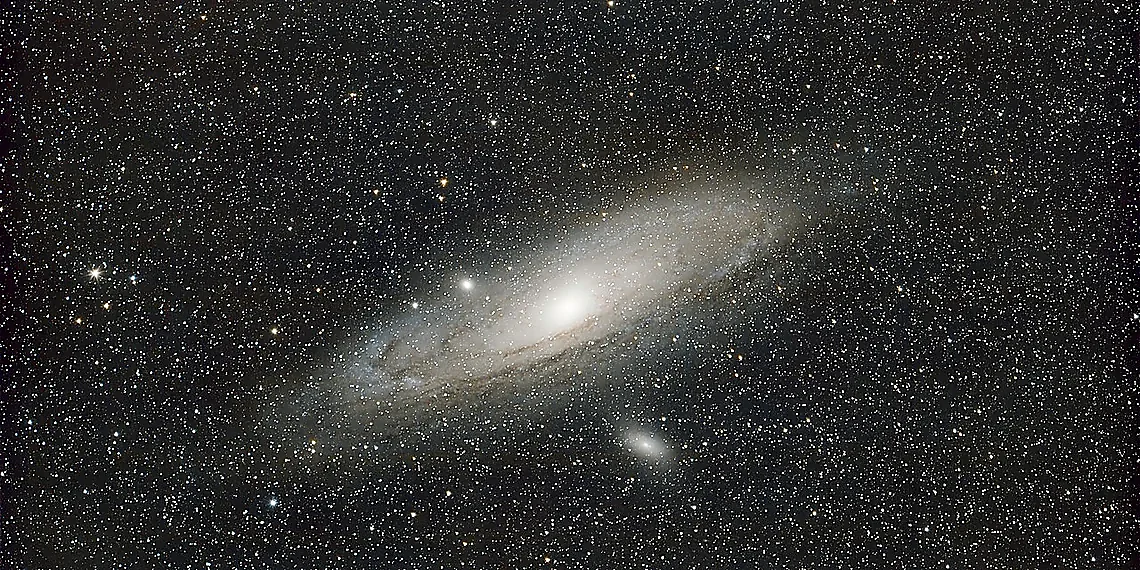
Cosmic voids are enormous regions within the Universe that appear surprisingly empty when compared to surrounding areas. Think of them as gigantic bubbles, often hundreds of millions or even billions of light-years across. They’re not truly ‘empty,’ of course – there’s still a sparse scattering of galaxies and dark matter – but their density is significantly lower than what we typically observe in regions filled with galaxy clusters and filaments.
These voids form as part of the Universe’s large-scale structure, which resembles a vast cosmic web. Galaxies tend to clump together in dense filaments and walls, while the spaces *between* these structures become the voids. The formation process is thought to be driven by gravity; over time, regions with slightly lower density than average experienced less gravitational pull, allowing them to expand outwards and become even emptier as matter was drawn towards denser areas.
Cosmic voids present a challenge to our understanding of gravity and cosmology. Their existence and distribution suggest that the standard model of structure formation might be incomplete and highlights the role of dark energy in shaping the Universe’s evolution. By studying these vast empty spaces, astronomers hope to gain deeper insights into the nature of dark energy and how it influences the expansion rate of the universe.
The Nancy Grace Roman Telescope’s Approach
The Nancy Grace Roman Space Telescope, often simply called the Roman Telescope, is poised to revolutionize our understanding of dark energy through an unprecedented mapping of cosmic voids. Unlike previous surveys that could only probe a limited number of these vast, empty regions – essentially giant bubbles in the fabric of space – Roman’s unique design and observational strategy will allow scientists to catalog tens of thousands across immense distances. This represents a monumental leap forward; earlier surveys were constrained by smaller fields of view, requiring significantly longer observation times to cover comparable volumes of space.
Roman’s approach hinges on its wide-field survey capability. The telescope is designed to scan vast swathes of the sky, covering an area roughly 200 times larger than that of the Hubble Space Telescope. This expansive perspective enables a statistical analysis of cosmic voids previously unattainable. By observing millions of galaxies spread across billions of light-years, Roman can identify subtle patterns in their distribution – these patterns reveal the locations and sizes of cosmic voids with remarkable precision. The sheer scale of this data collection provides an unprecedented opportunity to test cosmological models.
The traditional method of identifying cosmic voids relied heavily on deep, but narrow-field observations, a painstaking process akin to searching for needles in haystacks. Roman’s wide-field surveys are more like sweeping across a field with a metal detector – quickly revealing the locations of many ‘voids’ simultaneously. This efficiency allows researchers to not only map their positions but also to analyze their evolution over cosmic time, potentially shedding light on how dark energy has influenced the growth and distribution of these structures since the early universe.
Ultimately, Roman’s detailed void mapping will provide crucial constraints on dark energy models. By comparing the observed distribution of voids with theoretical predictions, scientists can refine our understanding of this mysterious force driving the accelerated expansion of the Universe. The telescope’s mission is not just about finding voids; it’s about using them as cosmic yardsticks to measure and unravel one of the biggest mysteries in modern cosmology.
Wide-Field Surveys & Void Mapping
The Nancy Grace Roman Space Telescope is employing a revolutionary technique called wide-field surveys to map the distribution of matter in the universe, including elusive cosmic voids. Unlike previous telescopes which typically observed small patches of sky with high precision, Roman will scan vast areas – roughly 20% of the entire sky – over several years. This expansive view allows astronomers to observe an unprecedented number of galaxies and identify thousands upon thousands of cosmic voids, those immense regions largely devoid of galaxies.
Historically, identifying and characterizing cosmic voids has been a painstaking process. Earlier surveys relied on smaller datasets and required significant manual effort to catalog these structures. The Roman Space Telescope’s wide-field approach automates much of this process, enabling the creation of a three-dimensional map of void locations with far greater detail and completeness than ever before. This automated detection is critical for analyzing the statistical properties of voids across large cosmic volumes.
The sheer scale of Roman’s observations will provide an enormous dataset for studying dark energy, a mysterious force driving the accelerating expansion of the universe. The sizes and distributions of cosmic voids are sensitive to the underlying cosmological parameters, including the amount of dark energy present. By precisely mapping these voids, Roman promises to offer unprecedented constraints on dark energy’s properties and refine our understanding of the universe’s evolution.
Unlocking Dark Energy’s Secrets
The accelerating expansion of our Universe, driven by a mysterious force we call Dark Energy, remains one of cosmology’s biggest puzzles. While its existence is firmly established through observations like Type Ia supernovae and the Cosmic Microwave Background, its fundamental nature – what it *is* and how it behaves – continues to elude us. A surprisingly powerful tool in this quest for understanding lies within the seemingly empty spaces of the Universe: cosmic voids. These enormous regions, often hundreds of millions of light-years across, represent areas with significantly lower density than average, formed as matter has been pulled away over billions of years.
The connection between cosmic voids and Dark Energy is subtle but profound. The size and distribution of these voids are exquisitely sensitive to the expansion history of the Universe – how quickly it’s been expanding throughout time. As the Universe expands, these voids grow larger. By precisely measuring the density and spatial arrangement of tens of thousands of cosmic voids (as planned by the Nancy Grace Roman Space Telescope), astronomers can effectively act as ‘standard rulers’ across vast distances. These measurements provide crucial constraints on cosmological parameters, particularly those related to Dark Energy’s ‘equation of state,’ which describes its pressure relative to its density – a key property that differentiates various theoretical models.
The equation of state for Dark Energy is often represented by the parameter ‘w’. If w = -1, it aligns with Einstein’s cosmological constant, suggesting a constant energy density driving the expansion. However, other theories propose evolving dark energy where ‘w’ changes over time. The Roman Space Telescope’s ability to map voids with unprecedented accuracy will allow scientists to test these varying-w models and determine if Dark Energy is truly constant or undergoing some form of transformation. Discrepancies between observed void distributions and predictions from cosmological models would necessitate revisions to our understanding of the Universe’s fundamental constituents.
Ultimately, studying cosmic voids offers a unique and complementary approach to probing Dark Energy’s secrets. It provides an independent check on measurements derived from other techniques and allows for more stringent tests of theoretical frameworks. The Nancy Grace Roman Space Telescope promises to revolutionize this field, providing us with the most detailed map of cosmic voids ever created, and bringing us closer to unraveling one of the Universe’s deepest mysteries – the nature of Dark Energy and its role in shaping the cosmos we observe.
Void Density & Expansion Rate
Cosmic voids, the immense empty spaces between filaments of galaxies in the Universe’s large-scale structure, aren’t simply ‘holes’ – they are powerful probes of cosmology. The density of cosmic voids, meaning how many voids exist per unit volume and their average size distribution, is intimately linked to the expansion history of the universe. During the early universe, fluctuations in density seeded the formation of these voids; denser regions collapsed into filaments while underdense regions expanded, eventually becoming the voids we observe today. The rate at which these voids grew over time directly reflects the underlying cosmological parameters, including the amount and behavior of dark energy.
The relationship between void density and expansion is complex but crucial for constraining dark energy’s equation of state (w). This equation describes how the pressure of dark energy relates to its density; a value of w = -1 corresponds to Einstein’s cosmological constant, while deviations from this value suggest more exotic forms of dark energy. By precisely measuring the sizes and distances of thousands of cosmic voids – a primary goal of the Nancy Grace Roman Space Telescope – astronomers can map their evolution over time. This data allows for stringent tests of theoretical models that predict how dark energy influences void growth.
The Roman Space Telescope’s ability to survey vast areas of the sky with unprecedented precision will provide significantly improved measurements of void density and distribution compared to previous surveys. These refined measurements offer a unique opportunity to test the standard cosmological model (Lambda-CDM) and potentially reveal subtle differences that could point towards new physics beyond our current understanding. Specifically, discrepancies between observed void properties and theoretical predictions would indicate that the equation of state of dark energy is evolving or that our fundamental assumptions about the Universe are incomplete.
Beyond Dark Energy: Future Discoveries
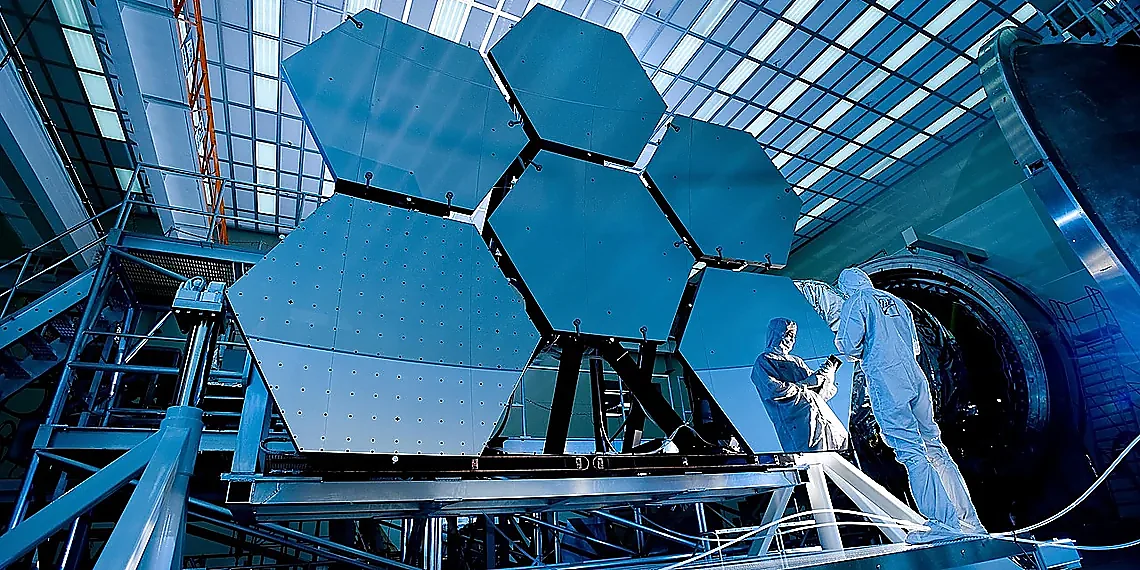
While the Nancy Grace Roman Space Telescope is primarily designed to map cosmic voids to better understand dark energy’s influence on the universe’s expansion, the sheer scale and precision of its observations could unlock entirely unexpected scientific avenues. These voids aren’t simply empty space; they represent regions where matter has been gravitationally pulled away, leaving behind a peculiar emptiness. Mapping tens of thousands of these voids with unprecedented accuracy promises to refine our models of dark energy, but it might also reveal subtle anomalies in their distribution or properties that point to physics beyond our current understanding.
One intriguing possibility lies in the potential for discovering new types of fundamental particles interacting weakly with ordinary matter. The formation and evolution of cosmic voids are sensitive to the gravitational effects of all mass-energy present, including hypothetical dark matter candidates like axions or sterile neutrinos. If these particles interact gravitationally differently than standard dark matter, Roman’s void maps could reveal subtle deviations from predicted distributions, offering a completely novel way to search for these elusive components of the universe.
Furthermore, the exceptionally deep and wide-field views offered by Roman might allow us to probe the interplay between cosmic voids and primordial non-Gaussianity – tiny fluctuations in the early universe that seeded structure formation. Current cosmological models assume Gaussian initial conditions, but if Roman’s observations demonstrate statistically significant departures from this assumption based on void characteristics, it could necessitate a fundamental rethinking of our understanding of inflation and the very earliest moments of the cosmos.
Finally, the detailed mapping of cosmic voids might provide unprecedented constraints on modified gravity theories. Some alternative models attempt to explain the accelerating expansion of the universe without invoking dark energy, by modifying Einstein’s theory of general relativity. Subtle differences in how these modified theories predict void evolution and distribution could be revealed with Roman’s data, potentially providing crucial evidence to either support or rule out these alternative explanations for the universe’s accelerated expansion.
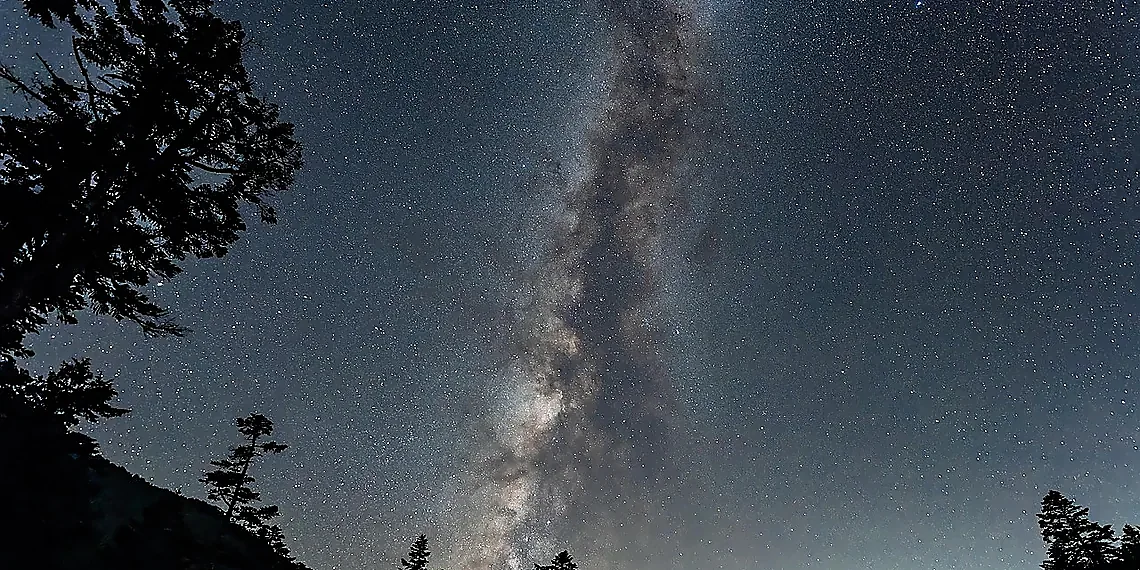
The Nancy Grace Roman Space Telescope represents a monumental leap forward in astronomical observation, poised to reshape our comprehension of dark energy and the large-scale structure of the cosmos. Its wide field of view will allow us to map billions of galaxies, revealing subtle patterns previously hidden from detection and offering unprecedented insights into the universe’s expansion history. Imagine witnessing vast regions seemingly devoid of matter – these incredible structures, known as Cosmic Voids, hold crucial clues about how gravity shapes the distribution of galaxies over cosmic time, and Roman is uniquely equipped to study them in detail. Beyond dark energy research, the telescope’s capabilities extend to exoplanet detection and gravitational lensing studies, promising a cascade of discoveries across numerous astronomical disciplines. This isn’t just an advancement; it’s a paradigm shift, allowing us to probe deeper into the universe’s mysteries than ever before. The data Roman collects will fuel countless research projects for years to come, inspiring future generations of scientists and explorers. To stay abreast of this groundbreaking mission and its discoveries, we invite you to follow NASA’s Roman Space Telescope program updates on their website and social media channels. Several excellent resources are available online – explore the links provided to delve deeper into the science behind the telescope and the incredible journey ahead; your curiosity is the best tool for unlocking the universe’s secrets.
We believe that Roman’s legacy will extend far beyond its initial observations, fundamentally changing our understanding of the cosmos. It’s a testament to human ingenuity and our relentless pursuit of knowledge, demonstrating what can be achieved when we dare to look further than ever before. The potential for transformative discoveries is immense, promising answers to some of the most profound questions about our place in the universe. Don’t miss out on witnessing this scientific revolution unfold; continue following along as Roman begins its mission and shares its remarkable findings.
Continue reading on ByteTrending:
Discover more tech insights on ByteTrending ByteTrending.
Discover more from ByteTrending
Subscribe to get the latest posts sent to your email.