

The cosmos has always whispered secrets, and humanity’s been diligently listening – but what if we could hear those whispers with unprecedented clarity? That future is rapidly approaching thanks to a monumental project poised to redefine our understanding of the universe: the Nancy Grace Roman Space Telescope. This isn’t just another telescope; it represents a fundamental shift in how we observe the vast expanse beyond Earth, promising discoveries that will challenge and expand existing astronomical knowledge.
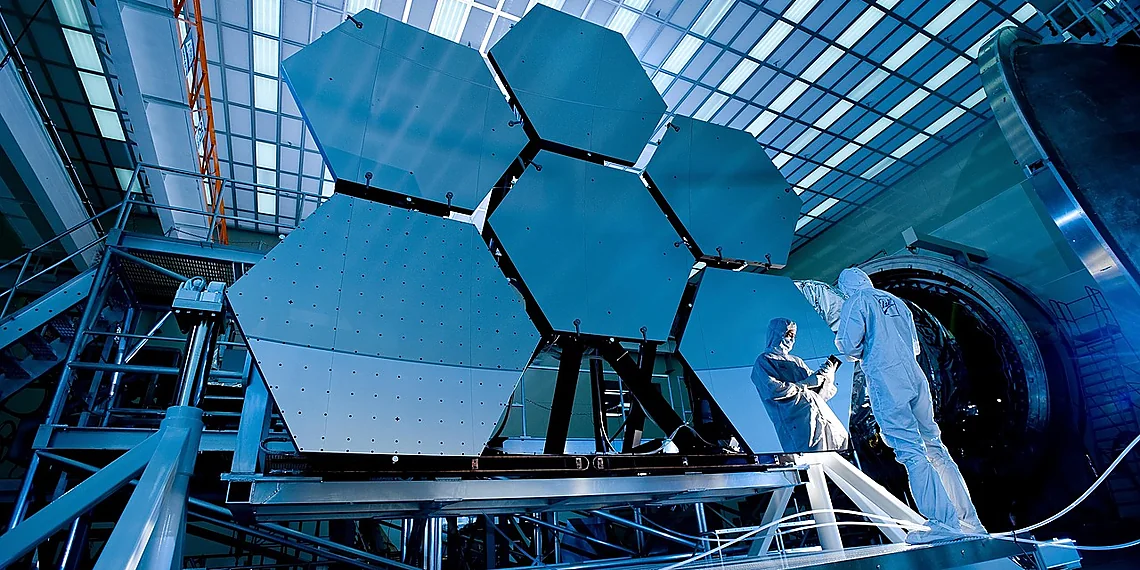
Recently, a critical milestone was achieved – all 18 of its primary mirror segments have been successfully interconnected, marking a significant step toward completion. This complex assembly is the heart of the Roman Space Telescope’s revolutionary design; unlike Hubble, which focuses on detailed views of smaller areas, Roman is designed for wide-field surveys, allowing it to map vast swathes of the sky with incredible sensitivity.
The sheer scale and innovative technology behind the Roman Space Telescope are what truly set it apart. Its massive primary mirror, significantly larger than Hubble’s, will enable observations across a broader range of wavelengths and distances, unlocking insights into dark energy, exoplanets, and the evolution of galaxies in ways previously unimaginable. Get ready to witness a new era in space observation.
The Engineering Marvel: Assembling Roman
Assembling the Nancy Grace Roman Space Telescope – affectionately known as the Roman Space Telescope – represents an extraordinary feat of engineering, particularly when considering the intricate joining of its inner and outer segments. These aren’t simply large pieces fitting together; they are precision-engineered components designed to work in perfect harmony for unparalleled astronomical observation. The process itself wasn’t a quick snap or bolt-down affair but rather a carefully choreographed sequence spanning hours, demanding unwavering focus from the team involved.
The complexity stems from the sheer scale and sensitivity of the instruments. The inner segment houses Roman’s science instruments – cameras and spectrographs – which must maintain incredibly stable temperatures and alignment to capture faint light signals across vast distances. The outer segment provides the structural support and mirrors, and their precise connection is crucial for ensuring optical accuracy. Tolerances are measured in microns – a fraction of the width of a human hair – highlighting just how critical each step needed to be.
The ‘A Delicate Dance of Precision’ involved several key phases: first, meticulous cleaning and inspection of both segments; then, carefully aligning them using laser trackers and advanced robotics; finally, securing them with specialized fasteners designed to minimize stress on the delicate structures. Any deviation could have compromised the telescope’s ability to deliver its groundbreaking scientific data, necessitating constant monitoring and adjustments during the entire assembly process. The risk wasn’t just physical damage but also the potential for introducing vibrations or distortions that would degrade performance.
Ultimately, the successful connection of these segments underscores NASA’s commitment to pushing the boundaries of space telescope technology. It’s a testament to decades of research, development, and the unwavering dedication of countless engineers and technicians who worked tirelessly to ensure the Roman Space Telescope can fulfill its promise of revolutionizing our understanding of the universe.
A Delicate Dance of Precision
Connecting the Roman Space Telescope’s inner and outer segments was a remarkably intricate operation, requiring an almost balletic coordination between technicians and robotic systems. The process began with carefully aligning the two massive components – each roughly 2.4 meters in diameter – within a cleanroom environment at Northrop Grumman’s facility in Redondo Beach, California. This initial alignment wasn’t just about visual confirmation; it involved using laser trackers to ensure sub-millimeter accuracy across the vast surface area of both segments. Any deviation could compromise the telescope’s ability to achieve its incredibly sharp images.
The connection itself relied on a complex system of pins and locking mechanisms, each designed with extraordinarily tight tolerances – often within fractions of a millimeter. These tolerances are critical because the Roman Space Telescope needs to function as a single, flawless optical surface in space. Misalignment could introduce distortions into the light collected by the telescope, rendering scientific observations useless. The process involved multiple stages of verification and adjustment, with teams constantly monitoring data from sensors embedded in both segments to ensure everything remained within acceptable parameters throughout.
The complexity stemmed from several factors: the sheer scale of the components, the need for absolute cleanliness to prevent contamination of sensitive optics, and the requirement for precise alignment despite potential vibrations or minute movements during the process. Furthermore, simulating the vacuum environment of space on Earth proved challenging, necessitating specialized equipment and procedures to account for thermal expansion and contraction that would occur once in orbit. The success of this connection represents a major milestone toward realizing Roman’s groundbreaking scientific capabilities.
Beyond Hubble: Roman’s Unique Capabilities
The Nancy Grace Roman Space Telescope, often simply called the Roman Space Telescope, represents a monumental advancement in space observation, building upon the legacy of groundbreaking instruments like Hubble. While Hubble revolutionized our understanding of the universe with its stunningly detailed images, Roman is designed for a fundamentally different kind of exploration: wide-field surveys that will map vast swathes of the cosmos. Unlike Hubble’s focused view, which allows for deep examination of smaller areas, Roman’s primary strength lies in its ability to observe large portions of the sky simultaneously, providing context and statistical power previously unavailable.
This difference stems from Roman’s unique optics. It utilizes a wide-field corrector lens – a single piece of glass over 2.4 meters across – that significantly expands its field of view by roughly 100 times compared to Hubble’s. Imagine trying to understand the layout of a city: Hubble is like looking through a powerful microscope at one building, while Roman is like stepping back and viewing an entire map of the city all at once. This wide perspective isn’t just about seeing more; it’s crucial for its primary mission – studying dark energy and dark matter.
Roman’s ability to map dark energy and dark matter relies on a technique called weak gravitational lensing. Massive objects, like galaxies and galaxy clusters, warp the fabric of spacetime, subtly bending the light from more distant galaxies behind them. By precisely measuring these tiny distortions across billions of galaxies, Roman will create a cosmic ‘map’ revealing the distribution of unseen mass – both dark matter (which interacts gravitationally but doesn’t emit or absorb light) and the effects of dark energy (the mysterious force accelerating the universe’s expansion). The sheer volume of data from its wide-field surveys is essential for statistically analyzing these subtle lensing effects.
Beyond mapping dark energy, Roman will also enable a wealth of other scientific discoveries. Its broad view allows it to search for exoplanets using microlensing techniques, study the formation and evolution of galaxies, and even investigate the nature of black holes. The telescope’s capabilities promise to unlock new insights into some of the universe’s biggest mysteries, marking a significant step forward in our quest to understand the cosmos.
Wide Field, Deep Insights
The Nancy Grace Roman Space Telescope, often called the Roman Telescope, has a primary mission to unlock some of the universe’s biggest mysteries: dark energy and dark matter. These invisible forces make up roughly 95% of the universe, yet we know very little about them. To study them, Roman will use a technique called weak gravitational lensing. Imagine space as a giant, distorted funhouse mirror; massive objects like galaxies warp spacetime around them, bending the light from even more distant galaxies behind them. By precisely measuring these tiny distortions – much smaller than what our eyes can see – scientists can map how dark matter is distributed throughout the universe.
Weak lensing requires surveying an enormous area of the sky to find enough distorted galaxies. This is where Roman’s incredibly wide field of view comes in. Think of Hubble as using a straw to sip from a vast ocean; it sees tiny areas with incredible detail. Roman, on the other hand, uses a very wide bucket – it can observe a patch of sky nearly 100 times larger than what Hubble can at any given time. This allows it to collect data from millions upon millions of galaxies, providing a comprehensive map of dark matter’s influence across billions of light-years.
The sheer scale of Roman’s observations will allow scientists to create the most detailed three-dimensional map of the universe ever produced. By comparing this map with theoretical models, they can refine our understanding of dark energy – which is causing the accelerated expansion of the universe – and gain crucial insights into the nature of dark matter, shedding light on what makes up the vast majority of reality.
The Road Ahead: Testing and Launch
The recent successful integration of the Roman Space Telescope’s inner and outer segments marks a pivotal moment, but it’s far from the finish line. The road ahead is paved with rigorous testing and complex system integrations crucial to ensuring this ambitious mission achieves its scientific goals. Before the Roman Space Telescope can begin peering into the dark universe, engineers must subject it to conditions mimicking the harsh realities of spaceflight – a process designed to identify and rectify any potential weaknesses before launch.
The next phase involves extensive testing, starting with vibration tests that simulate the intense shaking experienced during rocket launches. Following this, the telescope will undergo thermal vacuum testing, where it’s placed in a chamber simulating the extreme cold and near-vacuum of space. These tests aren’t just about confirming functionality; they’re about pushing the system to its limits to identify any vulnerabilities or areas needing refinement. Data collected during these phases informs iterative design adjustments, ensuring optimal performance once deployed.
Integrating the Roman Space Telescope with other crucial systems – including its sunshield and navigation equipment – also presents considerable challenges. Precise alignment of optics is paramount for capturing sharp, detailed images, and this requires meticulous calibration and ongoing verification. Furthermore, coordinating with ground control teams to develop robust operational protocols will be essential for long-term mission success. While a firm launch date remains fluid, current projections place the Roman Space Telescope’s deployment sometime in 2027, contingent on successful completion of these critical testing milestones.
Potential delays are always a factor in complex engineering projects like this. Unexpected issues uncovered during testing could necessitate design modifications and further validation, potentially pushing back the timeline. However, the dedication and expertise of the team involved, coupled with robust contingency planning, aim to minimize disruptions and keep the Roman Space Telescope on track for its groundbreaking mission – poised to revolutionize our understanding of dark energy, exoplanets, and the evolution of cosmic structures.
From Assembly to Orbit

Following the successful joining of the Roman Space Telescope’s inner and outer segments – a critical milestone completed recently – the telescope now enters an intensive phase of testing. These tests are designed to simulate the harsh conditions encountered during launch and operation in space, ensuring its resilience and optimal performance. The first major hurdle is vibration testing, where the assembled telescope will be subjected to simulated rocket vibrations for several weeks. This process identifies any potential weaknesses or resonance frequencies that could damage sensitive components. Subsequent thermal vacuum testing will then subject the telescope to extreme temperature fluctuations and a near-vacuum environment, mimicking the conditions of space and verifying its ability to maintain stable temperatures and functionality.
The thermal vacuum tests are particularly crucial as they assess the performance of Roman’s sunshield and cryogenic cooling system – vital for minimizing infrared noise and enabling observations of faint, distant objects. During these tests, engineers will monitor every aspect of the telescope’s behavior, from its optical alignment to the operation of its detectors. Any anomalies detected during testing necessitate adjustments and re-testing, which can significantly impact the overall timeline. Data collected throughout this rigorous testing process is then used to refine operational procedures and predict long-term performance.
Currently, NASA anticipates launching the Roman Space Telescope no earlier than May 2027. While this date represents a target, it’s important to recognize that unforeseen challenges during these final testing phases could lead to delays. The integration of the telescope with the launch vehicle (a Falcon Heavy rocket) and subsequent final checks will add further time before the scheduled orbital insertion. Despite these potential uncertainties, the meticulous testing program underway significantly increases confidence in Roman’s ultimate success as a revolutionary tool for astronomical observation.
Impact & Future of Space Telescopes
The successful integration of the Roman Space Telescope’s inner and outer segments marks more than just a milestone in its development; it signals a paradigm shift for future space telescopes and astronomical research. The sheer scale and advanced technology incorporated into Roman – particularly its wide-field survey capability using corrective optics – represents a bold leap beyond existing instruments like Hubble. This achievement demonstrates the feasibility of constructing significantly larger, more capable observatories that can tackle some of the most pressing questions in cosmology, from dark energy to exoplanet demographics, with unprecedented speed and depth.
Roman’s legacy will extend far beyond its own scientific discoveries. The innovative techniques developed for its construction – including advancements in lightweight mirror technology, precision alignment systems, and wide-field optics – are already proving valuable across various engineering disciplines. We can expect to see these technologies trickle down into fields like materials science, robotics, and even medical imaging. Furthermore, the Roman mission is directly inspiring follow-on missions; concepts for future observatories leveraging similar large aperture designs and advanced instrumentation are actively being explored within NASA and international space agencies.
The experience gained from building and operating Roman will be invaluable in shaping the next generation of flagship telescopes. It provides a crucial learning ground, refining processes and identifying potential challenges before embarking on even more ambitious projects. The lessons learned regarding modular design and assembly techniques – essential for constructing instruments too large to fit within conventional launch vehicle fairings – are particularly significant. This paves the way for increasingly complex and powerful observatories capable of probing deeper into the universe than ever before.
Ultimately, Roman Space Telescope isn’t just about what it *will* see; it’s about how it will change *how* we see. Its impact lies in pushing the boundaries of space telescope technology, fostering innovation across multiple fields, and inspiring a new era of astronomical exploration – ensuring that future generations have access to even more remarkable views of our universe.
Inspiring Innovation
The Nancy Grace Roman Space Telescope, or Roman Space Telescope, isn’t just revolutionizing astronomy; it’s also spurring innovation in seemingly unrelated fields. Developing the telescope’s massive, wide-field optics required breakthroughs in precision metrology and lightweight materials science. The ‘diffractive optics’ used to correct for distortions are particularly noteworthy – this technology could find applications in advanced imaging systems beyond space telescopes, potentially impacting medical diagnostics or industrial inspection processes. Furthermore, the complex robotic assembly procedures needed to integrate Roman’s segments are pushing the boundaries of automated manufacturing techniques adaptable to sectors like automotive and aerospace production.
Beyond materials science, the sophisticated autonomous navigation and control systems developed for Roman also hold immense promise. The telescope’s ability to maintain incredibly precise pointing accuracy while operating far from Earth necessitates advanced robotics and software algorithms. These advancements can be directly applied to improve the capabilities of robotic explorers on Mars or other planetary bodies, allowing for more complex scientific tasks and resource utilization. The algorithms developed for autonomously identifying and avoiding micrometeoroids are also a valuable asset with potential applications in satellite constellations.
Roman’s success is already influencing plans for future missions. The demonstrated feasibility of large-aperture space telescopes utilizing diffractive optics opens the door to even more ambitious projects, potentially including dedicated surveys focused on exoplanet detection or mapping the distribution of dark matter across vast cosmic distances. While no direct follow-on mission has been formally announced, Roman’s technological advancements have undoubtedly shaped the conceptualization and planning stages for future space observatories seeking to push the frontiers of astronomical discovery.
The successful completion of this crucial assembly phase marks a pivotal moment, propelling us closer to unlocking unprecedented insights into the cosmos.
This isn’t just about building a telescope; it’s about constructing a time machine, allowing scientists to peer deeper into the universe’s history and unravel its most enduring mysteries.
The Roman Space Telescope promises to redefine our understanding of dark energy, exoplanets, and the formation of galaxies, offering data that will challenge existing theories and inspire entirely new avenues of research.
Imagine a future where we have a clearer picture of the universe’s expansion rate and can identify countless more potentially habitable worlds – that’s the potential held within this ambitious project, and it’s truly breathtaking to witness its progress firsthand. The Roman Space Telescope represents an extraordinary investment in human curiosity and scientific advancement, poised to reshape our place in the grand scheme of things. With its wide-field view and advanced instrumentation, it will deliver a wealth of data for years to come, fueling discoveries we can only begin to imagine now. The journey ahead is filled with anticipation, and this milestone confirms that the dream of groundbreaking space observation is steadily becoming reality. To stay abreast of these incredible developments and witness the Roman Space Telescope’s journey from assembly to deployment, be sure to follow NASA’s official updates – your window into the future of cosmic exploration!
Continue reading on ByteTrending:
Discover more tech insights on ByteTrending ByteTrending.
Discover more from ByteTrending
Subscribe to get the latest posts sent to your email.