
The cosmos just got a little clearer, thanks to a monumental achievement in space exploration. NASA’s Interstellar Mapping and Acceleration Probe, or IMAP, has officially reached its operational destination: Lagrange Point 1 (L1), a gravitationally stable location between the Earth and Sun.
This isn’t simply another satellite reaching orbit; it marks a critical step forward in our quest to understand the very edge of our solar system. L1 provides an unparalleled vantage point, allowing IMAP to continuously observe the constant stream of particles flowing from the sun and beyond.
For years, scientists have theorized about the complex interactions occurring at the boundary where our solar wind meets interstellar space, a region largely unexplored until now. The IMAP mission is specifically designed to unravel these mysteries, studying energetic particles and magnetic fields with unprecedented detail.
Reaching L1 represents more than just successful navigation; it’s the culmination of years of dedicated work by countless engineers and scientists, setting the stage for groundbreaking discoveries about how our solar system interacts with the galaxy. The data gathered during the IMAP mission promises to reshape our understanding of interstellar space and its influence on planetary environments.

What is the IMAP Mission?
The IMAP mission represents a significant leap forward in our understanding of the very edge of our solar system. Short for Interstellar Mapping and Acceleration Probe, it’s not about searching for new planets or life – instead, its purpose is to meticulously map and study the region where the sun’s influence wanes and interstellar space begins. Think of it as a cosmic border patrol, constantly monitoring what’s coming in from beyond our solar bubble. After a successful journey, IMAP has now reached its operational location at Lagrange Point 1 (L1), roughly a million miles from Earth, offering an unparalleled vantage point for these observations.
A crucial focus of the IMAP mission is the ‘heliopause,’ a boundary marking where the sun’s solar wind is stopped by the interstellar medium. This isn’t just a static wall; it’s a dynamic zone where particles and magnetic fields interact, creating complex phenomena that influence our entire solar system. Studying this region is vital because it shields Earth from harmful cosmic rays and provides clues about how other star systems might behave. IMAP will use its suite of advanced instruments to measure the properties of plasma, energetic particles, and magnetic fields in this volatile zone with unprecedented detail.
Beyond simply mapping the heliopause, IMAP aims to unravel some fundamental mysteries. Scientists believe that energy and momentum are being transferred across the heliopause, accelerating interstellar objects – a phenomenon IMAP is designed to observe directly. By tracking these accelerated particles and analyzing their behavior, researchers hope to gain insights into the processes shaping our local galactic neighborhood. The data gathered will help refine models of how solar systems interact with the broader cosmos and improve our ability to predict space weather events that can impact Earth-based technology.
Ultimately, the IMAP mission isn’t just about exploring a distant frontier; it’s about understanding our place within the larger universe. By meticulously studying the heliopause and its surrounding environment, IMAP promises to unlock secrets about the solar system’s protective shield, reveal how energy flows between stars, and provide crucial data for future space exploration endeavors. The mission’s location at L1 ensures a continuous, unobstructed view of this critical region, allowing scientists to gather long-term observations that will reshape our understanding of interstellar space.
Unlocking Interstellar Secrets
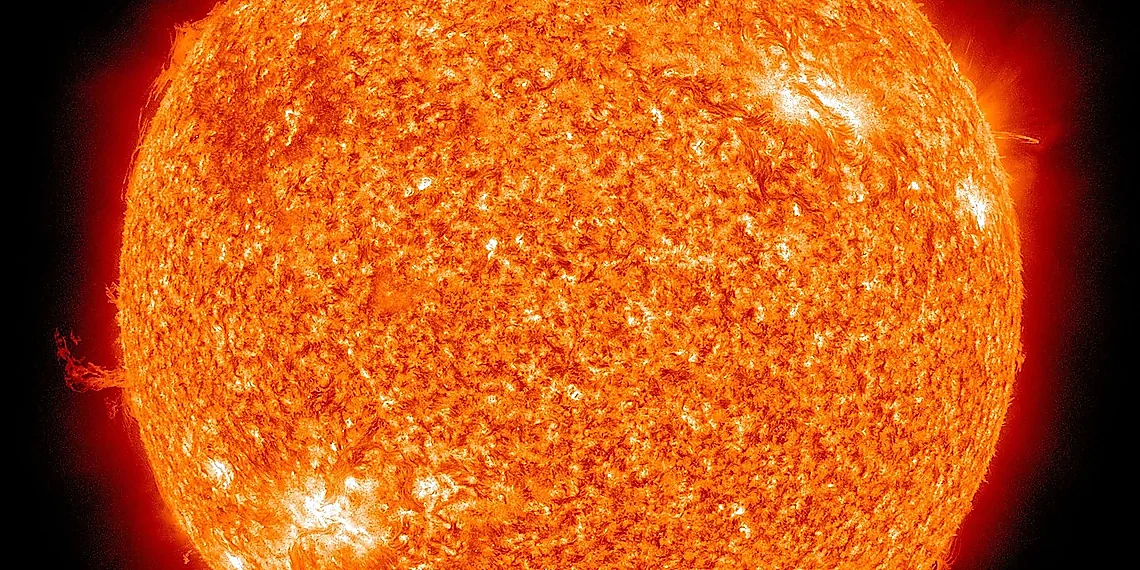
The Interstellar Mapping and Acceleration Probe (IMAP) mission has arrived at its designated orbit near Earth, poised to investigate a critical region of space known as the heliopause. This boundary marks where our solar wind – a constant stream of charged particles emanating from the Sun – abruptly slows down and interacts with the interstellar medium, the material that exists between star systems.
The heliopause isn’t just a simple stopping point; it acts as a shield, protecting Earth and our entire solar system from much of the high-energy galactic cosmic rays. These rays pose a threat to satellites, astronauts, and even life on Earth. IMAP will meticulously map this region, studying its structure and dynamics to better understand how it forms and changes over time – essentially revealing how effectively our ‘bubble’ protects us.
Understanding the heliopause is vital because it connects our solar system to the wider galaxy. By observing how interstellar particles interact with the solar wind at the heliopause, IMAP will provide invaluable data about the composition and behavior of the interstellar medium itself. This information helps scientists refine models of star formation, galactic evolution, and even the potential for life beyond Earth – unlocking secrets about our place in the cosmos.
Lagrange Point 1: The Ideal Observation Post
To truly understand why NASA’s IMAP mission chose a specific location, we need to delve into the fascinating concept of Lagrange points. These aren’t physical places in space like planets or stars, but rather gravitationally stable locations where the gravitational forces of two large bodies – in this case, the Earth and the Sun – balance each other out. There are five such points, labeled L1 through L5, forming equilibrium zones where a smaller object, like a spacecraft, can essentially ‘park’ with minimal fuel expenditure. The IMAP mission’s journey culminated at Lagrange Point 1 (L1), strategically positioned between the Earth and the Sun.
Lagrange Point 1 is particularly crucial for missions like IMAP because it offers an unparalleled vantage point for observing the Sun continuously without obstruction. Imagine trying to study solar activity while the Earth constantly gets in the way! At L1, the spacecraft remains roughly equidistant from both bodies, allowing for a nearly unobstructed view of the Sun’s corona and the constant stream of particles emanating from it – known as the solar wind. This continuous observation is vital for IMAP’s primary goal: to study how the interstellar medium interacts with our solar system.
The advantage of residing at L1 extends beyond just clear views. Because the spacecraft is effectively ‘held’ in place by the gravitational balance, very little fuel is needed to maintain its position. This represents a significant saving in mission resources and allows more weight to be allocated to scientific instruments. Essentially, it’s a gravitational sweet spot that provides both stability and an ideal observational platform. Think of it as a perfect listening post for understanding the Sun’s influence on our cosmic neighborhood.
The IMAP mission’s arrival at L1 marks a pivotal moment, setting the stage for years of groundbreaking data collection. From this unique perspective, approximately one million miles from Earth and directly between us and the sun, IMAP will provide unprecedented insights into the Sun’s activity and its interaction with interstellar space—a vital step in understanding our place within the broader universe.
Gravitational Sweet Spot

Lagrange points, also known as libration points, are locations in space where the gravitational forces of two large bodies, like the Earth and Sun, create a point of equilibrium. At these points, a smaller object – such as a spacecraft – can maintain a relatively stable position with minimal fuel expenditure. There are five Lagrange points associated with any two-body system; they’re labeled L1 through L5. The key is that the combined gravitational pull creates a situation where the spacecraft effectively ‘falls’ towards the larger body, but also moves along with it.
L1, specifically, sits directly between the Earth and Sun. This location allows IMAP to constantly observe the solar wind – a stream of charged particles emanating from the Sun – without being obscured by Earth or the Moon. Because IMAP is positioned in this gravitational sweet spot, its orbit is remarkably stable; it requires only minor course corrections to remain in place, preserving precious fuel for scientific observations and extending the mission’s lifespan.
The strategic advantage of L1 for solar observation missions like IMAP is immense. Unlike spacecraft orbiting Earth or other planets, which have intermittent views of the Sun due to planetary obstructions, IMAP at L1 enjoys an uninterrupted view. This continuous monitoring capability is crucial for understanding the dynamics of the solar wind and its interaction with the heliosphere – the protective bubble around our solar system.
The Journey and Arrival
The Interstellar Mapping and Acceleration Probe (IMAP mission) has officially arrived at its operational destination: Earth-Sun Lagrange Point 1 (L1). This location, roughly a million miles from our planet and directly between the Earth and the Sun, provides an unparalleled vantage point for IMAP’s ambitious scientific goals. The journey itself was a carefully orchestrated dance of orbital mechanics, spanning several months after launch and requiring precise navigation to reach this gravitationally stable spot.
Reaching L1 isn’t simply a matter of pointing a spacecraft and firing the engines. It involved a complex trajectory designed to leverage the Sun’s gravity while minimizing fuel consumption. The IMAP mission team meticulously planned for several course corrections during transit, utilizing onboard thrusters to fine-tune the probe’s path. These adjustments were crucial to counteract the subtle influences of gravitational forces from other celestial bodies and ensure an accurate arrival at L1.
The timeframe for this million-mile voyage highlights the scale of space travel. While the initial launch occurred earlier, achieving stable orbit around L1 took considerable time – a testament to the challenges inherent in interplanetary navigation. This careful positioning allows IMAP to continuously observe the solar wind and its interaction with interstellar particles, providing invaluable data for scientists studying the heliosphere, the bubble-like region of space dominated by our Sun’s influence.
Now safely positioned at L1, the IMAP mission is poised to begin its primary science operations. The team’s successful navigation underscores not only their expertise but also the sophisticated technologies that enable us to explore and understand the vastness of space – a critical step in furthering our knowledge of the universe beyond our solar system.
A Million-Mile Voyage
The Interstellar Mapping and Acceleration Probe (IMAP mission) recently concluded a remarkable voyage spanning roughly one million miles from Earth to its operational location at Lagrange point 1 (L1). This distance, while seemingly vast, is a carefully calculated trajectory designed to position the spacecraft in a gravitationally stable spot between the Earth and the Sun. L1 offers an unobstructed view of the solar wind and interstellar space, crucial for IMAP’s scientific objectives.
The journey itself wasn’t a straight shot. Navigation teams at NASA meticulously planned and executed several course corrections throughout the trip to ensure precise arrival at L1. These adjustments, minor in scale but critical for accuracy, were based on real-time data from onboard instruments and ground tracking stations. Factors like solar radiation pressure and gravitational influences needed constant monitoring and compensation.
The IMAP mission launched in December 2023 and successfully reached L1 approximately ten months later, arriving on January 10th, 2024. This timeframe reflects the need for a slow, fuel-efficient trajectory to minimize propellant usage while still achieving the targeted destination. The extended travel time also allowed engineers to thoroughly test all spacecraft systems in the deep space environment before commencing its primary science mission.
What’s Next for IMAP?
Now that the IMAP mission has successfully reached its operational orbit at Lagrange point L1, a new chapter of scientific discovery begins. The next phase focuses on intensive data collection, utilizing IMAP’s suite of sophisticated instruments to probe the interstellar medium and its interaction with the solar wind. Key among these is the Energetic Particle Spectrometer (EPHIN), which will measure the energy and composition of energetic particles arriving from beyond our solar system, helping scientists understand how they are accelerated. Simultaneously, the Sun-Earth Connection Coronal Environment Analyzer for Science (TRACE) will map the outer corona – the sun’s outermost atmosphere – allowing researchers to correlate solar activity with changes in the interstellar environment.
The initial observations will primarily target the heliosphere’s boundary region, where the solar wind meets and interacts with the interstellar medium. IMAP scientists are particularly interested in identifying regions of accelerated particles and determining the mechanisms behind their acceleration. This includes studying how magnetic fields play a role in shaping the heliosphere and influencing particle trajectories. Early data releases will be made publicly available through NASA’s archives, fostering collaboration among researchers worldwide and enabling broader analysis and interpretation of IMAP’s findings.
Looking further ahead, the mission’s long-term impact promises to revolutionize our understanding of interstellar space. By continuously monitoring these interactions for several years, IMAP will provide unprecedented insights into the dynamics of the heliosphere and its role in protecting Earth from harmful galactic cosmic rays. Ultimately, this data will help refine models of stellar environments across the galaxy, contributing significantly to broader astrophysics research and informing future planetary exploration missions. The ongoing nature of the observations allows for a temporal perspective rarely achievable with previous space-based instruments.
Beyond immediate scientific breakthroughs, IMAP’s success also validates innovative technologies used in its construction, potentially paving the way for even more ambitious interstellar probes. Its location at L1 provides a stable platform for continuous observation and minimizes interference from Earth’s environment, demonstrating the strategic advantages of this orbital position. The data gathered will not only advance our knowledge of space but also improve our ability to predict and mitigate potential hazards posed by solar activity and galactic cosmic rays – crucial for long-duration human spaceflight.
Data Collection Begins
Now that NASA’s IMAP mission has successfully reached its operational orbit at the Sun-Earth L1 Lagrange point, the focus shifts to intensive data collection. The initial phase will concentrate on characterizing the local interstellar environment – the region just beyond our solar system’s protective bubble (the heliosphere). This involves measuring the energy and density of interstellar particles, magnetic fields, and the flow of neutral atoms entering our solar system. IMAP’s primary instruments, including the Energetic Particle Spectrometer (EPHIN), the Interstellar Mapping Spectrograph (IMS), and the Magnetospecter instrument suite, are all actively collecting data.
Planned observations during this period include detailed mapping of the heliosphere’s boundary, known as the outer heliopause. Scientists hope to pinpoint exactly how solar wind interacts with interstellar space, a process that influences the overall structure and evolution of our local galactic neighborhood. Furthermore, IMAP will observe solar energetic particle events – bursts of high-energy particles originating from the Sun – and attempt to trace their origin back to specific solar flares or coronal mass ejections. Understanding these events is crucial for predicting space weather impacts on Earth.
All data collected by the IMAP mission will be made publicly available through NASA’s Planetary Data System (PDS) archive, fostering collaboration among scientists worldwide. This open-access policy ensures that researchers from various institutions and disciplines can analyze the data, test theories, and contribute to a broader understanding of interstellar space. The ongoing analysis promises to refine models of heliospheric structure, particle acceleration mechanisms, and ultimately provide valuable insights into our place within the galaxy.

The arrival of NASA’s Interstellar Mapping and Acceleration Probe, or IMAP mission, at its designated L1 Lagrange point marks a monumental leap forward in heliophysics research.
This strategic positioning allows IMAP to continuously observe the solar wind and interstellar medium, providing an unprecedented view of their complex interaction.
For decades, scientists have sought a deeper understanding of how our Sun’s influence extends far beyond the planets, shaping the very environment surrounding our solar system.
The data gathered by this pioneering mission promises to unravel mysteries concerning energetic particles, magnetic fields, and the subtle boundaries between our solar wind bubble and interstellar space – potentially rewriting textbooks as we learn more about these phenomena.
Continue reading on ByteTrending:
Discover more tech insights on ByteTrending ByteTrending.
Discover more from ByteTrending
Subscribe to get the latest posts sent to your email.