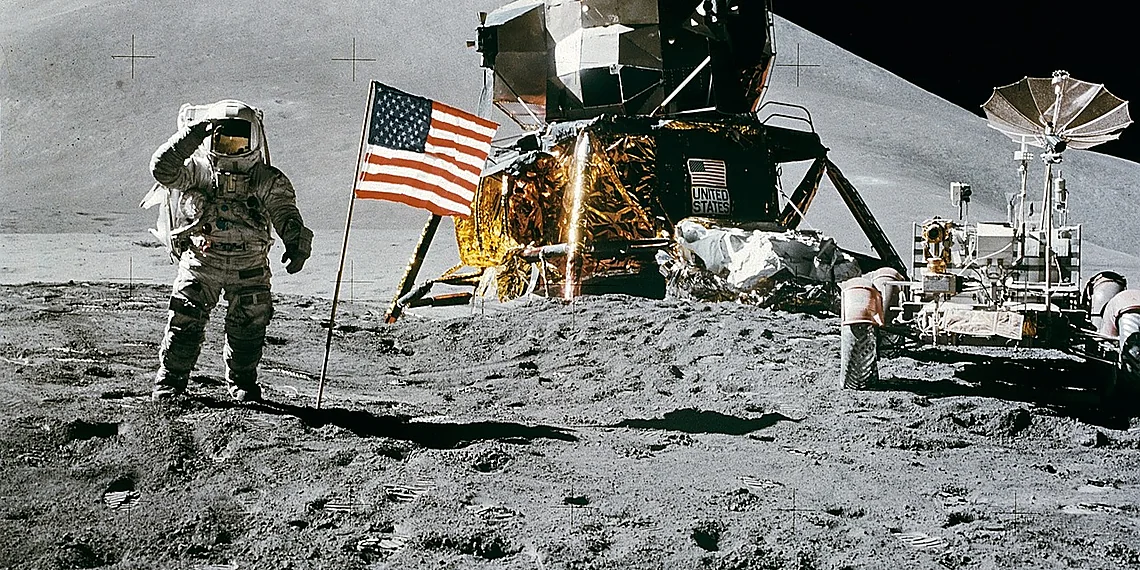


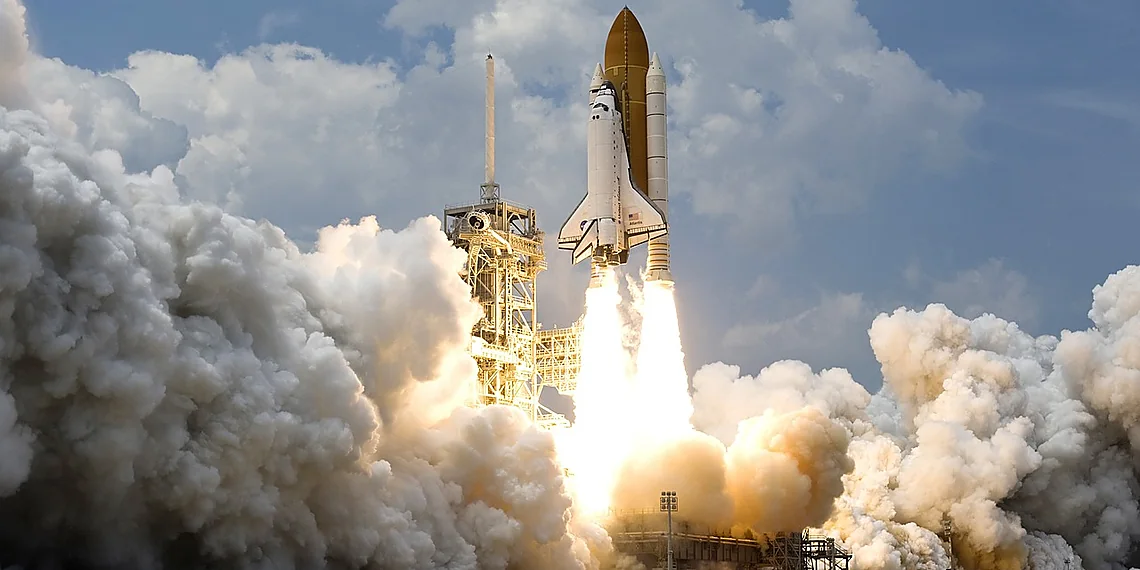
For decades, NASA’s Jet Propulsion Laboratory has been synonymous with groundbreaking space exploration, a place where audacious dreams are transformed into tangible missions reaching beyond our world.
From pioneering robotic probes to managing complex interplanetary operations, JPL’s legacy is etched in the annals of scientific achievement, consistently pushing the boundaries of what’s possible in astrophysics and planetary science.
Now, as we stand on the cusp of a new era of lunar exploration – one driven by both government agencies and commercial partners – JPL is playing an increasingly vital role, not just in designing missions but also in ensuring their success through rigorous validation.
A fascinating shift has occurred: JPL’s expertise is now heavily focused on providing crucial support for companies developing their own lunar spacecraft, a process that involves some truly unusual testing scenarios designed to mimic the harsh realities of spaceflight and the lunar environment itself. This includes extensive lunar spacecraft testing to verify performance under extreme conditions, something quite different from traditional NASA mission preparation in many ways; we’re seeing new approaches emerge as commercial entities enter the field. The sheer variety of designs and operational philosophies necessitates a flexible and adaptable testing framework – one that JPL is uniquely positioned to provide. ,
A Legacy of Shaking Things Up
For decades, the Jet Propulsion Laboratory (JPL) has been synonymous with pushing the boundaries of space exploration – and a significant part of that reputation stems from an unwavering commitment to rigorous testing. It’s not enough to simply design innovative spacecraft; they must be proven capable of enduring the harsh realities of launch and the unforgiving environments of deep space. Today, as JPL prepares commercial lunar spacecraft for missions under NASA’s Commercial Lunar Payload Services (CLPS) program, it’s drawing on a legacy built upon some truly monumental undertakings, most notably the Voyager missions.
Think about the Voyager 1 and 2 probes – launched in 1977, they continue their journey into interstellar space after over four decades. Their success wasn’t solely due to groundbreaking engineering; it was also a testament to the intense preparation they underwent at JPL. Before embarking on their grand tour of the solar system (and beyond), these probes were subjected to relentless vibration testing that simulated the violent shaking experienced during launch, and deafening acoustic tests mimicking the extreme noise levels. These weren’t mere check-boxes; engineers deliberately pushed the hardware to its limits to identify weaknesses *before* they became catastrophic failures millions of miles from Earth.
The reasoning was simple: failure in deep space isn’t an option. A malfunctioning instrument, a detached antenna, or even a loose bolt could spell disaster for a multi-billion dollar mission and decades worth of scientific potential. The meticulous testing regime ensured that every component – from the delicate electronics to the robust structure – would withstand the extreme conditions and continue functioning flawlessly. This principle remains at the core of JPL’s approach today, informing how they prepare commercial lunar spacecraft for their own challenging journeys.
Now, these historic facilities, once echoing with the sounds of Voyager’s preparations, are again buzzing with activity as engineers put modern lunar landers and rovers through similar trials. The legacy isn’t just about equipment; it’s about a culture of relentless scrutiny and a deep understanding that thorough testing is an indispensable ingredient for success in space exploration – a tradition JPL continues to uphold.
Voyager’s Rigorous Preparation
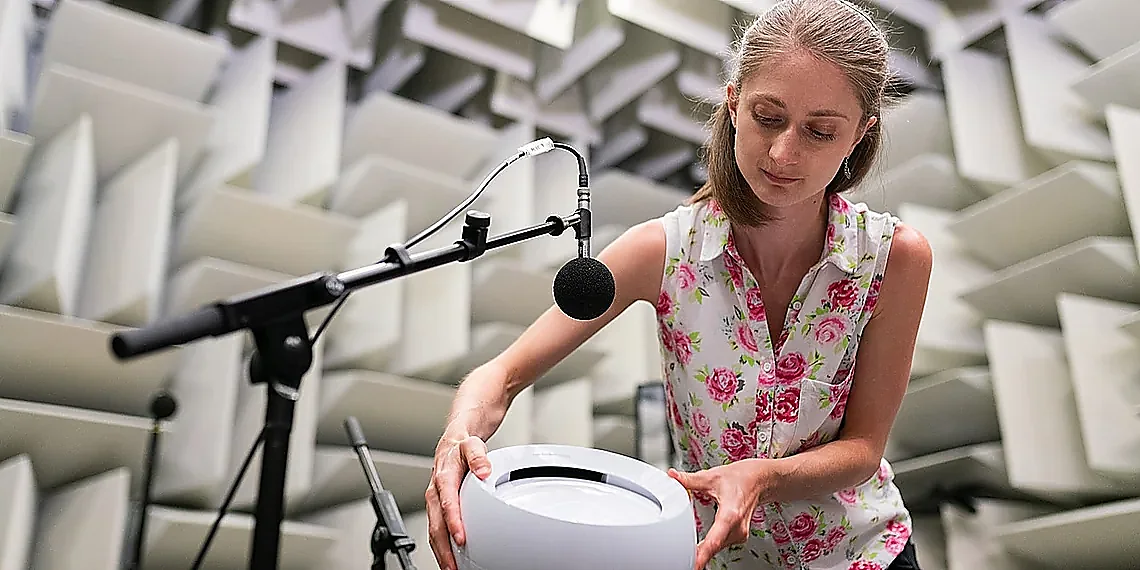
Before the Voyager 1 and 2 probes embarked on their historic journey to explore the outer planets and beyond, they underwent an incredibly demanding series of environmental tests at NASA’s Jet Propulsion Laboratory (JPL). These tests were designed to simulate the extreme conditions these spacecraft would encounter during launch and operation in the harsh environment of interstellar space. The primary focus was vibration testing – mimicking the intense shaking experienced during a rocket launch – and acoustic testing, which exposed the probes to levels of noise exceeding 100 decibels, equivalent to standing next to a jet engine.
The vibration tests involved suspending the spacecraft on specialized shakers that subjected them to random and repetitive vibrations across a broad range of frequencies. Engineers would gradually increase the intensity of these vibrations until components reached their design limits, identifying potential weaknesses in the hardware and ensuring structural integrity. Similarly, acoustic testing exposed the probes to powerful sound waves within large reverberation chambers. These tests revealed how sensitive instruments might react to extreme noise levels, allowing engineers to implement shielding or other mitigation strategies.
Such rigorous preparation was absolutely crucial for mission success. Without these tests, Voyager’s delicate scientific instruments could have been damaged during launch or rendered useless by the intense vibrations and noise of space. The lessons learned from preparing the Voyager probes continue to inform JPL’s testing protocols today, ensuring that both government and commercial lunar spacecraft are as resilient and reliable as possible for their missions to Earth’s Moon and beyond.
Testing for Lunar Landers
Preparing a lunar lander for its journey to the Moon isn’t as simple as building it and pointing it skyward. Just like the Voyager probes before them, modern commercial lunar spacecraft undergo rigorous testing at NASA’s Jet Propulsion Laboratory (JPL) to ensure they can survive the brutal conditions of launch and operate reliably on the lunar surface. A crucial part of this preparation focuses intensely on simulating those extreme launch environments – specifically, the intense vibrations and ear-splitting acoustic noise a spacecraft experiences as it blasts off from Earth.
The process involves subjecting the spacecraft to precisely controlled shaking and sound levels within specialized facilities. JPL’s shaker tables are enormous platforms capable of generating complex vibration profiles that mimic the unpredictable jolts encountered during ascent. Simultaneously, acoustic chambers bombard the spacecraft with powerful sound waves, replicating the intense noise pressure experienced as rockets fire. Engineers carefully measure a multitude of metrics – from component displacement to electrical signal integrity – to identify any weaknesses or potential failure points before they become catastrophic problems in space.
Why are these vibration and acoustic tests so critical? Simply put, launch is incredibly stressful for hardware. The constant shaking can loosen fasteners, fatigue materials, and disrupt sensitive electronics. Similarly, the intense sound pressure can damage delicate components like sensors and communication systems. Without thorough testing to identify and correct these vulnerabilities, a lunar lander risks failing before it even reaches its destination – potentially leading to lost payloads, damaged equipment, and a setback for commercial lunar exploration efforts under programs like CLPS.
The legacy of JPL’s facilities speaks volumes about their importance; the same infrastructure that prepared Voyager for interstellar travel is now ensuring the success of modern lunar missions. By meticulously recreating launch conditions on Earth, engineers can validate designs, refine manufacturing processes, and ultimately increase the odds of a successful landing – paving the way for a sustained human return to the Moon.
Simulating Launch Conditions

To ensure commercial lunar landers can survive the harsh realities of launch, engineers at NASA’s Jet Propulsion Laboratory (JPL) utilize specialized facilities designed to simulate those extreme conditions. A rocket launch subjects spacecraft to intense vibrations and deafening noise levels – forces that could easily damage sensitive components if not properly accounted for. JPL’s testing program recreates these stresses meticulously, allowing teams to identify potential weaknesses before the lander even leaves Earth.
The primary tools for simulating launch environments are powerful shaker tables and acoustic chambers. Shaker tables apply precisely controlled vibrations across various frequencies and amplitudes, mimicking the shaking experienced during ascent. These tests measure critical parameters like component displacement, strain, and acceleration to verify structural integrity. Simultaneously, spacecraft components are placed within large acoustic chambers where high-intensity sound waves bombard them; these ‘acoustic’ tests assess how well electronics and other sensitive systems perform under extreme noise pressure – a significant factor in preventing malfunctions.
The importance of this rigorous testing cannot be overstated. Lunar landers carry complex scientific instruments and communication equipment, all of which must remain fully functional throughout the launch and subsequent lunar mission. By subjecting spacecraft components to these simulated launch stresses, engineers can proactively identify and rectify any vulnerabilities, significantly increasing the likelihood of a successful landing and achieving the mission’s objectives on the Moon’s surface.
The Commercial Lunar Payload Services (CLPS) Initiative
NASA’s Commercial Lunar Payload Services (CLPS) Initiative represents a fundamental shift in how we approach lunar exploration. Rather than solely relying on government-funded missions, CLPS aims to cultivate a robust commercial ecosystem for delivering payloads – scientific instruments, technology demonstrations, and even resources – to the Moon’s surface. This program selects and contracts with American companies to provide these delivery services, leveraging their innovation and agility while sharing the risk inherent in space travel. The ultimate goal is to create a sustainable lunar economy, opening up opportunities for both scientific discovery and potential resource utilization.
The significance of CLPS lies not only in its cost-effectiveness but also in its ability to accelerate lunar exploration dramatically. By distributing payload delivery responsibilities across multiple commercial providers, NASA can pursue a wider range of objectives and experiments than would be possible with traditional mission models. This decentralized approach fosters competition and drives down costs, encouraging greater private investment and innovation within the space sector. It’s essentially creating a ‘space trucking’ service for the Moon, allowing researchers and companies to access lunar resources without needing to build their own spacecraft.
Here’s where JPL (Jet Propulsion Laboratory) plays a crucial role. The historic facilities at JPL – famously used in preparing the Voyager probes – are now being utilized to rigorously test these commercial lunar spacecraft. These tests simulate the harsh conditions of launch and the lunar environment, including extreme vibrations, acoustic noise, and thermal fluctuations. By identifying potential weaknesses *before* flight, JPL’s testing helps de-risk these CLPS missions, building confidence in the capabilities of the private companies involved and encouraging further investment in lunar exploration ventures.
Ultimately, JPL’s support for CLPS is a testament to NASA’s commitment to fostering collaboration between government agencies and commercial enterprises. Through this partnership, NASA can expand its reach into the Moon while simultaneously empowering American businesses to become key players in the burgeoning space economy – paving the way for a sustained human presence beyond Earth.
Enabling Commercial Lunar Missions
NASA’s Commercial Lunar Payload Services (CLPS) Initiative aims to establish a robust, commercially-driven ecosystem for delivering payloads to the Moon. Rather than directly managing lunar delivery missions themselves, NASA contracts with private U.S. companies to provide these services. This approach leverages the innovation and agility of the commercial sector, fostering competition and potentially lowering costs compared to traditional government-led approaches. The initiative envisions a future where multiple companies regularly transport scientific instruments, technology demonstrations, and other cargo to various lunar locations.
A critical component of the CLPS program is de-risking these commercial missions. To that end, NASA’s Jet Propulsion Laboratory (JPL) plays a vital role by providing access to its specialized testing facilities. These facilities simulate the harsh conditions spacecraft will experience during launch and on the lunar surface – including extreme vibrations, acoustic noise, and thermal cycling. By rigorously testing commercial landers and rovers in these environments, JPL helps identify potential weaknesses and ensures they can withstand the challenges of a lunar mission.
This support from JPL is essential for encouraging private investment in lunar exploration. Knowing that their hardware has undergone thorough validation at a trusted institution like JPL significantly increases investor confidence. It allows commercial companies to pursue ambitious lunar missions with greater assurance, ultimately accelerating the pace of lunar scientific discovery and paving the way for future human presence on the Moon.
Looking Ahead: The Future of Lunar Testing
The recent testing of commercial lunar spacecraft at JPL’s venerable facilities highlights a critical evolution in space exploration – the need to adapt established practices to accommodate increasingly complex missions and diverse partners. While the legacy infrastructure served us exceptionally well for Voyager and other groundbreaking endeavors, future lunar ambitions, particularly those involving robotic resource utilization and sustained human presence, demand even more sophisticated testing capabilities. We can anticipate seeing greater integration of virtual reality and augmented reality tools into test procedures, allowing engineers to simulate mission scenarios with unprecedented fidelity and identify potential failure points before launch.
Looking ahead, the next generation of lunar spacecraft testing at JPL will likely involve a shift towards ‘digital twins’ – complete digital replicas of spacecraft systems that can be subjected to simulated environmental stresses and operational conditions. This approach minimizes physical hardware usage during testing, accelerating development cycles and reducing costs while still providing invaluable data on system performance. Furthermore, advancements in acoustic simulation technology are crucial; recreating the extreme noise environments encountered during launch and lunar operations requires continuous refinement of these techniques to accurately model complex vibrational patterns.
Beyond simply mimicking environmental conditions, future JPL facilities will likely focus on testing integrated systems rather than individual components. This ‘system-of-systems’ approach is vital for validating interoperability between various spacecraft subsystems – power generation, communication, navigation, and robotic manipulation – especially as lunar missions increasingly rely on autonomous operation and in-situ resource utilization (ISRU). Imagine dedicated facilities capable of simulating a complete lunar surface environment, including regolith interaction testing and radiation exposure studies, allowing engineers to fine-tune ISRU processes and ensure long-term hardware resilience.
Ultimately, these advancements in lunar spacecraft testing aren’t just about ensuring mission success; they are fundamental building blocks for establishing a sustainable presence on the Moon. Robust testing validates designs, builds confidence in new technologies, and minimizes risks – all essential elements for fostering commercial investment and expanding human activity beyond Earth orbit. By continually improving our ability to rigorously assess and validate lunar spacecraft, JPL plays a pivotal role in unlocking the full potential of lunar exploration and resource utilization.
The work happening at JPL isn’t just about verifying hardware; it’s fundamentally shaping the future of how we access and utilize the Moon.
From vibration tables mimicking launch forces to thermal vacuum chambers simulating the harsh lunar environment, these rigorous processes are absolutely critical for ensuring commercial partners can reliably deliver their payloads.
The dedication to pushing boundaries in areas like autonomous navigation and precision landing is a testament to JPL’s commitment to fostering innovation within the burgeoning space economy.
This meticulous approach to lunar spacecraft testing reflects a broader strategy – one that empowers private companies while maintaining NASA’s oversight, ultimately accelerating our return to the Moon and beyond. It’s an exciting era for lunar exploration, fueled by collaboration and ingenuity. The coming years promise groundbreaking discoveries and unprecedented opportunities as we expand humanity’s presence in space. The advancements we’re seeing now are laying the groundwork for a sustained lunar presence, paving the way for resource utilization and scientific breakthroughs. We can anticipate even more sophisticated testing methodologies and collaborative efforts to refine our capabilities further. This ongoing evolution ensures that commercial lunar missions have the best possible chance of success, propelling us toward ambitious goals like establishing a permanent lunar base. The future is bright as we continue this journey together, pushing the limits of what’s possible beyond Earth’s orbit. It’s truly inspiring to witness the progress and potential unfolding before us. We are on the cusp of something remarkable, a new chapter in space exploration driven by both public and private partnerships. It highlights how vital thorough lunar spacecraft testing is for all future missions.
Continue reading on ByteTrending:
Discover more tech insights on ByteTrending ByteTrending.
Discover more from ByteTrending
Subscribe to get the latest posts sent to your email.