
The ‘Black Widow’ Phenomenon Explained
The newly discovered exoplanet is part of a fascinating class of celestial objects nicknamed ‘Black Widows,’ and understanding this moniker reveals an incredibly unusual and violent cosmic dance. These aren’t your typical planets orbiting a sun; they’re rogue giants, initially formed as regular stars themselves, that have undergone a bizarre transformation involving the consumption of smaller companion stars. The name ‘Black Widow,’ borrowed from the predatory spider known for consuming its mate, perfectly captures this destructive orbital relationship.
The ‘Orbital Dance of Destruction,’ as astronomers often describe it, begins when a massive star—initially much larger than our Sun—evolves into a white dwarf. As it ages and sheds mass, a smaller companion star can find itself drawn closer due to the altered gravitational dynamics. Over time, this proximity leads to tidal forces ripping material from the smaller star and feeding it onto the white dwarf. This process is exceptionally rare; witnessing such an event requires catching it at just the right moment during its long, slow progression.
Imagine a predator relentlessly circling its prey, gradually draining its life force – that’s essentially what’s happening in these Black Widow systems. The smaller star isn’t immediately devoured, but slowly consumed bit by bit, ultimately contributing to the white dwarf’s mass and altering its properties. This cannibalistic interaction provides astronomers with unique insights into stellar evolution, as it allows them to observe processes normally hidden within the cores of dying stars.
The discovery of this particular Black Widow exoplanet, located 750 light years from Earth, is especially exciting because it’s providing a new window into these extreme environments. The unusual atmospheric composition observed – details we’ll explore shortly – suggests that the consumption process might be even more complex and nuanced than previously thought, pushing our understanding of stellar evolution and exoplanetary systems to its limits.
Orbital Dance of Destruction

The ‘Black Widow’ exoplanet phenomenon describes a rare class of planetary systems where a massive planet orbits a small, dying star. These planets aren’t just orbiting; they are actively consuming their host stars, stripping away their outer layers in a process driven by extreme gravitational forces. The name comes from the predatory spider, as the planet acts like a ‘Black Widow,’ systematically destroying its smaller companion.
The destruction unfolds through a delicate but violent orbital dance. As the massive exoplanet spirals closer to the aging star, tidal forces – the same forces that cause Earth’s tides – become increasingly powerful. These forces stretch and distort the star’s outer layers, eventually pulling away significant amounts of stellar material onto the planet. This process can be ongoing for millions or even billions of years, slowly but surely dismantling the star.
These systems are incredibly rare to observe because they require a very specific set of circumstances: a massive planet with just the right orbit and a small, vulnerable star nearing the end of its life. The discovery of the ‘Black Widow’ exoplanet discussed in this article provides scientists with an unprecedented opportunity to study these destructive processes firsthand and refine our understanding of planetary evolution and stellar death.
Unveiling TOI 778 b: The Anomaly
The universe continues to surprise us, and recently, astronomers have unearthed a truly perplexing cosmic oddity: TOI 778 b, an exoplanet nicknamed the ‘Black Widow’ due to its unusual orbital dynamics. Located roughly 750 light-years from Earth in the constellation of Hydra, this planet is not just another celestial body; it represents an anomaly that challenges our current understanding of planetary formation and atmospheric behavior. Unlike many exoplanets discovered so far, TOI 778 b’s characteristics are pushing scientists to rethink established models – making its discovery a significant moment for astrophysics.
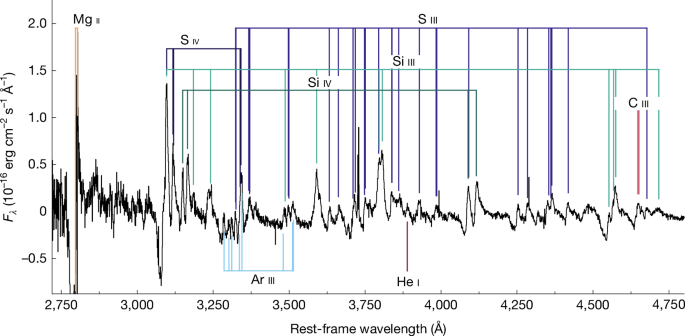
What sets TOI 778 b apart is its remarkably unusual atmosphere. Data gathered from NASA’s Transiting Exoplanet Survey Satellite (TESS) reveals an atmospheric composition that defies expectations. While most ‘Black Widow’ planets, so named because they orbit the remnants of a star and likely consumed their companion planet, are expected to have scorching hot atmospheres dominated by elements like iron, TOI 778 b’s atmosphere appears surprisingly cool and contains significant amounts of water vapor – an element typically absent in such extreme environments. This stark contrast has left researchers scratching their heads.
The presence of water vapor is particularly baffling because the planet’s proximity to its host star should have long evaporated any initial water content. Current theoretical frameworks simply cannot adequately explain how this atmosphere could exist, let alone maintain itself over billions of years. Scientists are now scrambling to develop new models and explore alternative explanations, ranging from unusual stellar activity influencing atmospheric chemistry to previously unknown planetary processes at play. Further observations with more powerful telescopes like the James Webb Space Telescope will be crucial in unraveling this cosmic mystery.
The discovery of TOI 778 b underscores just how much we still have to learn about exoplanets and the diverse range of conditions that exist beyond our solar system. It serves as a potent reminder that the universe is full of surprises, constantly challenging our assumptions and pushing the boundaries of scientific knowledge. This ‘Black Widow’ planet isn’t just an interesting find; it’s a vital clue in piecing together the puzzle of planetary evolution across the galaxy.
Atmospheric Enigma

TOI 778 b, a “Black Widow” exoplanet orbiting a small, ultra-cool dwarf star located approximately 750 light-years from Earth, presents an atmospheric enigma that has baffled astronomers. Unlike typical hot Jupiters or other known exoplanets, TOI 778 b’s atmosphere appears surprisingly pristine and lacks the expected heavy elements like iron and magnesium. This is particularly strange considering its proximity to a star that would normally strip away any initial atmosphere through intense radiation.
Observations from NASA’s Transiting Exoplanet Survey Satellite (TESS) initially identified TOI 778 b as transiting its host star – meaning it passes in front of the star, allowing scientists to study its properties. Subsequent spectroscopic analysis revealed a remarkably clean atmosphere, defying current atmospheric models for planets orbiting such stars. Theoretical predictions suggest these planets should be bombarded with stellar winds and high-energy particles, leading to significant atmospheric erosion and the deposition of heavy elements.
The lack of detectable metals in TOI 778 b’s atmosphere remains unexplained. Scientists are currently exploring several hypotheses – including a potentially unique formation history or an unexpectedly efficient mechanism for atmospheric replenishment – but no single explanation fully accounts for these observations. Further investigation using advanced telescopes like the James Webb Space Telescope will be crucial to unraveling this cosmic mystery and refining our understanding of exoplanet atmospheres.
Scientific Implications & Future Research
The discovery of TOI 778 b, an exoplanet exhibiting a truly bizarre atmosphere dominated by what appears to be sulfur dioxide and lacking expected water vapor, carries profound scientific implications for our understanding of astrophysics and exoplanet research. This isn’t just about finding another planet; it’s about fundamentally re-evaluating the processes that shape planetary atmospheres and potentially revealing entirely new types of planetary systems we hadn’t previously considered possible. The sheer unexpectedness of TOI 778 b’s atmospheric fingerprint demands a critical look at our existing models, which were largely constructed based on observations closer to our own solar system.
One immediate consequence is the pressure this places on established theories of planetary formation. Current models struggle to explain how such an atmosphere could arise, especially given the planet’s relatively close proximity to its star and estimated temperature. One speculative possibility involves a runaway greenhouse effect far more extreme than previously envisioned, possibly coupled with significant volcanic activity constantly replenishing the sulfur dioxide. Another intriguing, albeit highly theoretical, scenario suggests a past collision with another celestial body rich in sulfur compounds could have radically altered TOI 778 b’s atmospheric composition. Regardless of the mechanism, it’s clear that our current understanding is incomplete and requires substantial revision – potentially leading to entirely new frameworks for describing planetary genesis.
Future research will focus on several key areas. First, obtaining higher-resolution spectra using instruments like the James Webb Space Telescope (JWST) is crucial to refine our understanding of TOI 778 b’s atmospheric composition and search for other unexpected molecules. Further observations aimed at characterizing the host star’s activity are also essential; intense stellar flares or unusual chemical processes within the star itself could be contributing factors. Finally, a broader survey targeting similar exoplanets in comparable orbital configurations will be vital to determine if TOI 778 b is an anomaly or represents a previously unknown class of planetary systems.
Beyond immediate follow-up observations, this discovery highlights the need for innovative observational techniques and theoretical modeling approaches. We may need to develop entirely new instruments capable of detecting trace amounts of unusual compounds in exoplanet atmospheres. The investigation of TOI 778 b serves as a powerful reminder that our universe holds countless surprises, constantly challenging our assumptions and pushing the boundaries of scientific knowledge – ultimately fueling further exploration and discovery.
Rethinking Planetary Formation?
The recent discovery of TOI 778 b, an exoplanet roughly Earth-sized orbiting a young star, presents a significant challenge to established planetary formation models. Its atmospheric composition is unexpectedly rich in carbon dioxide and nitrogen, far exceeding what current theory predicts for a planet so close to its host star. Typically, planets closer to their stars lose lighter elements like hydrogen and helium due to intense stellar winds during the early stages of development, leaving behind denser materials. TOI 778 b’s retention of these volatile compounds suggests either an atypical formation process or a previously unknown mechanism for atmospheric preservation.
Existing models primarily assume that planets form from a protoplanetary disk where heavier elements accrete first, followed by lighter gases. However, the abundance of CO2 and N2 on TOI 778 b implies either a significantly different initial composition in its formation environment or an alternative pathway for atmospheric acquisition – perhaps through migration from a more distant region within the planetary system. Some researchers speculate it could have formed further out and migrated inwards, retaining volatile elements that would normally be stripped away closer to the star; however, this scenario introduces new complexities regarding how such a planet can maintain its orbital stability.
The unusual nature of TOI 778 b underscores the limitations of our current understanding of planetary formation and atmospheric evolution. Future research will focus on characterizing similar exoplanets with high-resolution spectroscopy to identify other instances of unexpected atmospheric compositions. This necessitates refining existing theoretical frameworks to incorporate processes like volatile element migration, alternative accretion mechanisms, or previously unaccounted for interactions between planets and their host stars – ultimately leading to a more complete picture of how planetary systems arise.
Beyond TOI 778 b: The Search Continues
The discovery of TOI 778 b, nicknamed the ‘Black Widow’ exoplanet due to its unusual formation scenario involving a white dwarf star devouring a planetary companion, has ignited a flurry of excitement within the astronomical community. While this specific find is groundbreaking, it also serves as a powerful reminder that our understanding of planet formation and stellar evolution remains incomplete. The sheer peculiarity of TOI 778 b – its presence so close to a dying star, defying conventional models – underscores how much more there is to learn about the vastness of space.
The ‘Black Widow’ exoplanet isn’t likely an isolated incident; it represents a potential class of cosmic anomalies waiting to be uncovered. Scientists are actively expanding their search parameters, utilizing data from missions like TESS and leveraging future observatories to hunt for similar systems. The focus extends beyond simply identifying candidates – the real breakthrough lies in understanding *how* these planets form, what conditions allow them to survive, and whether they represent a common or exceptionally rare phenomenon within our galaxy. This ongoing search is fueled by the realization that the universe consistently throws curveballs at established theories.
Looking ahead, powerful tools like the James Webb Space Telescope (JWST) will play an absolutely crucial role in characterizing these intriguing exoplanets. JWST’s unprecedented infrared capabilities allow astronomers to probe their atmospheres for chemical signatures and potentially even detect biosignatures – indicators of life. The ability to analyze the light filtering through a Black Widow planet’s atmosphere, revealing its composition and temperature profiles, is a vital step toward unraveling its mysteries and testing our existing planetary formation models. The detailed observations promised by JWST represent an exciting new chapter in exoplanet research.
Ultimately, the quest for ‘Black Widow’ exoplanets and other unexpected celestial bodies pushes the boundaries of astronomical knowledge. Each discovery, no matter how strange, refines our understanding of stellar evolution, planet formation, and potentially even the prevalence of life beyond Earth. The continued exploration promises not only to reveal more cosmic oddities but also to fundamentally reshape our perspective on the universe we inhabit.
Hunting Cosmic Oddities
The recent discovery of TOI 778 b, nicknamed the ‘Black Widow’ exoplanet due to its unusual orbital dynamics and likely consumption of a smaller companion planet, has sparked immense interest within the astronomical community. This exoplanet’s existence challenges existing planetary formation models and suggests that extreme gravitational interactions can lead to unexpected outcomes in star systems far beyond our own. Its unique properties—a highly elliptical orbit around a white dwarf star—make it an exceptional target for further investigation.
Future observations with powerful telescopes like the James Webb Space Telescope (JWST) are crucial to unraveling the mysteries surrounding TOI 778 b and similar exoplanets. JWST’s advanced infrared capabilities will allow scientists to analyze the planet’s atmosphere in unprecedented detail, searching for chemical signatures that could reveal more about its composition and formation history. These observations could also help determine if any remnants of the consumed companion planet are still detectable within the Black Widow’s atmosphere.
The hunt is now on for other ‘Black Widow’ exoplanets and similar cosmic anomalies. Astronomers are actively scanning data from missions like TESS (Transiting Exoplanet Survey Satellite) and planning future surveys with ground-based observatories to identify potential candidates. Each new discovery promises to refine our understanding of planetary evolution, stellar life cycles, and the sheer diversity of worlds that exist within our galaxy – a truly exciting prospect for space exploration.
The revelation of this ‘Black Widow’ exoplanet system presents a truly remarkable twist in our understanding of planetary formation and evolution, demonstrating that cosmic processes can be far more complex and violent than we initially imagined. It serves as a potent reminder of just how much remains unknown about the vastness surrounding us, challenging existing models and sparking entirely new avenues for research. The sheer strangeness of this system—a massive star seemingly cannibalizing its orbiting companions—highlights the incredible diversity found beyond our solar system and underscores the potential for even more bizarre celestial arrangements awaiting discovery. This particular exoplanet discovery is just one piece in a rapidly expanding puzzle, with each new observation pushing the boundaries of what we believe possible within the universe. The implications extend beyond astrophysics; they fuel our sense of wonder and inspire us to continue probing deeper into the cosmos. Let’s embrace this ongoing exploration, recognizing that every answer only reveals more profound questions about our place in the grand scheme of things. Stay tuned for further developments as scientists analyze data and refine their theories about these captivating cosmic phenomena. For continued insights into cutting-edge space exploration news and discoveries like this one, be sure to follow ByteTrending.
Follow ByteTrending to stay abreast of the latest breakthroughs in space exploration!
Continue reading on ByteTrending:
Discover more tech insights on ByteTrending ByteTrending.
Discover more from ByteTrending
Subscribe to get the latest posts sent to your email.