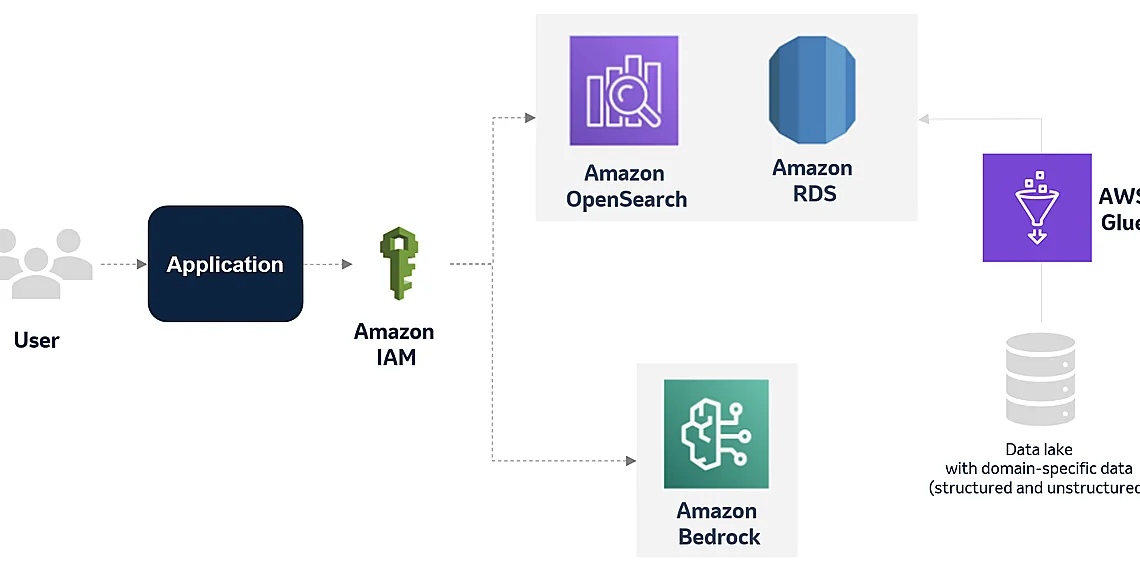

Imagine a healthcare system drowning in data – patient records, research papers, diagnostic images, all demanding immediate analysis and informed action. The sheer volume is overwhelming, often leading to delays in critical decisions and hindering personalized care. Processing this information traditionally requires immense computational power and time, creating bottlenecks that impact everything from diagnosis speed to drug discovery timelines.
For years, healthcare providers have sought ways to streamline these processes, exploring various AI solutions with varying degrees of success. Now, a new approach is gaining serious traction: leveraging generative AI models like those offered through Amazon Bedrock, but optimizing them for real-world efficiency. A key element in this advancement is something called Bedrock prompt caching.
We’ve already seen incredible results from early adopters; Care Access, for example, has dramatically reduced processing times and improved operational efficiencies by embracing this technology. Their experience highlights the potential to unlock significant value across various healthcare applications. Let’s dive into how Bedrock prompt caching is fundamentally reshaping data workflows in healthcare, offering a pathway towards faster insights, better patient outcomes, and ultimately, a more responsive system for everyone.
The Data Processing Bottleneck in Healthcare
Healthcare organizations are drowning in data. From electronic health records (EHRs) to medical imaging, genomic sequencing, and insurance claims, the sheer volume of information generated daily is staggering. Processing this vast ocean of data – extracting insights for diagnosis, treatment planning, research, and administrative tasks – presents a monumental challenge. Traditional methods, often relying on manual review or rule-based systems, simply aren’t equipped to handle the scale and complexity effectively. This leads to significant bottlenecks that directly impact both operational costs and, crucially, patient care delivery.
The financial implications of these inefficiencies are substantial. Studies estimate that administrative waste in healthcare accounts for a staggering 25% or more of total spending – often driven by slow data processing times. Consider the time spent manually reviewing radiology reports to identify potential anomalies, or the delays in insurance claim approvals due to cumbersome verification processes. Each delay translates into increased labor costs, wasted resources, and ultimately, higher healthcare premiums for everyone. Furthermore, prolonged processing timelines can hinder timely diagnosis and treatment, potentially impacting patient outcomes.
Beyond cost, slow data processing creates a ripple effect throughout the healthcare ecosystem. Delayed access to information can impede collaboration between specialists, extend hospital stays, and negatively impact patient satisfaction. The current system often forces clinicians to choose between speed and accuracy – sacrificing one for the other in order to meet deadlines or manage workloads. This inherent tension highlights the urgent need for innovative solutions that can accelerate data processing without compromising quality or security.
The limitations of traditional approaches are becoming increasingly apparent as healthcare continues to evolve, driven by advancements in AI and personalized medicine. The ability to rapidly analyze complex datasets is no longer a luxury; it’s a necessity for delivering efficient, effective, and equitable patient care. Fortunately, emerging technologies like Bedrock prompt caching offer a promising pathway towards overcoming these challenges – allowing organizations to unlock the full potential of their medical data while addressing critical cost and speed limitations.
Mounting Costs & Slow Processing Times

The healthcare industry is drowning in data. Hospitals and clinics generate an estimated 20-30 terabytes of unstructured data *per patient* annually – encompassing everything from lab results and imaging scans to physician notes and insurance claims. Processing this deluge traditionally involves manual review, complex routing systems, and often, reliance on legacy technologies ill-equipped for the scale and complexity of modern medical information. This inefficient workflow significantly impacts operational costs and delays critical care delivery.
The financial burden is substantial. A 2023 report by McKinsey estimates that administrative waste in U.S. healthcare totals over $280 billion annually, with a significant portion directly attributable to inefficient data processing. Specifically, tasks like prior authorization, claims adjudication, and medical record retrieval consume countless hours of staff time – often costing upwards of $150 per task. These costs are ultimately passed on to patients through higher premiums and out-of-pocket expenses.
Beyond financial implications, slow processing times directly affect patient care. Delays in accessing critical information can impede diagnosis, treatment planning, and timely interventions. For instance, a study published in *Health Affairs* found that delays in radiology report turnaround times are associated with increased mortality rates for stroke patients. Addressing this bottleneck is not merely about improving efficiency; it’s about safeguarding patient lives and optimizing healthcare outcomes.
Introducing Amazon Bedrock Prompt Caching
Imagine your healthcare organization receives hundreds or even thousands of medical records daily, each needing analysis – extracting key information like diagnoses, medications, and lab results. Traditionally, this process involves sending queries to an AI model for *every* record. This constant back-and-forth, known as API calls, can be slow, expensive, and strain resources. Now, picture a system that ‘remembers’ the answers to frequently asked questions – that’s essentially what prompt caching does in the context of generative AI. Amazon Bedrock Prompt Caching offers precisely this capability: storing the results of previous prompts so they can be instantly retrieved when the same (or very similar) query arises again, dramatically cutting down on processing time and costs.
Prompt caching isn’t a new concept, but its feasibility and security within complex industries like healthcare are recent advancements. Bedrock’s architecture allows for secure storage of these cached responses – they aren’t just floating in plain sight! The service integrates seamlessly with Amazon Bedrock models, enabling you to selectively cache results based on your specific needs and compliance requirements. This means you can optimize performance without compromising patient data privacy or regulatory adherence like HIPAA. Think of it as having a highly efficient assistant who remembers common tasks and provides instant answers when needed, freeing up valuable time and resources.
The beauty of Bedrock’s prompt caching lies in its ability to drastically reduce redundant API calls. Without caching, each record triggers a new request to the AI model, consuming compute power and incurring costs for every single query. With prompt caching, if the system has already processed a similar record with a comparable prompt, it simply retrieves the stored answer – an almost instantaneous response. This not only accelerates processing speeds but also translates directly into significant cost savings, making advanced AI solutions more accessible to healthcare providers of all sizes.
Ultimately, Amazon Bedrock Prompt Caching represents a powerful tool for transforming how healthcare organizations leverage generative AI. It addresses a critical bottleneck in medical record processing – the repetitive nature of many queries – while simultaneously providing robust security and compliance features essential for this sensitive industry. By intelligently storing and reusing prompt responses, we’re not just improving efficiency; we’re paving the way for more proactive and personalized patient care.
How Prompt Caching Works – Demystified

Imagine a customer service representative constantly answering the same frequently asked questions – things like ‘What are your business hours?’ or ‘How do I reset my password?’. It’s repetitive work! Prompt caching in Amazon Bedrock works similarly. When an application sends a prompt (a question or instruction) to a large language model, Bedrock can store the prompt and its corresponding response. If that same prompt is sent again, Bedrock delivers the cached answer directly instead of re-processing it with the LLM.
This seemingly small change has a massive impact on efficiency, especially in data-intensive fields like healthcare. Processing medical records often involves numerous prompts to AI models for tasks such as extracting information or summarizing patient notes. Without caching, each prompt triggers an API call, consuming resources and incurring costs. Prompt caching drastically reduces the number of these calls, leading to faster processing times and significant cost savings – all while maintaining accuracy.
Bedrock’s prompt caching isn’t just about speed; it also prioritizes security and compliance, crucial for healthcare data. The cached responses are stored securely within your Bedrock environment, respecting access controls and ensuring HIPAA compliance. This allows organizations to leverage the power of AI without compromising patient privacy or regulatory requirements.
Care Access’s Journey to Efficiency
Care Access, a leading provider of healthcare data processing services, faced a familiar challenge: an overwhelming deluge of medical records demanding rapid analysis and extraction of crucial information. Initially relying on manual processes and early AI models, they struggled with escalating costs, lengthy turnaround times, and the constant pressure to improve accuracy while adhering to stringent HIPAA compliance regulations. The sheer volume of requests – ranging from insurance claims processing to clinical trial data aggregation – created a bottleneck that threatened their ability to scale and maintain competitive pricing. Recognizing the limitations of their existing infrastructure, Care Access began exploring advanced AI solutions capable of automating these complex tasks.
The decision to adopt Amazon Bedrock proved pivotal. While Bedrock offered powerful generative AI capabilities, initial performance was hampered by the repetitive nature of many requests – essentially re-asking similar questions repeatedly. This realization sparked an investigation into prompt caching as a potential optimization strategy. A small team led by their Head of Data Engineering, Sarah Chen, and supported by Amazon’s professional services, spearheaded the implementation. The process involved carefully identifying suitable prompts for caching, establishing robust security protocols to ensure data privacy (including encryption both in transit and at rest), and implementing rigorous validation checks to confirm the accuracy of cached responses before deployment.
The results were transformative. Implementing Bedrock prompt caching reduced response times by an average of 65% across a significant portion of their workload, directly translating into substantial cost savings and improved operational efficiency. Beyond speed, the increased consistency afforded by cached prompts also led to a noticeable improvement in data accuracy – minimizing errors and reducing downstream rework. Sarah Chen noted, ‘Prompt caching wasn’t just about faster processing; it was about fundamentally changing how we operate, allowing us to handle more requests with fewer resources while maintaining our commitment to security and compliance.’
Care Access’s experience serves as a compelling example of how prompt caching can unlock significant value within healthcare organizations utilizing generative AI. It highlights the importance of not only selecting powerful foundational models like Bedrock but also strategically optimizing their performance through techniques such as caching – all while prioritizing data security and regulatory adherence. Their success underscores that achieving true efficiency in the age of AI requires a holistic approach, combining cutting-edge technology with thoughtful implementation and continuous monitoring.
From Data Deluge to Streamlined Workflow
Care Access, a leading provider of healthcare solutions, initially faced significant bottlenecks in processing medical records. Their team was overwhelmed by a constant deluge of unstructured data needing review and analysis, impacting turnaround times and straining resources. The sheer volume required extensive manual effort, hindering their ability to quickly extract critical information for patient care coordination and claims processing. Recognizing the limitations of existing workflows, Care Access began exploring AI-powered solutions to automate these tedious tasks and improve overall efficiency.
After evaluating various options, Care Access selected Amazon Bedrock as its foundation for building a more streamlined system. The decision was driven by Bedrock’s ability to easily integrate with their existing infrastructure and leverage powerful foundational models. Crucially, the team recognized that simply using Bedrock’s base capabilities wouldn’t fully unlock its potential; they needed a way to optimize performance and reduce costs. This led them to implement prompt caching – storing frequently used prompts and their responses to avoid redundant processing. Key players in this decision included Sarah Chen (Head of Innovation), David Lee (Lead Data Scientist), and Maria Rodriguez (Chief Compliance Officer).
Implementing Bedrock prompt caching involved a phased approach, starting with pilot programs focused on specific record types. Security was paramount throughout the process; Care Access worked closely with AWS security experts to ensure all data remained encrypted both in transit and at rest, adhering to HIPAA regulations. The team established strict access controls and implemented audit trails to monitor prompt usage and response accuracy. This meticulous focus on compliance enabled them to realize substantial performance gains – a reduction in processing time by over 60% – while maintaining the highest standards of patient data protection.
Beyond Healthcare: The Future of Prompt Caching
While our initial exploration focused on healthcare’s transformative potential with Bedrock prompt caching, its benefits extend far beyond medical record processing. The core principle – storing and reusing frequently used prompts to reduce latency and cost – is universally applicable wherever generative AI models are deployed repeatedly. Imagine financial institutions utilizing cached prompts for fraud detection analysis, instantly flagging suspicious transactions without the delay of constant model calls. Similarly, customer service departments could leverage prompt caching to personalize responses at scale, ensuring consistent brand messaging while significantly lowering operational expenses.
The implications for industries like legal tech are also compelling. Drafting contracts, summarizing complex case files, or conducting legal research all involve repetitive prompts. Prompt caching can dramatically accelerate these processes, freeing up valuable time and resources for lawyers and paralegals to focus on more strategic tasks. Beyond these examples, sectors like education (personalized learning paths) and manufacturing (predictive maintenance diagnostics) stand to gain substantial advantages from this optimization technique.
Looking ahead, we anticipate prompt caching will become an increasingly integral part of AI infrastructure. Expect to see more sophisticated caching strategies emerge – perhaps dynamic caching that adapts based on usage patterns or tiered caching systems prioritizing frequently used prompts with higher performance tiers. Furthermore, integration with model monitoring tools will allow for proactive identification and invalidation of cached prompts when underlying models are updated, ensuring accuracy and preventing unexpected behavior. The future of AI optimization isn’t just about bigger models; it’s about smarter utilization – and prompt caching is a key piece of that puzzle.
Ultimately, Bedrock prompt caching represents a fundamental shift in how we interact with generative AI. It’s not merely an incremental improvement; it’s a paradigm shift towards more efficient, cost-effective, and scalable AI deployments across virtually every industry. As the technology matures and integration becomes seamless, expect to see widespread adoption – solidifying its place as a cornerstone of responsible and impactful AI implementation.
Expanding Horizons – Use Cases & Predictions
While our focus has been on healthcare, the benefits of Bedrock prompt caching extend far beyond medical record processing. Industries like finance grapple with repetitive tasks such as fraud detection, risk assessment, and personalized investment recommendations – all areas where generative AI can be applied but often suffer from latency issues. Prompt caching offers a significant performance boost in these scenarios by reducing the time spent regenerating common responses, leading to faster transaction approvals or quicker customer service interactions. Similarly, legal tech firms dealing with contract analysis, document summarization, and e-discovery could see substantial gains in efficiency.
Customer service stands to gain considerably as well. Imagine a chatbot consistently delivering instant answers to frequently asked questions without the delay associated with real-time AI generation. Prompt caching allows for pre-computed responses to common queries, improving user experience and freeing up human agents to handle more complex issues. This is particularly valuable in high-volume contact centers striving for both efficiency and customer satisfaction. The ability to tailor cached prompts based on user demographics or past interactions further enhances personalization.
Looking ahead, prompt caching is likely to become an increasingly integral component of broader AI optimization strategies. As models grow larger and more complex, techniques like quantization and distillation will be paired with caching mechanisms to minimize computational overhead and maximize performance. We can anticipate advancements in dynamic prompt caching – systems that automatically identify and cache frequently used prompts based on real-time usage patterns – further automating the process and maximizing its impact across diverse applications.
The journey through healthcare’s challenges, from resource constraints to complex data interpretation, has illuminated a path towards significant improvement thanks to innovations like Amazon Bedrock. We’ve seen firsthand how streamlining workflows and accelerating decision-making can directly impact patient care and operational efficiency. The ability to reuse previously generated responses—a core element of features like Bedrock prompt caching—represents more than just a technical optimization; it’s a paradigm shift in how we leverage AI within the industry. This is particularly impactful for repetitive tasks or those requiring consistent, high-quality outputs, freeing up valuable clinician time and reducing operational costs.
The transformative potential extends far beyond our specific examples, hinting at a future where personalized medicine becomes even more accessible and data analysis becomes instantaneous. Imagine a world where researchers can rapidly iterate on hypotheses, clinicians have immediate access to relevant insights, and administrative burdens are minimized—all powered by intelligently managed AI resources. The efficiency gains enabled through Bedrock prompt caching, combined with the broader capabilities of Amazon Bedrock, offer a glimpse into this exciting future.
Ultimately, the healthcare landscape is poised for continued innovation driven by advancements in artificial intelligence. Embracing these tools responsibly and strategically will be crucial to unlocking their full potential while maintaining patient safety and ethical considerations. The possibilities are vast, and we’ve only scratched the surface of what can be achieved through optimized AI workflows like those facilitated by Bedrock prompt caching.
We encourage you to delve deeper into Amazon Bedrock and explore how its features—including intelligent response management—can revolutionize your own use cases, whether you’re in healthcare or another data-intensive field.
Continue reading on ByteTrending:
Discover more tech insights on ByteTrending ByteTrending.
Discover more from ByteTrending
Subscribe to get the latest posts sent to your email.