


For years, scientists believed they had a solid grasp on how the sun’s relentless outflow, the solar wind, behaved – a constant stream of charged particles shaping our solar system. Recent data from NASA’s Parker Solar Probe has thrown that understanding into fascinating disarray, revealing something truly unexpected about this celestial breeze. We’re now witnessing what researchers are calling a ‘solar wind reversal,’ a phenomenon where the magnetic fields within the solar wind abruptly change direction in ways we hadn’t previously predicted. This isn’t just an academic curiosity; it has profound implications for our understanding of space weather and its potential impact on Earth. The sun’s activity doesn’t always follow neat, predictable patterns, and this discovery underscores just how much more there is to learn about the star that sustains us. Understanding these reversals allows us to better model and potentially mitigate the risks associated with solar flares and coronal mass ejections – events that can disrupt satellites, power grids, and even communication systems. The Parker Solar Probe’s journey has delivered a vital piece of this puzzle, forcing scientists to re-evaluate established theories about how our sun interacts with its surroundings.
The implications are significant because the solar wind’s magnetic field acts as a shield, deflecting harmful cosmic rays and influencing Earth’s magnetosphere. A sudden reversal can weaken this protection, potentially exposing us to increased radiation levels and disrupting technological infrastructure. While these reversals aren’t inherently dangerous on their own, they highlight the complex and dynamic nature of space weather phenomena. By studying them in detail, we hope to refine our forecasting capabilities and develop strategies to safeguard our assets in orbit and on the ground. This unexpected finding reinforces the importance of continued solar exploration and underscores how much we still have to discover about our nearest star.
The Parker Solar Probe’s Record Run
The recent images beamed back from NASA’s Parker Solar Probe are more than just pretty pictures; they represent a monumental leap in our understanding of the sun and its influence on Earth. As it made its record-breaking closest approach to the sun in December 2024, the probe captured unprecedented details about the solar magnetic fields that drive space weather events. What’s truly remarkable is the discovery of what scientists are calling a ‘solar wind reversal,’ an unexpected behavior that challenges existing models and opens up new avenues for research.
The Parker Solar Probe isn’t just orbiting the sun; it’s diving into it, quite literally. Designed to push the boundaries of space exploration, this mission is unlike anything attempted before. Its trajectory brings it within 3.8 million miles (6.2 million kilometers) of the solar surface – closer than any spacecraft has ever flown. Achieving this requires incredible engineering feats, notably a sophisticated heat shield made of carbon-composite material that protects the probe from temperatures exceeding 1700 degrees Celsius. The sheer audacity of getting so close to our star is a testament to human ingenuity and determination.
The mission’s overarching goal is to unravel the mysteries surrounding the solar wind – the constant stream of charged particles flowing outward from the sun. Understanding how this wind originates, accelerates, and interacts with the solar magnetic field is crucial for predicting space weather, which can disrupt satellites, communication systems, and even power grids on Earth. The ‘solar wind reversal’ discovery suggests that our current understanding of these processes might be incomplete, requiring a re-evaluation of long-held assumptions.
The latest images provide invaluable data points in this ongoing quest. By observing the magnetic field behavior so close to the sun’s surface, scientists can refine their models and gain deeper insights into how solar wind escapes—and occasionally, doesn’t—contributing significantly to our ability to forecast and mitigate potentially damaging space weather events. This discovery truly underscores the importance of continued exploration and the transformative power of pushing the limits of what’s technologically possible.
Pushing the Boundaries of Space Exploration
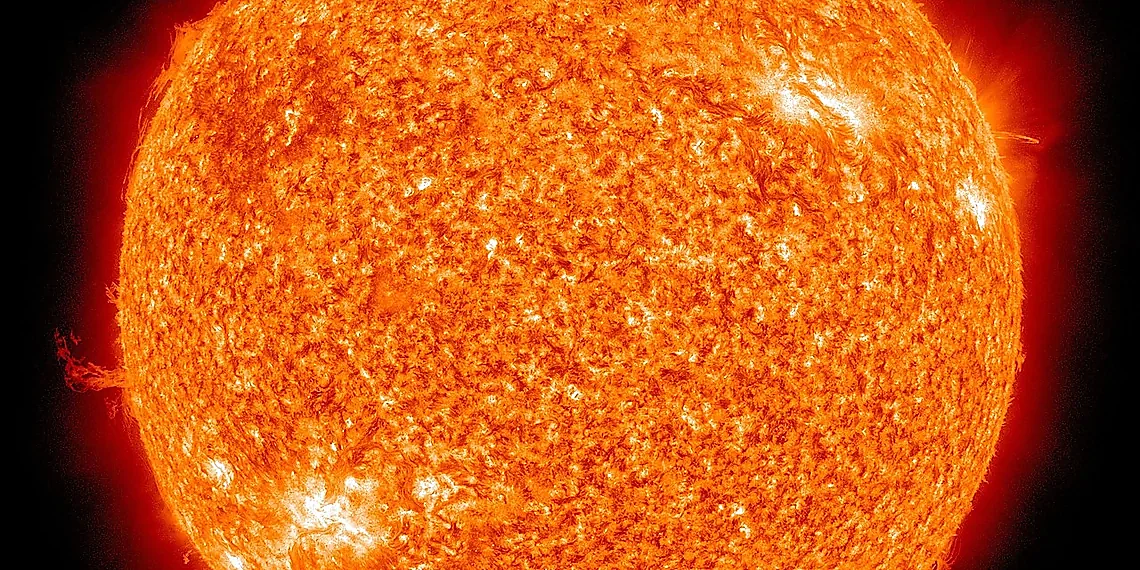
The Parker Solar Probe, named after solar physicist Eugene Parker, represents a monumental feat of engineering designed to study our Sun up close. Its primary mission is to unravel the mysteries surrounding the coronal heating problem – why the Sun’s outer atmosphere (corona) is millions of degrees hotter than its surface – and how the solar wind originates. To achieve this ambitious goal, the probe executes a series of increasingly elliptical orbits around the Sun, utilizing gravity assists from Venus to gradually lower its perihelion (closest approach). This complex orbital maneuvering allows it to repeatedly plunge closer to the Sun than any spacecraft before.
Operating so close to the Sun presents extreme technical challenges. The Parker Solar Probe faces intense heat and radiation fluxes that would quickly destroy conventional spacecraft components. To mitigate this, it employs a 4.5-inch thick carbon composite heat shield, known as Thermal Protection System (TPS), which is designed to deflect most of the incoming solar energy. Despite this protection, the sun-facing side can reach temperatures exceeding 1,500 degrees Celsius (2,730 degrees Fahrenheit). The spacecraft also incorporates sophisticated cooling systems and carefully selected materials that can withstand these harsh conditions.
As of December 2024, Parker Solar Probe has achieved its closest approach yet, bringing it within approximately 3.26 million miles (5.24 million kilometers) of the Sun’s surface. This record-breaking proximity allows scientists to gather unprecedented data about the solar wind and magnetic fields, providing crucial insights into space weather phenomena that can impact Earth and other planets.
Unraveling the Solar Wind Mystery
The sun constantly emits a stream of charged particles – primarily protons and electrons – known as the solar wind. This isn’t just a gentle breeze; it’s a supersonic outflow that extends far beyond Pluto, influencing the entire heliosphere, our solar system’s bubble within interstellar space. Understanding the solar wind is crucial because its behavior dictates what we call ‘space weather’. Intense bursts of solar wind can wreak havoc on Earth-based technology, disrupting satellite communications, damaging power grids, and even posing a risk to astronauts in orbit. Historically, scientists believed that this outflow was relatively uniform, emanating directly from coronal holes – regions of open magnetic field lines on the sun’s surface.
To comprehend how the solar wind escapes, we need to understand magnetic fields. The sun’s magnetic field is incredibly complex and constantly shifting, much like Earth’s but far more powerful. These magnetic field lines act as invisible highways for the charged particles of the solar wind. When these lines are open, they allow the wind to flow freely outwards. Scientists have long used observations of these field line structures to predict the behavior of the solar wind and anticipate potential space weather events; a clear picture of open field lines typically meant a strong, predictable solar wind stream heading our way.
However, recent images captured by NASA’s Parker Solar Probe during its December 2024 close approach have dramatically challenged this established understanding. These observations revealed something unexpected: regions where the magnetic field lines aren’t behaving as predicted. Instead of flowing outwards, some field lines appear to be turning back on themselves – a phenomenon scientists are calling a ‘solar wind reversal’. This surprising U-turn indicates that our previous models of how solar material escapes from the sun were incomplete and potentially misleading.
The discovery of this ‘solar wind reversal’ is significant because it suggests a more intricate process at play within the sun’s corona. It implies that the flow of charged particles isn’t solely dictated by open magnetic field lines, but also influenced by complex interactions and perhaps previously unknown mechanisms. Further research using Parker Solar Probe data promises to unlock deeper insights into these processes, allowing for improved space weather forecasting and a more complete understanding of our star’s dynamic behavior – ultimately helping us better protect our technology and future exploration efforts.
What is Solar Wind & Why Should We Care?

Solar wind is a constant stream of charged particles—primarily protons and electrons—emanating from the Sun’s upper atmosphere, known as the corona. It travels outward throughout the solar system at speeds ranging from 200 to 800 kilometers per second (roughly 450,000 to 1.8 million miles per hour). This flow isn’t uniform; it exhibits variations in speed and density depending on solar activity.
The composition of solar wind is largely determined by the conditions within the Sun’s corona. In addition to protons and electrons, trace amounts of heavier ions like helium are also present. These charged particles interact with magnetic fields, both those originating from the Sun and those found in planetary environments. The behavior of this interaction significantly impacts space weather.
Space weather events, such as geomagnetic storms and solar flares, are directly linked to solar activity and can disrupt technology on Earth. Powerful bursts of solar wind can interfere with satellite communications, damage spacecraft electronics, and even induce electrical currents in power grids, potentially leading to widespread blackouts. Understanding the origins and behavior of the solar wind is therefore crucial for protecting our technological infrastructure.
The Unexpected ‘U-Turn’ Phenomenon
For decades, scientists believed they had a relatively solid grasp on how solar wind – that constant stream of charged particles emanating from the sun – escaped into space. The prevailing models suggested a fairly straightforward outflow, driven by the sun’s magnetic field. However, data recently released from NASA’s Parker Solar Probe paints a significantly more complex picture. During its closest approach to the sun in December 2024, the probe captured images and measurements revealing an unexpected phenomenon: magnetic fields near the sun’s surface abruptly reversing direction, essentially performing what researchers are calling a ‘U-turn’. This isn’t just a minor deviation; it’s a fundamental challenge to existing solar models.
The ‘solar wind reversal’, as this behavior is now being termed, was detected through Parker Solar Probe’s instruments which measure magnetic fields and plasma properties in unprecedented detail. Instead of consistently flowing outwards, these magnetic field lines were observed looping back towards the sun’s surface. This challenges the established view that all near-surface magnetic fields are oriented to facilitate solar wind outflow. The implication is that the coronal magnetic field structures – the invisible highways guiding this charged particle stream – are far more intricate and dynamic than previously thought, with complex interactions preventing a smooth escape.
This discovery has profound implications for our understanding of coronal reconnection events, which are crucial drivers of space weather. Reconnection occurs when oppositely directed magnetic fields collide and suddenly rearrange, releasing vast amounts of energy. The observed ‘U-turns’ suggest that these reconnection processes might be happening far closer to the sun’s surface than previously believed, potentially influencing the intensity and frequency of solar flares and coronal mass ejections – events that can disrupt satellites, power grids, and even pose a risk to astronauts.
Ultimately, the detection of this ‘U-turn’ phenomenon underscores just how much we still have to learn about our nearest star. Parker Solar Probe’s continued observations promise to refine our models of solar dynamics, improving our ability to predict space weather events and protect vital infrastructure here on Earth. The unexpected reversal highlights the crucial role of direct observation in pushing the boundaries of scientific knowledge and revising long-held assumptions.
Magnetic Field Reversals: A New Puzzle?
Recent observations from NASA’s Parker Solar Probe have revealed a surprising phenomenon dubbed the ‘solar wind reversal,’ where the typical outward flow of solar wind abruptly changes direction, essentially creating a U-turn. This unexpected behavior was detected using the probe’s FIELDS instrument suite, which measures electric and magnetic fields in space. Instead of continuously expanding outwards from the Sun, some magnetic field lines were observed to bend back towards the solar surface near the equator, indicating that the plasma flow associated with them reversed direction. These reversals occurred within a relatively small region close to the sun, at distances as close as 25 solar radii.
The detection of these ‘U-turns’ challenges existing models of coronal magnetic field structures and reconnection events. Previously, it was assumed that once magnetic field lines escaped the Sun’s gravitational pull, they would generally continue outward. The observed reversals suggest a more complex interplay between the magnetic field and plasma pressure near the solar surface. This implies localized regions where the magnetic field is somehow being pushed back towards the sun, possibly due to unexpected variations in plasma density or magnetic field strength.
Scientists believe these reversals are likely linked to coronal reconnection events – processes where magnetic field lines break and reconnect, releasing energy and accelerating particles. The observation that reconnection can lead to a reversal of flow direction provides new insights into how this process operates so close to the Sun’s surface. Further analysis of Parker Solar Probe’s data is expected to reveal more details about the conditions leading up to these reversals and their contribution to the overall solar wind dynamics, potentially refining our understanding of space weather prediction.
Future Implications & Research
The unexpected solar wind reversal observed by the Parker Solar Probe has profound implications for the future of solar physics research, fundamentally challenging existing models and opening new avenues of investigation. Scientists are now re-evaluating how magnetic fields interact with the solar corona, particularly concerning the mechanisms that allow the solar wind – a constant stream of charged particles – to escape from the Sun’s atmosphere. This discovery necessitates refining our understanding of coronal heating, reconnection events, and the overall topology of the Sun’s magnetic field, potentially leading to a paradigm shift in how we conceptualize these processes.
Looking ahead, this revelation will directly influence space weather forecasting capabilities. Current models struggle to accurately predict solar flares and coronal mass ejections (CMEs), which can disrupt satellite communications, power grids, and even pose risks to astronauts. By incorporating the observed reversal phenomena into predictive algorithms, we can expect more accurate forecasts of these disruptive events, allowing for proactive mitigation strategies. Future missions, such as a potential next-generation Parker Solar Probe with enhanced instrumentation focused on magnetic field mapping and particle tracking, are crucial for building upon this breakthrough.
Beyond improved predictions, a deeper understanding of the solar wind reversal could spur significant technological advancements. Harnessing or shielding against solar energy is an ongoing pursuit; comprehending how these magnetic fields behave might unlock new methods for managing solar radiation. Furthermore, studying the physics behind coronal reconnection events – which are intrinsically linked to the observed reversals – could inspire innovations in fusion power technology, mimicking the Sun’s processes on Earth to create a clean and virtually limitless energy source. The knowledge gained will likely inform advancements across multiple engineering disciplines.
Ultimately, this discovery highlights the importance of continued investment in space exploration and scientific instrumentation. The Parker Solar Probe’s data is providing unprecedented insights into our star, but further research requires dedicated missions designed to probe these complex phenomena with even greater precision. By fostering a collaborative environment between scientists, engineers, and policymakers, we can unlock the full potential of this knowledge and pave the way for a future where we not only understand the Sun better but also harness its power responsibly.
Looking Ahead: Refining Space Weather Predictions
The recent observation of a ‘solar wind reversal’ – where magnetic field lines unexpectedly turn back towards the Sun instead of continuing outward – provides invaluable data for refining space weather prediction models. Current models often assume a relatively consistent outflow of solar wind, but this discovery demonstrates that the process is far more complex and dynamic. By incorporating these reversals into simulations, scientists can potentially improve forecasts of coronal mass ejections (CMEs) and other disruptive events that impact Earth’s magnetosphere, leading to better warnings for satellite operators, power grid managers, and even airline routes.
Understanding the mechanisms behind this solar wind reversal is crucial. Parker Solar Probe’s observations suggest a link between these reversals and localized magnetic field structures near the Sun’s surface. Further analysis of the probe’s data – particularly its measurements of magnetic fields, plasma velocity, and temperature – will help researchers better understand how these structures form and influence the overall solar wind flow. This improved understanding can be translated into more accurate models that account for variations in solar activity and their potential impact on Earth.
Future missions are being planned to build upon Parker Solar Probe’s legacy and further investigate this phenomenon. The ESA’s HelioLios mission, for example, will provide complementary observations from a different vantage point, allowing scientists to map the three-dimensional structure of these magnetic field reversals. Additionally, advancements in ground-based observatories with enhanced capabilities for measuring solar magnetic fields could significantly contribute to our understanding and improve the accuracy of space weather forecasts – ultimately lessening the risks associated with extreme solar events.
The recent observations of a dramatic shift in the solar wind’s direction, what we’ve termed a solar wind reversal, offer an unprecedented glimpse into the dynamic nature of our Sun.
These findings challenge existing models and highlight how much remains to be discovered about coronal mass ejections and their unpredictable behavior. Understanding these shifts is crucial because they directly impact Earth’s magnetosphere and can trigger geomagnetic storms.
The potential consequences for satellite operations, power grids, and even high-frequency radio communication are significant, underscoring the vital need for continued monitoring and improved forecasting capabilities.
This unexpected U-turn in the solar wind serves as a potent reminder of the Sun’s influence on our technological infrastructure and its capacity to surprise us with its complexity. Further research promises not only to refine our understanding but also to bolster Earth’s defenses against space weather events, ensuring safer operations in an increasingly technology-dependent world. It demonstrates that even well-established solar phenomena can exhibit surprising variations and require ongoing scrutiny. Ultimately, the implications of this discovery stretch far beyond scientific curiosity; they are essential for safeguarding our future in space and on Earth. We’ve only scratched the surface of understanding these processes, but the initial insights are already invaluable. Don’t just take our word for it – delve deeper into the fascinating world of solar physics and its impact on us all. Explore NASA’s website to discover more about their missions dedicated to studying the Sun, like Parker Solar Probe and the upcoming ESA Solar Orbiter, and learn how they’re working to unravel the mysteries of space weather.
Continue reading on ByteTrending:
Discover more tech insights on ByteTrending ByteTrending.
Discover more from ByteTrending
Subscribe to get the latest posts sent to your email.