For years, humanity has gazed at our star and wondered about its secrets, but now we’re getting closer than ever before thanks to NASA’s Parker Solar Probe.
This intrepid spacecraft, named for the legendary solar physicist Eugene Parker, embarked on a daring mission in 2018 – to repeatedly plunge into the sun’s atmosphere, known as the corona, and collect unprecedented data about its behavior.
The probe has already revolutionized our understanding of coronal heating and the acceleration of the solar wind, but recent findings have taken things to an entirely new level.
Scientists analyzing Parker’s observations have documented a surprising phenomenon: a ‘solar wind u-turn,’ where magnetic fields are looping back on themselves within the corona – something previously only theorized about, not directly observed. This unexpected behavior challenges existing models of how solar material is ejected into space and has profound implications for our understanding of the sun’s dynamics.
Understanding Solar Wind and Space Weather
The Sun isn’t just a giant ball of fire; it’s constantly emitting a stream of charged particles known as the solar wind. Think of it like a continuous, supersonic breeze flowing outward from our star. This ‘wind’ is primarily composed of protons and electrons, ejected from the Sun’s outermost layer, the corona, at incredibly high speeds—ranging from 250 to 800 kilometers per second! It permeates the entire solar system, influencing everything it encounters.
Why should we care about this constant outflow? Because the solar wind is a key driver of what scientists call ‘space weather.’ Space weather isn’t about rain or snow; it refers to disturbances in Earth’s magnetosphere and ionosphere caused by solar activity. These disturbances can disrupt satellite communications, damage power grids, and even pose risks to astronauts – highlighting the crucial link between understanding the Sun and protecting our technology and safety here on Earth.
The impact of space weather is growing as we become increasingly reliant on technologies vulnerable to these solar disruptions. GPS navigation, telecommunications networks, and even airline flight paths can be affected by intense bursts of energy and particles from the Sun. Monitoring and predicting space weather events are therefore vital for mitigating potential risks and ensuring the continued functionality of essential systems.
Recent discoveries, like those made by NASA’s Parker Solar Probe (discussed further in this article), are helping us unravel the complexities of solar wind behavior and ultimately improve our ability to forecast space weather. By studying how the Sun’s magnetic fields interact with the solar wind, we gain a deeper understanding of these potentially disruptive events and can better prepare for their impact.
What is Solar Wind?
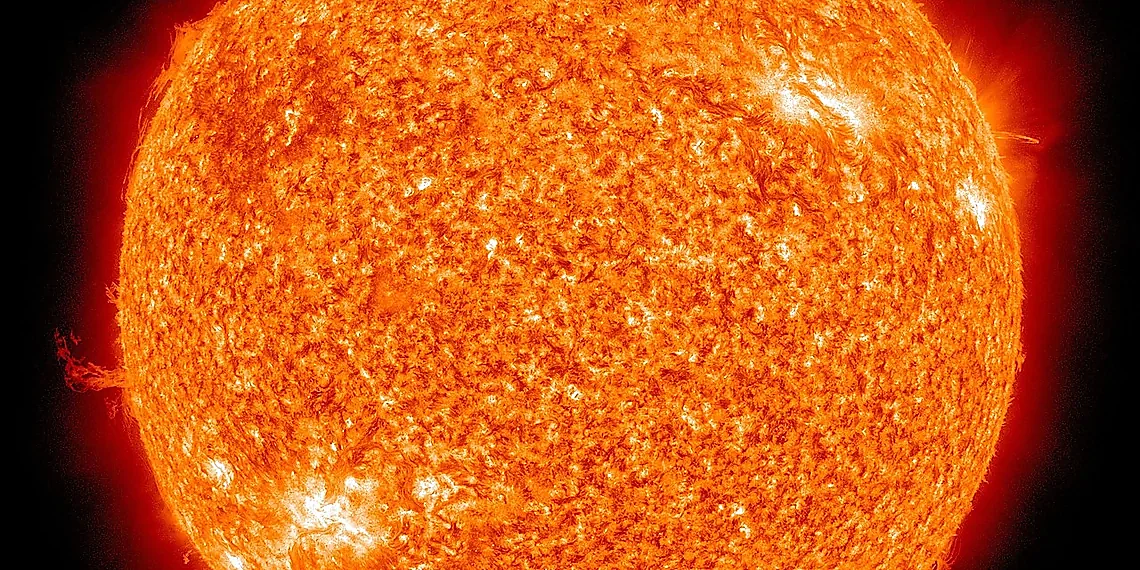
The solar wind is a constant stream of charged particles—primarily protons and electrons—that continuously flows outward from the Sun’s corona into interplanetary space. Think of it as a never-ending ‘wind’ blowing off our star, carrying with it vast amounts of energy and material.
This outflow originates in the Sun’s outermost atmospheric layer, the corona, which is surprisingly hot (millions of degrees Celsius). The extreme heat causes these particles to escape the Sun’s gravity. The solar wind travels at incredible speeds, ranging from roughly 200 kilometers per second (about 450,000 miles per hour) near Earth to even faster velocities closer to the Sun.
The solar wind isn’t just a scientific curiosity; it’s a significant factor in what we call ‘space weather.’ This space weather can impact satellites, communication systems, and even power grids on Earth. Understanding the behavior of the solar wind—like the recent discovery of its occasional ‘u-turns’ – is crucial for predicting and mitigating these potential disruptions.
The Parker Solar Probe’s Close-Up View
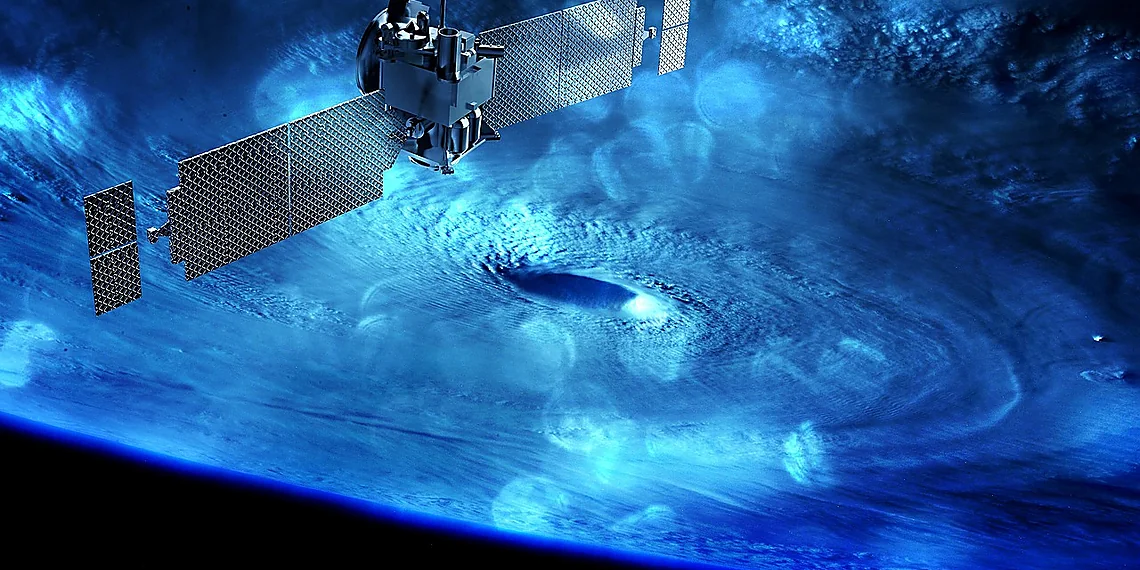
NASA’s Parker Solar Probe is on a groundbreaking mission to unlock the secrets of our Sun. Launched in 2018, this ambitious project aims to study the solar wind – the constant stream of charged particles emanating from the Sun – and unravel its origins. The probe’s design is truly remarkable, built to withstand incredibly harsh conditions. A crucial element is its massive heat shield, known as a Thermal Protection System (TPS), which measures over 9 feet in diameter and is made of carbon-carbon composite material. This shield protects the spacecraft from temperatures exceeding 2,500 degrees Fahrenheit during its closest approaches.
What sets Parker Solar Probe apart is its unprecedented proximity to the Sun. It’s repeatedly broken records for the closest any human-made object has ventured to our star, dipping within millions of miles – closer than Mercury! Achieving this required incredible feats of engineering, including complex orbital maneuvers and sophisticated communication systems designed to handle extreme heat and radiation. Previous observations from Parker Solar Probe have already revealed surprising details about the solar wind’s speed and behavior near the Sun’s surface, but the recent December 2024 close approach has yielded even more astonishing insights.
The ability to get so close allows scientists to observe phenomena that were previously impossible to study. From this vantage point, Parker Solar Probe can directly sample the solar wind’s magnetic fields and plasma environment, providing data far richer than what could be obtained from Earth-based observatories or even spacecraft orbiting further away. This detailed information is invaluable for understanding how the Sun influences space weather – disturbances that can impact satellites, power grids, and communication systems here on Earth.
The latest images captured during this record-breaking approach are now revealing unexpected behavior of solar magnetic fields, demonstrating instances where they seemingly ‘u-turn’ instead of escaping outwards. This discovery adds a new layer of complexity to our understanding of the Sun’s dynamics and how it interacts with the surrounding space environment – a critical area of research for protecting our technological infrastructure.
A Record-Breaking Journey
The Parker Solar Probe, named after solar physicist Eugene Parker, embarked on its ambitious journey in 2018 with the primary goal of studying the Sun’s outer corona and understanding the origin of the solar wind. Unlike previous missions that observed the Sun from a distance, the PSP is designed to fly directly through this region, repeatedly approaching closer than any spacecraft before it. Its trajectory isn’t a simple orbit; instead, it utilizes gravity assists from Venus to gradually lower its perihelion – the point in its orbit closest to the Sun.
As of December 2024, Parker Solar Probe has achieved its tenth close approach to the sun, surpassing all previous records. It now orbits closer than 3 million miles to our star’s surface. This proximity demands extraordinary engineering feats. The spacecraft is protected by a 4.5-inch thick carbon-composite heat shield, capable of withstanding temperatures exceeding 2700°F (1500°C). Communication also presents a challenge; the intense solar radiation interferes with signals, requiring sophisticated techniques and precise timing to maintain contact.
Prior observations from Parker Solar Probe have already yielded valuable insights into coronal heating and the acceleration mechanisms of the solar wind. Previous findings include observations of switchbacks – sudden reversals in the magnetic field carried by the solar wind – providing clues about how energy is transferred from the Sun’s surface. The latest data, revealing the ‘solar wind u-turn’, builds upon this foundation and promises to further revolutionize our understanding of heliophysics.
The Unexpected ‘U-Turn’ Phenomenon
For decades, scientists believed they had a pretty good handle on how the solar wind – that constant stream of charged particles emanating from the Sun – escapes into space. The prevailing theory suggested magnetic field lines, think of them like invisible rubber bands extending outwards from the Sun’s surface, carried these particles away. However, NASA’s Parker Solar Probe has just revealed a surprising twist: sometimes those ‘rubber bands’ don’t stretch out; they loop back! This newly observed phenomenon, dubbed a ‘solar wind u-turn,’ is fundamentally changing our understanding of how this crucial process works.
The discovery came as Parker Probe made its closest approach to the Sun in December 2024. Using sophisticated instruments, scientists detected magnetic fields that were expected to be flowing outwards into interplanetary space – carrying solar wind with them. Instead, these fields abruptly reversed direction and curved back towards the Sun’s surface. Imagine a river suddenly changing course and flowing upstream; that’s essentially what’s happening with these magnetic field lines. This ‘u-turn’ wasn’t just a one-off event; Parker Probe observed multiple instances of this unexpected behavior, suggesting it might be more common than previously thought.
The existence of these solar wind u-turns throws a wrench into existing models of the Sun’s magnetosphere and how the solar wind is generated. Current theories struggle to explain why magnetic field lines would behave in such a way. It suggests that the process of launching the solar wind from the Sun’s surface might be more complex than we realized, possibly involving intricate interactions between the Sun’s magnetic fields and the plasma – the superheated gas surrounding it. Understanding these intricacies is vital; disruptions to the solar wind can trigger space weather events here on Earth, impacting satellites, power grids, and even communication systems.
Ultimately, deciphering the mechanics behind this ‘solar wind u-turn’ will improve our ability to predict space weather. By refining models that account for these unexpected reversals in magnetic field lines, scientists hope to better forecast solar flares and coronal mass ejections – powerful bursts of energy and particles from the Sun – allowing us to prepare for their potential impacts on Earth and our technological infrastructure. The Parker Solar Probe’s continued observations promise to unlock even more secrets about our star.
Magnetic Field Reversals

Recent observations from NASA’s Parker Solar Probe have revealed a surprising phenomenon: some of the Sun’s magnetic fields, which are normally expected to stream outwards into space as part of the solar wind, appear to be looping back towards the Sun’s surface – effectively performing a ‘U-turn.’ These magnetic field lines act like invisible highways for charged particles; previously, scientists believed they primarily flowed away from the Sun. The probe captured these reversals using its FIELDS instrument, which measures electric and magnetic fields in space, allowing researchers to trace the pathways of these fields with unprecedented detail.
This ‘solar wind U-turn’ challenges existing models of how the solar wind is generated and propagates. Current theories suggest that magnetic field lines reconnect – essentially breaking and reforming – as they move outward, releasing energy and accelerating particles. However, observing fields returning to the Sun implies a more complex reconnection process than previously understood, potentially involving interactions within the lower layers of the corona (the Sun’s outermost atmosphere). It suggests some reconnection events are not solely oriented outwards.
Understanding these magnetic field reversals has significant implications for predicting space weather. Solar wind disturbances, driven by these fields, can disrupt satellites, power grids, and even pose a radiation hazard to astronauts. If the behavior of solar magnetic fields is more intricate than we thought, it necessitates refining our models to better anticipate these events. The Parker Probe’s continued observations are crucial for unraveling this mystery and improving space weather forecasting capabilities.
Future Implications and Research
The unexpected observation of the ‘solar wind u-turn’ by Parker Solar Probe represents a significant shift in how we understand solar dynamics and has profound implications for future research. Previously, scientists believed that once magnetic field lines detached from the Sun, they continued outwards into interplanetary space. This discovery challenges that assumption, suggesting these fields can be redirected back towards the star – essentially ‘turning around’ – offering a new perspective on the complex processes driving the solar wind. Future missions will undoubtedly prioritize studying this phenomenon to understand what factors trigger these reversals and how frequently they occur.
Improved space weather forecasting is a direct beneficiary of this newfound understanding. Solar flares and coronal mass ejections (CMEs) are powerful eruptions that can wreak havoc on our technological infrastructure, from satellite communications to power grids here on Earth. By characterizing the conditions that lead to these ‘solar wind u-turns,’ we can refine models that predict the likelihood and intensity of such events. Knowing when magnetic fields might be redirected back towards the Sun allows for a more comprehensive assessment of potential space weather hazards, enabling proactive measures to protect vulnerable systems.
Looking ahead, Parker Solar Probe will continue its close encounters with the Sun, collecting even more detailed data about these reversals and their relationship to other solar phenomena. Complementary missions like ESA’s Solar Orbiter, which observes the Sun from a different perspective, are crucial for gaining a complete picture. Combining observations of the ‘solar wind u-turn’ across multiple viewpoints will allow scientists to build three-dimensional models of the Sun’s magnetic field and its interaction with the solar wind, leading to a more holistic understanding of heliophysics.
Further research will focus on determining the precise mechanisms behind these ‘u-turns’ – are they due to localized reconnection events, or larger-scale topological changes in the coronal magnetic field? The answers likely lie in a deeper investigation of the Sun’s lower corona and its interaction with the more extended solar atmosphere. Ultimately, unraveling the mystery of the ‘solar wind u-turn’ promises not only to advance our fundamental knowledge of the Sun but also to provide invaluable tools for safeguarding our technology and infrastructure in the face of ever-changing space weather conditions.
Refining Space Weather Models
The recent images from NASA’s Parker Solar Probe have revealed a surprising phenomenon: reversals in the direction of the solar wind – often referred to as ‘solar wind u-turns.’ These unexpected shifts in magnetic field lines, previously poorly understood, demonstrate that some solar material initially launched outwards is being pulled back towards the Sun. Understanding these ‘u-turns’ is critical because they directly influence the complex processes leading to coronal mass ejections (CMEs) and solar flares – events which can severely disrupt satellite communications and power grids on Earth.
Currently, space weather models struggle to accurately predict these disruptive events due to incomplete knowledge of how magnetic fields behave near the Sun’s surface. By incorporating observations of these ‘u-turns’ into existing models, scientists hope to significantly improve forecasting accuracy. A better understanding of the mechanisms driving these reversals will allow for more precise prediction of when and where CMEs might originate, providing crucial advance warning time.
Future research efforts, including continued observations from Parker Solar Probe and data from missions like ESA’s Solar Orbiter and JAXA’s PSP/SOLAR-C, are vital to further unraveling the intricacies of solar magnetic field behavior. These complementary missions offer different perspectives on the Sun, allowing for a more comprehensive understanding of how these ‘u-turns’ impact space weather and ultimately contribute to protecting our technological infrastructure.
The Parker Solar Probe’s recent observations have fundamentally shifted our perspective on how the Sun interacts with its surrounding environment, revealing a surprising ‘solar wind u-turn’ where previously understood outflow patterns are demonstrably reversed in specific regions of the corona. This groundbreaking discovery challenges existing models and underscores the complexity inherent within our star’s behavior, hinting at deeper processes still waiting to be unveiled. Understanding these reversals is crucial not only for advancing pure scientific knowledge but also for predicting space weather events that can impact terrestrial technology and even human safety. The implications extend far beyond astrophysics; accurate solar forecasting relies on a complete picture of the Sun’s dynamics, something this mission is actively helping us achieve. Parker Solar Probe’s continued data collection promises to refine our understanding of coronal heating and acceleration mechanisms, areas which have long puzzled scientists. This represents a significant leap forward in heliophysics, opening new avenues for research and potentially revolutionizing how we interpret observations from future missions. To dive deeper into this fascinating subject and explore the broader landscape of NASA’s solar exploration efforts, we encourage you to visit the NASA website and follow their social media channels. Stay tuned for more updates as Parker Solar Probe continues its incredible journey and unravels further secrets of our Sun!
You can find detailed information on ongoing missions like the ESA’s Solar Orbiter, which complements Parker’s observations with a different perspective.
Learning about solar physics doesn’t require advanced degrees; there are countless accessible resources available online to satisfy your curiosity and keep you informed about these exciting developments.
Continue reading on ByteTrending:
Discover more tech insights on ByteTrending ByteTrending.
Discover more from ByteTrending
Subscribe to get the latest posts sent to your email.