

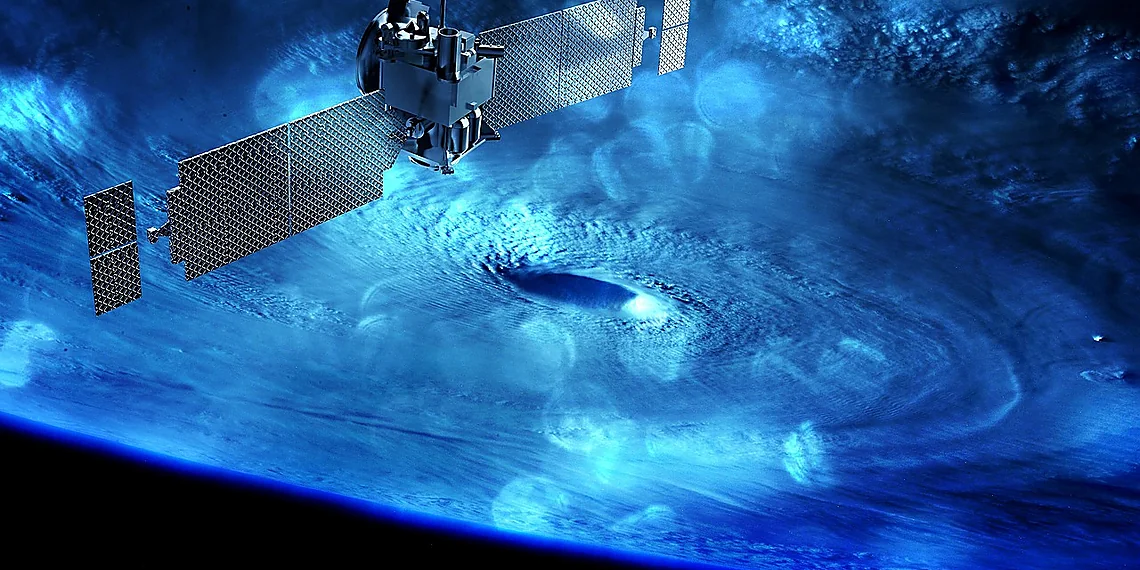
Imagine a team of students, fueled by passion and late nights, designing and building a spacecraft that will actually venture into space – it’s not science fiction anymore! This incredible story showcases how ingenuity and collaboration are driving the future of exploration, proving that groundbreaking discoveries aren’t limited to seasoned professionals.
Enter CubeSats: miniature satellites revolutionizing access to orbit. These compact marvels, roughly the size of a shoebox, drastically lower the barrier to entry for space-based research, allowing universities and smaller teams to participate in missions previously only achievable by major agencies.
Our featured project highlights just that – a student-led endeavor focused on studying the Sun’s energetic breath. The mission involves deploying a CubeSat specifically designed to monitor the ever-changing conditions of the solar wind, providing invaluable data for scientists back on Earth.
Understanding the solar wind is crucial for protecting our satellites and infrastructure here at home, and this student project offers a fresh perspective using innovative technology. It’s an inspiring example of how future generations are shaping space exploration.
The Genesis of ‘Solaris’: A Student-Led Project
The ‘Solaris’ CubeSat project represents a remarkable achievement in student-led space exploration – a testament to what can be accomplished when diverse talents collaborate towards a shared goal. Born from the collective ambition of undergraduate students hailing from three different universities, Solaris isn’t just a mini satellite; it’s a culmination of years of learning, problem-solving, and unwavering dedication. The project’s genesis lies in a desire to contribute meaningfully to NASA’s Interstellar Mapping and Acceleration Probe (IMAP) mission by providing complementary solar wind data from a unique orbital perspective.
What truly sets Solaris apart is the multidisciplinary nature of its development team. Students with backgrounds ranging from aerospace engineering and electrical engineering to physics, computer science, and even mechanical engineering pooled their expertise to tackle the complex challenges inherent in CubeSat design and construction. This collaborative environment fostered an incredibly rich learning experience; engineers grappled with the intricacies of power systems alongside physicists analyzing sensor data, while computer scientists developed sophisticated onboard software to manage operations – a dynamic where theoretical knowledge met practical application head-on.
The journey wasn’t without its hurdles. Integrating diverse perspectives and approaches required significant communication and compromise, demanding that students learn not only their individual disciplines but also the language of others. Building a CubeSat presents inherent limitations in size, weight, and power, forcing ingenious solutions to seemingly intractable problems. From designing miniature, high-efficiency solar panels to crafting robust yet lightweight structural components, each decision was a careful balancing act driven by both scientific necessity and engineering constraint.
Ultimately, Solaris exemplifies the potential of student involvement in cutting-edge space research. It’s more than just a CubeSat designed for monitoring solar wind; it’s a powerful demonstration of how interdisciplinary teamwork, coupled with passion and perseverance, can propel innovation and contribute to our understanding of the universe – all while equipping a new generation of engineers and scientists with invaluable skills and experience.
Multidisciplinary Teamwork: Engineering, Physics & Beyond

The ‘Solaris’ CubeSat project exemplifies how diverse academic backgrounds can converge to solve complex engineering problems. The team, comprised of undergraduate students majoring in electrical engineering, mechanical engineering, physics, and computer science from three separate universities, initially faced the challenge of bridging communication gaps inherent in such a multidisciplinary environment. Early design reviews required significant effort to ensure everyone understood each other’s terminology and perspectives – for example, a physicist’s understanding of plasma behavior needed translation into actionable electrical engineering specifications for sensor integration.
A particularly impactful hurdle arose during the development of the CubeSat’s power management system. Electrical engineers focused on efficient battery charging and distribution while mechanical engineers ensured structural integrity under launch vibrations and thermal extremes. The physics students, vital in defining the operational requirements for solar wind data collection, helped optimize sensor placement to maximize signal strength while minimizing interference. This iterative process demanded constant communication and compromise, fostering a deeper understanding of each discipline’s limitations and strengths.
Beyond the technical accomplishments, the experience proved invaluable for student skill development. Students gained practical experience in project management, systems engineering, and rapid prototyping – skills rarely emphasized in traditional coursework. Furthermore, the collaborative nature of the project fostered strong teamwork abilities, communication proficiency, and a shared sense of ownership over ‘Solaris’ mission to monitor solar wind and contribute valuable data to NASA’s IMAP program.
CubeSat Design & Functionality
The heart of this ambitious project lies in its clever design – a 3U CubeSat, meaning it’s roughly the size of a loaf of bread. This presents significant engineering challenges; every component, from power systems to scientific instruments, must be meticulously miniaturized without compromising performance. The team faced tight constraints on weight and volume dictated by launch vehicle requirements, forcing them to innovate in areas like sensor technology and data processing. This focus on miniaturization is crucial for making space-based research more accessible and affordable – demonstrating that powerful science can come in a surprisingly small package.
The CubeSat’s functionality revolves around a suite of specialized instruments designed to directly measure the properties of solar wind. These include sensors to detect the flux and velocity of charged particles (protons, electrons) composing the solar wind itself, as well as magnetometers to map the associated magnetic fields. Data will be collected at regular intervals and transmitted back to Earth for analysis. A key feature is its planned collaboration with NASA’s Interstellar Mapping and Acceleration Probe (IMAP). By operating in a complementary orbit, the CubeSat’s data will provide valuable context and ground truth for IMAP’s broader observations of the interstellar medium.
To ensure accurate measurements, the CubeSat incorporates sophisticated onboard processing capabilities. Preliminary analysis is performed in real-time to filter noise and prioritize data transmission – maximizing the scientific return within limited bandwidth constraints. This also allows for adaptive sampling; if a particularly interesting solar wind event is detected, the CubeSat can automatically increase its measurement frequency and duration. The entire system is built around redundant components to ensure operational reliability throughout its mission lifetime, a critical consideration given the harsh environment of space.
Ultimately, this student-built CubeSat represents more than just a technological achievement; it’s a crucial step towards democratizing access to space science. By gathering data on solar wind – a key driver of space weather and potential threat to satellites and terrestrial infrastructure – the mission directly contributes to our understanding of the Sun’s influence on Earth and beyond, while simultaneously providing invaluable hands-on experience for aspiring engineers and scientists.
Miniaturization & Mission Objectives
The very nature of a CubeSat – defined by its 10cm x 10cm x 10cm maximum size and mass limit (typically 1.6 kg) – presents significant engineering challenges. Every component, from power systems to scientific instruments, must be meticulously miniaturized and optimized for efficiency. This constraint necessitates the use of highly specialized microchips, custom-designed circuit boards, and innovative mechanical solutions to pack functionality into a remarkably small volume. The limited power budget further restricts instrument capabilities, requiring careful selection based on both scientific value and energy consumption.
The primary mission objective of this student-built CubeSat is to characterize the solar wind – the constant stream of charged particles emanating from the Sun. Specifically, it will measure the density, velocity, temperature, and composition of these particles using miniaturized plasma analyzers. In addition, onboard magnetometers will map the magnetic fields carried by the solar wind. These measurements are crucial for understanding space weather phenomena, which can disrupt satellite operations and terrestrial power grids.
This CubeSat mission is designed to complement NASA’s Interstellar Mapping and Acceleration Probe (IMAP). While IMAP focuses on the outer heliosphere, this smaller CubeSat will provide valuable in-situ data closer to Earth. By correlating its measurements with those from IMAP and other observatories, scientists can gain a more complete picture of how solar wind interacts with planetary environments – ultimately improving our ability to predict and mitigate space weather events.
Solar Wind & Space Weather: Why It Matters
The sun isn’t just a source of light and warmth; it’s a dynamic powerhouse constantly emitting a stream of charged particles known as solar wind. While often subtle, this flow interacts with Earth’s magnetic field and atmosphere, creating what we call space weather. Understanding this phenomenon is no longer purely an academic pursuit – it’s critically important for protecting the increasingly complex technological infrastructure that underpins modern life.
Solar flares and coronal mass ejections (CMEs) are particularly dramatic events within this system. When these bursts of energy reach Earth, they can wreak havoc on our satellite networks, disrupting communication signals, GPS navigation, and even causing orbital changes. Beyond space-based technology, severe solar storms have the potential to overload power grids, leading to widespread blackouts and significant economic damage. The 1989 Quebec blackout, which left millions without power for hours, serves as a stark reminder of the vulnerability.
Currently, forecasting space weather relies heavily on ground-based observatories and data from a limited number of satellites. These resources provide valuable insights, but often lack the detailed, in-situ measurements needed for highly accurate predictions. The student-built CubeSat, designed to monitor solar wind directly, offers a unique opportunity to fill this gap. By gathering real-time data closer to the source of these events, it will contribute to more precise models and improved forecasting capabilities – allowing us to better anticipate and mitigate potential disruptions.
Ultimately, the knowledge gained from this CubeSat mission, working in conjunction with NASA’s IMAP project, represents a significant step towards safeguarding our technological civilization. It demonstrates how innovative approaches, even those driven by undergraduate students, can play a vital role in addressing critical challenges related to space weather and ensuring the continued reliability of essential services here on Earth.
Protecting Our Tech from Solar Storms
Solar flares and coronal mass ejections (CMEs) are powerful bursts of energy and plasma released from the Sun. These events, collectively known as space weather, can have significant disruptive effects on technology here on Earth. Satellites in orbit are particularly vulnerable; energetic particles can damage sensitive electronics, leading to malfunctions or even complete failure. Geomagnetically induced currents (GICs) caused by these solar disturbances can also flow through power grids, potentially causing widespread blackouts – as demonstrated by the 1989 Quebec blackout.
Beyond satellites and power infrastructure, space weather impacts communication systems. Radio signals used for navigation, aviation, and telecommunications can be degraded or completely blocked during intense solar events. High-frequency (HF) radio communications are especially susceptible, which poses a risk to emergency responders and maritime operations. Even GPS accuracy can be affected, impacting everything from ride-sharing apps to precision agriculture.
The CubeSat developed by these students will contribute valuable data to improve our understanding of solar wind dynamics and space weather forecasting. By collecting real-time measurements closer to the Sun than many existing observatories, it will provide crucial information about the precursors to CMEs and their potential impact on Earth. This enhanced data will allow scientists to refine predictive models, enabling better warnings and mitigation strategies to protect critical infrastructure from future solar storms.
Looking Ahead: The Future of Student Space Exploration
The success of the Solaris CubeSat project, and its planned collaboration with NASA’s IMAP mission, signals a significant shift towards increased student involvement in advanced space research. This isn’t just about building a satellite; it’s about providing undergraduates with hands-on experience in every phase – from conceptual design and engineering to testing, launch integration, and data analysis. The opportunity to contribute meaningfully to an ongoing NASA mission demonstrates that students can play vital roles in pushing the boundaries of scientific discovery, fostering a deeper understanding of space weather phenomena like solar wind.
Looking ahead, we anticipate seeing a proliferation of similar student-led CubeSat missions targeting diverse areas beyond solar wind monitoring. The relatively low cost and accessibility of CubeSat technology compared to traditional satellite development dramatically lowers the barrier to entry for universities and research institutions – opening doors for exploration in fields such as planetary observation, materials science experiments in microgravity, and even developing novel communication technologies for deep space probes. This democratization of access will undoubtedly accelerate innovation within the aerospace sector.
The ‘Solaris’ project serves as a powerful proof-of-concept, demonstrating that student teams can design, build, and operate complex scientific instruments capable of delivering valuable data to professional researchers. The experience gained by these students – spanning electrical engineering, mechanical engineering, computer science, and physics – is invaluable and will directly contribute to the next generation of aerospace professionals. It’s likely we’ll see more universities establishing dedicated CubeSat labs and incorporating space-related projects into their curriculum as a direct result of initiatives like this.
Ultimately, the future of student space exploration lies in continued collaboration between academia and agencies like NASA. Providing students with real-world challenges and access to advanced infrastructure not only empowers them to contribute significantly to scientific advancements but also cultivates a passion for STEM fields that will drive future innovation in space technology and beyond. The Solaris CubeSat is just the beginning of what’s possible when we invest in the next generation of space explorers.
Inspiring the Next Generation of Scientists & Engineers
The ‘Solaris’ CubeSat project, spearheaded by students from multiple universities and partnering with NASA’s IMAP mission, exemplifies a powerful trend in space exploration: increasing opportunities for undergraduate participation. This hands-on experience – encompassing design, construction, testing, and ultimately deployment – provides invaluable practical skills rarely accessible to undergraduates. The Solaris mission specifically aims to gather data about the solar wind, a stream of charged particles emanating from the Sun that impacts Earth’s magnetic field and can disrupt communications systems; this data will contribute directly to IMAP’s scientific objectives.
Beyond the immediate scientific contribution, projects like Solaris serve as potent catalysts for inspiring future generations of scientists and engineers. Witnessing their work integrated into a real-world NASA mission demonstrates the tangible impact they can have on advancing space exploration. This direct involvement fosters a deeper understanding of complex systems and fuels passion for STEM fields – crucial for addressing the challenges of future missions, from lunar bases to deep space probes.
The success of Solaris paves the way for more student-led CubeSat missions in various areas of space research. With increasingly accessible launch opportunities and readily available standardized CubeSat kits, universities are poised to become hubs for innovative space technology development. Future projects could focus on planetary observation, asteroid mapping, or even developing novel propulsion systems – all driven by the ingenuity and dedication of the next generation of space explorers.
The journey of this student-led project demonstrates that groundbreaking scientific discovery isn’t confined to massive, multi-billion dollar endeavors; it thrives in the ingenuity and dedication of passionate individuals. Witnessing their success reinforces the incredible potential held within accessible space exploration technologies like CubeSats. This small satellite’s ability to gather data on the CubeSat solar wind provides invaluable insights into our star’s behavior and its impact on Earth, proving that even modest platforms can contribute significantly to vital research. The lessons learned from this project will undoubtedly inspire future generations of engineers and scientists, fostering a spirit of innovation and collaboration across disciplines. We’re entering an era where space exploration is becoming increasingly democratized, opening doors for wider participation and accelerating the pace of discovery. This student effort embodies that exciting shift perfectly, showcasing what can be achieved with creativity, perseverance, and a shared passion for understanding our universe. The future of space research is bright, fueled by the ingenuity of students and supported by organizations pushing the boundaries of what’s possible. To delve deeper into this fascinating field and understand how CubeSats are revolutionizing space-based observation, we encourage you to explore NASA’s IMAP mission, a flagship endeavor that builds upon these smaller satellite advancements. Learn more about CubeSat technology and the incredible science being conducted through NASA’s website – your exploration of the cosmos starts now!
Discover the possibilities and join us in celebrating the next generation of space explorers.
Continue reading on ByteTrending:
Discover more tech insights on ByteTrending ByteTrending.
Discover more from ByteTrending
Subscribe to get the latest posts sent to your email.