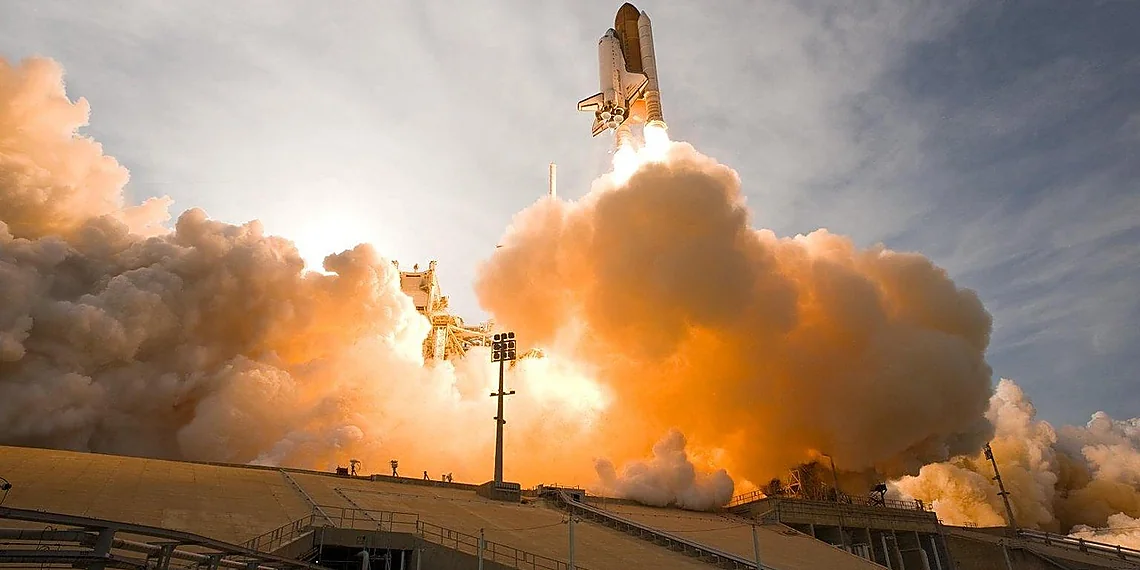



The future of space travel just got a whole lot brighter, folks! Blue Origin has officially achieved a monumental milestone, successfully launching its New Glenn NG-2 rocket on a critical mission supporting NASA’s ambitions for Mars exploration.
This isn’t just another launch; it represents a significant leap forward in reusable rocket technology and demonstrates the growing capabilities of private space companies to contribute meaningfully to national and international space programs.
The NG-2 mission delivered its payload, essential components for future Martian research, precisely on target, showcasing Blue Origin’s precision engineering and operational expertise. Beyond successful delivery, the spectacular return of the New Glenn booster landing further solidified this achievement.
Witnessing a reusable rocket stage land safely back on Earth is always breathtaking, but in the context of NASA’s long-term plans for sustainable Martian settlements, this New Glenn Launch underscores a vital element: affordability and accessibility. This opens up incredible possibilities for scientific discovery and potentially even human presence on the Red Planet someday.
The ESCAPADE Mission: A Martian Relay
The recent successful New Glenn Launch by Blue Origin wasn’t just a demonstration of rocket power; it carried with it NASA’s ESCAPADE mission, a critical step in our understanding of Mars and paving the way for future human exploration. ESCAPADE, an acronym for “Escape and Plasma Acceleration Devices,” represents two identical spacecraft working together to study the Martian atmosphere and its interaction with the solar wind – essentially, the constant stream of charged particles from the sun. These twin probes are now en route to the Red Planet, marking a significant advancement in our ability to remotely sense the complex environment surrounding Mars.
Why is studying this plasma environment so vital? It’s more than just academic curiosity. The Martian atmosphere isn’t static; it’s constantly being shaped and eroded by solar radiation. Understanding how the sun interacts with Mars, and how that affects its atmospheric loss, is absolutely essential for planning any long-duration human missions. Without this knowledge, we risk exposing astronauts to dangerous levels of radiation or designing habitats that are vulnerable to atmospheric changes – potentially jeopardizing their safety and mission success.
The ESCAPADE mission’s unique approach involves using a combination of instruments to map the magnetic field around Mars and measure the density and temperature of the plasma. Unlike previous missions focused solely on surface exploration, ESCAPADE provides a crucial three-dimensional view of the Martian environment. This data will allow scientists to build more accurate models of the planet’s atmosphere, predict its behavior, and ultimately, enable us to prepare for a sustainable human presence on Mars.
The success of the New Glenn Launch delivering these vital probes is a testament to both Blue Origin’s capabilities and NASA’s commitment to expanding our knowledge of Mars. ESCAPADE represents more than just two spacecraft; it signifies a crucial piece in the larger puzzle of unlocking the secrets of the Red Planet, ensuring safer and more successful future missions for generations to come.
What is ESCAPADE?
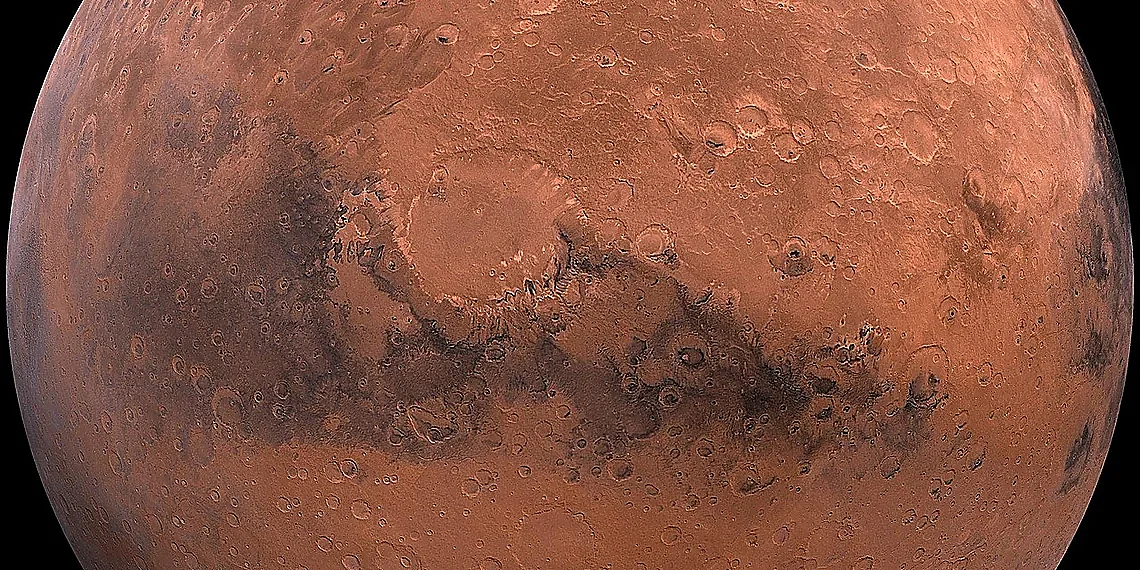
ESCAPADE, an acronym for Escape and Plasma Acceleration Devices, represents a unique partnership between NASA and the University of Michigan. It isn’t a single spacecraft but rather two identical twin probes launched aboard Blue Origin’s New Glenn rocket. These probes are designed to study the Martian atmosphere in unprecedented detail, specifically focusing on how solar wind interacts with Mars’ outer layer.
The primary objective of ESCAPADE is to investigate the ‘Martian plasma environment.’ This involves analyzing the behavior of electrically charged particles surrounding the planet and understanding how they influence atmospheric escape. Understanding this process is vital because it helps scientists determine why Mars lost much of its atmosphere over billions of years, transforming from a potentially habitable world to the cold, dry desert we see today.
ESCAPADE’s findings are incredibly important for planning future human missions to Mars. Knowing how radiation and plasma affect spacecraft and astronauts will be crucial for designing safe habitats, developing effective shielding technologies, and ultimately enabling sustainable exploration of the Red Planet.
New Glenn’s Performance: A Milestone for Reusability
The recent New Glenn Launch, carrying NASA’s ESCAPADE mission towards Mars, marked a significant achievement for Blue Origin, but it was the successful booster landing that truly stole the show. This wasn’t just about reaching orbit; it was about demonstrating a crucial element of reusable space technology – bringing the first stage back safely and precisely to Earth. The precision required for this maneuver is immense, demanding sophisticated guidance systems, powerful engines capable of throttling down for controlled descent, and robust landing gear designed to absorb the impact.
Reusability is paramount in making space exploration more affordable and accessible. Traditional rocket designs expend their first stages, essentially writing off a significant portion of launch costs with each mission. By recovering and refurbishing the New Glenn booster, Blue Origin aims to drastically reduce these expenses, opening up opportunities for more frequent missions and broader participation in space endeavors. The ESCAPADE mission served as an invaluable testbed, validating landing algorithms and demonstrating the viability of this approach on a larger scale.
The engineering challenges associated with controlled descent and landing are considerable. Maintaining stability during atmospheric re-entry requires precise control over aerodynamic forces. Then, navigating to a designated landing zone while accounting for wind conditions and engine performance demands real-time adjustments. The New Glenn’s success highlights Blue Origin’s advancements in these areas – showcasing sophisticated software and hardware integration capable of handling the complexities of booster recovery.
Looking ahead, this successful demonstration paves the way for further refinements to the New Glenn program and reinforces Blue Origin’s commitment to reusable launch systems. It’s a crucial step towards lowering the barrier to entry for space exploration, potentially enabling more ambitious missions to Mars and beyond – all driven by the innovative technology showcased in this recent New Glenn Launch.
The Booster Landing – A Key to Affordability?
The recent New Glenn launch marked a significant step forward for Blue Origin’s ambitions in space travel, particularly due to the successful controlled descent and landing of the first stage booster. Reusability is paramount to drastically reducing the cost of access to space; historically, rocket stages were discarded after a single use, representing a massive expenditure. By recovering and refurbishing boosters, companies like Blue Origin can significantly lower launch costs per mission, making space exploration and satellite deployment more accessible.
Achieving a controlled booster landing is an incredibly complex engineering feat. It requires sophisticated navigation systems to accurately determine the rocket’s position and velocity during descent, powerful engines capable of precise thrust adjustments for braking, and robust landing gear designed to absorb the impact. The New Glenn’s first stage utilizes multiple engine restarts and aerodynamic surfaces – grid fins – to guide it back towards a designated landing zone, all while dealing with dynamic atmospheric conditions.
The economic implications of successful booster recovery are substantial. Estimates suggest that reusable rockets could reduce launch costs by as much as 100 times compared to expendable systems. While refurbishment does incur costs (inspection, repair, and potential component replacement), these are typically far less than the cost of building a new first stage for each mission. This shift towards reusability is poised to democratize space access, enabling more frequent launches for scientific research, commercial ventures, and even future human missions.
Blue Origin’s Role in NASA’s Strategy
The successful New Glenn Launch of NG-2, carrying the dual ESCAPADE spacecraft to Mars, marks a pivotal moment for Blue Origin and solidifies its increasingly important role in NASA’s broader space exploration strategy. While SpaceX has long dominated the commercial launch services landscape, Blue Origin’s emergence with New Glenn represents a significant diversification of options for NASA and underscores the agency’s commitment to fostering competition and redundancy within this critical sector. This mission isn’t just about delivering probes to Mars; it signals Blue Origin’s capability to handle increasingly complex and demanding payloads, paving the way for larger-scale scientific endeavors.
NASA’s strategy has shifted towards leveraging commercial partnerships to reduce costs and accelerate innovation in space exploration. The ESCAPADE mission, designed to study the Martian atmosphere and plasma environment, is a prime example of this approach – allowing NASA to focus on scientific objectives while Blue Origin handles the crucial launch services. This collaboration demonstrates more than just a transactional relationship; it reflects a shared vision for expanding humanity’s presence in space and tackling ambitious goals like future crewed missions beyond Earth orbit. The New Glenn’s performance will be closely scrutinized, as its success directly impacts NASA’s confidence in Blue Origin for future, even larger, projects.
Looking ahead, the potential for further collaboration between Blue Origin and NASA is substantial. Beyond ESCAPADE, opportunities abound for joint ventures involving lunar landers, cargo delivery to the Gateway space station, or even participation in missions targeting asteroids. However, competition remains fierce. SpaceX continues to push boundaries with Starship, while other companies like Relativity Space are vying for a piece of the commercial launch market. Blue Origin’s ability to consistently deliver reliable and cost-effective launches will be crucial in securing these future contracts and establishing itself as a long-term partner in NASA’s ambitious exploration plans.
Ultimately, the New Glenn Launch and its successful delivery of ESCAPADE demonstrates that Blue Origin is not merely a competitor but an integral element within NASA’s evolving commercial space ecosystem. The agency’s reliance on diverse launch providers reduces risk and fosters innovation – a win-win scenario for both parties as they collectively strive to unlock the mysteries of Mars and beyond.
Beyond ESCAPADE: Future Partnerships?

The successful launch of New Glenn NG-2, carrying NASA’s twin ESCAPADE spacecraft towards Mars, marks a crucial milestone for Blue Origin and signals potential expansion in their partnership with NASA. While ESCAPADE represents an initial collaboration focused on Martian dust activity observation, the mission’s success paves the way for discussions surrounding future collaborations beyond this specific project. This launch demonstrates New Glenn’s capabilities for deep space missions, a critical area where NASA is increasingly relying on commercial partners.
Looking ahead, Blue Origin could be positioned to compete for upcoming NASA contracts related to lunar surface access and cargo delivery under programs like Artemis. While SpaceX currently holds significant contracts with the Lunar Starship program, Blue Origin’s New Glenn offers an alternative launch vehicle capable of delivering substantial payloads – a valuable asset as NASA diversifies its approach to lunar exploration. The company’s development of the Blue Moon lander also suggests a long-term ambition to participate in surface operations.
The competitive landscape remains significant. SpaceX continues to dominate commercial launch services, and other players like Relativity Space are rapidly emerging. However, Blue Origin’s deep pockets, Bezos’ commitment to space exploration, and New Glenn’s increasing reliability provide a solid foundation for continued growth and potentially securing larger roles in NASA’s future missions – especially as the agency seeks redundancy and diversified capabilities across its commercial partners.
Looking Ahead: What’s Next for Martian Exploration?
The successful launch of Blue Origin’s New Glenn NG-2, carrying NASA’s twin ESCAPADE spacecraft towards Mars, marks a pivotal moment not just for Blue Origin, but for the broader future of Martian exploration. While this mission focuses on studying the tenuous atmosphere and plasma environment of Mars – crucial data for understanding how the planet lost its water and evolved over billions of years – it represents a stepping stone toward increasingly ambitious goals. The New Glenn launch itself demonstrates advances in reusable rocket technology, vital for reducing the cost and increasing the frequency of missions to other planets.
Looking beyond ESCAPADE’s scientific objectives, the New Glenn’s capabilities open doors for more complex robotic missions. Imagine future probes deploying advanced rovers or establishing small-scale resource utilization facilities on the Martian surface. These are not just dreams; they’re realistic goals achievable within the next decade thanks to advancements in both rocketry and robotics. The ability to reliably and cost-effectively transport significant payloads is arguably the single biggest hurdle in expanding our presence beyond Earth, and New Glenn directly addresses this challenge.
However, robotic exploration isn’t the complete picture. Human missions to Mars remain a long-term ambition, and the infrastructure developed for robotic endeavors will be invaluable in paving the way. The insights gained from ESCAPADE concerning Martian atmospheric conditions, radiation levels, and potential hazards are essential for planning safe and sustainable human expeditions. Furthermore, the logistical framework – launch capabilities, orbital refueling strategies, and even habitat construction techniques – that supports robotic missions lays the foundation for eventual crewed landings.
Ultimately, the New Glenn Launch signifies a new era of collaborative space exploration. With Blue Origin partnering with NASA and contributing to vital Martian research, we’re witnessing a shift towards a more accessible and sustainable future where both robots and humans can contribute to our understanding of the Red Planet and its potential for supporting life.

The successful ESCAPADE mission, propelled by a momentous New Glenn Launch, marks a pivotal moment not just for Blue Origin, but for humanity’s continued pursuit of Mars exploration.
This ambitious endeavor demonstrates Blue Origin’s commitment to developing reusable launch vehicles and pioneering innovative space technologies that will ultimately lower the cost and increase the frequency of interplanetary travel.
The precision and capabilities displayed during this mission reinforce Blue Origin’s position as a key player in shaping the future of commercial spaceflight, pushing boundaries beyond Earth orbit and paving the way for sustained Martian presence.
While ESCAPADE’s initial objectives focus on surface mapping and resource identification, the data gathered will undoubtedly inform future missions and contribute significantly to our understanding of Mars’ potential for habitability and scientific discovery. The New Glenn Launch itself showcased a level of reliability and performance essential for such complex undertakings, solidifying its role in this evolving landscape. We anticipate even more groundbreaking developments as Blue Origin continues to refine its technology and expand its reach into the cosmos. The future looks bright for Martian exploration, fueled by innovation and driven by ambitious goals like these. Stay tuned; there’s a whole universe of possibilities still waiting to be unlocked. Follow ByteTrending to remain at the forefront of space exploration news and technological advancements – we’ll keep you updated on every exciting milestone.
Continue reading on ByteTrending:
Discover more tech insights on ByteTrending ByteTrending.
Discover more from ByteTrending
Subscribe to get the latest posts sent to your email.