
We’re past summertime, and it’s an odd-numbered year, which means there is a new major release of Debian Linux, subsequently leading to a new major release of Raspberry Pi OS. This year’s Debian version is called Trixie—as many of you know, Debian releases are named after characters in Disney’s Toy Story series of films; however, all the well-known characters have already been used, so names are becoming increasingly obscure! Trixie is apparently a blue plastic triceratops who appears in Toy Story 3. Notably, I must admit I can’t remember her—furthermore, I only watched that one once because it got a bit sad towards the end…
But I digress. Therefore, we have a new version of Raspberry Pi OS—what has changed?
A Time System with Time Ahead
Perhaps the biggest change in Debian Trixie is one that no one will actually notice until the year 2038—or rather, will now not notice in 2038 due to changes in this version. Linux has always used a time system based on the number of seconds since an arbitrary start time of midnight on January 1st, 1970; however, this time value has been stored in a 32-bit number. If you do the sums, this 32-bit value will overflow and loop back to zero (i.e., January 1st, 1970) sometime on January 19th, 2038.
Now, clearly there are a few years left before this actually becomes a problem—indeed, I’ll probably have retired by then. Consequently, Debian wanted to get ahead of the game; and so, from Trixie onwards, all times have been changed to use a 64-bit value rather than a 32-bit value. They are still using the same start date, but because there are now twice as many bits available to store the number of seconds, the calendar will not overflow until sometime around the year 292,277,026,596. By which time I will definitely have retired; so this will then be someone else’s problem. This means that many parts of Trixie have had to be rebuilt to ensure that the entire system is using the new time format. But as I said, you are really not going to notice that!
Fresh New Look
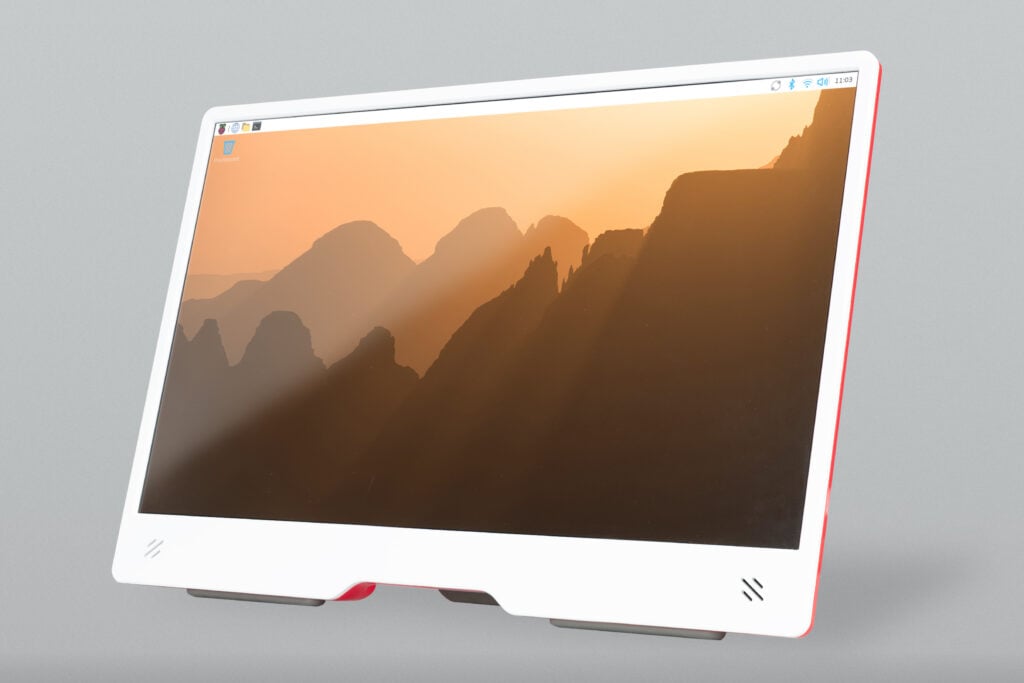
Something you will notice, however, is that we’ve made some changes of our own in the Trixie release. The most obvious is that we have updated the theme for the desktop—we have a completely new set of icons, a new font, new desktop backgrounds, and some other small tweaks to refresh the appearance of the system. This should be apparent as soon as you launch it.
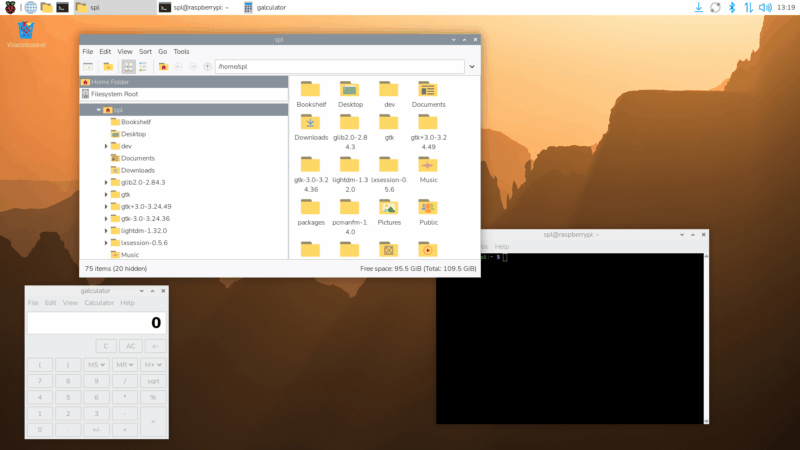
Many years ago, at the very start of my career, I worked as a user interface designer at Cambridge Consultants Ltd, where I learned a great deal about what makes interfaces look and feel good. Furthermore, we’ve applied those lessons to create a truly modern and appealing desktop experience with Trixie.
Customization Options
In addition to the visual refresh, we’ve also made it easier than ever to customize your Raspberry Pi OS. The new Control Centre application allows you to quickly adjust settings such as screen brightness, volume, and network connections. Simultaneously, we’ve added more options for personalizing the desktop background and icon set.
Improved Performance
Beyond the cosmetic changes, Trixie also includes a number of under-the-hood improvements that enhance performance and stability. The kernel has been updated with the latest patches, and various system libraries have been optimized for speed. As a result, you should notice snappier responsiveness and fewer crashes.
What Else is New?
While the visual overhaul and time system update are the most significant changes in Trixie, there are also numerous smaller improvements and bug fixes. For example, support for new hardware devices has been added, and several security vulnerabilities have been addressed. On the other hand, some older applications may require updates to be compatible with the latest version of Raspberry Pi OS; however, we’ve done our best to ensure a smooth transition for everyone.
Trixie represents another significant step forward for Raspberry Pi OS. With its refreshed design, improved performance, and enhanced customization options, it’s sure to provide an enjoyable and productive computing experience. In conclusion, this release delivers substantial improvements across the board.
Source: Read the original article here.
Discover more tech insights on ByteTrending.
Discover more from ByteTrending
Subscribe to get the latest posts sent to your email.