


At Raspberry Pi, we’ve consistently strived to create exceptional general-purpose computing platforms suitable for a vast range of applications, all while maintaining an accessible price point. This commitment extends beyond the initial purchase; it involves designing products built for longevity and supported by a supply chain that is both ethically responsible and environmentally sustainable. A crucial element in achieving this lies in how and where we conduct our manufacturing processes.
The Advantages of Localized Manufacturing
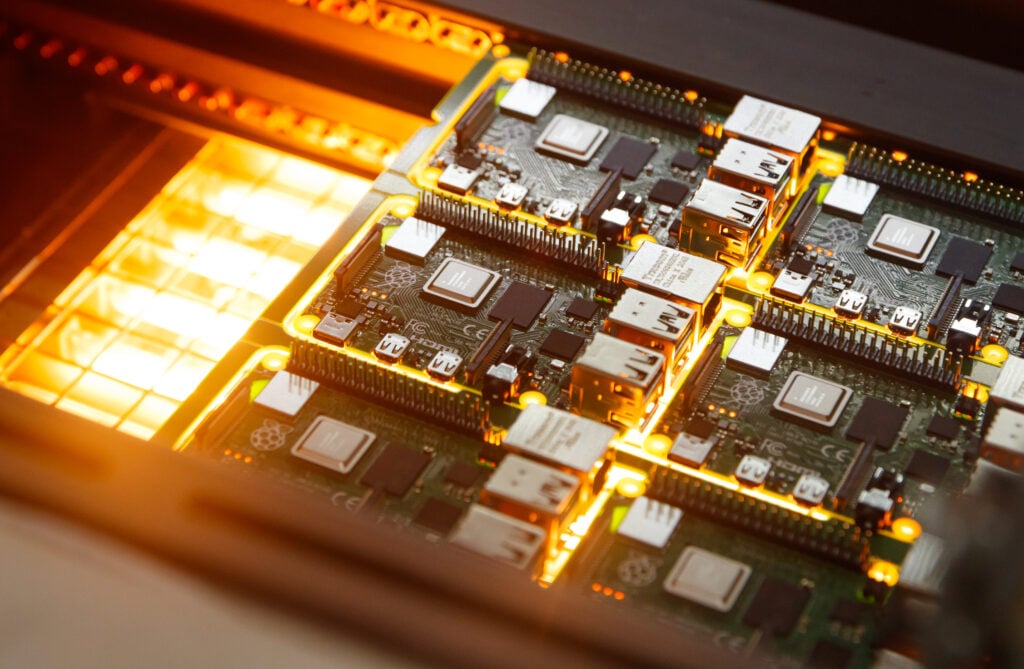
From the beginning, Raspberry Pi has partnered with Sony UK Technology Centre (Sony UK TEC) in Pencoed, South Wales, for the manufacturing of our single-board computers. This close collaboration offers invaluable insight into every facet of production, ensuring that our rigorous standards for quality and ethical practices are consistently met. Furthermore, this choice actively supports British jobs and industries—and it’s a fundamentally sustainable decision as well. Keeping production onshore significantly reduces the carbon footprint associated with complex and energy-intensive global shipping, which is characteristic of much electronics manufacturing.
Maintaining Quality Control
Working closely with Sony UK TEC allows for real-time feedback and adjustments to the manufacturing process. This ensures that every Raspberry Pi meets our exacting standards before reaching customers. Consequently, we can adapt quickly to challenges and continuously improve efficiency.
Supporting Local Economies
Our partnership provides valuable employment opportunities in South Wales and strengthens the local economy. Notably, it fosters a sense of community and shared responsibility for sustainable practices within the region.
Commitment to Zero Waste in Manufacturing
True sustainability isn’t solely about recycling; it requires continuous improvement and embracing circularity. The Sony UK TEC facility exemplifies this approach with its commitment to a zero-waste-to-landfill policy. This ambitious goal is achieved through comprehensive waste stream management, including electronics recycling, material repurposing, and even composting food waste. For example, during the COVID-19 pandemic, the site ingeniously transformed disposable PPE waste into new benches for their on-site environmental center.
Source: Read the original article here.
Discover more tech insights on ByteTrending.
Discover more from ByteTrending
Subscribe to get the latest posts sent to your email.