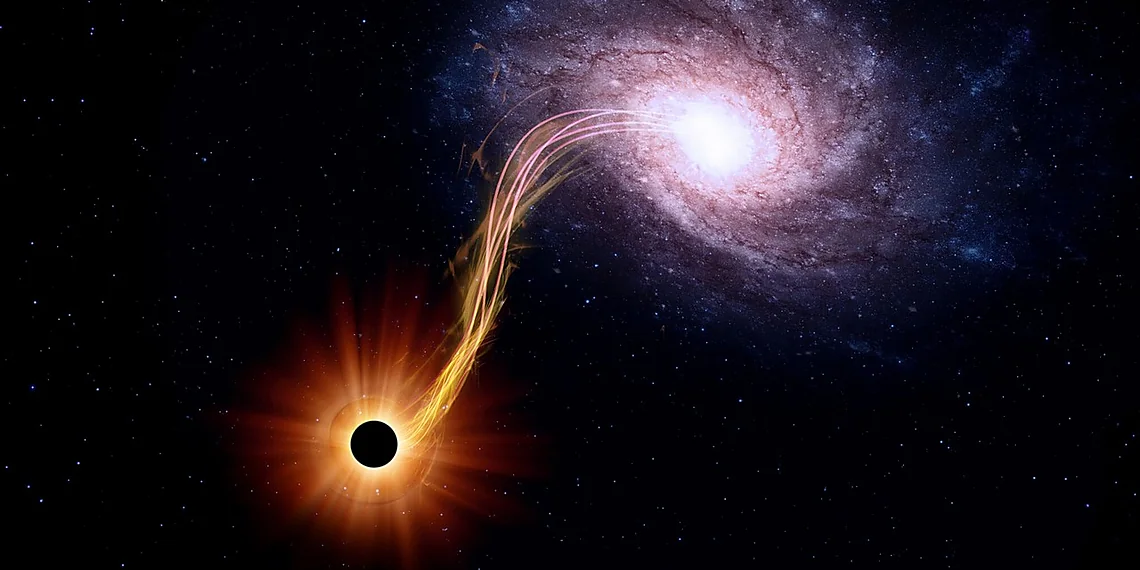

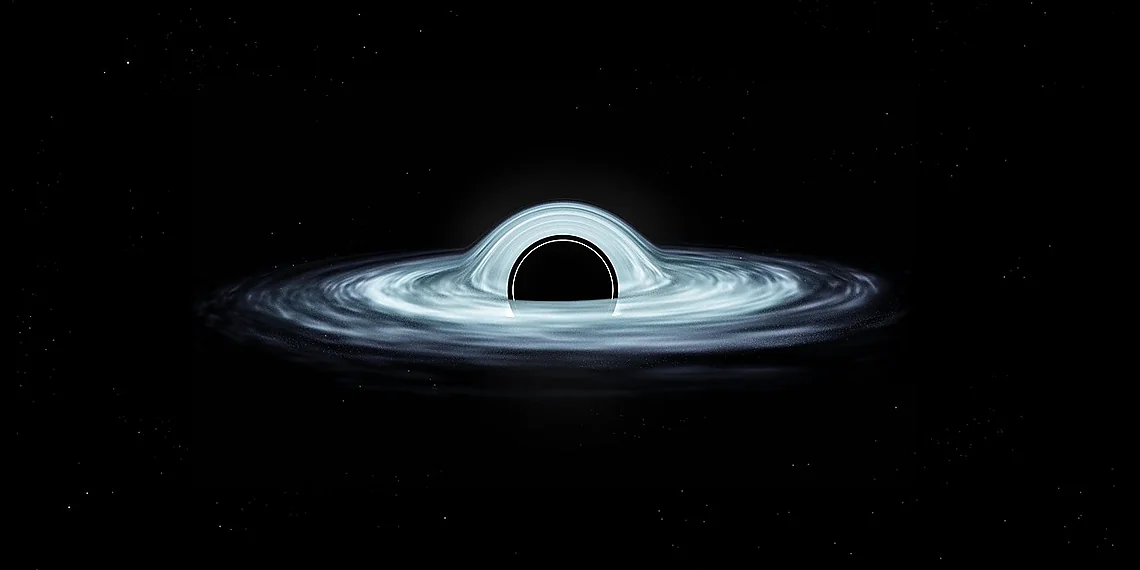

Imagine two cosmic titans, each possessing gravity so immense that nothing, not even light, can escape their grasp – colliding in a spectacular dance of destruction and creation. That’s essentially what happens during black hole mergers, events predicted by Einstein’s theory of general relativity but only recently witnessed firsthand through the groundbreaking detection of gravitational waves.
These ripples in spacetime, first observed in 2015, have opened an entirely new window into the universe, allowing us to study phenomena previously hidden from view. While initial detections confirmed many theoretical predictions, scientists are now delving deeper, searching for subtle nuances that can reveal even more about these extreme environments and the fundamental laws governing them.
New research is now focusing on something called ‘gravitational wave tails’ – faint echoes following the main burst of energy released during black hole mergers. These tails offer a unique opportunity to test Einstein’s theory with unprecedented precision, potentially hinting at deviations from its predictions and providing clues about exotic physics beyond our current understanding.
Understanding these gravitational wave tails is crucial; they represent more than just an afterglow. They contain valuable information about the properties of black holes themselves – their mass, spin, and even the nature of spacetime around them – pushing the boundaries of what we know about the cosmos.
Understanding Gravitational Waves & Their Usual Behavior
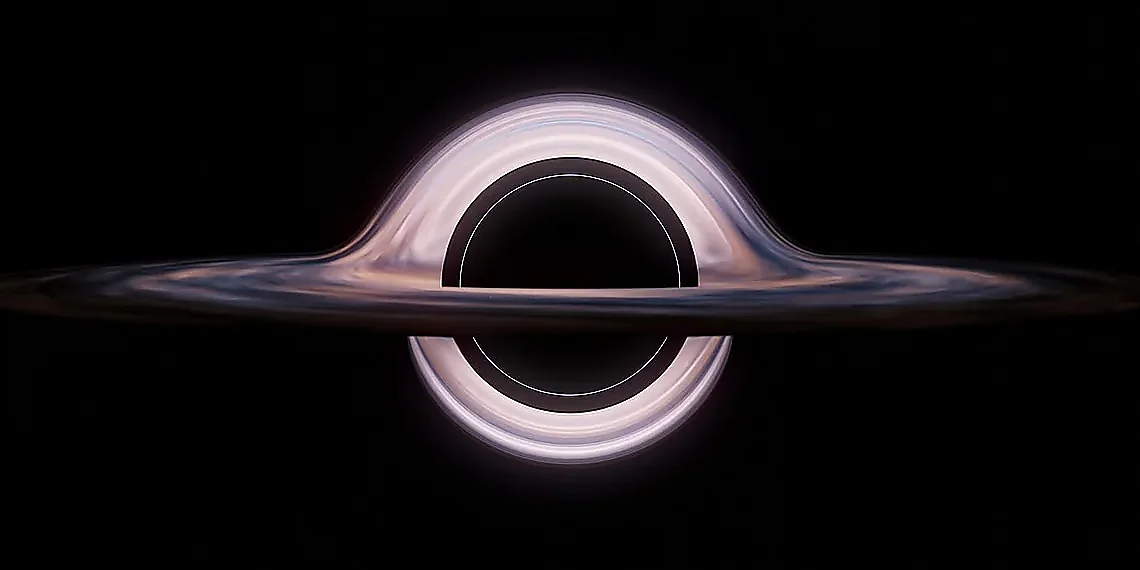
Gravitational waves, predicted by Einstein’s theory of general relativity over a century ago, are essentially ripples in spacetime itself. Think of dropping a pebble into a calm pond – the disturbance creates expanding circles of wave energy. Similarly, massive accelerating objects warp spacetime, and when those objects interact—like two black holes spiraling towards each other—they generate these gravitational waves that propagate outward at the speed of light. The initial merger is incredibly energetic, producing a powerful burst of these waves we can detect here on Earth using highly sensitive instruments like LIGO and Virgo.
Traditionally, scientists expected these gravitational wave signals to behave predictably: an initial intense pulse followed by a rapid damping or decay as the energy dissipates. The waveform should smoothly diminish over time, much like those ripples gradually fading in our pond analogy. This expectation is rooted in the principles of general relativity and has been validated by observations of numerous black hole mergers – until recently. The standard model paints a picture of a relatively clean, predictable signal that allows for precise measurement of the merging masses and spins.
However, recent observations have revealed something unexpected: ‘gravitational tails.’ These are secondary, weaker waves that appear *after* the main gravitational wave pulse has seemingly died down. They persist much longer than predicted by current models and exhibit a complex, oscillating pattern—a distinct departure from the smooth decay we’ve come to expect. Imagine our pond ripple suddenly producing smaller, delayed ripples bouncing back and forth across the surface long after the initial disturbance should have vanished; that’s conceptually similar to what scientists are observing with these gravitational tails.
The discovery of these gravitational tails challenges our understanding of black hole mergers and hints at potential modifications or extensions to general relativity. While the exact mechanisms generating these tails remain under investigation, leading theories suggest they might be related to the complex interplay of frame-dragging effects and the extreme spacetime distortions near the merging black holes. Understanding these ‘tails’ promises to unlock deeper insights into the fundamental nature of gravity and the behavior of matter in the most extreme environments in the universe.
The Ripple Effect: How Gravitational Waves Form

Imagine dropping a pebble into a still pond. The impact creates ripples that spread outwards – these are analogous to gravitational waves. When two black holes orbit each other and eventually collide, they generate an immense disturbance in spacetime itself, creating powerful gravitational waves. These aren’t waves *in* space, but rather distortions *of* space and time propagating outward at the speed of light. The initial moments of a black hole merger are incredibly energetic; as the two black holes spiral closer together, the gravitational wave signal dramatically increases in amplitude – think of the ripples growing larger and more intense just before the pebble hits the water.
The standard expectation for these waves is that they should quickly ‘ring down’ or dampen after the initial burst. Following the merger, the resulting single black hole oscillates, emitting a final series of gravitational waves which gradually decrease in intensity. This decay follows a predictable pattern based on the mass and spin of the newly formed black hole, much like the ripples from the pebble eventually fade away due to friction and spreading out over a larger area. Scientists have been meticulously studying these ‘ringdown’ phases for years to test Einstein’s theory.
However, recent observations have revealed something unexpected: ‘gravitational tails.’ These are faint, long-lasting echoes of the merger that persist far longer than predicted by standard models. They’re like extremely subtle secondary ripples appearing after the main wave has seemingly died down. While the exact nature and origin of these tails are still under investigation, they suggest our understanding of black hole mergers and the behavior of gravitational waves may be incomplete, potentially hinting at new physics beyond Einstein’s general relativity.
The discovery of gravitational tails emanating from black hole mergers has fundamentally shifted our understanding of these cosmic collisions, revealing a complexity previously hidden within Einstein’s equations. These subtle ripples offer a new window into the extreme physics governing gravity and the behavior of spacetime itself, hinting at potential deviations from established models that could revolutionize our theories. Further investigation promises to refine our simulations and deepen our appreciation for the intricate dance of massive objects in the universe. The ongoing refinement of detection methods and telescope sensitivity will undoubtedly uncover more examples of these tails, allowing us to map their properties with unprecedented accuracy and test theoretical predictions with greater rigor. We’re entering a golden age for gravitational wave astronomy, where observations like those surrounding black hole mergers are reshaping our perception of the cosmos. It’s truly an exciting time to witness how these findings might ultimately contribute to a more complete theory of quantum gravity. The potential implications extend far beyond astrophysics; understanding the behavior of spacetime under such extreme conditions could inform other areas of physics and even cosmology. We can anticipate increasingly sophisticated analyses that will correlate gravitational wave data with electromagnetic observations, providing a holistic view of these powerful events. This interdisciplinary approach is crucial for unlocking the full scientific value of future discoveries. If you’ve been captivated by this exploration of gravitational tails and black hole mergers, we strongly encourage you to delve further into the fascinating world of astrophysics! Resources like NASA’s website (nasa.gov), the Laser Interferometer Gravitational-Wave Observatory’s site (ligo.caltech.edu), and educational platforms such as Khan Academy offer accessible introductions to these complex topics. Consider exploring introductory textbooks on cosmology or gravitational physics – the universe is waiting to be discovered, one wave at a time!
Don’t hesitate to join online communities dedicated to astronomy; engaging with fellow enthusiasts and experts can significantly enhance your learning experience.
Continue reading on ByteTrending:
Discover more tech insights on ByteTrending ByteTrending.
Discover more from ByteTrending
Subscribe to get the latest posts sent to your email.