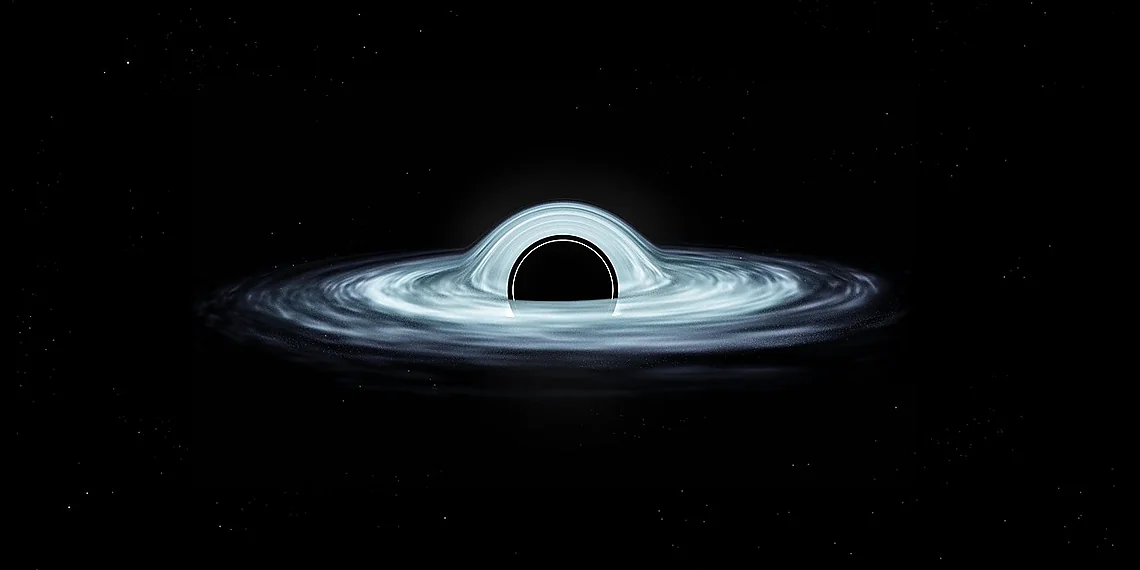


For decades, astronomers have confidently mapped the cosmic landscape, identifying stellar black holes born from collapsing stars and supermassive behemoths residing at the hearts of galaxies. Yet, a crucial piece of this puzzle has remained frustratingly elusive: intermediate mass black holes. These objects, predicted by many cosmological models to play a vital role in galaxy formation and evolution, sit somewhere between these extremes, possessing masses ranging from hundreds to thousands of times that of our Sun – a scale incredibly difficult to detect directly.
The theoretical significance of intermediate black holes is profound; they’re believed to be the seeds around which supermassive black holes grow, potentially explaining how galaxies acquire their immense central engines. Their existence would provide invaluable insight into the early universe and the processes driving galactic assembly. However, pinpointing these middleweight monsters has proven remarkably challenging due to their relatively small size and tendency to reside in dense stellar environments where signals are easily obscured.
Now, the James Webb Space Telescope (JWST) offers an unprecedented opportunity to finally shed light on this cosmic mystery. We’re turning its powerful infrared gaze towards Omega Centauri, a sprawling globular cluster near our Milky Way galaxy that’s long been considered a prime suspect for harboring one or more intermediate black holes. JWST’s advanced capabilities will allow us to penetrate the dust and stellar clutter within Omega Centauri, searching for subtle gravitational signatures and unique chemical compositions that could reveal the presence of these elusive objects.
The Mystery of Intermediate Mass Black Holes
Black holes come in a variety of sizes, but for decades, astronomers have struggled to definitively confirm the existence of one particular class: intermediate-mass black holes (IMBHs). While we’ve thoroughly cataloged stellar-mass black holes – formed from the collapse of individual massive stars – and observed numerous supermassive black holes residing at the centers of galaxies, IMBHs represent a significant gap in our understanding. These objects are theorized to have masses ranging from roughly 100 to 100,000 times that of our Sun, placing them firmly between these two well-established categories.
The theoretical need for IMBHs arises from models of galaxy and globular cluster evolution. Galactic mergers, a common occurrence in the universe’s history, often involve smaller galaxies colliding and merging with larger ones. These smaller galaxies likely contain stellar-mass black holes. As these galaxies coalesce, their black holes could sink towards the center of the newly formed, larger galaxy, potentially aggregating to form IMBHs. Similarly, dense globular clusters like Omega Centauri are thought to have formed from the collapse of entire dwarf galaxies, and could harbor an IMBH as a remnant of that original galactic core.
Despite their theoretical importance, detecting IMBHs is incredibly challenging. Unlike supermassive black holes, which often shine brightly as they accrete matter, forming active galactic nuclei (AGN), IMBHs are less likely to be actively feeding and producing such dramatic displays. Their lower mass means they generally have smaller accretion disks, emitting far less radiation. Stellar-mass black holes can also be detected through gravitational waves from merging binary systems, but the probability of an IMBH forming a stable, detectable binary system is significantly lower.
The recent research utilizing the James Webb Space Telescope (JWST) to study Omega Centauri offers a promising new avenue for detection. By meticulously analyzing the infrared light emitted by gas and dust around the cluster, scientists are attempting to probe for subtle signs of an IMBH’s influence – specifically, evidence of accretion even at low rates. While definitive confirmation remains elusive, this represents a critical step in finally unraveling the mystery surrounding these missing links in the black hole family.
Beyond Stellar & Supermassive: Defining IMBHs
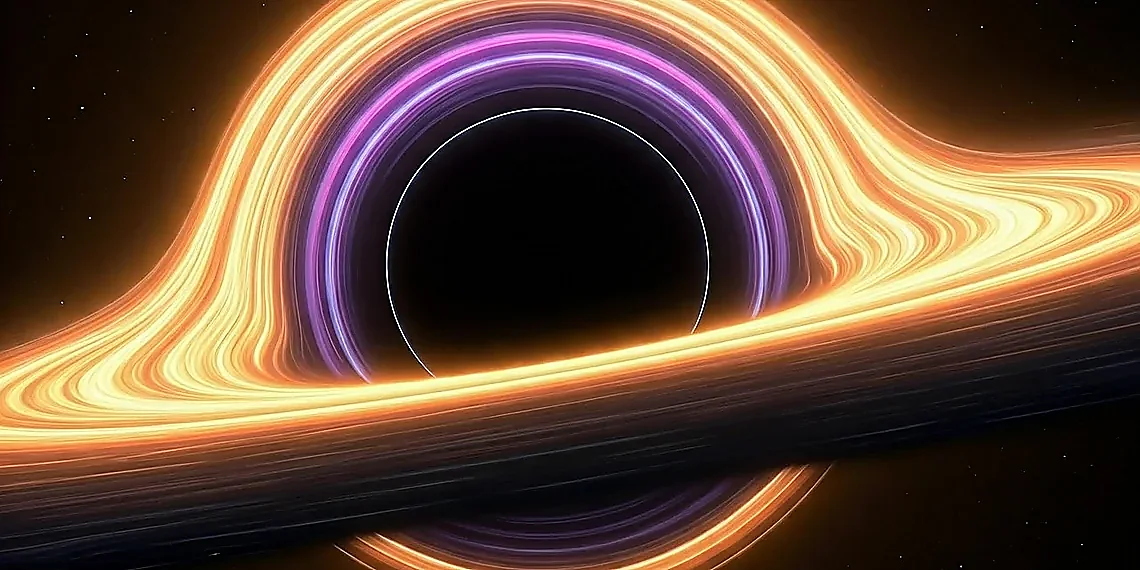
Black holes come in a variety of sizes, generally categorized as stellar-mass, intermediate-mass, and supermassive. Stellar-mass black holes form from the collapse of massive individual stars, typically ranging from about 5 to dozens of times the mass of our Sun. Supermassive black holes reside at the centers of most galaxies, possessing masses millions or even billions of times that of the Sun. Intermediate-mass black holes (IMBHs) fall between these extremes; they are predicted to have masses between roughly 100 and 100,000 solar masses.
The existence of IMBHs isn’t directly observed with high frequency, but their presence is strongly suggested by models of galactic evolution. These models propose that galaxies grow through mergers and accretion events. Smaller stellar-mass black holes could coalesce over time to form larger IMBHs. Furthermore, dense star clusters like Omega Centauri (the focus of recent JWST observations) provide environments where multiple stars can collapse into a single, more massive black hole. Detecting these objects is challenging because they are often obscured by dust and gas and don’t always exhibit the dramatic activity associated with supermassive black holes consuming large amounts of material.
The difficulty in confirming IMBHs lies in their relatively low accretion rates compared to supermassive black holes. While active galactic nuclei (AGN) powered by supermassive black holes emit tremendous energy, an IMBH accreting matter at a slow rate might only produce faint signals that are easily masked by the surrounding environment or confused with other astronomical phenomena. The James Webb Space Telescope’s infrared capabilities offer improved sensitivity to these subtle signals, making it a powerful tool in the ongoing search for intermediate-mass black holes.
Omega Centauri: A Prime Hunting Ground
Omega Centauri is truly a cosmic behemoth – the largest known globular cluster in our Milky Way galaxy, containing somewhere between 10 and 20 million stars packed into a region just 63 light-years across. Its sheer size dwarfs all other globular clusters we’ve observed, and its stellar density is astonishingly high, meaning stars are incredibly close together. What makes Omega Centauri even more peculiar is its unusual chemical composition; it appears to be composed of multiple, smaller star clusters that merged over time, resulting in a mix of stars with different ages and metallicities – far from the homogenous populations typically found in globular clusters.
Globular clusters themselves are thought to play a significant role in the formation of intermediate black holes (IMBHs). The intense gravitational interactions within these densely packed stellar environments can lead to frequent collisions and mergers between stars. These events, over vast timescales, can produce massive stars that eventually collapse directly into IMBHs, bypassing the typical supernova explosion phase for smaller black holes. Omega Centauri’s chaotic history of multiple mergers makes it an especially promising candidate for hosting one of these elusive objects.
The possibility of an IMBH lurking within Omega Centauri has been investigated before, with previous studies relying on observations of stellar velocities near the cluster’s center. These investigations suggested a concentrated mass – potentially indicative of a black hole – but lacked definitive confirmation. Now, utilizing the unprecedented infrared capabilities of the James Webb Space Telescope (JWST), astronomers are taking a new approach, focusing on probing the accretion rate of any potential IMBH by analyzing the faint glow from material falling into it.
The JWST’s ability to detect subtle changes in this ‘accretion disk’ offers an exciting opportunity to finally confirm or rule out the presence of an IMBH within Omega Centauri. This detailed scrutiny is critical, as definitively identifying intermediate black holes has proven incredibly challenging – they are too small to be easily observed directly and often reside hidden within complex stellar environments like globular clusters.
Omega Centauri’s Unique Character

Omega Centauri is truly remarkable; it’s not just large but *exceptionally* large, dominating the Milky Way’s globular cluster population. Containing roughly 10 million stars – more than some dwarf galaxies – its diameter spans about 65 light-years. This immense size translates to an incredible stellar density near its center, significantly higher than most other globular clusters. The sheer number of stars packed into such a small volume creates complex gravitational interactions and increases the likelihood of black hole formation.
Beyond just its size, Omega Centauri exhibits an unusual composition. Spectroscopic analysis reveals a mix of stellar populations, suggesting it may have formed from the merger of several smaller star clusters rather than through a single monolithic collapse. This history contributes to a wide range of stellar ages and metallicities, further complicating the dynamics within the cluster and potentially providing more pathways for intermediate black hole (IMBH) formation – a process which often involves multiple stellar mergers.
The combination of Omega Centauri’s massive scale, high stellar density, and complex merger history makes it an attractive candidate for hosting an IMBH. Previous searches using data from the Hubble Space Telescope have hinted at its presence through subtle motions of stars near the cluster’s core, but conclusive proof has remained elusive. The James Webb Space Telescope is now being utilized to further investigate these hints by precisely measuring the velocities and accretion rates of potential black hole candidates within Omega Centauri.
JWST’s Powerful Gaze
The James Webb Space Telescope (JWST) is revolutionizing our understanding of the universe, and one particularly compelling target for its powerful gaze is Omega Centauri, a sprawling globular cluster nestled within our Milky Way galaxy. Astronomers suspect this massive cluster harbors an intermediate black hole (IMBH), objects theorized to exist between stellar-mass black holes and supermassive black holes at galactic centers – yet notoriously difficult to detect. JWST’s unique capabilities make it ideally suited for hunting these elusive IMBHs, offering a level of sensitivity and resolution previously unattainable.
A key advantage of JWST is its ability to observe in the infrared spectrum. Omega Centauri is shrouded in dust clouds that obscure visible light observations, effectively hiding potential clues about an IMBH’s presence. Infrared light, however, can penetrate this dusty veil, revealing faint signals otherwise lost. Accretion disks – swirling masses of gas and dust falling into a black hole – emit intense infrared radiation as material heats up due to friction. JWST’s Near-Infrared Camera (NIRCam) and Mid-Infrared Instrument (MIRI) are specifically designed to capture these subtle emissions, allowing scientists to probe the environments around potential IMBHs with unprecedented clarity.
The recent observations of Omega Centauri involved meticulously analyzing data from both NIRCam and MIRI. Scientists focused on searching for telltale signs of an accretion disk – variations in brightness, spectral signatures indicative of heated material, and overall structure that would distinguish it from other phenomena within the cluster. The high resolution afforded by JWST is also critical; it allows astronomers to pinpoint the precise location of any detected infrared source, helping to differentiate between a genuine IMBH signal and background noise or emission from individual stars within the dense cluster environment.
Currently, researchers are analyzing the gathered data, seeking subtle patterns that would confirm the presence of an actively accreting IMBH. While initial results have been promising, further investigation is needed to definitively rule out alternative explanations for the observed infrared emissions. The ongoing analysis promises to shed light on the properties of this potential IMBH and contribute significantly to our broader understanding of black hole formation and evolution across cosmic scales.
Infrared Reveals Hidden Clues
The James Webb Space Telescope’s (JWST) ability to observe infrared light is proving crucial in the hunt for intermediate-mass black holes (IMBHs). Unlike visible light, infrared radiation can penetrate vast clouds of dust and gas that often obscure these objects from view. Many regions where IMBHs are suspected to reside – like the dense core of Omega Centauri – are heavily obscured by such material, making them invisible to telescopes operating primarily in optical wavelengths. JWST’s infrared cameras allow astronomers to peer through this cosmic veil and search for faint signals that would otherwise be missed.
When a black hole actively accretes matter from its surroundings, it forms an accretion disk – a swirling vortex of gas and dust heated to incredibly high temperatures. As material spirals inwards towards the black hole’s event horizon, friction generates intense heat, causing the disk to glow brightly, primarily in infrared wavelengths. The brightness and characteristics of this infrared emission are directly linked to the rate at which the black hole is consuming matter. JWST’s sensitive instruments can detect these subtle infrared signatures, providing invaluable insights into the accretion process.
In the case of Omega Centauri, scientists are using JWST to meticulously analyze the infrared emissions from its central region. They’re looking for telltale signs of an IMBH’s presence – variations in brightness and spectral characteristics that wouldn’t be attributable to other phenomena. The telescope’s high resolution also allows researchers to pinpoint the source of this radiation with unprecedented accuracy, helping them distinguish between light emanating from a potential IMBH and other sources within the cluster.
What the Data Reveals (and What’s Next)
The James Webb Space Telescope (JWST) has turned its powerful gaze towards Omega Centauri, a sprawling globular cluster brimming with stars, in a quest to find evidence of an intermediate black hole (IMBH). These ‘missing link’ black holes, residing between the stellar-mass black holes formed from collapsed stars and the supermassive behemoths at galactic centers, are predicted by theory but have proven notoriously difficult to detect. JWST’s initial observations have yielded intriguing signals, primarily focused on analyzing the accretion rate – the amount of material spiraling into a potential black hole – around the cluster’s core. Researchers are meticulously examining infrared data for telltale signs like an extended, hot accretion disk and unusual emission lines that would betray the presence of superheated gas orbiting a compact object.
While the data isn’t conclusive proof of an IMBH, it hasn’t ruled one out either. The observed emissions *could* be explained by other phenomena within Omega Centauri, such as bursts of star formation or interactions between dense stellar populations. Specifically, scientists are working to distinguish between a consistent, low-level accretion disk characteristic of an IMBH and the more sporadic flares that might arise from smaller events. Currently, the signal is relatively faint, making it challenging to definitively attribute it solely to an accreting black hole. The sensitivity of JWST allows for unprecedented detail in these observations, but disentangling various potential sources remains a significant analytical hurdle.
Future research will focus on obtaining more extended and deeper observations with JWST, utilizing different instrument modes to probe the region around Omega Centauri’s core at varying wavelengths. These follow-up studies aim to map the distribution of gas and dust, refine measurements of the accretion rate’s variability over time, and search for subtle gravitational effects that an IMBH would exert on surrounding stars. Additionally, combining JWST data with observations from other telescopes across the electromagnetic spectrum – including radio and X-ray wavelengths – will be crucial in painting a more complete picture and bolstering any claims of an IMBH’s existence.
Ultimately, confirming the presence of an IMBH within Omega Centauri requires eliminating alternative explanations for the observed signals. While JWST’s initial results are promising and represent a significant step forward in the hunt for these elusive objects, continued observation and sophisticated modeling will be necessary to either solidify its discovery or rule it out as the source of the intriguing emissions.
Early Results: Hints of Activity?
The James Webb Space Telescope (JWST) recently turned its gaze towards Omega Centauri, a massive globular cluster believed by some to harbor an intermediate-mass black hole (IMBH). While definitive proof remains elusive, initial JWST data has revealed intriguing signals that warrant further investigation. Scientists are meticulously analyzing infrared observations for telltale signs of activity around a potential IMBH, specifically looking for evidence of an accretion disk – the swirling mass of gas and dust feeding the black hole. The exceptional sensitivity of JWST allows researchers to probe these faint emissions with unprecedented detail.
Currently, the observed signals aren’t conclusive enough to definitively confirm the presence of an IMBH. While some spectral features suggest increased energy release in the cluster’s core, these could also be attributed to other phenomena like intense star formation or interactions between stars within the dense environment of Omega Centauri. Distinguishing between these possibilities is a significant challenge, requiring sophisticated modeling and analysis techniques. The team is focusing on precise measurements of the emission spectrum across different wavelengths to search for specific patterns characteristic of an accretion disk.
Future JWST observations are planned to further refine our understanding of Omega Centauri’s core. These include longer exposure times to increase signal-to-noise ratios, and potentially utilizing different observing modes to map the spatial distribution of emissions in greater detail. Researchers also intend to compare these JWST data with archival observations from other telescopes spanning various wavelengths, hoping to identify temporal variations that could provide additional clues about the nature of the central object – whether it’s an IMBH or something else entirely.
Continue reading on ByteTrending:
Discover more tech insights on ByteTrending ByteTrending.
Discover more from ByteTrending
Subscribe to get the latest posts sent to your email.