For decades, scientists believed we had a pretty solid grasp on how black holes formed and interacted – until recently, that is.
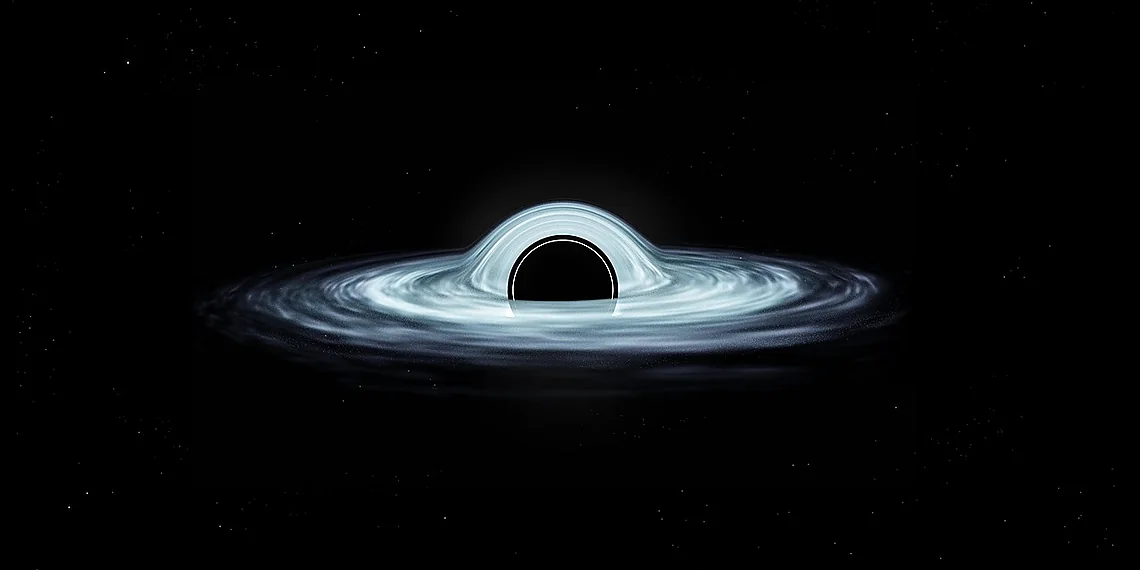
A groundbreaking observation has thrown a wrench into established theories, revealing what appears to be an ‘impossible’ collision: a Black Hole Merger between two objects defying our current understanding of stellar evolution.
This isn’t just about adding another data point to the cosmic catalog; it challenges fundamental assumptions about how massive stars live and die, potentially rewriting textbooks on astrophysics.
At ByteTrending, we thrive on unraveling these complex scientific mysteries, translating intricate research into digestible insights for everyone curious about the universe’s wonders. We’re diving deep into this anomaly, exploring what it means for our models of black hole formation and galactic evolution, and explaining why it matters to you – even if you aren’t a physicist.
The Anomaly: A Merger That Shouldn’t Exist
In early 2023, a ripple through spacetime announced an event so extraordinary it has sent shockwaves throughout the astrophysics community: the detection of a colossal black hole merger. Observed by gravitational wave observatories like LIGO and Virgo, this collision involved two black holes smashing together roughly 7 billion light-years from Earth. What makes this discovery truly remarkable isn’t just its distance – it’s the sheer scale and unexpected characteristics of the merging black holes themselves, challenging fundamental assumptions about how such behemoths form.
The individual black holes involved in this merger weren’t simply large; they were gargantuan. One possessed a mass approximately 85 times that of our Sun, while its partner clocked in at around 66 solar masses. While massive black hole mergers have been detected before, these weights are significantly higher than what models predicted for merging pairs within galaxies like ours. To put this into perspective, imagine two skyscrapers collapsing and combining into a single structure – now picture those skyscrapers each weighing more than the entire population of a small city! The sheer size alone was baffling, but it didn’t stop there.
Adding to the puzzle were the spins of these black holes. Black holes rotate, and their spin dramatically affects how they merge and what gravitational waves are emitted. These two weren’t just spinning; they were rotating at incredibly high speeds, almost as fast as physically possible. The combination of such massive masses *and* extreme spins is… well, it’s practically impossible according to current theoretical models. It’s like finding a perfectly balanced house made entirely of Jenga blocks – defying all expectations of stability and construction.
This ‘impossible’ merger forces astronomers to rethink their understanding of black hole formation and evolution. Where did these colossal, rapidly spinning objects come from? Did they form through an entirely different process than previously thought? Or are our current models fundamentally incomplete? The answer remains elusive, but this discovery serves as a potent reminder that the universe is full of surprises, constantly pushing the boundaries of what we believe to be possible and demanding a re-evaluation of our cosmic understanding.
Unprecedented Scale & Spin

The black hole merger detected in 2023, designated GW-230529, presented a truly baffling scenario. The two colliding black holes were colossal – one with an estimated mass roughly 66 times that of our Sun and the other around 85 solar masses. To put this into perspective, most previously observed merging black hole pairs have involved objects significantly smaller, often less than 30 or 40 solar masses combined. Imagine two skyscrapers suddenly colliding; GW-230529 was like witnessing two structures each five times taller than the Empire State Building smashing together – an event of unparalleled scale in the realm of gravitational wave detections.
What made this merger even more perplexing wasn’t just the size, but also the spins of the black holes. Black holes rotate, and their spin significantly influences how they merge and the resulting gravitational waves emitted. GW-230529 displayed unusual spin orientations that defied simple explanations based on current models of stellar evolution and galaxy formation. It’s akin to two figure skaters spinning in completely different directions before attempting a complex partnered move; the outcome becomes much harder to predict, and any deviation from expectations is magnified.
The sheer mass of these black holes also suggests they formed through pathways we don’t fully understand. Standard models struggle to explain how such massive stars could have collapsed into black holes without exploding as supernovae – an event that would leave behind a remnant instead of a black hole ready to merge. This discovery forces astronomers to rethink the processes involved in black hole formation and galaxy evolution, potentially requiring revisions to our understanding of stellar lifecycles and the dynamics within galactic cores.
Challenging Existing Models
The recent detection of an exceptionally massive black hole merger – a collision occurring 7 billion light-years away – has thrown a significant wrench into our existing astrophysical models. This event, observed in 2023, involved two black holes boasting unprecedented masses and exhibiting extreme spins. According to current understanding, such behemoths shouldn’t exist at all, prompting scientists to re-evaluate long-held assumptions about black hole formation and evolution. The sheer scale of this merger, far exceeding predictions based on known processes, demands a serious rethinking of how these cosmic giants come into being.
Our established theories primarily focus on two pathways for black hole creation: stellar collapse, where massive stars exhaust their fuel and implode under gravity’s relentless pull, and galactic mergers, where smaller black holes coalesce within colliding galaxies. However, the observed masses in this merger – significantly larger than what these processes typically produce – present a serious challenge. Stellar-mass black holes rarely exceed 100 solar masses, while galactic mergers usually result in black holes of a few hundred to a thousand solar masses. This recent collision involved objects far exceeding those limits, suggesting alternative formation mechanisms are at play.
One increasingly intriguing possibility is the existence of primordial black holes (PBHs). Unlike stellar-mass black holes formed from collapsed stars, PBHs are theorized to have originated in the very early universe, potentially arising from density fluctuations shortly after the Big Bang. These fluctuations could have directly collapsed into black holes, bypassing the need for star formation altogether. While still largely hypothetical, the discovery of this unusual merger lends considerable weight to the PBH hypothesis, offering a potential explanation for the existence of these unexpectedly massive objects and pushing us to reconsider our understanding of the universe’s infancy.
The implications extend far beyond just black hole formation. The prevalence (or lack thereof) of such massive black holes directly impacts our models of galaxy evolution and the growth of supermassive black holes at galactic centers. If PBHs are indeed a significant population, it could fundamentally alter how we understand early galaxy assembly and the distribution of dark matter. Further observations and theoretical investigations into this extraordinary merger will be crucial in refining our understanding of these fundamental cosmological processes and potentially revealing entirely new chapters in the story of the universe.
The Formation Puzzle
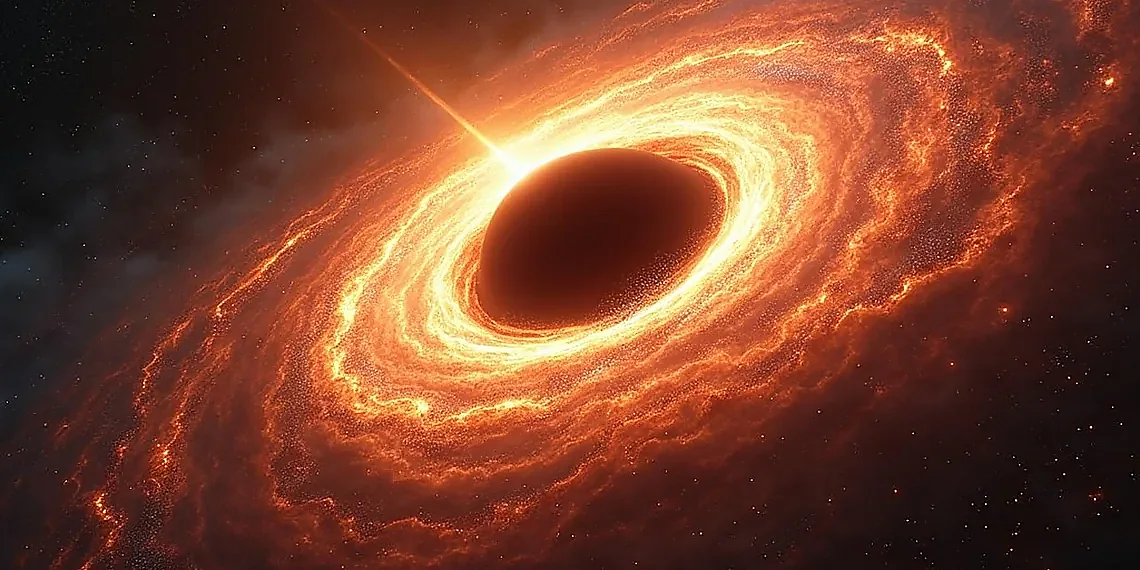
For decades, astrophysicists have largely understood black hole formation through two primary mechanisms: stellar collapse and galactic mergers. Stellar-mass black holes arise when massive stars exhaust their nuclear fuel and undergo gravitational collapse at the end of their lives. These typically range from a few to tens of times the mass of our Sun. Supermassive black holes, residing at the centers of galaxies, are thought to form through a combination of processes including the merger of smaller black holes and the accretion of vast amounts of gas and dust over billions of years. Simulations have helped build a framework for how these behemoths grow within galaxies.
The recent detection of this unusually massive black hole merger, involving objects each exceeding 60 times the mass of the Sun, presents a significant challenge to these established models. Stellar collapse rarely produces such large black holes directly; it’s more common for them to form from smaller stars and gradually grow through accretion or mergers with other stellar remnants. Furthermore, galactic mergers often involve complex interactions that limit the size of resulting black holes – finding two objects of this magnitude already merged is unexpected given current understanding of galaxy evolution timelines.
One intriguing possibility gaining renewed attention is the existence of primordial black holes (PBHs). These hypothetical objects are theorized to have formed not from stellar collapse, but directly from density fluctuations in the very early universe shortly after the Big Bang. If PBHs exist and span a wide range of masses, they could potentially account for some or all of the observed black hole merger, sidestepping the limitations imposed by standard astrophysical models. While still speculative, the discovery bolsters research into primordial black holes as potential contributors to dark matter and other cosmological mysteries.
Proposed Explanations & New Theories
The discovery of a colossal black hole merger, detected in 2023, has sent ripples through the astrophysics community. The sheer scale of the event – involving two black holes with masses far exceeding expectations for their galactic environment – defies conventional models of stellar evolution and galaxy formation. These behemoths, estimated to be around 66 million and 85 million solar masses respectively, possessed unusually aligned spins that further complicate our understanding. Standard theories suggest such massive black holes should reside at the centers of large galaxies, not in relatively isolated regions, leaving scientists scrambling for explanations.
One particularly intriguing hypothesis involves primordial black holes (PBHs). These aren’t formed from collapsed stars like most known black holes; instead, they’re theorized to have sprung into existence shortly after the Big Bang due to density fluctuations in the early universe. If PBHs exist and possess the right mass distribution, they could potentially account for this unusual merger. The idea is that these primordial objects, having formed independently of stellar evolution, could wander through space and eventually collide. However, detecting PBHs remains a significant challenge; their existence is primarily inferred from gravitational lensing effects or as potential dark matter candidates, making direct observation exceptionally difficult.
Beyond primordial black holes, researchers are exploring alternative formation pathways that might explain the merger’s characteristics. These include scenarios involving dense star clusters where multiple stars collapse into intermediate-mass black holes which then merge over time, or even exotic processes within galactic nuclei we haven’t yet fully grasped. The alignment of spins also presents a puzzle – it suggests a complex history of interactions and mergers prior to this final collision, but the exact mechanisms driving that alignment are still under investigation.
Ultimately, while several compelling hypotheses have emerged, the mystery surrounding this extraordinary black hole merger isn’t completely solved. Further observations, improved simulations, and potentially entirely new theoretical frameworks will be needed to fully reconcile these findings with our current understanding of astrophysics. The event serves as a powerful reminder that the universe continues to surprise us, pushing the boundaries of what we thought possible and demanding a re-evaluation of fundamental assumptions.
Primordial Black Hole Hypothesis
One intriguing explanation for the unusually massive black hole merger involves primordial black holes (PBHs). Unlike stellar-mass black holes which form from the collapse of massive stars, PBHs are theorized to have originated in the very early universe, just fractions of a second after the Big Bang. Density fluctuations during this epoch could have caused regions to collapse directly into black holes, bypassing the need for star formation altogether. These primordial events would have potentially created black holes across a wide range of masses, including those observed in the recent merger.
If PBHs were responsible for the merger, it offers a compelling solution to the puzzle of their large size and spin characteristics. Stellar-mass black holes are limited by the mass of stars; PBHs aren’t. Furthermore, their formation wouldn’t necessarily require the complex processes that govern stellar evolution, potentially explaining the observed spins. The possibility exists that these PBHs drifted through space and eventually collided, leading to the detected event.
However, detecting primordial black holes is incredibly challenging. Because they don’t emit light themselves, scientists must rely on indirect evidence like gravitational lensing (bending of light due to their gravity) or their potential contribution to dark matter. Current observational constraints limit the abundance of PBHs within certain mass ranges, but haven’t entirely ruled them out as a possible explanation for this merger. Further research and more sensitive observations are needed to either confirm or refute their role in these extraordinary cosmic collisions.
Future Research & Implications
The discovery of this exceptionally massive Black Hole Merger in 2023 has fundamentally challenged existing models of stellar evolution and galaxy formation. Future research will necessitate a concerted effort to identify similar events, ideally across a wider range of distances and orientations. This requires leveraging next-generation observatories like the Laser Interferometer Space Antenna (LISA), which will be exquisitely sensitive to gravitational waves from mergers occurring in our galactic neighborhood, and the Roman Space Telescope, capable of observing electromagnetic counterparts associated with these cosmic collisions. Finding more examples of black holes exceeding predicted mass limits is paramount; each new detection provides crucial data points for refining our theoretical frameworks.
A key area of focus moving forward will be multi-messenger astronomy – combining gravitational wave observations with traditional telescopes detecting light (and other forms of electromagnetic radiation). While the initial 2023 event was detected solely through gravitational waves, identifying accompanying flashes of gamma rays or X-rays would offer unparalleled insights into the merger process and the environment surrounding these black holes. Such a combined observation could reveal details about the accretion disks feeding the black holes prior to collision and potentially shed light on the origin of the extreme spins observed.
Beyond refining our understanding of black hole formation, this discovery has broader implications for cosmology. The existence of such massive black holes at relatively early epochs in the universe suggests that galaxies may have formed more rapidly or through different mechanisms than previously thought. It could also inform our models of dark matter distribution and its influence on galaxy evolution. Essentially, these ‘impossible’ Black Hole Merger events are forcing us to re-evaluate fundamental assumptions about how structures assemble in the cosmos.
Ultimately, continued investigation into black hole mergers promises not only a deeper understanding of these fascinating objects but also a more comprehensive picture of the universe’s history and its underlying physical laws. The next decade of astronomical observation will be critical as we strive to reconcile theory with these surprising discoveries and unravel the mysteries surrounding the formation of these cosmic behemoths.
The Search Continues
The detection of unusually massive black hole mergers, like the one observed in 2023, underscores the limitations of current observational capabilities. Future space-based observatories promise a significant leap forward. The Laser Interferometer Space Antenna (LISA), for example, will be sensitive to gravitational waves at lower frequencies than ground-based detectors like LIGO and Virgo. This allows LISA to observe mergers involving much larger black holes that are currently undetectable, potentially revealing populations of ‘impossible’ events previously hidden from view.
Complementing LISA, the Nancy Roman Space Telescope (formerly WFIRST) will play a crucial role through its wide-field infrared surveys. These surveys can identify electromagnetic counterparts – light signals – associated with gravitational wave events. The combination of gravitational wave detection and simultaneous optical/infrared observations is vital for multi-messenger astronomy; it provides a richer dataset to characterize the black holes involved, their environments, and the processes driving these extraordinary mergers.
The ability to combine gravitational wave data with electromagnetic observations unlocks powerful new avenues of research. For instance, identifying host galaxies associated with merger events can provide insights into galaxy evolution and how supermassive black holes grow. Future missions are poised not only to detect more frequent and extreme black hole mergers but also to fundamentally reshape our understanding of these cosmic collisions and the universe they inhabit.
The ripples we’ve detected aren’t just echoes; they are profound revelations, reshaping our understanding of gravity and the cosmos.
Each new observation pushes the boundaries of what we thought possible, demonstrating the universe’s capacity for both immense violence and breathtaking beauty.
Consider the sheer scale of a Black Hole Merger – two cosmic behemoths colliding with unimaginable force, generating energy far exceeding anything humans can produce.
This ongoing exploration isn’t just about confirming theories; it’s about uncovering entirely new phenomena we haven’t even begun to conceptualize yet, forever altering our place in the universe’s narrative. The precision of gravitational wave detection continues to amaze and promises more astonishing discoveries ahead. It truly feels like we are witnessing a golden age for astrophysics, with each signal providing invaluable data points to refine our models and deepen our comprehension of these extreme events and the fundamental laws governing them. The implications extend far beyond astrophysics too, potentially offering insights into particle physics and the very fabric of spacetime itself. We’ve only scratched the surface of what we can learn from these cosmic collisions. This is an era where imagination and scientific rigor intertwine to unlock secrets previously hidden by distance and time. Let’s continue to embrace this journey of discovery with open minds and a relentless curiosity about all that lies beyond our planet. The universe is vast, mysterious, and constantly surprising us – and we are just beginning to listen to its song.
Continue reading on ByteTrending:
Discover more tech insights on ByteTrending ByteTrending.
Discover more from ByteTrending
Subscribe to get the latest posts sent to your email.