
For years, astronomers have been captivated by enigmatic signals appearing as faint ‘little red dots’ in distant galaxies – cosmic anomalies defying easy explanation and sparking intense debate within the astrophysics community.
These puzzling observations initially suggested a variety of possibilities, from obscured quasars to previously unknown types of stellar explosions, leading to a prolonged period of speculation and rigorous investigation.
Now, a revolutionary discovery is dramatically shifting our understanding: these ‘little red dots’ aren’t what we thought; they are cosmic cocoons, shielding nascent black holes as they rapidly grow.
Researchers have finally pieced together compelling evidence demonstrating that these structures represent the earliest stages of black hole formation, essentially cradling and protecting incredibly energetic, developing objects – effectively, *young black holes* – from their surrounding environment. This breakthrough promises to rewrite our models of galaxy evolution and stellar lifecycle, offering unprecedented insights into the universe’s most extreme phenomena.
The Enigmatic ‘Little Red Dots’
For years, astronomers have been puzzling over a peculiar phenomenon: tiny, bright red dots scattered across deep-space telescope images. Initially dubbed ‘little red dots,’ these enigmatic points defied easy explanation. The first detections occurred while analyzing data from the Dark Energy Survey (DES), where researchers noticed these unusual features standing out against the backdrop of seemingly empty space. Early hypotheses ranged widely, suggesting they might be incredibly distant quasars – supermassive black holes actively feeding on matter – or perhaps a new type of galaxy altogether. However, attempts to classify them based on existing astronomical models consistently fell short; their characteristics simply didn’t align with any known object.
The initial confusion stemmed from several factors. Their small size and consistent red hue made distance estimations extremely difficult. Traditional methods for determining redshift – the stretching of light due to the expansion of the universe, which indicates distance – proved unreliable. Furthermore, attempts to detect radio waves or other electromagnetic signals associated with quasars were largely unsuccessful. The ‘little red dots’ seemed stubbornly resistant to categorization, leading scientists down numerous blind alleys and sparking intense debate within the astronomical community about their true nature.
One particularly compelling theory proposed that these points represented extremely faint, highly redshifted galaxies obscured by dust. While this offered a potential solution for both their faintness and color, it struggled to account for the dots’ apparent lack of surrounding structure or associated spectral features typically observed in galaxies. Similarly, suggestions involving gravitational lensing – where massive objects warp spacetime to magnify light from distant sources – were deemed unlikely due to the regularity and widespread distribution of the ‘little red dots’ across different regions of the sky. Each discarded hypothesis left astronomers with more questions than answers.
Ultimately, these previously baffling observations are now being reinterpreted as something far more extraordinary: cosmic cocoons surrounding the youngest black holes ever directly observed. This revolutionary understanding hinges on a new model that explains their peculiar properties and provides a compelling framework for future research – a story we’ll delve into next.
A Cosmic Puzzle Emerges

For years, astronomers have been puzzled by peculiar red dots appearing in data from powerful telescopes like the Hubble Space Telescope and the James Webb Space Telescope. These weren’t random noise or artifacts; they consistently appeared as distinct points of light, seemingly far more compact than typical galaxies. Initially, these ‘little red dots’ sparked a flurry of hypotheses attempting to explain their origin, ranging from incredibly distant quasars – supermassive black holes actively feeding and emitting vast amounts of energy – to entirely new types of unusual galaxies previously unknown to science.
The quasar explanation quickly fell short because the observed light was too faint for such objects at those distances. The intensity didn’t match what would be expected from a standard, powerful quasar. Similarly, while some initially suggested these could represent completely novel galactic structures, detailed analysis revealed inconsistencies with known galaxy formation models and their spectral characteristics weren’t easily attributable to any recognized class of galaxies. Their small size and unique red color presented an ongoing challenge for astronomers seeking a satisfactory explanation.
The initial confusion stemmed from the fact that many standard astronomical explanations simply couldn’t account for all aspects of these observations simultaneously – their brightness, their compact nature, and their peculiar spectral signatures. Each hypothesis had its limitations, leading researchers down various investigative paths before the current ‘cosmic cocoon’ theory began to emerge as a more compelling possibility.
Black Hole ‘Cocoons’: A Revolutionary Theory
For years, astronomers have been puzzled by a series of mysterious red dots appearing in deep space images. Initially dismissed as noise or instrumental errors, these faint points of light have now sparked a revolutionary theory: they represent ‘cocoons’ surrounding incredibly young black holes – the youngest ever observed. This isn’t just about identifying new celestial objects; it fundamentally shifts our understanding of how supermassive black holes form and evolve in the early universe.
So, what exactly is a ‘cocoon’ in this context? Imagine a newborn black hole, still accumulating mass from its surroundings. It can’t simply suck everything in; that would create immense turbulence and disrupt the surrounding gas clouds needed for further growth. Instead, it’s enveloped by a dense shell of gas and dust – our ‘cocoon.’ This protective layer shields the nascent black hole from the chaotic environment, allowing it to steadily accrete matter and grow without triggering widespread disruption.
The physics behind this shielding mechanism is fascinating. The cocoon acts as a gravitational lens, concentrating material towards the central black hole while simultaneously deflecting much of the surrounding gas. Think of it like a carefully sculpted funnel – directing resources precisely where they’re needed. This process allows these ‘young black holes’ to grow at a surprisingly stable rate, potentially explaining how supermassive black holes could have formed relatively quickly in the early universe, defying previous models that struggled to account for such rapid growth.
The discovery of these ‘cocoons’ opens up exciting new avenues for research. By studying their composition and behavior, scientists can gain unprecedented insights into the conditions prevalent during the first billion years of the universe’s existence – a period shrouded in mystery. Furthermore, it provides a tangible link between the formation of stellar-mass black holes and the eventual emergence of the colossal supermassive black holes that reside at the centers of most galaxies.
Shielding the Birth of Giants
For years, astronomers have puzzled over peculiar ‘red dots’ observed in distant galaxies. Now, groundbreaking research suggests these aren’t simply glowing gas clouds, but rather protective ‘cocoons’ shielding the birth of young black holes. These cocoons are incredibly dense regions composed primarily of gas and dust, acting as a barrier between the nascent black hole and the surrounding interstellar medium. This shielding is crucial because the initial formation of a black hole often involves intense gravitational collapse that would otherwise violently disrupt its environment.
The physics behind this protective mechanism relies on the cocoon’s ability to absorb and redirect infalling material. As gas and dust are drawn towards the forming black hole, they collide with the dense cocoon layers. These collisions generate heat and momentum, causing the material to scatter outwards rather than directly feeding the growing black hole. This process effectively regulates the accretion rate – the speed at which matter falls into the black hole – preventing a catastrophic outburst that would otherwise halt its growth or even destroy it entirely.
The presence of these cocoons offers an unprecedented opportunity to study the earliest stages of black hole formation, something previously obscured by the immense energy released during their birth. By observing these shielded objects, astronomers can gain valuable insights into the conditions necessary for black hole genesis and potentially refine our understanding of how supermassive black holes at the centers of galaxies came to exist.
Implications for Astrophysics
The discovery of these ‘cosmic cocoons,’ representing the youngest black holes ever observed, carries profound implications for our understanding of astrophysics and challenges long-held assumptions about how these celestial behemoths are born. For decades, scientists have grappled with the question of black hole formation – were they formed from the collapse of massive stars, or did other mechanisms play a crucial role? These cocoons, essentially dense clouds of gas and dust actively feeding nascent black holes, offer an unprecedented glimpse into this formative period, potentially rewriting our models and forcing us to reconsider the initial conditions necessary for their creation.
Specifically, observing these young black holes in their cocoon phase provides invaluable data points that were previously inaccessible. Existing theories often struggle to explain the rapid growth of supermassive black holes found at the centers of galaxies early in the universe’s history. By studying how these smaller, ‘baby’ black holes accrete mass within their cocoons – observing the flow and distribution of material, and the energies involved – we can gain insights into the processes that ultimately lead to the formation of those colossal objects. This allows us to test whether the early universe provided a uniquely favorable environment for rapid black hole growth.
The implications extend beyond just understanding individual black holes; it touches on the overall structure and evolution of galaxies themselves. The presence and activity of these young black holes likely influenced the distribution of gas and star formation within their host galaxies during the early universe. Analyzing the chemical composition of the cocoon material, for example, could reveal clues about the conditions prevalent in those early environments – information that is currently extremely difficult to obtain from other sources. Further research focused on characterizing more of these cocoons promises to refine our picture of the cosmic landscape at its infancy.
Ultimately, the identification of these ‘cosmic cocoons’ marks a turning point in black hole astrophysics. It opens up a new window onto a previously obscured epoch and provides an opportunity to rigorously test theoretical models against observational evidence. The ability to directly witness the birth pangs of black holes is not just significant for understanding their individual life cycles, but also for piecing together a more complete narrative of how galaxies – and indeed, the universe itself – evolved from its earliest stages.
Rewriting Black Hole Formation?

The recent observation of these ‘cosmic cocoons’ – dense, dusty structures surrounding nascent black holes – presents a significant challenge to prevailing models of stellar collapse and black hole formation. Traditionally, it was thought that massive stars would directly collapse into black holes, or potentially explode as supernovae leaving behind remnants. These cocoon observations suggest a different pathway: some young black holes appear to be forming within incredibly dense gas clouds, accreting material at an astonishing rate and being shielded from direct observation until recently.
The ‘cocoon’ phase is crucial because it represents a fleeting period in the early lives of these black holes. By studying the composition and behavior of this surrounding material – the dust, gas, and radiation – astronomers can gain unprecedented insights into the accretion processes that fuel their growth. Understanding how these young black holes accumulate mass within these cocoons is vital for explaining how they eventually evolve into the supermassive black holes residing at the centers of galaxies.
Ultimately, these findings force a re-evaluation of our understanding of early universe conditions and the mechanisms by which massive objects formed in the relatively short timeframe after the Big Bang. The existence of these shielded ‘cosmic cocoons’ implies that black hole formation may have been more common and occurred under different conditions than previously imagined, potentially reshaping our timelines for galaxy evolution.
Future Research & Unanswered Questions
The discovery of these ‘cosmic cocoons’ marks a thrilling new chapter in our understanding of black hole formation, but it also opens up a wealth of future research avenues. One immediate focus will be on leveraging the capabilities of next-generation telescopes like the James Webb Space Telescope (JWST) and the Nancy Roman Space Telescope. JWST’s infrared sensitivity is already proving invaluable, but with dedicated observing time and more sophisticated analysis techniques, we can expect to pierce even deeper through the dust and gas shrouding these objects. The Roman Space Telescope, with its wide-field survey capabilities, promises to identify many more of these cocoons across vast stretches of the sky, providing crucial statistical data on their prevalence and distribution.
A key unanswered question revolves around the precise mechanism that creates these cocoons in the first place. Are they solely the result of direct collapse black hole formation, or do other processes – perhaps involving mergers of smaller objects – also contribute? Detailed spectroscopic analysis using JWST could reveal the chemical composition of the cocoon material itself, potentially identifying telltale signs of different formation pathways. We’ll be looking for specific molecular fingerprints and isotopic ratios that can act as unique signatures.
Future experiments might even involve attempting to ‘model’ these cocoons in laboratory settings – albeit on a significantly smaller scale. While recreating the conditions of the early universe is impossible, researchers could simulate aspects like intense radiation fields and turbulent gas dynamics to better understand how such structures form and evolve. Furthermore, gravitational wave observatories will continue playing a vital role; while these cocoons themselves may not directly generate detectable gravitational waves, their formation environments often involve other energetic events that *do* produce them, offering complementary insights.
Ultimately, studying these cosmic cocoons provides a unique window into the early universe – a period when black holes likely formed more readily and shaped the evolution of galaxies. Unraveling the mysteries surrounding their origin and internal structure promises to refine our cosmological models and fundamentally alter our understanding of how the universe came to be.
Peering Through the Veil
The discovery of ‘cosmic cocoon’ structures, believed to harbor young black holes, has opened a new window into the early universe. However, current observations offer only glimpses through the obscuring dust and gas. Future telescopes like the James Webb Space Telescope (JWST) and the upcoming Roman Space Telescope (formerly WFIRST) are poised to revolutionize our understanding of these objects. JWST’s infrared capabilities will allow for deeper penetration of the cocoons’ dusty environments, revealing more detail about their internal structure and composition.
The Roman Space Telescope, with its wide-field survey capabilities and near-infrared instruments, is particularly well-suited to identify a larger population of these cosmic cocoons across vast distances. By studying the distribution and properties of these structures, astronomers hope to constrain models of black hole formation in the early universe. Furthermore, detailed spectroscopic observations from both telescopes could reveal the chemical makeup of the gas within the cocoon, providing crucial insights into star formation processes at that epoch.
Ultimately, analyzing the light emitted *from* and *through* these cocoons will be key to understanding the black holes they contain. We can expect future research to focus on determining the masses and spin rates of these young black holes, as well as examining how their growth is influenced by the surrounding environment. This detailed study promises to shed light not only on the formation of black holes but also on the conditions prevalent in the universe shortly after the Big Bang.
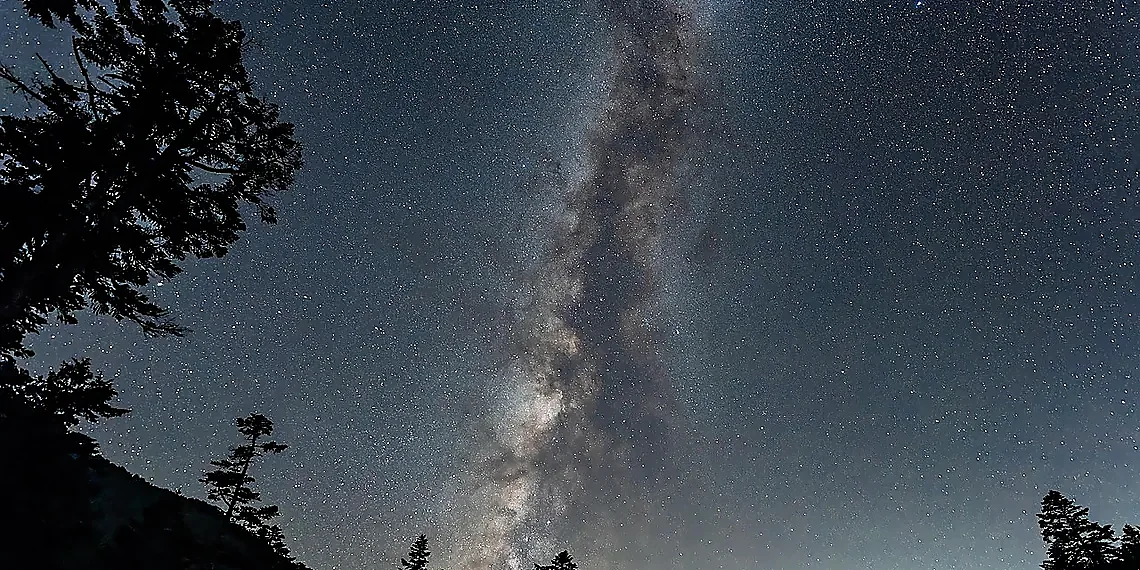
The revelation of these cosmic cocoons, shielding nascent galaxies and revealing the presence of incredibly early-stage objects, fundamentally shifts our understanding of how structures formed in the universe’s infancy.
Imagine witnessing the birth pangs of a galaxy, observing the very processes that sculpted the cosmos as we know it – this is precisely what these observations allow us to do.
The existence of these protective gas clouds also suggests that many more such systems likely exist, potentially harboring even more surprises about the formation of supermassive black holes and the evolution of early galaxies.
It’s particularly fascinating to consider how these environments nurtured the development of what we now believe were *young black holes*, providing a unique window into their initial growth phases – something previously shrouded in mystery and theoretical models alone. The implications for our understanding of dark matter and energy are profound, hinting at connections we’re only beginning to unravel. This discovery is just one piece of an ever-expanding cosmic puzzle, and it’s breathtaking to contemplate the possibilities that remain hidden within the vastness of space.
Continue reading on ByteTrending:
Discover more tech insights on ByteTrending ByteTrending.
Discover more from ByteTrending
Subscribe to get the latest posts sent to your email.