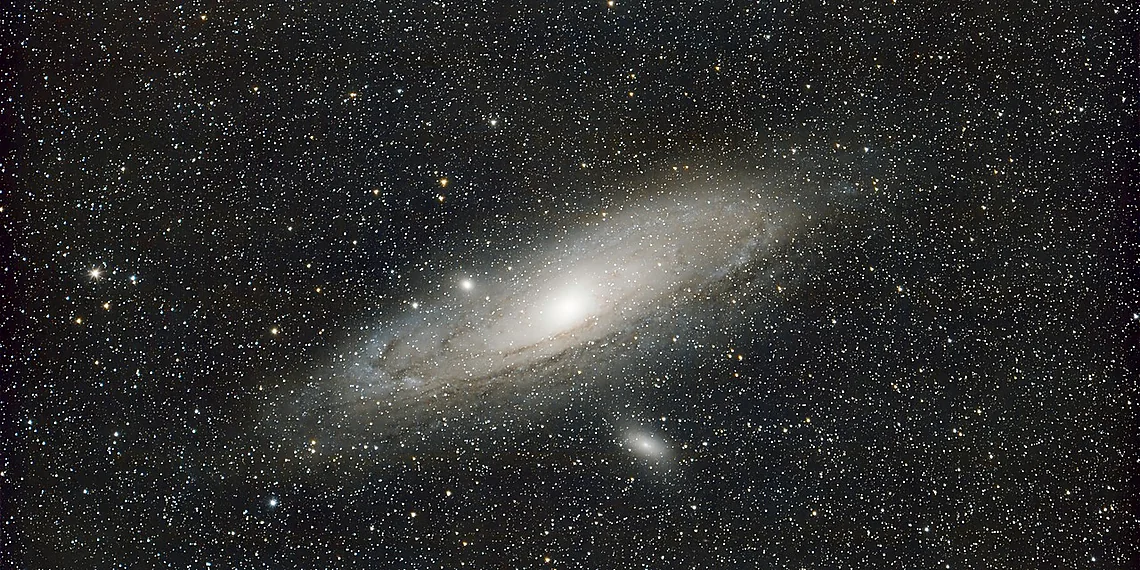
The cosmos just got a whole lot clearer, thanks to a groundbreaking new instrument poised to revolutionize our understanding of the universe. For years, astronomers have eagerly anticipated its arrival, and now, that wait is over: the 4MOST telescope has officially achieved ‘first light.’ This isn’t just another addition to the constellation of observatories; it represents a significant leap forward in large-scale mapping capabilities, promising unprecedented insights into dark matter distribution and galaxy evolution.
So, what exactly does ‘first light’ mean for a telescope? Simply put, it signifies the moment when the telescope successfully collects and focuses light from a celestial object – a crucial first step in its operational journey. It’s akin to a newborn taking their first breath; confirming that all systems are functioning correctly and paving the way for scientific observations. The successful ‘first light’ achieved by the 4MOST telescope confirms this critical milestone, signaling that it is ready to begin its ambitious survey program.
The 4MOST telescope, an acronym representing Four-meter MultiObject Spectrograph Telescope, boasts a unique design allowing it to simultaneously observe thousands of objects across vast swathes of the sky. This innovative capability will enable astronomers to create detailed three-dimensional maps of the universe, revealing hidden structures and testing fundamental cosmological models with unprecedented precision. The initial data already received are incredibly promising, hinting at the transformative discoveries that lie ahead.
What is 4MOST and Why Does it Matter?
The 4MOST telescope, short for 4-meter Multi-Object Spectroscopic Telescope, represents a significant leap forward in astronomical observation capabilities. It’s not just another giant eye pointed at the sky; it’s designed to systematically survey and analyze vast regions of the universe with unprecedented efficiency. Installed on the existing VISTA telescope at ESO’s Paranal Observatory in Chile, 4MOST leverages existing infrastructure while adding a powerful new layer of scientific potential. Its first light, captured on October 18, 2025, signifies that this ambitious project is now ready to begin its primary mission: unraveling some of the universe’s biggest mysteries.
What truly sets 4MOST apart is its multi-object spectroscopic capability. Unlike traditional telescopes which typically observe a single object at a time, 4MOST can simultaneously analyze the light from hundreds – even thousands – of celestial objects. This is achieved through a sophisticated system of fiber optics and spectrographs. Imagine being able to study not just one galaxy, but hundreds of galaxies in a single observation! This capability dramatically accelerates scientific discovery by allowing astronomers to build comprehensive maps of the cosmos and identify patterns across vast distances.
Spectroscopy itself is an incredibly valuable tool for understanding what distant objects are made of, how they’re moving, and even their temperature. By splitting light into its constituent colors – like a prism creating a rainbow – scientists can analyze the specific wavelengths present. Dark lines in this spectrum reveal the elements that absorb those wavelengths, effectively providing a ‘fingerprint’ of the object’s composition. 4MOST will use this technique to study everything from nearby stars and exoplanets to distant quasars and galaxies, pushing the boundaries of our understanding of cosmic evolution.
The combination of its large aperture (4 meters) and multi-object spectroscopic capabilities makes 4MOST a truly unique instrument in astronomy. It’s designed to tackle ambitious projects like mapping the distribution of dark matter, tracing the history of galaxy formation, and searching for exoplanets around nearby stars – tasks that would be simply impossible with older generation telescopes. The first light marks not just a technological achievement, but also the beginning of an exciting new era in astronomical research.
A Spectroscopic Powerhouse

The 4MOST (4-meter Multi-Object Spectroscopic Telescope) is designed as a spectroscopic powerhouse, fundamentally different from many previous telescopes. Unlike traditional telescopes that observe one object at a time, 4MOST can simultaneously analyze the light from hundreds of celestial objects. It achieves this through an array of 1500 robotic positioners, each capable of placing optical fibers precisely onto targets across a wide field of view. These fibers then channel the collected light to spectrographs, which break down the light into its constituent colors.
Spectroscopy itself is a crucial technique in astronomy; it’s essentially analyzing an object’s ‘fingerprint.’ By dispersing light and examining the resulting spectrum – the pattern of brightness across different wavelengths – astronomers can determine an object’s chemical composition, temperature, density, and even its radial velocity (how fast it’s moving towards or away from us). Dark lines, known as absorption lines, reveal which elements are present, while shifts in these lines provide information about motion. 4MOST’s ability to collect spectra from so many objects at once drastically increases the efficiency of this process.
This multi-object spectroscopic capability allows 4MOST to tackle large-scale astronomical surveys that would be impractical with older instruments. It will contribute significantly to projects like mapping the distribution and motions of stars in our galaxy, searching for exoplanets via radial velocity measurements, and studying the evolution of galaxies across cosmic time. The combined power of its design promises an unprecedented view into the universe’s complexities.
The ‘First Light’ Moment: A Crucial Milestone
The term ‘first light’ holds a special significance in astronomy – it’s not merely about seeing something, but rather signifies a crucial milestone in a telescope’s life cycle. For the 4MOST telescope, achieving first light on October 18, 2025, marks the moment its optical system successfully collected and focused light from a distant object for the very first time. This validates years of design, construction, and meticulous integration work, demonstrating that the core functionality – gathering photons – is working as intended. It’s akin to an athlete completing their initial training run; it proves they can move, but intense conditioning and refinement still lie ahead.
Reaching this ‘first light’ moment wasn’t without its technical challenges. The 4MOST telescope isn’t a standalone instrument; it’s intricately integrated with the existing VISTA telescope at ESO’s Paranal Observatory in Chile. This required incredibly precise alignment and coordination between the two systems, ensuring that light collected by 4MOST’s optics is accurately fed into its spectrographs – devices that split light into its constituent colors to reveal information about celestial objects’ composition, temperature, and velocity. The team also had to overcome complexities related to thermal stability in the harsh Chilean desert environment and ensure seamless data transfer between the telescope and processing facilities.
What does this first light signify for future operations? Primarily, it’s a green light to proceed with a rigorous phase of testing and calibration. Scientists will now meticulously fine-tune 4MOST’s performance, mapping its optical aberrations and adjusting its instruments to ensure data accuracy and sensitivity. This process involves analyzing the quality of the collected images, characterizing the spectrographs’ resolution, and calibrating against known celestial objects. Any unexpected observations during this initial phase – anomalies in image sharpness or spectral features – will be investigated thoroughly, potentially leading to further refinements.
Beyond simply confirming functionality, first light provides a vital opportunity for early validation of 4MOST’s innovative design. With its ability to simultaneously observe hundreds of objects across a wide field of view, the telescope is poised to revolutionize our understanding of galaxy evolution and dark matter distribution. The data gathered during this initial testing phase will be invaluable in preparing for the telescope’s ambitious scientific program, ensuring it delivers on its promise to unlock unprecedented insights into the cosmos.
Beyond the Initial Glow

The achievement of first light isn’t simply a celebratory moment; it’s the starting gun for an intensive period of testing and calibration. Following 4MOST’s initial glow, engineers and scientists are meticulously evaluating its performance across various parameters. This includes assessing the optics to ensure sharp images, verifying the spectroscopic capabilities to analyze the composition of distant objects, and characterizing the behavior of the robotic positioning system that allows it to observe hundreds of targets simultaneously. Initial data from first light is crucial for identifying any subtle imperfections or areas needing adjustment before full scientific operations begin.
A significant portion of this post-first light phase involves fine-tuning the telescope’s performance. This includes calibrating its instruments against known celestial objects, correcting for atmospheric distortions using adaptive optics, and ensuring the accuracy and reliability of data pipelines that process the incoming information. Scientists are employing techniques like flat fielding and wavelength calibration to minimize instrumental effects and guarantee the scientific validity of future observations. The team is also developing sophisticated software to manage the massive datasets 4MOST will generate.
Interestingly, during early testing following first light, the team noted slightly higher-than-expected background noise in certain spectral ranges. While not a major issue, this unexpected observation prompted further investigation into potential sources of contamination and adjustments to observing strategies to mitigate its impact. These kinds of discoveries, even minor ones, are invaluable as they contribute to a deeper understanding of the telescope’s operational characteristics and lead to refinements that will ultimately enhance data quality for astronomers worldwide.
Scientific Goals: Unveiling Cosmic Mysteries
The 4MOST telescope isn’t just about capturing beautiful images; it’s designed to tackle some of the most profound questions facing modern astronomy. Its primary scientific goals revolve around understanding how galaxies form and evolve over cosmic time. By precisely measuring the light from thousands of objects simultaneously – a capability afforded by its multi-object spectroscopic design – 4MOST will allow astronomers to trace the chemical composition, temperature, and velocity of these distant galaxies, revealing clues about their birth, growth through mergers, and eventual fate.
A particularly exciting aspect of 4MOST’s mission is its contribution to mapping the distribution of dark matter. While invisible, dark matter’s gravitational influence shapes the large-scale structure of the universe. Using techniques like weak gravitational lensing – distortions in the light from distant galaxies caused by intervening dark matter – and analyzing the peculiar velocities of galaxies, 4MOST will help create unprecedentedly detailed three-dimensional maps of this elusive substance. These maps are crucial for testing cosmological models and refining our understanding of the universe’s composition.
Beyond galactic evolution and dark matter, 4MOST also opens new avenues for exoplanet research. While not its primary focus, the telescope’s capabilities will enable it to characterize the atmospheres of some transiting exoplanets – planets that pass in front of their host stars from our perspective. By analyzing the starlight filtering through these planetary atmospheres, astronomers can search for biosignatures, potential indicators of life beyond Earth, furthering the ongoing quest to determine if we are alone.
Ultimately, 4MOST’s broad range of capabilities allows it to address a complex web of interconnected scientific questions. Its ability to observe vast numbers of objects with high precision will provide an unparalleled dataset for testing existing theories and potentially revolutionizing our understanding of the universe’s origins, evolution, and future – all while contributing to fundamental physics research.
Mapping the Universe’s Structure
The 4MOST telescope is designed to conduct large-scale spectroscopic surveys of the universe, fundamentally contributing to our understanding of cosmic structure formation. Unlike traditional telescopes that observe a small patch of sky at a time, 4MOST can simultaneously analyze the light from over 1000 objects. This capability allows astronomers to map the distribution of galaxies across vast volumes of space with unprecedented detail, revealing how these structures have evolved over billions of years.
A key focus for 4MOST is mapping the ‘cosmic web,’ a large-scale network of filaments and voids where galaxies reside. By precisely measuring the redshifts (and therefore distances) of millions of galaxies, astronomers can create three-dimensional maps that trace this web’s intricate architecture. These maps will help refine cosmological models by testing predictions about how dark matter – the invisible substance making up roughly 85% of the universe’s mass – influences galaxy distribution and structure formation.
The data gathered by 4MOST won’t just reveal the *where* of galaxies, but also provide insights into their properties. Spectroscopic analysis allows scientists to determine a galaxy’s chemical composition, age, and velocity – all crucial pieces in piecing together the puzzle of galaxy evolution. By combining these observations with detailed dark matter maps, 4MOST will offer powerful constraints on current cosmological theories and potentially reveal new physics beyond our standard model.
Looking Ahead: The Future of 4MOST
The journey of the 4MOST telescope doesn’t stop with first light; it’s truly just beginning. While October 18, 2025 marked a critical milestone, the telescope isn’t immediately entering full operational mode. A period of extensive commissioning and calibration will follow over the next year or so, ensuring that all instruments are functioning optimally and data is being collected with maximum precision. Scientists and engineers will meticulously test every aspect of the system, refining processes and ironing out any unforeseen issues before regular observations commence in 2026. This careful approach guarantees the highest quality data for the groundbreaking research planned.
Looking further ahead, the design of 4MOST allows for future upgrades that promise to enhance its capabilities even further. While the initial phase will focus on large-scale spectroscopic surveys targeting millions of stars and galaxies, plans are already in motion for potential advancements. These could include incorporating new detectors with increased sensitivity or refining the spectrograph itself to expand the range of wavelengths observed. Such enhancements would allow 4MOST to tackle increasingly complex questions about the universe’s formation and evolution.
The scientific possibilities unlocked by 4MOST are truly exciting. Its ability to simultaneously observe hundreds of objects makes it ideally suited for mapping the Milky Way’s stellar populations, tracing the distribution of dark matter, and studying the dynamics of galaxy clusters. Astronomers hope to use 4MOST data to refine our understanding of exoplanet atmospheres, search for faint signals from the early universe, and potentially even uncover new types of celestial objects we haven’t yet imagined. The sheer volume of data generated will require innovative analysis techniques, fostering collaboration between astronomers and computer scientists.
Ultimately, the 4MOST telescope represents a significant investment in our understanding of the cosmos. While predicting specific discoveries is inherently challenging, its unique capabilities position it to make transformative contributions to astronomy for years to come. From refining models of galaxy formation to potentially shedding light on the mysteries of dark energy, the first light signals not only the operational readiness of a powerful new tool but also the dawn of a new era in astronomical exploration.
The successful first light of the 4MOST telescope marks a pivotal moment, not just for the project team but for the entire astronomical community.
This achievement represents years of dedicated work and signifies a substantial leap forward in our ability to map and understand the vastness of space.
With its unique capabilities, 4MOST telescope promises to revolutionize how we study galaxy evolution, dark matter distribution, and the formation of stars, offering unprecedented insights into cosmic structures.
The data already being collected hints at discoveries yet unimagined, potentially challenging existing theories and opening entirely new avenues for research; this is truly an exciting time to be involved in astronomy’s advancement. We can anticipate a steady stream of groundbreaking results as the telescope reaches full operational capacity and begins its primary survey missions. The potential for unveiling hidden secrets of the universe feels palpable now that observations are underway, allowing us to probe deeper into the cosmos than ever before. The coming years will undoubtedly be filled with fascinating revelations thanks to this powerful new instrument and the dedicated scientists behind it. Stay tuned as we witness a golden age of astronomical discovery fueled by instruments like 4MOST telescope. We’re only at the beginning of what promises to be an extraordinary journey of exploration and understanding.
Continue reading on ByteTrending:
Discover more tech insights on ByteTrending ByteTrending.
Discover more from ByteTrending
Subscribe to get the latest posts sent to your email.