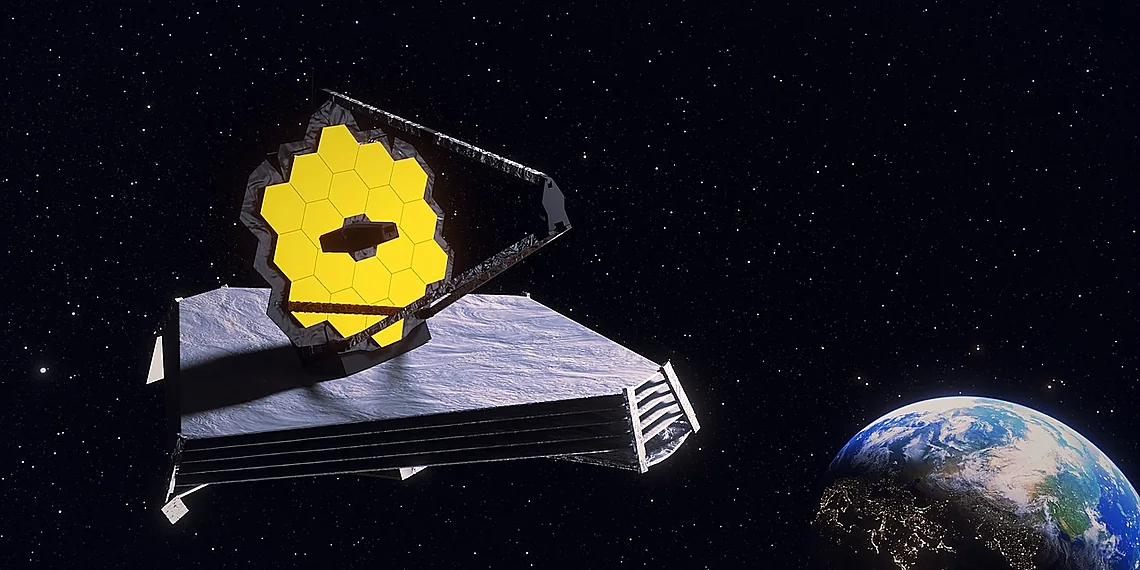

For decades, the Hubble Space Telescope has captivated us with breathtaking images of distant galaxies and nebulae, fundamentally reshaping our understanding of the cosmos.
Now, imagine a telescope capable of pushing those boundaries even further, revealing details previously shrouded in darkness and unlocking secrets of the universe we can only dream of today.
That vision is rapidly becoming reality thanks to Eric Schmidt, former CEO of Google, who’s embarking on an unprecedented private initiative to fund a groundbreaking observatory – essentially, a Hubble successor.
Schmidt’s commitment represents a staggering investment, far exceeding typical philanthropic endeavors and signaling a new era for space exploration driven by both public and private partnerships; the scale is truly remarkable and promises transformative advancements in astronomical observation. This endeavor isn’t just about building a better telescope; it’s about redefining what’s possible when ambition meets resources.


The Vision: Beyond Hubble
Eric Schmidt’s vision for the Hubble successor, dubbed tentatively as the ‘Schmidt Observatory System’, extends far beyond simply replicating Hubble’s achievements. He aims to tackle some of the most profound unanswered questions in cosmology and astrophysics, including a deeper understanding of exoplanet atmospheres, mapping the distribution of dark matter with unprecedented precision, and peering further back into the early universe than ever before possible. Schmidt isn’t just looking for incremental improvements; he wants a telescope capable of revolutionizing our understanding of the cosmos.
A key element enabling these ambitious scientific goals is the sheer scale of the planned observatory. While Hubble’s 2.4-meter primary mirror was revolutionary in its time, Schmidt envisions a significantly larger aperture – initial reports suggest potentially up to 8 meters or even larger. This expanded light-gathering capability will allow for the detection of fainter and more distant objects, crucial for studying early galaxy formation and characterizing exoplanets that are too dim for Hubble to analyze effectively. Furthermore, the telescope’s design incorporates a novel ‘Argus’ array – multiple smaller mirrors combined to act as a single large aperture – offering flexibility in both size and cost.
Beyond sheer size, Schmidt’s project emphasizes advanced sensor technology. He plans to utilize next-generation detectors with significantly improved sensitivity across a broader spectrum of light, including infrared wavelengths vital for penetrating dust clouds and observing cooler exoplanets. These sensors will also incorporate sophisticated noise reduction techniques, maximizing signal clarity and enabling the detection of incredibly subtle variations in light – crucial for analyzing exoplanet atmospheres for biosignatures or mapping the faint gravitational lensing effects that reveal the distribution of dark matter.
Finally, Schmidt recognizes the importance of advanced data processing capabilities. The sheer volume of data generated by such a powerful telescope will require cutting-edge algorithms and computing infrastructure to analyze effectively. He aims to incorporate machine learning techniques from his Google background to automatically identify patterns and anomalies in the data, accelerating scientific discovery and potentially uncovering unexpected insights that human researchers might otherwise miss – truly pushing the boundaries of what we can learn about the universe.
Scientific Aims & Capabilities

The planned “Hubble successor,” spearheaded by Eric Schmidt, is envisioned as a powerful tool addressing fundamental questions about the universe’s origins, evolution, and potential for life elsewhere. Key scientific objectives include detailed exoplanet characterization – analyzing their atmospheres to search for biosignatures indicating possible life – alongside significantly enhanced dark matter mapping. Unlike Hubble’s primarily optical observations, Schmidt’s telescope aims to observe across a broader spectrum including infrared wavelengths crucial for peering through cosmic dust and observing the earliest galaxies.
A primary driver of this new telescope’s capabilities is its sheer size. While Hubble’s 2.4-meter mirror has served admirably, Schmidt’s project anticipates a considerably larger aperture, potentially exceeding 8 meters in diameter. This increased light-gathering power directly translates to greater sensitivity for observing faint and distant objects. Furthermore, the design incorporates advanced sensor technology, including highly sensitive detectors capable of capturing subtle signals from exoplanet atmospheres and mapping the distribution of dark matter with unprecedented precision.
Beyond exoplanets and dark matter, the telescope’s infrared capabilities will allow scientists to observe galaxies as they formed in the early universe, pushing back the observational frontier significantly further than Hubble. This ability to study these nascent galaxies provides invaluable insights into the processes that shaped the cosmos we see today – a quest Hubble was limited in pursuing due to its wavelength constraints and sensitivity.
Schmidt’s Investment & The ‘Argus’ Prototype
Eric Schmidt, former CEO of Google, is making a bold move to ensure humanity’s continued access to groundbreaking astronomical observations: he’s personally financing the development of a successor to the Hubble Space Telescope. This isn’t a small philanthropic gesture; estimates place his investment at over $200 million – a sum that rivals many traditional government-funded space projects. While NASA and other agencies often grapple with budget constraints and political hurdles, Schmidt’s independent funding model promises a potentially faster development timeline and greater flexibility in design choices. It signals a significant shift towards private enterprise playing an increasingly crucial role in pushing the boundaries of space exploration.
At the heart of this ambitious project are the ‘Argus’ prototype telescopes. These aren’t direct replicas of what the final Hubble successor will look like, but rather experimental platforms used to test and refine key technologies. Schmidt Observatory Systems is utilizing these prototypes to explore novel optical designs and advanced imaging techniques – features that could dramatically improve upon Hubble’s capabilities. The Argus design itself focuses on a modular approach allowing for easier upgrades and adaptability as technology advances, a departure from the more rigid architecture of previous space telescopes.
The implications of private funding in space exploration are far-reaching. While government agencies like NASA often prioritize long-term research and broader strategic goals, private investment can be driven by specific objectives or even commercial opportunities. This could lead to faster innovation cycles and a greater willingness to take risks on unconventional approaches. However, it also raises questions about accessibility – will Schmidt’s Hubble successor be freely available to the scientific community, or will access be restricted based on financial considerations? The balance between private ambition and public benefit remains a critical aspect of this evolving landscape.
Ultimately, Schmidt’s investment represents more than just funding for a telescope; it’s a statement about the future of space exploration. It demonstrates that significant advancements are no longer solely reliant on government budgets and bureaucratic processes. The success of the ‘Argus’ prototypes and the eventual Hubble successor will undoubtedly influence how we approach ambitious scientific endeavors in the years to come, potentially opening doors for other private individuals and companies to contribute to our understanding of the universe.
Funding a Space Telescope: A Private Endeavor
Eric Schmidt’s ambition to build a successor to the Hubble Space Telescope is underscored by the staggering scale of his investment. Estimates place the total cost around $2 billion, a figure that rivals and even surpasses many traditional government-funded space projects. While NASA’s James Webb Space Telescope (JWST), often considered Hubble’s direct descendant, also cost approximately $10 billion overall (including development and launch costs), Schmidt’s commitment represents a significant departure from the established model of relying on public funds for such ambitious endeavors. This private investment allows for potentially faster decision-making and less bureaucratic overhead compared to government projects.
The financial backing isn’t solely directed towards building the primary telescope itself. A crucial element involves developing and refining an array of prototype telescopes nicknamed ‘Argus’. Schmidt Observatory Systems is utilizing these smaller, ground-based Argus prototypes to test various optical technologies and imaging techniques intended for the Hubble successor. This phased approach allows for iterative improvements and risk mitigation before committing fully to the construction of the orbital telescope. The initial investment in the Argus program itself reportedly accounts for a substantial portion of Schmidt’s overall commitment.
Private funding models like Schmidt’s offer both compelling benefits and potential drawbacks. On one hand, they can accelerate innovation by bypassing governmental red tape and fostering agility. However, concerns regarding long-term sustainability, scientific priorities (potentially driven more by the investor than the broader scientific community), and equitable access to data remain valid considerations. The success of this endeavor could pave the way for increased private involvement in space exploration, but it also necessitates careful evaluation of ethical implications and ensuring alignment with global scientific goals.
The ‘Argus’ System: A Unique Approach
Eric Schmidt’s ambitious plan to build a Hubble successor isn’t relying on traditional single-telescope design. Instead, he’s championing a revolutionary system called ‘Argus,’ a name referencing the hundred-eyed giant of Greek mythology. Argus utilizes an array of smaller prototype telescopes arranged in a carefully calculated configuration. These aren’t intended to be independent observing instruments; rather, they serve as crucial testing and calibration tools for the primary telescope – the eventual Hubble replacement itself. This modular approach allows Schmidt’s team to rigorously validate optics, detectors, and pointing systems before committing fully to the main structure, significantly reducing risk and potentially accelerating development.
The purpose of the Argus system is fundamentally about iterative refinement and de-risking a project of this immense complexity. Each prototype telescope within the array mimics aspects of the primary’s functionality – testing everything from mirror alignment and thermal stability to data processing pipelines. By observing the same celestial targets simultaneously with both the prototypes and simulations, engineers can pinpoint and correct errors early on, avoiding costly redesigns later in the process. This approach also allows for experimentation with different technologies and configurations without jeopardizing the entire project; if one prototype design proves problematic, it can be modified or replaced without impacting the others.
Schmidt’s choice of this unique ‘Argus’ system stems from a desire to leverage agile development principles often found in the tech industry – something he championed during his time at Google. Building a telescope of this scale is traditionally an incredibly long and complex process, prone to delays and budget overruns. By employing smaller, independent prototypes for testing and calibration, Schmidt aims to create a more flexible and responsive development cycle, enabling faster iteration and potentially leading to breakthroughs in observational capabilities that might not be possible with conventional methods. The modularity also offers inherent redundancy; if one component fails, the system can continue operating with reduced capacity.
Furthermore, the Argus array’s design allows for testing of advanced image processing techniques before they’re integrated into the main telescope’s operational software. This ensures that data acquired by the Hubble successor will be as clean and scientifically valuable as possible from day one. The system effectively functions as a ‘proving ground,’ rigorously validating every aspect of the primary telescope’s design and functionality, ultimately setting the stage for a more efficient, reliable, and groundbreaking space observatory.
Understanding Argus

The Schmidt Observatory System’s approach to building a Hubble successor, dubbed ‘Argus,’ is unique: instead of relying on a single massive telescope, it utilizes an array of smaller prototype telescopes working in concert. These Argus prototypes aren’t intended for scientific observations themselves; their primary function is to rigorously test and calibrate the systems destined for the main, larger Hubble replacement telescope. This includes testing optics, detectors, pointing mechanisms, and data processing pipelines under simulated space conditions before they are integrated into the flagship instrument.
The arrangement of these Argus telescopes is crucial to their functionality. They are positioned in a carefully designed configuration that allows them to observe the same celestial targets simultaneously. By comparing the data collected by each prototype, engineers can identify subtle errors and biases within the individual systems and refine their performance. This iterative process significantly reduces risk and cost associated with integrating complex technologies into the main telescope, as problems are caught and corrected earlier in development.
This modular approach offers several benefits beyond just testing and calibration. It allows for parallel development of different subsystems, accelerating the overall project timeline. Furthermore, it provides redundancy; if one prototype encounters issues, others can continue contributing to the validation process. Ultimately, Schmidt’s investment in this Argus system represents a novel engineering solution aimed at minimizing risk and maximizing the success rate of his ambitious Hubble successor project.
Implications & The Future of Space Exploration
Eric Schmidt’s ambitious plan to privately fund a successor to the Hubble Space Telescope represents far more than just a new eye on the cosmos; it signals a potential paradigm shift in how we approach space exploration. For decades, large-scale astronomical endeavors have been largely reliant on government funding and agencies like NASA and ESA. Schmidt’s initiative, if successful, could democratize access to powerful observational tools, allowing researchers and even citizen scientists opportunities previously unavailable. This model of private investment alongside or independent of governmental programs could unlock a new wave of innovation, potentially accelerating the pace of discovery in ways we can only begin to imagine.
The implications extend beyond just scientific advancement. Schmidt’s willingness to invest heavily demonstrates a powerful vote of confidence in the commercial space sector and its potential for groundbreaking contributions. This kind of high-profile backing could inspire other wealthy individuals and private companies to explore similar ventures, further fueling investment in areas like advanced telescope technology, orbital infrastructure, and even deep-space probes. Imagine a future where multiple privately funded telescopes are constantly pushing the boundaries of our understanding – Schmidt’s project could be the catalyst for precisely that kind of accelerated progress.
However, the road ahead won’t be without significant challenges. Building and deploying a telescope capable of rivaling Hubble’s capabilities is an incredibly complex undertaking, requiring expertise in optics, engineering, robotics, and orbital mechanics. Securing access to launch vehicles, ensuring stable funding over the project’s lifespan (which could span decades), and navigating regulatory hurdles are just a few of the obstacles Schmidt and his team will face. Furthermore, maintaining data accessibility and avoiding proprietary restrictions will be crucial for fostering collaboration and maximizing the scientific value of the resulting observations.
Ultimately, Schmidt’s Hubble successor isn’t merely about replacing an aging telescope; it’s about redefining the future of space exploration itself. It challenges existing norms, opens doors to new possibilities, and inspires a renewed sense of wonder and ambition. While hurdles undoubtedly lie ahead, the potential rewards – from unprecedented scientific discoveries to a broader democratization of access to the universe – make this initiative one worth watching closely.
A New Era for Space?
Eric Schmidt’s ambitious plan to privately fund a successor to the Hubble Space Telescope represents a potentially seismic shift in how we approach space exploration. Historically, large-scale astronomical observatories have been almost exclusively government-funded projects, requiring years of bureaucratic processes and often facing budget constraints. Schmidt’s initiative demonstrates the possibility – and perhaps inevitability – of significant private investment driving major advancements in this field, effectively bypassing traditional limitations and potentially accelerating timelines for scientific discovery. This could pave the way for a new era where wealthy individuals or corporations play a larger role in funding and even designing space-based infrastructure.
The implications extend beyond just building another telescope. Schmidt’s involvement signals a broader trend towards ‘democratization’ of access to space, encouraging other private entities to consider similar ventures. This competition could spur innovation not only in telescope technology but also in areas like launch capabilities and data processing – all crucial components for effective astronomical research. Furthermore, the transparency often associated with privately funded projects (though this remains to be seen) may lead to greater public engagement and understanding of scientific endeavors.
However, Schmidt’s project isn’t without potential roadblocks. Building and operating a space telescope is an incredibly complex undertaking requiring specialized expertise, intricate engineering, and rigorous testing. Securing reliable launch services, ensuring long-term operational stability in the harsh environment of space, and navigating regulatory hurdles will all present significant challenges. Moreover, questions remain about how Schmidt’s privately funded observatory will share its data with the wider scientific community – a crucial aspect for maximizing its impact and avoiding accusations of hoarding valuable information.

Schmidt’s vision isn’t just about building a larger telescope; it’s about fundamentally reshaping how we understand our universe, pushing beyond the limitations of current observational capabilities and opening entirely new avenues for discovery.
The sheer scale of the project, combined with Schmidt’s innovative engineering approach to diffraction grating technology, promises an unprecedented leap in sensitivity and resolution, allowing us to peer deeper into space and unravel mysteries that have long eluded astronomers.
While challenges undoubtedly remain, the momentum behind this initiative is palpable, fueled by a passionate team and a global community eager to witness its realization. This telescope represents more than just technological advancement; it’s a testament to human curiosity and our relentless pursuit of knowledge.
Looking ahead, the data gathered from this Hubble successor will redefine our understanding of exoplanets, galactic formation, and potentially even offer glimpses into the very early universe, providing insights we can scarcely imagine today. The possibilities are truly limitless, poised to usher in a golden age for astronomical research and inspire future generations of scientists and explorers alike. We invite you to join us on this incredible journey – follow the project’s progress closely and share your thoughts and excitement about what this groundbreaking endeavor might reveal; your engagement helps shape the future of space exploration.
Continue reading on ByteTrending:
Discover more tech insights on ByteTrending ByteTrending.
Discover more from ByteTrending
Subscribe to get the latest posts sent to your email.