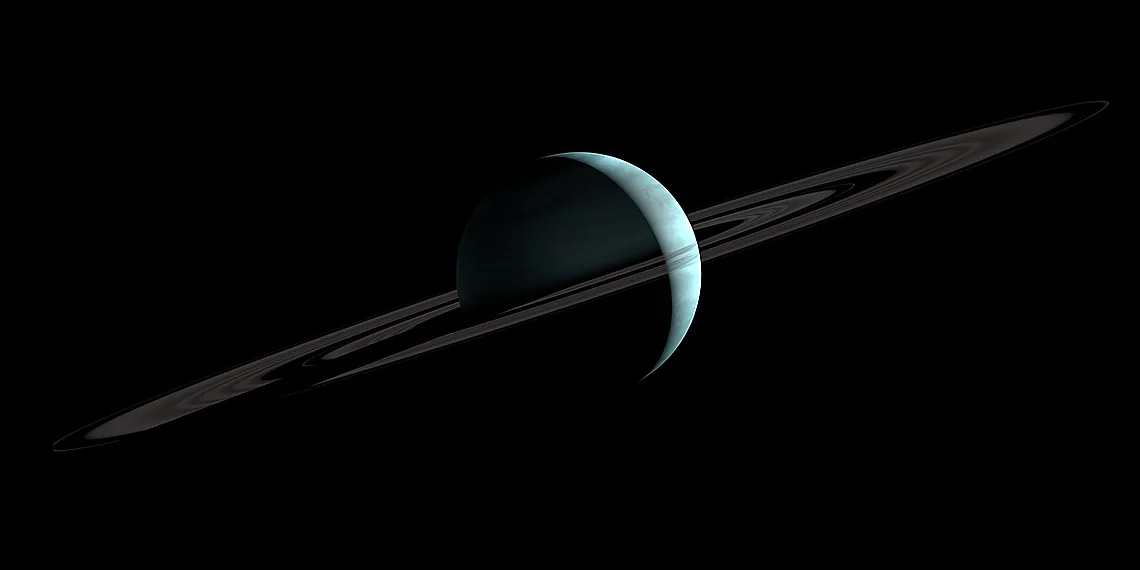



Imagine a sky dominated not by a single, familiar planet, but by worlds several times larger than Earth – gas giants shrunk down to rocky sizes. These enigmatic bodies, known as super-Earths and sub-Neptunes, are incredibly common around other stars, yet conspicuously absent from our own solar system, presenting one of the most perplexing puzzles in modern astronomy. Their sheer abundance elsewhere begs the question: where did they go, and why are we so unique? The search for answers has been a long and complex journey, filled with competing theories and frustrating gaps in our understanding.
Scientists have wrestled with how these massive planets manage to form at relatively close distances to their stars – a location that seems inherently unfavorable according to established planetary formation models. Traditional explanations often fall short when attempting to reconcile the observed prevalence of super-Earths with what we know about the dynamics of protoplanetary disks and the building blocks of planets. Understanding the nuances of Super-Earths Formation is crucial for refining our broader theories of planet development.
Now, a groundbreaking new discovery promises to shed significant light on this cosmic mystery, offering compelling evidence that challenges existing assumptions and opens up exciting new avenues of research. This article dives into the details of these findings, exploring their implications for our understanding of planetary systems beyond our own and potentially rewriting textbooks about how planets are born.
The Super-Earth Puzzle
For decades, our solar system was considered the gold standard for planetary architectures. We knew of rocky planets like Earth and Mars closer to the sun, followed by gas giants like Jupiter and Saturn further out. Then exoplanet hunting began in earnest, and what we found completely upended that view. Astronomers have identified thousands of planets orbiting other stars, many belonging to a class dubbed ‘Super-Earths’ and ‘Sub-Neptunes.’ These aren’t Earth 2.0; Super-Earths are roughly between the size of Earth and Neptune (roughly twice Earth’s radius and up to ten times its mass), while Sub-Neptunes extend slightly beyond that range. The surprising thing? They appear incredibly common – orbiting most stars, unlike anything we see in our own solar system.
The prevalence of Super-Earths and Sub-Neptunes is what makes them such a puzzle. Our own solar system simply lacks these types of planets; the closest analogue would be a planet between Mars and Jupiter, but that material never coalesced into a distinct world. This absence fuels a deep curiosity among planetary scientists: How did other systems form planets we don’t see here? While Earth formed from rocky debris, Super-Earths likely arose through a process called core accretion—a gradual accumulation of rock and ice – or potentially a more rapid gas collapse similar to how giant planets like Jupiter are thought to form. The exact mechanisms, however, remain hotly debated.
Studying these distant worlds is extraordinarily challenging. Because they’re so far away, direct observation is nearly impossible; we primarily detect them through indirect methods like the transit method (observing dips in a star’s brightness as a planet passes in front) or radial velocity measurements (detecting subtle wobbles in a star caused by a planet’s gravitational pull). These techniques provide information about size and mass, but offer limited insight into composition – are we looking at a rocky world with a thick atmosphere, or a small gas giant? The difficulty in characterizing their atmospheres and internal structures makes unraveling the mysteries of Super-Earths formation all the more complex.
The ongoing quest to understand Super-Earths and Sub-Neptunes represents a fundamental shift in our understanding of planetary system architecture. Their abundance challenges existing models of planet formation, forcing scientists to refine theories and develop new observational techniques. As exoplanet research continues to advance with missions like the James Webb Space Telescope, we can anticipate increasingly detailed insights into these fascinating worlds – hopefully bringing us closer to solving the ‘Super-Earth Puzzle’ and ultimately providing a clearer picture of our place in the universe.
Defining the ‘Missing Link’

Super-Earths and sub-Neptunes represent a distinct class of exoplanets that are significantly more massive than Earth but less massive than Neptune. ‘Super-Earth’ generally refers to planets with masses between roughly 1 to 10 times the mass of Earth, while ‘sub-Neptune’ extends this range up to around 10 to 20 Earth masses. Their radii typically fall between 1.25 and 4 Earth radii. Critically, these designations describe size and mass; their composition can vary dramatically, ranging from primarily rocky planets with substantial atmospheres to mini-Neptunes possessing thick hydrogen-helium envelopes.
Observations of exoplanetary systems reveal that super-Earths and sub-Neptunes are remarkably common – they appear to be the most frequently observed type of planet orbiting other stars. In contrast, our own solar system lacks any planets within this size range; we have rocky inner planets (Mercury, Venus, Earth, Mars) and gas/ice giants further out (Jupiter, Saturn, Uranus, Neptune). This difference in planetary architecture is a key driver for scientific inquiry, suggesting that the processes of planet formation may vary significantly between different stellar systems.
Studying super-Earths and sub-Neptunes presents significant challenges. Their smaller size and greater distance from Earth compared to larger planets like Jupiter make them difficult to observe directly. Most observations rely on indirect methods such as transit photometry (measuring the dimming of a star’s light as a planet passes in front) and radial velocity measurements (detecting the wobble caused by a planet’s gravity). These techniques provide limited information about their atmospheric composition or internal structure, hindering our understanding of their formation and evolution.
New Observations: Four Baby Planets Revealed
A groundbreaking new study has unveiled four “baby” planets in the process of forming around a young star system located 340 light-years away, providing unprecedented insights into the perplexing question of Super-Earths formation. These aren’t fully formed exoplanets; they are protoplanets – essentially planetary embryos still accreting material from a swirling disk of gas and dust. The discovery, detailed in *Nature*, marks one of the most comprehensive observations yet of planets actively being born, offering a rare glimpse into the chaotic early stages of planetary system development.
The four protoplanets, designated AB Aurigae b, c, d, and e, were detected using the High Contrast Instrument for the Exploration of Circumstellar Phenomena (HiPEC) on the Very Large Telescope (VLT) in Chile. HiPEC employs a coronagraph to block out the overwhelming light from the parent star, allowing astronomers to directly image the fainter protoplanets. AB Aurigae b is the most massive at roughly nine times the mass of Earth and orbits its star in just 21 days. Planets c, d, and e are significantly smaller, with masses estimated to be between one and three times that of Earth, exhibiting orbital periods ranging from around 80 to 450 days.
What makes this discovery particularly significant is the ability to witness these planets during their formative period. Observing planets *while* they’re forming is incredibly challenging; most exoplanet detection methods rely on observing subtle dips in a star’s light as a planet passes in front of it (the transit method) or analyzing the wobble a planet induces on its star – techniques that reveal already-established planets. Direct imaging, like what was used here with HiPEC, is crucial for catching these nascent worlds and understanding their composition and growth mechanisms.
The observations provide valuable clues about how Super-Earths, those enigmatic planets larger than Earth but smaller than Neptune which are common around other stars yet absent in our own solar system, come to be. Scientists believe that AB Aurigae’s protoplanets offer a window into the early stages of planet formation – potentially revealing whether they formed closer to their star and migrated outwards or arose further away and spiraled inwards.
Witnessing Planetary Birth
For decades, astronomers have primarily relied on indirect methods like the transit method – observing dips in a star’s light as a planet passes in front of it – to discover exoplanets. While incredibly successful, this approach reveals limited information about a planet’s formation process itself. Recently, however, advancements in telescope technology and observational techniques have enabled astronomers to directly image planets while they are still actively forming within protoplanetary disks, swirling clouds of gas and dust surrounding young stars. This represents a monumental shift in our ability to witness planetary birth firsthand.
The groundbreaking observation detailed in this article focuses on four ‘baby’ planets orbiting the star PDS 70, located approximately 370 light-years away from Earth. Using the Very Large Telescope (VLT) in Chile and its advanced instrument SPHERE (Spectro-Polarimetric High-contrast Exoplanet REsearch), scientists were able to directly image these nascent planets. Two of the planets, PDS 70b and PDS 70c, are particularly intriguing; PDS 70b is a gas giant roughly twice the mass of Jupiter with an orbital period of just 5.4 years, while PDS 70c is smaller, about six times the mass of Earth, with an orbital period of 13.8 years. Crucially, these planets are embedded within the protoplanetary disk and continue to accrete material.
What makes this observation truly unique isn’t just the direct imaging capability – it’s that we can see evidence suggesting these planets are still in the process of formation. For example, gaps and structures within the surrounding disk hint at ongoing gravitational interactions between the planets and the disk material. These features provide invaluable insights into how super-Earths gain mass and shape over time, offering a rare glimpse into a stage of planetary evolution previously inaccessible to observation.
Formation Theories Under Scrutiny
The existence of ‘Super-Earths’ – planets significantly larger than Earth but smaller than Neptune – has long puzzled astronomers. These behemoths, found orbiting most stars surveyed so far, are conspicuously absent from our own solar system, hindering detailed study and fueling debate about their origins. Two dominant theories attempt to explain Super-Earths formation: core accretion and disk instability. Core accretion proposes a slow and steady buildup of planetesimals – rocky bodies initially forming through collisions – gradually accumulating gas and dust over millions of years. This process is analogous to how our own solar system’s planets likely formed, but struggles to adequately explain the rapid growth needed for Super-Earth masses. Disk instability, conversely, suggests that under specific conditions within a protoplanetary disk (the swirling cloud of gas and dust around a young star), massive clumps can rapidly collapse directly into giant planets.
Each theory has its limitations when attempting to account for the observed diversity in Super-Earths. Core accretion requires efficient pebble transport – moving small, planetesimal-building particles across vast distances within the disk – which is difficult to achieve and often leads to planetary migration. Disk instability, while capable of rapid formation, typically predicts planets much further from their stars than where many Super-Earths are actually found. Furthermore, it’s challenging for this model to explain the observed composition gradients in these exoplanets – how their internal structure relates to their distance from the star – something core accretion handles more gracefully.
Recent observations, particularly those utilizing high-resolution imaging and precise radial velocity measurements of distant star systems, are now providing critical data points that challenge and refine both models. For instance, the detection of unusually massive planets orbiting very close to their stars—a scenario initially deemed unlikely by either theory—forces a reevaluation of how gas accretion can occur and potentially challenges assumptions about disk lifetimes. Furthermore, detailed analyses of planet densities reveal compositional variations that are difficult to reconcile with simple core accretion scenarios, suggesting more complex processes involving multiple migration events or unique initial conditions within the protoplanetary disk. These revelations hint at a hybrid formation process, where elements of both core accretion and disk instability may play a role depending on the specific star system’s characteristics.
Ultimately, these new observations aren’t invalidating either model entirely but rather highlighting their limitations and prompting scientists to develop more nuanced frameworks for Super-Earths formation. The data is revealing that planet formation is likely far more dynamic and complex than previously imagined – a messy interplay of gravitational interactions, gas dynamics, and material transport within protoplanetary disks. Continued observations and increasingly sophisticated simulations will be crucial in piecing together the full picture of how these fascinating planetary outliers came to exist.
Core Accretion vs. Disk Instability

The formation of Super-Earths, planets with masses significantly greater than Earth but less than Neptune, remains a central puzzle in planetary science. Two primary models attempt to explain their origin: core accretion and disk instability. Core accretion is the more established theory; it posits that Super-Earths begin like smaller terrestrial planets – with dust grains gradually colliding and sticking together to form planetesimals, which then accrete into larger protoplanets. Over millions of years, these protoplanets gravitationally pull in gas from the surrounding protoplanetary disk, eventually forming a full-fledged Super-Earth. This process is relatively slow and requires a substantial amount of solid material within a specific distance from the star.
In contrast, the disk instability model offers a much faster route to Super-Earth formation. It suggests that under certain conditions – a particularly massive and cold protoplanetary disk – regions can rapidly collapse directly into gas giant planets or Super-Earths. This collapse isn’t driven by the gradual accumulation of solids but by instabilities within the gaseous disk itself, leading to a swift gravitational implosion. Disk instability models predict that these planets would form much farther from their stars than core accretion typically allows, and could possess significantly different compositions due to the direct capture of gas.
While core accretion successfully explains the formation of many observed exoplanets, it struggles to account for Super-Earths found at large orbital distances (beyond ~20 AU) where there isn’t sufficient solid material available. Disk instability elegantly addresses this issue, but faces challenges in explaining why these massive planets don’t always migrate inward towards their stars and why the protoplanetary disks required for rapid collapse are not more commonly observed. Current observations of exoplanet systems, particularly those with Super-Earths at wider orbits or unusual compositions, continue to refine our understanding and may eventually necessitate a hybrid model that combines aspects of both core accretion and disk instability.
Implications for Our Solar System & Beyond
The prevalence of Super-Earths—planets larger than Earth but smaller than Neptune—across the galaxy presents a fascinating puzzle. Their existence challenges our established models of solar system formation, especially considering our own solar system’s distinct lack of such a planet. New research into Super-Earths’ formation is forcing us to re-evaluate how planetary systems evolve and consider alternative scenarios that might explain why Earth ended up as the sole rocky planet in our neighborhood. Understanding these diverse planetary architectures could reveal crucial insights into the conditions necessary for solar system stability and, perhaps most importantly, the likelihood of finding other worlds capable of supporting life.
One compelling implication is that the absence of a Super-Earth in our solar system might not be an anomaly but rather a consequence of specific, potentially rare, formation circumstances. Perhaps Jupiter’s early migration played a crucial role in scattering any protoplanets that would have otherwise grown into Super-Earths. Revising our models to account for such dynamic events—planetary collisions and gravitational interactions—could help us understand why our solar system developed the way it did and provide better context for interpreting the vast array of exoplanetary systems we’re discovering. This also opens up questions about how common ‘Jupiter-like’ migration events are in other star systems.
The habitability question is another crucial aspect. While Super-Earths possess a larger surface area than Earth, potentially allowing for more liquid water, their greater gravity and dense atmospheres can also lead to runaway greenhouse effects or tidal locking – conditions that might render them inhospitable. However, the sheer number of Super-Earths discovered suggests they represent a significant population; understanding their formation mechanisms will be vital in assessing which ones warrant further investigation as potential havens for life. Future exoplanet searches, armed with this improved knowledge, may prioritize systems exhibiting specific characteristics that suggest a higher probability of Earth-like conditions on orbiting Super-Earths.
Ultimately, the ongoing research into Super-Earths formation isn’t just about understanding distant worlds; it’s fundamentally about refining our understanding of our own place in the cosmos. By examining these planetary outliers and contrasting them with our solar system’s unique configuration, we gain a deeper appreciation for the complex processes that shape planetary systems and the extraordinary circumstances that allowed life to flourish on Earth. This knowledge will undoubtedly guide future missions designed to detect biosignatures and search for other potentially habitable worlds beyond our own.
Rethinking Our Cosmic Neighborhood
The prevalence of super-Earths – planets with masses between that of Earth and Neptune – orbiting other stars presents a significant puzzle when compared to our own solar system, which conspicuously lacks one. Recent research into super-Earth formation suggests several potential mechanisms beyond the traditional core accretion model, including pebble disc instability, where gravitational collapse within a protoplanetary disk rapidly forms massive planets close to their host star. These models highlight that conditions necessary for super-Earth formation are more common than previously thought, implying our solar system may have experienced unique circumstances preventing such a planet’s emergence.
Understanding the formation pathways of these exoplanets allows scientists to refine existing planetary formation theories and potentially explain why our solar system evolved differently. One leading hypothesis posits that Jupiter’s early migration scattered any protoplanets forming beyond its orbit, effectively clearing out space for only smaller planets like Earth and Mars. Alternatively, a super-Earth may have formed but was ejected due to gravitational interactions with other bodies in the nascent solar system. Reconstructing these events through simulations based on new formation models is crucial for a complete picture of our own planetary history.
The habitability of super-Earths remains an open question. While their larger size can potentially allow them to retain thicker atmospheres, which could moderate temperatures and provide liquid water, they are also more prone to tidal locking (one side always facing the star) and intense volcanic activity. Current observations suggest a wide range in atmospheric compositions and surface conditions among super-Earths, making it difficult to generalize about their habitability. Future missions designed to analyze exoplanet atmospheres will be critical for determining whether any of these worlds harbor environments conducive to life.
The journey into understanding planetary systems beyond our own has revealed a universe of astonishing diversity, and the study of Super-Earths Formation is proving to be at its very forefront. We’ve seen how complex models, combined with increasingly sophisticated observational data from missions like TESS and JWST, are slowly peeling back the layers of mystery surrounding these intriguing worlds. The ongoing debate about their composition – whether they’re dense rocky planets or gaseous mini-Neptunes – highlights just how much we still have to learn about the fundamental processes shaping planetary bodies. These findings not only refine our existing theories on planet formation but also force us to reconsider assumptions about the prevalence of Earth-like conditions elsewhere in the cosmos. Ultimately, continued research promises a deeper comprehension of our own solar system’s origins and its place within the broader galactic context. The future is bright for exoplanet exploration, with new missions and technologies constantly pushing the boundaries of what’s possible. Stay tuned to ByteTrending – we’ll be covering these exciting breakthroughs as they unfold; subscribe to our newsletter and follow us on social media to keep your finger on the pulse of this incredible field.
@ByteTrending!#exoplanets #astronomy #science
Continue reading on ByteTrending:
Discover more tech insights on ByteTrending ByteTrending.
Discover more from ByteTrending
Subscribe to get the latest posts sent to your email.