
The cosmos just threw us a curveball, and astronomers are scrambling to understand its implications. A recent burst of energy, designated GRB 250702B, has shattered previous assumptions about how these extreme events occur. It wasn’t merely powerful; it was unprecedented in several key measurements, leaving scientists worldwide scratching their heads.
Gamma-Ray Bursts are the most luminous explosions in the universe, typically signaling the death of massive stars or the collision of neutron stars – incredibly violent and distant phenomena. GRB 250702B, however, exhibited an unexpectedly long duration and a peculiar spectral signature that defied easy categorization within existing models.
Now, a groundbreaking new perspective emerges from Professor An Tao at Shanghai Astronomical Observatory, proposing a radical explanation rooted in the concept of a ‘magnetic jet engine.’ His team’s work suggests this event wasn’t driven by the standard collapse scenario, but rather by a previously underestimated interplay between magnetic fields and collapsing stellar material – an idea that could fundamentally reshape our understanding of these cosmic powerhouses.
Professor Tao’s model offers a compelling framework for interpreting GRB 250702B’s unique characteristics, potentially opening up new avenues for research into the diverse mechanisms behind these spectacular displays. The implications extend far beyond this single event; they challenge us to reconsider the very engines that drive some of the universe’s most energetic processes.
The Mystery of ‘Heartbeat’ Gamma-Ray Bursts
Gamma-Ray Bursts (GRBs) are the most powerful explosions in the universe – colossal events marking the death of massive stars or the collision of neutron stars. These fleeting bursts release more energy in a few seconds than our Sun will emit over its entire lifespan, making them incredibly rare and challenging to observe. Typically, GRBs appear as short, intense flashes of gamma rays before fading away. However, one recent burst, designated GRB 250702B and discovered on July 2nd, 2025, presented an unprecedented anomaly: a pulsating, ‘heartbeat’ pattern that has baffled astronomers.
What sets GRB 250702B apart is its remarkably regular repetition of intense gamma-ray emissions. Instead of the usual brief flash, this burst emitted pulses every 2.14 seconds for nearly three hours. This rhythmic pulsing isn’t just unusual; it directly contradicts many existing models that describe how these cosmic explosions work. Standard theories often involve a rapidly rotating black hole surrounded by an accretion disk, with jets of material blasting out along the poles. While these jets are responsible for the observed gamma rays, they don’t readily explain this consistent, heartbeat-like pattern – it’s as if the explosion is ticking like a cosmic clock.
To address this perplexing phenomenon, Professor An Tao from the Shanghai Astronomical Observatory (SHAO) has proposed a groundbreaking new model: a ‘precessing magnetic jet engine.’ This theory suggests that instead of a simple, stable jet, GRB 250702B involved a jet powered by intense magnetic fields which wobbled or precessed—much like a spinning top. This wobble would periodically focus the energy output, resulting in the observed pulsing. While still theoretical, this model offers a promising explanation for the heartbeat pattern and highlights the complexity of these extreme cosmic events.
The discovery of GRB 250702B and Professor Tao’s proposed solution underscore how much we still have to learn about the universe’s most energetic phenomena. Further observations and refinements of models like the ‘precessing magnetic jet engine’ will be crucial in unraveling the mysteries surrounding these cosmic heartbeats and deepening our understanding of stellar death, black holes, and the fundamental physics that govern the cosmos.
What are Gamma-Ray Bursts?

Gamma-ray bursts (GRBs) are the most powerful explosions in the universe, releasing more energy in a few seconds than our Sun will in its entire lifetime. They’re incredibly rare events, occurring roughly once every few days somewhere in the observable universe. Because they emit such intense radiation primarily in gamma rays – the highest energy form of light – detecting them requires specialized space-based telescopes like NASA’s Fermi Gamma-ray Space Telescope and Swift Observatory.
Unlike many other astronomical phenomena, GRBs don’t consistently follow established patterns. Scientists generally classify them as either ‘long’ (lasting longer than two seconds) or ‘short’ (shorter than two seconds), with these categories often linked to different underlying causes – the collapse of massive stars for long bursts and the merger of neutron stars for short bursts. However, pinpointing their precise origins remains a significant challenge due to their immense distances.
The vast majority of GRBs are fleeting events, quickly fading from view. This makes GRB 250702B particularly unusual; it exhibited a distinct ‘heartbeat’ pattern – recurring pulses of gamma rays separated by periods of silence – and persisted for an exceptionally long time. This unprecedented behavior has presented astronomers with a puzzle, prompting researchers like Prof. An Tao to develop new theoretical models that can account for this unique cosmic signature.
The ‘Precessing Magnetic Jet Engine’ Model
Professor An Tao from the Shanghai Astronomical Observatory has unveiled a groundbreaking new model attempting to explain the unusual behavior of gamma-ray burst (GRB) 250702B, an explosion observed on July 2, 2025. This GRB stands out due to its remarkably consistent pulsations – rhythmic bursts of energy unlike anything previously seen. To account for this phenomenon, Tao proposes a ‘precessing magnetic jet engine,’ a concept that fundamentally alters our understanding of how these powerful cosmic events are generated.
At the heart of Tao’s model lies the idea of a tightly wound magnetic field surrounding a rapidly rotating black hole. This field acts like an engine, channeling material into incredibly focused jets traveling at near-light speed. The key innovation is the ‘precession,’ or wobble, of this jet. Imagine a sprinkler spinning in a circle; instead of spraying water uniformly, it creates a pattern of pulses as each section of the spray sweeps past a fixed point. Similarly, Tao’s model suggests that the magnetic jet isn’t perfectly aligned but wobbles slightly over time, creating the observed pulsations in the gamma-ray burst.
The physics involved are complex, involving intense gravitational forces and incredibly strong magnetic fields. However, the core concept is surprisingly intuitive: the precession is driven by asymmetries in the black hole’s environment or within the jet itself. These asymmetries could arise from factors like uneven accretion of matter onto the black hole or variations in the magnetic field structure. The resulting ‘wobble’ then systematically interrupts and refocuses the energy beam, leading to the rhythmic pulsations that astronomers have detected.
While still theoretical, Tao’s precessing magnetic jet engine model offers a compelling explanation for GRB 250702B and potentially provides a framework for understanding other pulsating gamma-ray bursts. It highlights the critical role of magnetic fields in these extreme astrophysical events and opens up new avenues for research aimed at unraveling the mysteries of the universe’s most powerful explosions.
How Does It Work?

Professor An Tao’s ‘precessing magnetic jet engine’ model offers a compelling explanation for the unusual behavior seen in Gamma-Ray Burst 250702B, particularly its repeating bursts of gamma rays. At its core, the model posits that incredibly powerful jets of material are ejected from a rapidly spinning, collapsing star – likely a massive star undergoing supernova. These aren’t just straight streams; they’re propelled by intense magnetic fields, acting like an engine far more complex than anything we see on Earth.
Imagine a sprinkler head, but instead of water, it’s shooting out beams of energy and particles at near light speed. That’s essentially what the model describes – a jet originating from a central point. However, this ‘sprinkler’ isn’t fixed; its magnetic field lines are twisting and wobbling, causing the jet to precess, or trace out a cone-like pattern as it travels outwards. This precession is key: as the beam sweeps across our line of sight, we observe pulses of gamma rays – explaining the repeating bursts.
The crucial element differentiating Tao’s model is the role of magnetic fields in driving and shaping this precession. These fields are tangled and incredibly strong near the collapsing star, creating a dynamic environment that forces the jet to wobble. The precise details of how these fields interact are still being investigated, but the precessing jet engine provides a framework for understanding why some GRBs exhibit such peculiar pulsating behavior – something previous models struggled to explain.
Implications for Astrophysics
The ‘magnetic jet engine’ model, proposed to explain GRB 250702B’s unique ‘heartbeat’ signal, holds profound implications for our understanding of black hole behavior and the processes that generate these incredibly powerful events. Traditionally, gamma-ray bursts have been attributed to the collapse of massive stars or the merger of neutron stars, leading to the formation of a black hole surrounded by an accretion disk. However, this new model suggests a more complex interplay between magnetic fields and the black hole’s spin is at play – essentially, the black hole’s rotation twists magnetic field lines, channeling energy into focused jets that emit the observed gamma rays in a pulsing pattern.
Crucially, the precessing nature of the jet—the wobbling or tilting motion—is what creates the characteristic ‘heartbeat’ effect. This precession isn’t just an aesthetic feature; it provides crucial insight into the magnetic field structure around these black holes and how effectively they can extract energy from surrounding material. Studying this process helps us refine our models of accretion disks, which are fundamental to understanding not only GRBs but also active galactic nuclei (AGN), supermassive black hole growth, and even the early universe when such powerful events were likely much more common.
Beyond GRB 250702B itself, this model opens up exciting avenues for research. Scientists now actively seek other gamma-ray bursts exhibiting similar periodic or ‘heartbeat’ signatures. The detection of additional ‘magnetic jet engine’ GRBs would strongly validate the model and allow us to map out the distribution of black hole spins and magnetic field configurations across vast cosmic distances. It also hints that we may have been overlooking a class of events previously masked by less sensitive observations – future, more sophisticated telescopes could reveal a hidden population of these unique explosions.
The discovery underscores the importance of continued observation and theoretical development in astrophysics. While GRB 250702B provided the initial spark for this model, it’s likely that further investigation into other unusual astrophysical phenomena will be illuminated by its principles. This ‘magnetic jet engine’ concept represents a significant step forward in understanding some of the most energetic events in the universe and promises to fuel new research and discoveries for years to come.
Beyond GRB 250702B
While the precessing magnetic jet engine model elegantly explains the observed characteristics of GRB 250702B – its repeated bursts resembling a heartbeat – its implications extend far beyond this single event. The framework suggests that similar mechanisms, involving rapidly rotating black holes with misaligned magnetic fields and resulting precession, could be responsible for other unusual astrophysical phenomena currently unexplained. These might include certain types of fast radio bursts (FRBs), particularly those exhibiting complex or repeating patterns, as well as some active galactic nuclei (AGN) displaying highly variable emission profiles. The model provides a unified perspective on jet formation and behavior that transcends the traditional understanding of GRB engines.
The ability to predict the occurrence of events resembling GRB 250702B hinges on our capacity to identify black hole systems with suitable magnetic field configurations and rotation rates. Future observational campaigns, particularly those utilizing wide-field X-ray and gamma-ray telescopes like the Chinese Gaofen-12 satellite and planned next-generation observatories, will be critical. Searching for subtle precursor signals – variations in accretion disk emission or magnetic field structure preceding the ‘heartbeat’ bursts – could also provide valuable insights. Identifying similar events would allow researchers to test the model’s predictions and refine our understanding of black hole physics.
The discovery of GRB 250702B and the subsequent development of this model highlight a crucial point: many astrophysical phenomena remain poorly understood, and innovative theoretical frameworks are essential for driving progress. By proposing a mechanism that links seemingly disparate events through a common physical process – precession driven by magnetic fields around spinning black holes – Prof. Tao’s work opens up new avenues for research across multiple areas of astrophysics. It underscores the importance of continued investment in observational capabilities and theoretical modeling to unravel the mysteries of the cosmos.
Future Research and the Search for Cosmic Rhythms
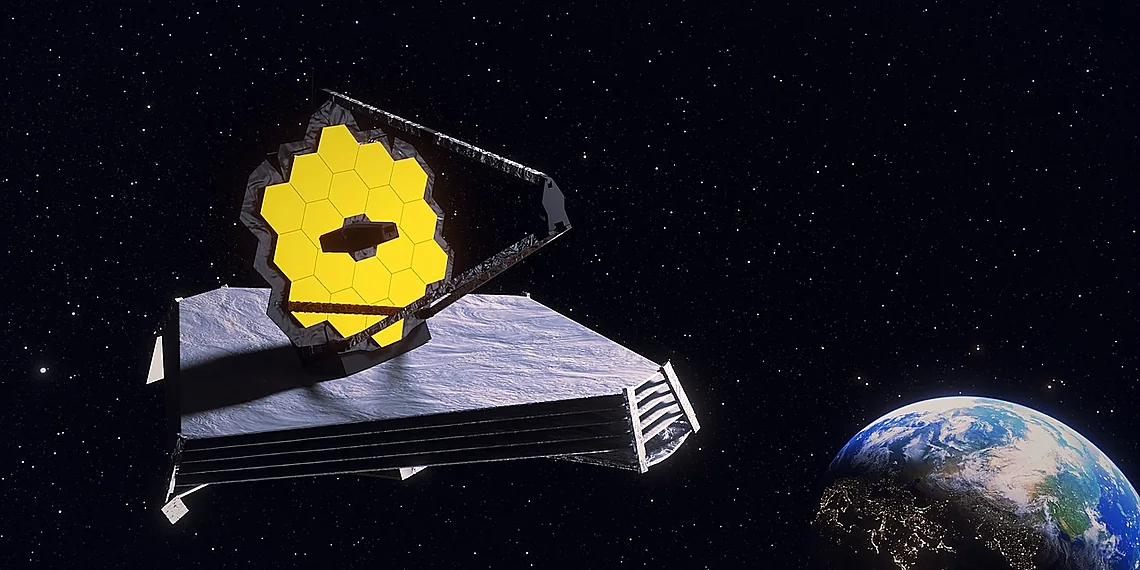
The validation of Professor Tao’s precessing magnetic jet engine model for GRB 250702B hinges on several crucial observational steps planned over the coming years. A primary focus will be acquiring high-resolution spectroscopic data using instruments like the James Webb Space Telescope (JWST). JWST’s unparalleled ability to analyze faint infrared signals emanating from the burst’s afterglow could reveal subtle shifts and patterns in spectral lines, potentially providing evidence of the magnetic field structure and precession that Tao’s model predicts. These observations will be vital for confirming whether the observed energy release aligns with the theoretical framework.
Beyond JWST, next-generation radio observatories like the Square Kilometre Array (SKA) are poised to play a critical role. The SKA’s immense sensitivity will allow astronomers to probe the environment surrounding GRB 250702B with unprecedented detail, searching for polarized radio emission – a hallmark of ordered magnetic fields and potentially revealing the jet’s structure as it interacts with the circumgalactic medium. Furthermore, multi-wavelength observations across the electromagnetic spectrum, coordinated between space-based and ground-based facilities, are essential to capture the full picture of this cosmic event.
Recognizing the complexity of GRB 250702B and the need for diverse expertise, collaborative efforts are already underway. Professor Tao’s team at SHAO is actively seeking partnerships with research groups specializing in magnetohydrodynamics (MHD) simulations, relativistic jet physics, and gamma-ray burst afterglow modeling. These collaborations will allow for more refined theoretical predictions that can be directly compared to observational data, iteratively improving the model’s accuracy and predictive power. Data sharing initiatives and joint analysis projects are key components of this collaborative approach.
Looking further ahead, future missions specifically designed to study gamma-ray burst environments – such as dedicated X-ray polarimetry satellites – could provide even more conclusive evidence for or against the magnetic jet engine model. The search for recurring patterns in GRB behavior is also a priority; if similar bursts with comparable precession periods are observed, it would strongly support the existence of this mechanism as a common phenomenon among certain types of cosmic explosions, ultimately unlocking deeper insights into the extreme physics governing these events.
What’s Next?
To rigorously test Professor Tao’s precessing magnetic jet engine theory, astronomers are planning a multi-wavelength observational campaign targeting future GRBs exhibiting similar characteristics to GRB 250702B. This will involve coordinated efforts across the electromagnetic spectrum, from radio waves to gamma rays. Initial observations will focus on searching for the predicted periodic variations in brightness and polarization—the ‘cosmic heartbeats’ Tao’s model suggests – using existing facilities like the Very Large Array (VLA) and the Atacama Large Millimeter/submillimeter Array (ALMA).
The James Webb Space Telescope (JWST), with its unprecedented infrared sensitivity, will play a crucial role in characterizing the environments surrounding these GRBs. JWST can probe dust-obscured regions near the central engine, potentially revealing details about the magnetic field structure and jet launching mechanism that are inaccessible to other telescopes. Furthermore, next-generation radio observatories, such as the Square Kilometre Array (SKA), currently under construction, promise an unparalleled ability to detect subtle variations in radio emission from these jets, providing further constraints on the model’s parameters.
Future collaborations will be essential for maximizing the scientific return of these observations. SHAO is actively seeking partnerships with international teams specializing in gamma-ray burst detection (e.g., Fermi Gamma-Ray Space Telescope), optical follow-up observations, and theoretical modeling. Sharing data and expertise across different institutions will enable a more comprehensive understanding of GRBs and help determine whether Professor Tao’s magnetic jet engine model accurately describes these powerful cosmic events.
The journey into understanding these colossal cosmic engines has revealed a profound connection between magnetic fields, accretion disks, and the most energetic explosions in the universe. Our exploration of this ‘magnetic jet engine’ model provides a compelling framework for explaining how such immense power is harnessed and channeled outwards. The ability to simulate and observe these processes with increasing fidelity marks a significant leap forward in astrophysics. While challenges remain in fully resolving every nuance of these complex phenomena, we’ve undeniably strengthened our grasp on the mechanisms driving events like Gamma-Ray Bursts, offering new avenues for future research. This breakthrough underscores how crucial interdisciplinary collaboration – combining theoretical modeling, observational data analysis, and advanced simulations – is to unraveling the deepest mysteries of space. The implications extend beyond just understanding black holes; they reshape our perspective on extreme physics and the evolution of galaxies themselves. To truly appreciate the scale and complexity of these cosmic events, continued investigation is vital, and we are only beginning to scratch the surface. Stay tuned for further developments as researchers refine this model and probe even deeper into the heart of these stellar behemoths. The universe holds countless more secrets waiting to be uncovered; we invite you to join us on that exciting quest! Follow ByteTrending and leading astrophysics journals to remain abreast of future discoveries, and delve further into the captivating worlds of black holes and Gamma-Ray Bursts – your exploration awaits.
The era of precision cosmology has arrived, allowing us to test long-held theories with unprecedented rigor.
Continued refinement of these simulations will undoubtedly lead to even more accurate predictions about the behavior of black holes and their associated phenomena.
Continue reading on ByteTrending:
Discover more tech insights on ByteTrending ByteTrending.
Discover more from ByteTrending
Subscribe to get the latest posts sent to your email.