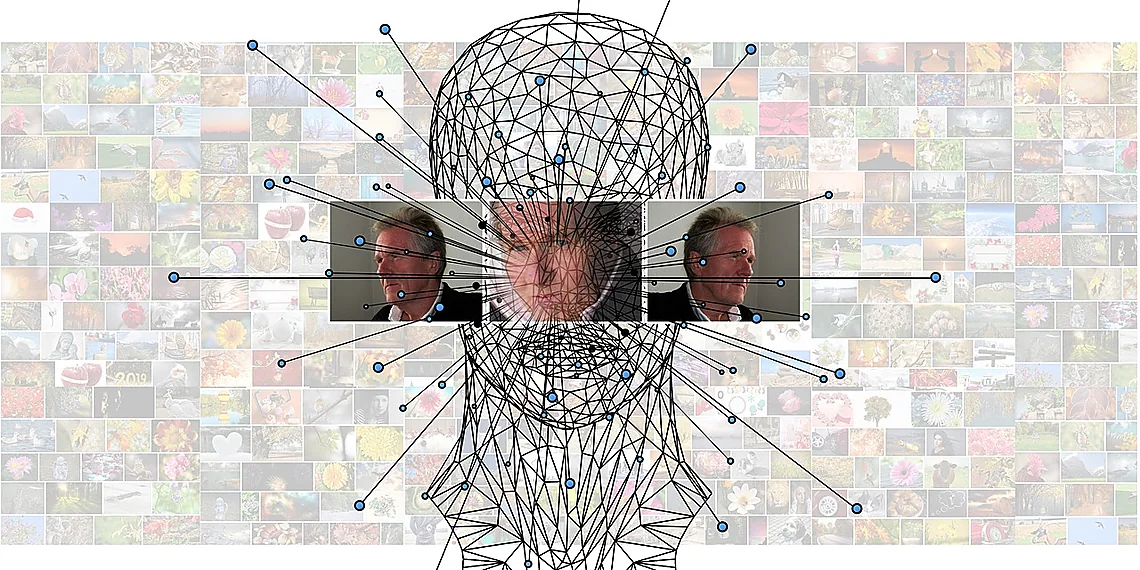

Data is everywhere, but extracting meaningful insights from it isn’t always straightforward. We often encounter datasets described by multiple, distinct perspectives – think product reviews alongside sales figures, or medical images paired with patient records. These diverse viewpoints contain complementary information that, when combined effectively, can reveal patterns and relationships far richer than any single perspective alone could offer.
Traditional clustering techniques frequently struggle to handle this complexity; they typically assume a unified representation of data, overlooking the valuable nuances embedded within each individual view. This limitation restricts their ability to accurately group similar instances across these varied representations, potentially leading to missed opportunities for discovery and suboptimal decision-making.
Enter multi-view clustering, a powerful approach designed specifically to tackle this challenge by simultaneously analyzing and integrating information from multiple data views. It aims to discover underlying structures that are consistent across different perspectives, ultimately providing a more holistic and accurate understanding of the data’s inherent organization.
To navigate this evolving landscape, researchers have been actively exploring advancements in multi-view clustering techniques. A recent comprehensive survey paper beautifully synthesizes these efforts, offering a thorough overview of existing methods, highlighting current research directions, and identifying key challenges that remain to be addressed within the field.
Understanding Multi-View Clustering
Imagine trying to understand a person – would you get a complete picture just from their height and weight? Probably not! You’d also want to know about their personality, hobbies, education, and so on. That’s the core idea behind multi-view clustering (MVC). In machine learning terms, ‘views’ represent different ways of looking at your data – perhaps images described by pixels, text described by word frequencies, or user behavior described by purchase history. Single-view clustering treats each view in isolation, much like judging someone solely on their height and weight; it can miss crucial information.
So, what *is* multi-view clustering? Simply put, it’s a technique that combines insights from multiple views of the same dataset to group data points together. Instead of analyzing images based only on pixel values or text based only on word counts, MVC leverages all available perspectives simultaneously. Think of it as assembling a complete profile – combining physical attributes with personality traits and life experiences – for a more holistic understanding. This allows algorithms to identify clusters that wouldn’t be apparent when considering just one view.
The advantages over traditional single-view clustering are significant. Single-view approaches often struggle with complex data where different features (or views) contribute differently to the underlying structure. For example, in medical diagnosis, patient records might include lab results, imaging scans, and clinical notes – each providing a distinct perspective on their health. Relying solely on one of these views could lead to inaccurate diagnoses or missed patterns. MVC allows us to integrate these diverse sources of information, leading to more robust and accurate clustering results.
Ultimately, multi-view clustering offers a way to unlock the hidden potential within data that is inherently multifaceted. By recognizing that different perspectives can complement each other, we can build machine learning models that are not only more powerful but also provide a deeper understanding of the underlying patterns driving our data.
The Problem with Single Views

Traditional unsupervised learning methods, like k-means or hierarchical clustering, often rely on a ‘single view’ of the data – meaning they analyze only one set of features or attributes. While effective for simpler datasets, this approach can fall short when dealing with complex phenomena that are best understood from multiple angles. Imagine trying to classify different types of music: relying solely on audio characteristics (like tempo and instrumentation) might miss crucial elements like lyrical content or cultural context.
The problem arises because real-world data is rarely homogenous. A customer’s purchasing habits, their demographic information, and their online reviews all offer valuable but distinct perspectives on who they are. If a clustering algorithm only considers purchase history, it might group together customers with vastly different demographics or motivations. Similarly, analyzing images using just pixel values ignores high-level features like objects present or scene composition – leading to inaccurate classifications.
Consequently, single-view clustering can lead to fragmented clusters and missed opportunities for discovering meaningful patterns. A single perspective creates a limited understanding of the underlying structure. Multi-view clustering addresses this by integrating information from multiple perspectives simultaneously, creating a more complete and accurate representation of the data and ultimately leading to better cluster assignments.
A Taxonomy of MVC Techniques
Multi-view clustering (MVC) offers a compelling solution for leveraging data from multiple perspectives, and a diverse range of techniques have emerged to tackle its complexities. To better understand this landscape, we can categorize MVC methods into several key groups, each employing distinct strategies for integrating information across views. This taxonomy, drawn from recent research, provides a framework for appreciating the breadth of approaches available.
One prominent category is **co-training**, where different views iteratively refine cluster assignments based on each other’s predictions – essentially teaching one view what another already knows about the data’s underlying structure. Closely related is **co-regularization**, which aims to enforce consistency between the learned representations across views, guiding them towards similar clustering solutions. The **subspace** approach focuses on identifying relevant feature subsets within each view and then combining these reduced spaces for clustering, minimizing noise and redundancy.
Moving into more advanced methodologies, **deep learning** techniques increasingly dominate MVC research. These approaches utilize neural networks to learn complex, non-linear relationships between views and generate unified representations suitable for clustering. **Kernel-based** methods extend traditional kernel clustering by incorporating information from multiple kernels derived from each view, enabling the discovery of intricate data patterns. More recently, **anchor-based** methods have gained traction, using representative ‘anchor’ points to bridge the gap between different views and facilitate alignment.
Finally, **graph-based** approaches construct a unified graph that captures the relationships within and between views, allowing for clustering based on connectivity and proximity in this combined representation. Understanding these distinct categories – co-training, co-regularization, subspace, deep learning, kernel-based, anchor-based, and graph-based – provides a valuable roadmap for navigating the evolving world of multi-view clustering and appreciating its potential to unlock deeper insights from complex datasets.
Exploring Key Approaches: From Co-Training to Deep Learning
Early multi-view clustering approaches often employed techniques like co-training and co-regularization. Co-training leverages the idea that different views provide complementary information; it iteratively refines cluster assignments in each view based on the results from other views, aiming for consistent grouping across all perspectives. Co-regularization focuses on encouraging similar representations of data points across views while simultaneously improving clustering performance, effectively smoothing out discrepancies and promoting agreement between the various viewpoints.
Subspace and graph-based methods represent another significant category within MVC. Subspace approaches identify shared or relevant feature subsets across different views that are most informative for clustering. Graph-based techniques construct a unified graph reflecting relationships between data points based on information from multiple views; nodes represent data points, edges signify similarity derived from one or more views, and the graph structure guides the clustering process. These methods excel when views have varying levels of relevance to the underlying clusters.
More recently, deep learning has become increasingly prevalent in MVC. Deep neural networks are used to learn feature representations from each view, then a joint architecture is employed to fuse these representations for clustering. This allows models to automatically discover complex relationships and patterns within and between views, often outperforming traditional methods when sufficient data is available. Kernel-based, anchor-based, and other specialized techniques offer further refinements, but deep learning currently represents the state-of-the-art in many MVC applications.
Challenges & Practical Considerations
While the promise of multi-view clustering (MVC) is significant, translating its theoretical advantages into real-world deployments isn’t always straightforward. A primary hurdle lies in scalability; many MVC algorithms exhibit computational complexity that explodes as dataset size grows. The need to iteratively reconcile information from multiple views – often involving complex optimization procedures – can quickly become prohibitive for datasets common in modern applications like image analysis, social network modeling, and bioinformatics. Simply put, the more views you incorporate and the larger your data, the longer it takes to achieve a meaningful clustering solution.
Data incompleteness presents another significant challenge. Real-world multi-view data rarely arrives perfectly formed; one or more views might have missing entries due to sensor failures, incomplete records, or simply limitations in data acquisition processes. Naively applying standard MVC algorithms to datasets with substantial missing values can lead to biased clustering results and severely degraded performance. Ignoring the patterns inherent in the available views while attempting to impute missing data is often worse than not using that view at all.
Fortunately, researchers are actively developing strategies to address these limitations. Techniques like mini-batch optimization and distributed computing frameworks offer avenues for improving scalability, allowing MVC algorithms to handle larger datasets more efficiently. For incomplete data, imputation methods specifically designed to leverage the correlations between views – rather than relying on univariate imputation – can provide a more accurate reconstruction of missing values. Furthermore, robust MVC approaches that explicitly account for noise and uncertainty in each view are gaining traction.
Ultimately, successful implementation of multi-view clustering necessitates careful consideration of these practical constraints. A thorough understanding of the data characteristics – including size, completeness, and inherent correlations between views – is crucial for selecting an appropriate algorithm and tailoring it to achieve optimal results. A ‘one-size-fits-all’ approach simply won’t work; a pragmatic assessment of computational resources and data quality is essential for unlocking the full potential of MVC.
Scalability and Data Incompleteness

While multi-view clustering (MVC) offers significant advantages in leveraging diverse data sources, its implementation faces practical hurdles when dealing with large datasets. Many MVC algorithms rely on pairwise comparisons or iterative updates between views, leading to computational complexity that scales poorly as the number of samples and features within each view increase. For example, methods involving co-clustering often have quadratic or even cubic time complexities, making them infeasible for datasets containing hundreds of thousands or millions of data points. This scalability challenge restricts MVC’s applicability to smaller, more manageable datasets unless significant algorithmic optimizations are employed.
Data incompleteness is another common issue that complicates MVC. Real-world multi-view data often suffers from missing values in one or more views, which can bias clustering results and degrade performance. Standard MVC algorithms typically assume complete data, and applying them directly to incomplete datasets can introduce errors or instability. Furthermore, the patterns learned within a view may be distorted if significant portions of the data are absent. Strategies like imputation (filling in missing values) using techniques such as k-nearest neighbors or matrix factorization can mitigate this, but these approaches themselves introduce assumptions that might not always hold true.
Researchers are actively exploring solutions to address both scalability and incompleteness in MVC. Techniques such as mini-batch optimization, distributed computing frameworks (e.g., Spark), and approximation algorithms provide avenues for handling larger datasets. For incomplete data, robust MVC methods are being developed that explicitly account for missing values during the clustering process or utilize imputation techniques tailored to multi-view settings. Further investigation into adaptive weighting schemes that dynamically adjust the importance of different views based on their completeness is also a promising direction.
The Future of Multi-View Clustering
The field of multi-view clustering (MVC) is rapidly evolving beyond its initial foundations, driven by the increasing availability of data from diverse sources and a growing recognition of the limitations of single-view learning approaches. Current research focuses on developing more sophisticated architectures that can effectively integrate information from different views – think combining image features with textual descriptions or genomic data alongside patient medical history – to uncover hidden patterns and relationships. We’re seeing exciting developments in deep learning frameworks specifically designed for MVC, allowing models to learn complex interactions between views automatically, moving beyond hand-engineered feature combinations.
One key trend is the rise of graph neural networks (GNNs) within the MVC landscape. GNNs excel at representing data as interconnected nodes and edges, perfectly suited for modeling relationships *between* different views. This allows for more nuanced understanding than traditional methods that might simply average or concatenate view-specific representations. Furthermore, research explores adaptive weighting schemes – dynamically adjusting the importance of each view during the clustering process based on its relevance to specific data points. This addresses the common challenge where one view may be noisy or less informative than others.
The practical applications for advanced MVC techniques are expanding dramatically. Healthcare is a particularly fertile ground, with potential uses ranging from personalized medicine (clustering patients based on genetic profiles, lifestyle factors, and clinical observations) to disease subtype discovery. In multimedia analysis, MVC can fuse visual, audio, and textual information to improve object recognition, content understanding, and recommendation systems. Beyond these core areas, we anticipate seeing MVC employed in fields like financial risk assessment (combining market data with economic indicators), environmental monitoring (integrating satellite imagery with sensor readings), and even social network analysis.
Looking ahead, future research will likely concentrate on addressing the scalability challenges inherent in handling massive multi-view datasets. Federated learning approaches, which allow models to be trained across decentralized data sources without sharing raw information, are a promising avenue for enabling MVC in privacy-sensitive environments. We can also expect increased integration with explainable AI (XAI) techniques to make MVC decisions more transparent and trustworthy – crucial for adoption in critical applications like healthcare diagnostics.
Emerging Trends & Applications: Healthcare, Multimedia & Beyond
Beyond established areas like image analysis and bioinformatics, multi-view clustering (MVC) is demonstrating significant potential across diverse industries. In healthcare, for example, MVC can integrate patient data from various sources – genomic information, medical imaging, electronic health records – to identify distinct disease subtypes or predict treatment response more accurately than relying on any single view alone. Similarly, in multimedia analysis, combining visual features with audio cues and textual descriptions allows for finer-grained content categorization and personalized recommendations, surpassing the limitations of unimodal approaches.
The rise of sophisticated AI techniques is directly fueling MVC’s expansion. Deep learning architectures, particularly graph neural networks (GNNs) and transformer models, are increasingly employed to learn complex relationships between different data views and perform clustering with greater precision. These methods can handle high-dimensional data and automatically discover relevant features without extensive manual engineering, opening doors for applications in areas like financial risk assessment (combining market data, news sentiment, and economic indicators) and cybersecurity (integrating network traffic logs, system behavior, and threat intelligence feeds).
Future research is focused on several key areas to further enhance MVC capabilities. This includes developing more robust methods for handling missing or noisy data across views, exploring dynamic multi-view scenarios where relationships evolve over time, and creating interpretable MVC models that provide insights into the underlying factors driving cluster formation. Furthermore, bridging the gap between MVC and reinforcement learning promises exciting opportunities for building adaptive systems that can optimize decisions based on multiple sources of information.
We’ve journeyed through a fascinating landscape of data complexity, witnessing firsthand how traditional clustering methods often fall short when faced with information presented across diverse perspectives. The ability to synthesize knowledge from multiple sources – images, text descriptions, user behavior – is becoming increasingly critical for extracting meaningful patterns and driving impactful decisions. It’s clear that embracing techniques capable of handling this inherent heterogeneity isn’t just a trend; it’s a necessity for organizations seeking a competitive edge.
The power of multi-view clustering lies in its capacity to reveal relationships previously obscured by the limitations of single-perspective analysis. By harmonizing these disparate views, we can uncover hidden structures and achieve a more nuanced understanding of our data, leading to improved predictions, personalized experiences, and entirely new avenues for innovation. Imagine identifying customer segments based not only on purchase history but also their social media engagement and product review sentiment – that’s the kind of insight multi-view clustering enables.
While this exploration has provided an overview, the field is constantly evolving with exciting advancements in algorithms and applications. We encourage you to delve deeper into the resources we’ve linked throughout this article; there’s a wealth of knowledge awaiting discovery. Consider how principles of multi-view clustering might be adapted or applied within your own domain – whether it’s marketing analytics, medical diagnosis, or scientific research. The potential for unlocking hidden value is vast and largely unexplored.
Ultimately, the future belongs to those who can effectively integrate diverse data streams into a cohesive understanding. We hope this article has sparked your curiosity and empowered you to explore the transformative possibilities of leveraging multiple perspectives in your own work.
Continue reading on ByteTrending:
Discover more tech insights on ByteTrending ByteTrending.
Discover more from ByteTrending
Subscribe to get the latest posts sent to your email.