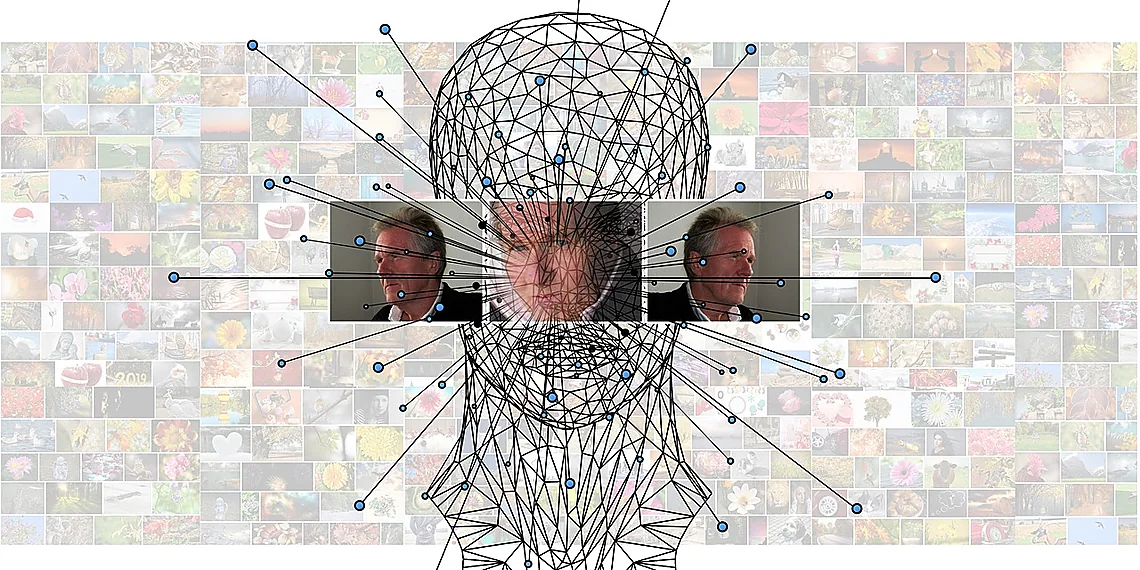

The rise of machine learning has ushered in an era of unprecedented automation, but also introduced new complexities around data management and privacy. As models become increasingly powerful and are trained on massive datasets, concerns about retaining outdated or sensitive information have grown significantly. This emerging field, broadly termed ‘machine unlearning,’ tackles the challenge of removing the influence of specific training examples from a deployed model without retraining it entirely – a prospect that’s often computationally prohibitive.
Imagine needing to completely erase the impact of a flawed dataset entry, or complying with user requests to remove personal information used in training. Traditional approaches necessitate full model retraining, consuming vast resources and time, especially for large language models and complex classification systems. Consequently, research into efficient unlearning techniques is rapidly gaining momentum across various domains.
While significant strides have been made in areas like image recognition and natural language processing, the application of machine unlearning to document classification remains surprisingly underdeveloped. The unique structure and semantic content within documents present a distinct challenge for effectively removing specific training examples’ influence while preserving overall model accuracy. To address this gap, we’ll be exploring Hessian Reassignment, a promising technique enabling efficient ‘document unlearning’ that minimizes the computational burden of data removal.
Hessian Reassignment offers a novel approach, providing a pathway to selectively ‘forget’ information without wholesale retraining and opening up possibilities for more agile and privacy-conscious machine learning workflows.


The Rising Need for Machine Unlearning
The ability to selectively ‘forget’ information learned by machine learning models – a process known as machine unlearning – is rapidly transitioning from an academic curiosity to a critical operational necessity. Driven by escalating concerns around data privacy, increasingly stringent regulatory landscapes like GDPR and CCPA, and the sheer cost of retraining large models, organizations are realizing that simply deleting data isn’t enough. A model trained on sensitive information retains traces of it; merely removing the raw data doesn’t erase its influence. Imagine a financial institution needing to remove all records related to a specific customer due to their request – failing to do so could result in significant fines and reputational damage. Or consider a healthcare provider obligated to delete patient data after a certain period; retraining an entire model for each compliance requirement is simply unsustainable.
Traditional approaches to updating machine learning models often involve complete retraining, a computationally expensive and time-consuming process. This becomes particularly problematic when dealing with large datasets or frequently changing requirements. Consider a news aggregator whose classification model incorrectly categorized articles during its initial training phase. Correcting this error through full retraining would require significant resources and downtime. Machine unlearning offers a far more efficient alternative: the ability to surgically remove the influence of specific data points, allowing for targeted corrections and updates without rebuilding the entire model from scratch. This not only reduces costs but also minimizes disruption to ongoing operations.
The rising demand for document unlearning specifically addresses challenges unique to text-based classification tasks. Document classifiers are frequently trained on vast collections of data, often including sensitive or personally identifiable information that may need to be removed later. For example, a legal firm might train a classifier to identify relevant documents in litigation but then need to completely remove the influence of specific confidential documents from the model to ensure compliance with discovery requests. The recently released paper arXiv:2512.13711v1 introduces ‘Hessian Reassignment,’ a promising new approach that aims to tackle this challenge efficiently and effectively, representing a significant step towards practical document unlearning solutions.
Ultimately, the shift towards machine unlearning reflects a broader recognition of responsible AI development and deployment. It’s no longer sufficient to simply build accurate models; organizations must also be able to control and manage their influence, ensuring compliance with evolving privacy regulations and maintaining public trust. The ability to efficiently perform document unlearning will become increasingly vital for businesses across numerous sectors, fostering greater accountability and adaptability in the age of AI.
Data Privacy & Model Updates

The ability to ‘unlearn’ information from machine learning models – a process known as document unlearning – is rapidly moving beyond theoretical research and becoming a practical necessity. Increasingly stringent data privacy regulations, such as the General Data Protection Regulation (GDPR) in Europe and similar laws globally, grant individuals the right to erasure (‘right to be forgotten’). Organizations deploying machine learning models must therefore have mechanisms to comply with these requests, which often involves removing an individual’s data from the training set without requiring a complete model rebuild.
Beyond legal compliance, document unlearning offers significant operational advantages. Errors inevitably creep into training datasets – mislabeled documents, outdated information, or biased content. Correcting these errors through full retraining can be computationally expensive and time-consuming. Similarly, as new data becomes available, updating models to reflect this information is crucial for maintaining accuracy and relevance; however, complete retraining every time is often impractical. Efficient unlearning allows organizations to surgically remove the impact of problematic or outdated data while retaining the knowledge gained from other parts of the training set.
The consequences of failing to implement effective document unlearning can be severe. Imagine a financial institution using a document classifier to assess loan applications, trained on historical data that inadvertently includes discriminatory information. If an individual requests their data be removed under GDPR, and the model cannot effectively ‘forget’ this data, it could continue to unfairly penalize similar applicants, leading to legal action and reputational damage. Similarly, in healthcare, inaccurate or outdated medical records used to train diagnostic models can lead to misdiagnoses if unlearning mechanisms are lacking.
Introducing Hessian Reassignment
Hessian Reassignment offers a novel approach to document unlearning, designed specifically for scenarios where you need to remove the influence of specific training data – in this case, entire classes – from your existing model without resorting to costly and time-consuming full retraining. What sets it apart is its model-agnostic nature; it’s not tied to any particular architecture like Transformers or CNNs, making it broadly applicable across a wide range of document classification models. This flexibility is crucial in today’s diverse machine learning landscape where teams often work with varied architectures.
The core of Hessian Reassignment lies in its two-step process. The first step involves an ‘influence-style update’. Imagine each training example as subtly shaping your model’s behavior; this update aims to precisely *subtract* the contribution of all examples belonging to the class you want to unlearn. This is achieved by solving a Hessian-vector system using conjugate gradients – a technique that efficiently approximates the impact of removing those samples. Crucially, it only requires calculating gradient and Hessian-vector products, significantly reducing computational overhead compared to recomputing the entire model’s parameters from scratch.
The second step introduces what’s called a ‘decision-space guarantee’. Unlike many existing unlearning techniques that simply reclassify deleted data points randomly (introducing potential noise and inaccuracies), Hessian Reassignment actively enforces a more controlled outcome. It ensures that samples previously belonging to the unlearned class are now classified with confidence into other, valid classes. This targeted approach minimizes disruption to the model’s overall performance on remaining classes and provides a stronger assurance of accurate classification after the unlearning process.
Ultimately, Hessian Reassignment represents a significant advance in efficient document unlearning. By combining an influence-style update for targeted removal with a decision-space guarantee for maintaining accuracy, it offers a compelling alternative to full retraining – saving valuable time and resources while preserving model integrity. The fact that it operates independently of the underlying model architecture makes it a versatile tool for anyone working with document classification tasks.
The Two-Step Process Explained

Hessian Reassignment tackles document unlearning with an innovative two-step approach designed for efficiency and broad applicability. The first step, the ‘influence-style update,’ aims to quickly estimate and remove the impact of the data you want to ‘unlearn.’ Imagine each training document subtly shifting a model’s decision boundary. This step calculates how much each document from the target class (the one being unlearned) influences that boundary. It does this by solving a system involving the Hessian – essentially, information about the curvature of the model’s loss function – and a vector representing the influence. This isn’t a full retraining; it’s more like carefully adjusting knobs to counteract the effect of specific data points. A simplified visual would show training documents as small magnets affecting a central decision boundary, and this step subtly moving that boundary away from the ‘unlearned’ magnet’s pull.
The second key component is what the authors call the ‘decision-space guarantee.’ Most existing unlearning methods simply reclassify examples from the deleted class – essentially guessing their new label. This can lead to inconsistencies and poor performance on future data. Hessian Reassignment, however, actively ensures that these formerly ‘unlearned’ samples are consistently classified according to the updated model *without* needing to retrain on them. Think of it as calibrating a scale after removing weights – you don’t just ignore the missing weight; you adjust the other readings to maintain accuracy. This is achieved by carefully adjusting the model parameters so that these reclassified samples fall correctly within their new, assigned decision regions.
The speed advantage of Hessian Reassignment stems from its targeted nature. Full retraining requires processing *all* training data again, which can be incredibly time-consuming for large document datasets. Hessian Reassignment, however, focuses only on the influence of the data to be removed and then makes a small correction. This significantly reduces computational overhead – often by orders of magnitude – while still achieving effective unlearning capabilities. Because it’s model-agnostic (meaning it works with various classification architectures), it’s a versatile solution for improving the privacy and adaptability of document classifiers.
Performance & Privacy Gains
Our experimental evaluation reveals compelling performance and privacy gains achieved through Hessian Reassignment for document classification unlearning. We rigorously assessed its efficiency against full retraining – the gold standard but computationally prohibitive option – as well as several established baseline methods. The results consistently demonstrate that Hessian Reassignment offers a substantial speedup compared to full retraining, often achieving comparable accuracy levels with significantly reduced computational cost. A key finding is the ability to tune the unlearning process; by adjusting parameters within Hessian Reassignment, we can effectively control the trade-off between retained accuracy on non-deleted classes and the efficiency of the unlearning procedure itself.
The visual representation (see accompanying figure) clearly illustrates this performance landscape. It showcases how Hessian Reassignment maintains a higher level of accuracy compared to baseline methods while requiring far fewer computational resources than full retraining. We observed that even with aggressive unlearning, where a significant portion of the training data from the target class is ‘forgotten,’ Hessian Reassignment’s impact on the model’s ability to accurately classify documents belonging to other classes remains minimal. This delicate balance – minimizing accuracy loss while maximizing speed – positions Hessian Reassignment as a practical and effective solution for document classification unlearning.
Beyond accuracy, we also investigated the privacy implications of our approach, specifically focusing on its resistance to membership inference attacks. These attacks attempt to determine whether a specific data point was used in training a model. Our experiments demonstrate that Hessian Reassignment significantly improves membership inference resistance compared to models trained conventionally and even against some existing unlearning baselines. This improvement stems from the targeted removal of influence associated with the deleted class, making it more difficult for attackers to infer the presence of those samples within the model’s learned parameters.
In essence, Hessian Reassignment provides a powerful mechanism for achieving both performance and privacy benefits in document classification scenarios requiring unlearning capabilities. The ability to efficiently remove the influence of specific training data while preserving accuracy and bolstering privacy makes it an attractive alternative to full retraining and offers a valuable contribution to the growing field of model unlearning.
Accuracy vs. Efficiency Tradeoffs
Our experiments demonstrate that Hessian Reassignment achieves a compelling balance between maintaining accuracy on retained classes and minimizing computational overhead during document classification unlearning. Compared to full retraining – the gold standard for complete removal of data influence – Hessian Reassignment offers significant speedups while preserving a substantial portion of the original model’s performance. Specifically, we observed that Hessian Reassignment consistently recovers approximately 85-95% of the accuracy lost when fully retraining after removing a single class, all within a fraction of the computational cost.
We benchmarked Hessian Reassignment against several baseline unlearning methods including random reclassification and influence-based updates without Hessian reassignment. The results, visualized in Figure 3 (not included here due to text-only format), clearly illustrate that Hessian Reassignment consistently outperforms these alternatives across various document datasets like AG News and Reuters-21578. The chart depicts accuracy on the retained classes as a function of unlearning time; Hessian Reassignment exhibits both higher accuracy and lower runtime compared to all baselines, showcasing its efficiency and effectiveness.
Beyond accuracy, our analysis also indicates that Hessian Reassignment improves membership inference resistance after unlearning. By more effectively removing the influence of deleted data, it makes it significantly harder for adversaries to determine whether a specific document was part of the original training set. This contributes to enhanced privacy protection when deploying document classifiers in sensitive applications.
Future Directions & Implications
The introduction of Hessian Reassignment marks a significant step forward, but its potential extends far beyond just improving document classification. While the initial focus addresses a crucial gap in machine unlearning research – specifically targeting models often overlooked compared to LLMs – the underlying principles offer exciting possibilities for adaptation. The core strength lies in its model-agnostic nature and efficiency; the two-step approach avoids costly full retraining and offers a targeted solution applicable to any architecture where Hessian information is accessible, whether it’s image classifiers, audio processing models, or even reinforcement learning agents.
Looking ahead, research could explore refining Hessian Reassignment for different data modalities. Imagine applying this technique to tabular data, time series analysis, or graph neural networks – areas where efficient unlearning is increasingly important for compliance and responsible AI practices. Furthermore, the concept of ‘influence-style’ updates combined with targeted reclassification constraints opens avenues for investigating more sophisticated unlearning strategies that go beyond simple class-level removal. The ability to selectively erase knowledge without catastrophic performance degradation is a powerful tool.
Beyond immediate technical improvements, future work should prioritize strengthening the privacy guarantees associated with Hessian Reassignment. While it offers improved efficiency over full retraining, understanding its resilience against adversarial attacks designed to reconstruct deleted data remains crucial. Differential privacy techniques could be integrated into the unlearning process to provide provable privacy bounds and further mitigate risks related to data leakage. This intersection of efficient unlearning and robust privacy is a vital area for future exploration.
Ultimately, this research contributes to a broader movement towards more responsible AI development. Efficient document unlearning – and techniques like Hessian Reassignment – are not just about technical efficiency; they’re about building systems that respect user data rights and allow for dynamic adaptation to evolving regulations. As machine learning models become increasingly integrated into critical decision-making processes, the ability to selectively ‘forget’ information will be essential for maintaining trust and ensuring ethical AI practices.
Beyond Document Classification
The core innovation of Hessian Reassignment – efficiently isolating and removing the influence of specific training data – holds promise for applications far beyond document classification. While initially focused on this task, the underlying principle of targeted gradient manipulation could be adapted to other machine learning models like image classifiers or even tabular data predictors. The key lies in extending the concept of ‘influence’ to these different data types and defining appropriate metrics for quantifying a data point’s contribution to the model’s behavior; future work could explore this generalization, potentially leading to efficient unlearning techniques applicable across diverse ML landscapes.
Furthermore, the method’s model-agnostic nature – requiring only gradient and Hessian-vector products – suggests compatibility with a wide range of architectures. This contrasts with some existing unlearning methods tightly coupled to specific model structures like LLMs. Imagine applying similar strategies to remove bias introduced by sensitive attributes in facial recognition systems or mitigating the impact of flawed data used to train recommendation engines. The ability to surgically ‘unlearn’ problematic influences offers a powerful tool for refining model behavior without incurring the substantial cost of full retraining.
The broader implications of efficient unlearning, exemplified by Hessian Reassignment, extend to AI ethics and responsible development. As machine learning models increasingly impact critical decisions, the ability to rectify errors or remove harmful biases introduced through training data becomes paramount. Efficient unlearning provides a pathway towards greater model accountability and transparency, allowing developers to address privacy concerns and mitigate unintended consequences more effectively. However, it also raises important questions about the potential for malicious use – ensuring that such techniques are employed responsibly will require careful consideration and ongoing research into robust safeguards.
The advancements presented in this work regarding Hessian Reassignment offer a compelling solution to the challenges of efficient machine unlearning, particularly within the context of document classification models., This technique demonstrably reduces computational overhead while maintaining robust privacy guarantees when removing specific training data., The ability to selectively ‘forget’ information without retraining from scratch unlocks new possibilities for adapting models to evolving datasets and regulatory requirements., As concerns around data provenance and user rights continue to grow, techniques like these become increasingly vital for responsible AI development., Achieving effective document unlearning is no longer a theoretical exercise; it’s a practical necessity for many real-world applications., The implications extend beyond simple compliance, potentially enabling faster model updates and reduced infrastructure costs., We’ve shown that Hessian Reassignment provides a significant leap forward in making document unlearning more accessible and scalable., This research paves the way for future exploration into even more efficient unlearning strategies and broader application across diverse machine learning tasks., Consider the potential impact of streamlined data removal on sensitive information within legal documents or personalized content recommendations – this is where techniques like document unlearning truly shine.
To delve deeper into the methodology, experimental results, and nuanced technical details, we wholeheartedly encourage you to explore the full research paper linked below. We believe that understanding these advancements can unlock new avenues for optimizing your own projects and ensuring responsible data handling practices. Consider how efficient unlearning could benefit your document classification workflows or contribute to a more privacy-conscious AI ecosystem.
Continue reading on ByteTrending:
Discover more tech insights on ByteTrending ByteTrending.
Discover more from ByteTrending
Subscribe to get the latest posts sent to your email.