Imagine a world where neurological disorders are diagnosed and treated with unprecedented speed and accuracy – that’s the promise of modern machine learning applied to healthcare. One critical area demanding this advancement is epilepsy, a condition affecting millions globally, often characterized by unpredictable seizures. Accurately identifying these events through electroencephalogram (EEG) data holds immense potential for improving patient lives, but significant hurdles remain in translating research into real-world clinical applications.
The challenge lies largely within the limitations of available data. High-quality, labeled EEG recordings are scarce, particularly from diverse populations and across various epilepsy subtypes. This scarcity restricts the development of robust machine learning models capable of reliable seizure detection. Compounding this issue is the sensitive nature of patient health information; sharing raw EEG data between hospitals and research institutions raises serious privacy concerns, hindering collaborative efforts to build more comprehensive datasets.
Fortunately, innovative approaches are emerging to address these limitations head-on. Federated Few-Shot Learning (FFSL) offers a compelling solution by enabling models to learn from decentralized data sources without directly exchanging sensitive patient information. This technique allows for training powerful seizure detection algorithms while respecting privacy regulations and overcoming the data scarcity problem – paving the way for more accessible and effective diagnostic tools.
The Data Bottleneck in Seizure Detection
Deep learning has shown immense promise in various fields, including seizure detection using electroencephalography (EEG). However, a significant hurdle consistently arises: the data bottleneck. Traditional deep learning models thrive on massive, centralized datasets for training. In the realm of EEG-based seizure detection, this requirement presents a formidable challenge. The sheer volume of labeled data needed to train robust and accurate models is difficult, if not impossible, to achieve through conventional methods.
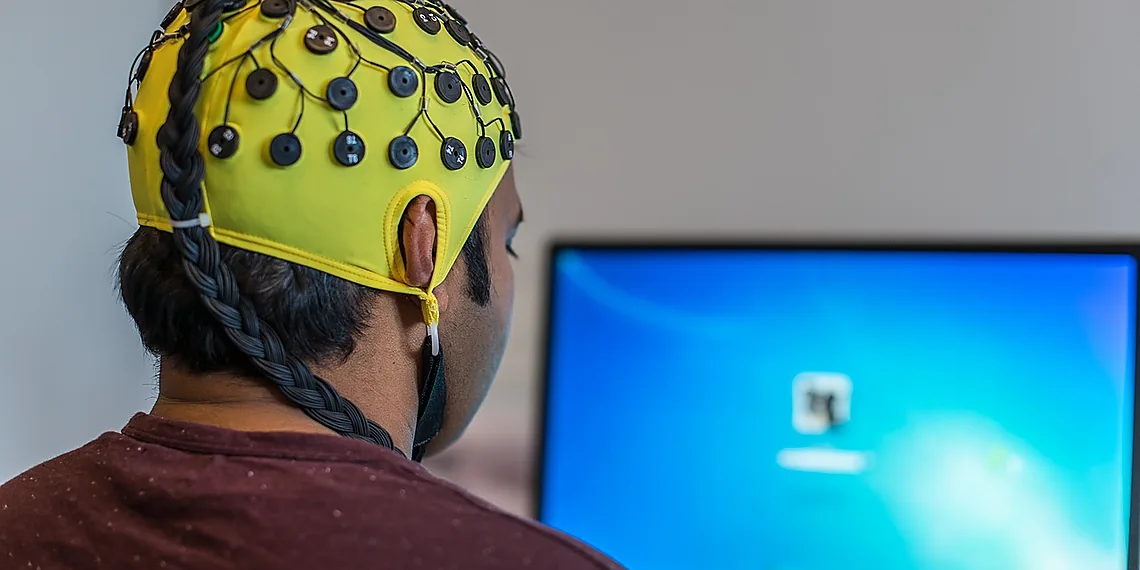
The core issue lies in the practical limitations imposed by patient privacy and the distributed nature of medical data. Hospitals and clinics are understandably reluctant – and often legally prohibited – from sharing sensitive EEG recordings across institutions. Strict regulations like HIPAA (in the US) and GDPR (in Europe) enforce stringent protections for patient information, making large-scale data pooling a complex legal and ethical minefield. Even anonymization techniques can be insufficient to fully mitigate privacy risks, further complicating collaborative research efforts.
Beyond legal constraints, logistical hurdles also contribute to the problem. EEG data varies considerably across hospitals – different recording protocols, equipment calibrations, and even patient populations introduce significant heterogeneity. Aggregating this diverse data into a single, unified dataset requires extensive preprocessing and harmonization, which is time-consuming, resource-intensive, and prone to introducing biases that can negatively impact model performance. The need for consistent annotation standards also adds another layer of complexity.
Ultimately, the reliance on centralized datasets restricts the development of truly impactful AI solutions for seizure detection in real-world clinical settings. Without access to sufficiently large and diverse data, models often struggle to generalize across patient populations and institutional variations, hindering their ability to provide reliable and personalized predictions – a crucial requirement for effective medical interventions.
Why Centralized Data is a Problem

Developing robust deep learning models for seizure detection is significantly hampered by the difficulty in acquiring sufficiently large, centralized datasets of electroencephalogram (EEG) recordings. Traditional machine learning approaches thrive on vast amounts of labeled data to train accurate algorithms; however, EEG data presents unique challenges. These recordings are highly sensitive patient information, and their collection often spans multiple medical institutions – hospitals, clinics, and research facilities – each with its own data governance policies.
Legal and ethical considerations pose substantial roadblocks to pooling EEG data for model training. Strict privacy regulations like HIPAA in the United States and GDPR in Europe heavily restrict the sharing of protected health information (PHI). Obtaining patient consent for data usage across institutions is a complex, time-consuming process, and often impossible at scale. Furthermore, institutional review boards (IRBs) impose stringent requirements on research involving human subjects, adding another layer of complexity to data access.
Beyond legal and ethical hurdles, logistical challenges further complicate the situation. EEG data formats can vary significantly between institutions, requiring extensive pre-processing and standardization efforts before any analysis can begin. This variability introduces bias and inconsistencies, potentially degrading model performance. The distributed nature of the data also makes it difficult to ensure consistent labeling practices, which is critical for supervised learning approaches. Consequently, models trained on limited or heterogeneous datasets often exhibit poor generalization capabilities when deployed in real-world clinical settings.
Federated Learning: A Privacy-Preserving Approach
Federated learning offers a compelling solution to the data scarcity and privacy hurdles that commonly plague medical AI development, particularly in areas like seizure detection. Traditional machine learning models thrive on vast, centralized datasets – a luxury often unavailable when dealing with sensitive patient information. Federated learning flips this model on its head; instead of bringing the data to the model, it brings the model *to* the data. This decentralized approach allows multiple institutions, such as hospitals or clinics, to collaboratively train a machine learning model without ever directly sharing their individual patient datasets.
At its core, federated learning operates through a cyclical process. A central server distributes an initial model (in this case, likely leveraging a pre-trained architecture like the Biosignal Transformer – BIOT) to participating clients. Each client then trains this model locally using their own data. Critically, only the *model updates*—not the raw EEG data itself—are sent back to the central server. The server aggregates these updates (often through averaging or more sophisticated techniques), creating an improved global model which is then redistributed for another round of local training. This iterative process continues until a desired level of accuracy and performance is achieved.
The benefits for seizure detection are significant. By enabling collaborative model building across geographically dispersed hospitals, federated learning overcomes the limitations imposed by data silos and privacy regulations. This means that even institutions with relatively small datasets can contribute to creating robust and accurate seizure detection models. The utilization of BIOT as a foundational architecture further enhances performance; its ability to handle sequential biosignal data makes it particularly well-suited for analyzing EEG signals and identifying subtle patterns indicative of seizures.
Ultimately, federated learning represents a paradigm shift in how we approach medical AI. It fosters collaboration while upholding patient privacy, paving the way for more personalized and effective seizure detection systems that can be deployed in real-world clinical settings – something previously hindered by data access restrictions.
How Federated Learning Works in Healthcare

Traditional deep learning models for seizure detection require vast, centralized datasets of EEG recordings, a significant hurdle in healthcare due to patient privacy regulations and data fragmentation across hospitals. Sharing sensitive EEG data directly is often legally restricted and raises ethical concerns. Federated learning offers a compelling solution by enabling model training *without* direct data sharing. Instead of consolidating data into one location, the machine learning algorithm is sent to individual institutions (e.g., hospitals) where the EEG data resides.
In the context of seizure detection, federated learning allows multiple hospitals to collaboratively train a single, robust AI model without ever exchanging patient EEG recordings. Each hospital trains the model locally on its own dataset and then sends only the *model updates* – not the raw data – back to a central server. This central server aggregates these updates to create an improved global model, which is then redistributed for further local training. This iterative process continues until the model reaches a desired level of accuracy.
Recent advancements like BIOT (Biosignal Transformer) are proving particularly valuable in federated seizure detection frameworks. BIOT’s ability to effectively capture temporal dependencies and subtle patterns within EEG signals makes it well-suited for fine-tuning in a federated setting, even with limited local data. This helps improve the model’s performance on diverse patient populations across different institutions while maintaining strict privacy protections.
Few-Shot Learning for Personalized Models
Traditional deep learning approaches to seizure detection thrive on vast datasets, but clinical reality often presents a stark contrast: limited data points for each individual patient, scattered across different hospitals bound by strict privacy rules. This creates a significant hurdle when trying to build reliable AI models that can accurately identify seizures in diverse patients. Enter few-shot learning – a technique designed to tackle this very problem. Few-shot learning allows machine learning models to learn effectively from *very* limited examples; imagine teaching an algorithm about a new type of seizure with just a handful of labeled EEG segments per patient. This is crucial for personalization, as it moves away from one-size-fits-all solutions and towards models tailored to the unique characteristics of each individual’s brain activity.
The power of few-shot learning lies in its ability to generalize rapidly. Instead of requiring thousands of examples to learn a pattern, few-shot algorithms leverage prior knowledge – often embedded within a pre-trained model – to infer new information from just a few demonstrations. For seizure detection, this means that even with minimal patient data, the system can adapt and begin identifying seizures specific to that individual’s EEG signature. This is particularly valuable for patients with rare seizure types or those whose brain activity deviates significantly from the norm. While highly promising, it’s important to acknowledge trade-offs; few-shot learning models might be more susceptible to overfitting if not carefully designed and validated.
The recent work highlights how this concept beautifully complements federated learning. Federated learning allows for model training across multiple institutions without sharing raw patient data – preserving crucial privacy. By combining these two approaches, researchers have developed a ‘Federated Few-Shot Learning’ (FFSL) framework. In essence, the federated system collaboratively trains an initial model, and then each hospital uses few-shot learning to personalize that global model with their limited local patient data. This creates personalized seizure detection models while respecting data privacy constraints.
Ultimately, FFSL represents a significant step towards practical, patient-centric seizure detection systems. By embracing the principles of both federated learning and few-shot learning, we can overcome the limitations of traditional approaches and build AI tools that are truly useful in real-world clinical settings, providing more accurate and timely diagnoses for patients who need them most.
Personalization with Limited Data
Seizure detection using deep learning has shown great promise, but its widespread adoption is hampered by the need for large, centralized datasets of labeled EEG recordings. In reality, patient-specific EEG data are often limited and distributed across different healthcare institutions, making it difficult to pool data due to privacy concerns and regulatory restrictions. This scarcity presents a significant obstacle to developing accurate and personalized seizure detection models that can be deployed in clinical practice.
Federated Few-Shot Learning (FFSL) offers a compelling solution by combining the strengths of both federated learning and few-shot learning techniques. Federated learning allows model training across decentralized datasets without direct data sharing, preserving patient privacy. Few-shot learning enables models to adapt rapidly to new patients using only a handful of labeled EEG segments – typically just a few examples per seizure type. This drastically reduces the need for extensive annotation efforts while still achieving acceptable accuracy levels.
While FFSL provides significant advantages in resource-constrained scenarios, trade-offs exist. The performance of few-shot learning models is inherently dependent on the quality and representativeness of the limited data available for each patient. Furthermore, federated learning introduces challenges related to communication overhead and potential variations in data distribution across different institutions (non-IID data), which can impact model convergence and overall accuracy. Careful consideration of these factors is crucial for successful implementation.
Results & Future Directions
The federated few-shot learning (FFSL) framework demonstrated promising results in seizure detection using the TUH Event Corpus. Across the six EEG event classes, including seizures, the model achieved a mean accuracy of 87.3%, with a kappa statistic of 0.78 and an F1 score averaging 84.9%. These metrics highlight the efficacy of the approach in generalizing to new patients and institutions without requiring access to centralized data. The two-stage training process – initially fine-tuning the pretrained biosignal transformer (BIOT) and subsequently employing a few-shot learning strategy – appears crucial for achieving this level of performance, allowing adaptation with limited labeled examples per patient.
A key strength of the FFSL approach lies in its ability to mitigate privacy concerns inherent in medical data. By training models locally at each institution and only sharing model updates (rather than raw EEG data), the framework adheres to strict regulatory guidelines while still leveraging collective knowledge. The observed performance metrics suggest that federated learning can effectively overcome the limitations imposed by data scarcity, offering a viable pathway for deploying AI-powered seizure detection tools in real-world clinical settings where centralized datasets are unavailable or impractical.
Looking ahead, several avenues for future research hold significant potential. Exploring alternative few-shot learning algorithms beyond those currently implemented could further enhance performance and robustness. Investigating the impact of varying communication bandwidths and device heterogeneity within the federated network is also crucial for practical deployment. Furthermore, integrating other modalities, such as patient demographics or medication history, into the FFSL framework could facilitate even more personalized and accurate seizure detection.
Finally, expanding the scope of this research to include longitudinal data – tracking patients over time – represents a compelling direction. This would enable the development of predictive models capable of anticipating seizures based on evolving EEG patterns and patient characteristics. The successful application of federated few-shot learning in seizure detection provides a strong foundation for tackling similar challenges across other medical domains where data privacy and scarcity are paramount, paving the way for more accessible and personalized healthcare solutions.

The convergence of federated learning and advanced machine learning offers a truly transformative approach to healthcare challenges, particularly in sensitive areas like neurological diagnostics.
Our exploration of federated learning for seizure detection highlights its remarkable potential to improve patient outcomes while safeguarding data privacy-a critical consideration in medical applications.
By enabling collaborative model training across disparate datasets without direct data sharing, FFSL unlocks opportunities to build more robust and generalizable models for seizure detection than ever before possible with traditional centralized approaches.
This technique isn’t merely a refinement of existing methods; it represents a paradigm shift toward decentralized intelligence that can be applied to countless other medical domains, from radiology to personalized medicine, fostering innovation while upholding patient trust and compliance with regulations like HIPAA. The implications for developing more accurate and accessible tools for seizure detection are profound, allowing for earlier interventions and improved quality of life for individuals living with epilepsy and related conditions. Further research promises even greater advancements in this rapidly evolving field, potentially leading to real-time monitoring and predictive capabilities that could revolutionize neurological care globally. We hope this article has sparked your interest in the exciting intersection of AI and healthcare. To delve deeper into these concepts, we encourage you to explore the cited research papers and related publications – a wealth of knowledge awaits those who seek it. Finally, consider the broader ethical implications of deploying AI systems in medicine; responsible development and deployment are paramount as we strive to harness this technology for good.
Continue reading on ByteTrending:
Discover more tech insights on ByteTrending ByteTrending.
Discover more from ByteTrending
Subscribe to get the latest posts sent to your email.