
The world of artificial intelligence is rapidly evolving, but often feels locked behind complex hardware and hefty price tags. That perception is about to change dramatically, thanks to a powerful combination of familiar tools and exciting new possibilities. We’re witnessing an unprecedented shift towards democratizing AI, making it accessible to hobbyists, educators, and innovators who previously felt excluded from the conversation. This isn’t just about theoretical concepts anymore; it’s about bringing intelligent functionality into physical projects with tangible results.
Enter the Arduino UNO Q and its accompanying App Lab platform – a game-changer for anyone interested in exploring machine learning without needing a supercomputer. These resources are lowering the barrier to entry, allowing users of all skill levels to experiment with AI concepts directly on hardware they already understand. The ability to easily integrate sensors, actuators, and data processing opens up incredible avenues for creative problem-solving and innovative applications – truly ushering in an era of accessible Arduino AI.
To celebrate this exciting development and gather invaluable feedback from the community, we’re hosting an exclusive ‘Ask Me Anything’ (AMA) session with key members of the Arduino team. This is your chance to dive deep into the technical details, explore potential use cases, and share your ideas for how you envision utilizing these tools. Your input will directly shape the future development of this accessible AI ecosystem, ensuring it remains responsive to the needs of its users.
Understanding the Arduino UNO Q
The Arduino UNO Q represents a significant leap forward in the evolution of the iconic Arduino platform, specifically designed to unlock new possibilities for Artificial Intelligence (Arduino AI) applications at the edge. While retaining the familiar form factor and accessibility that made previous UNO models so popular, the UNO Q incorporates substantial hardware enhancements that address the limitations encountered when attempting more complex tasks – particularly those involving machine learning. This isn’t just an incremental upgrade; it’s a strategic move by Arduino to lower the barrier to entry for AI development in hobbyist, educational, and professional settings.
So, what exactly makes the UNO Q different? At its core lies a powerful STM32F401K6U microcontroller boasting a quad-core ARM Cortex-M4 processor running at 192MHz. This provides a substantial boost in processing power compared to the traditional AVR ATmega328P found in earlier UNO boards, offering approximately five times the clock speed. Crucially, it also features 192KB of Flash memory and 48KB of RAM – significantly more space for storing code and data necessary for AI models. The addition of integrated WiFi (IEEE 802.11 b/g/n) and Bluetooth Low Energy (BLE) connectivity further expands its capabilities, allowing seamless integration with cloud services or other devices.
Beyond the core processing unit, the UNO Q includes a range of built-in sensors – an accelerometer, gyroscope, magnetometer, temperature sensor, and pressure sensor. This integrated sensing suite reduces the need for external components in many applications, streamlining development and lowering costs. While previous Arduino boards required users to add these functionalities through shields or separate modules, the UNO Q’s onboard sensors provide a convenient starting point for data collection and analysis – essential steps in training and deploying AI models locally. This combination of processing power, memory, connectivity, and integrated sensing makes the UNO Q uniquely positioned to handle on-device machine learning tasks.
Ultimately, the Arduino UNO Q is more than just a hardware upgrade; it’s an enabling technology for a new wave of accessible AI projects. By providing a powerful, connected, and sensor-equipped platform within the familiar Arduino ecosystem, it empowers makers, students, and professionals to experiment with and deploy AI solutions in innovative ways – from smart home automation and robotics to environmental monitoring and personalized healthcare. The UNO Q truly represents Arduino’s commitment to democratizing Artificial Intelligence.
Hardware Deep Dive: What’s New?
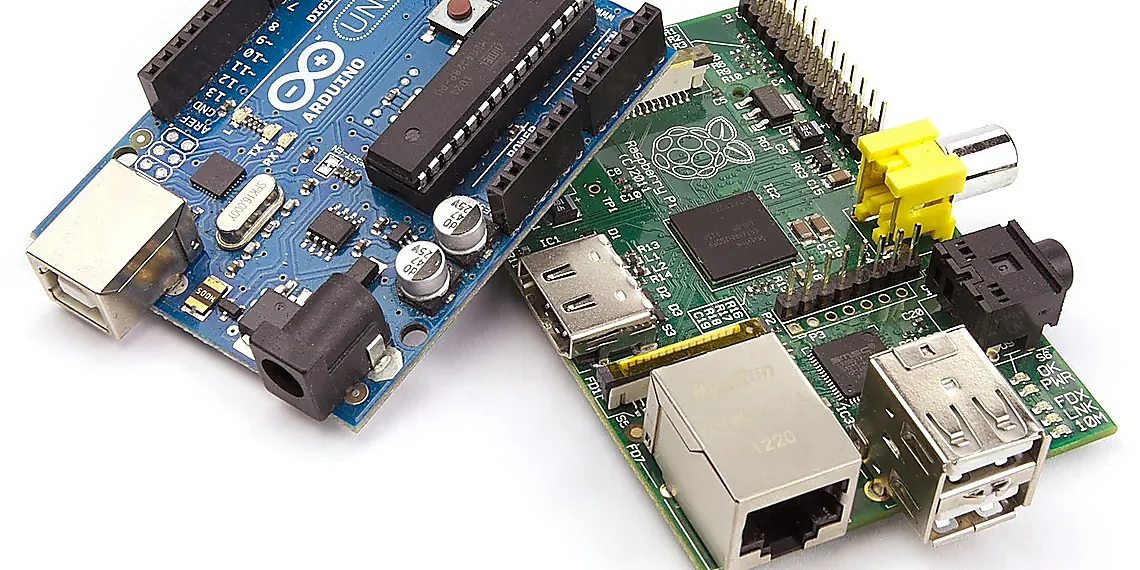
The Arduino UNO Q represents a significant leap forward in processing capabilities compared to the classic UNO R3. It boasts a 32-bit ARM Cortex-M7 processor running at 64MHz, a substantial upgrade from the UNO R3’s 8-bit AVR ATmega328P chip clocked at 16MHz. This increased clock speed and wider data path enable significantly faster execution of code, crucial for handling more complex tasks including those required by AI models. The processor also supports floating point operations which are beneficial in many machine learning applications.
Memory is another area where the UNO Q shines compared to its predecessor. It features 256KB of SRAM and 192KB of flash memory, a considerable increase over the UNO R3’s 2KB of RAM and 32KB of flash. This expanded memory allows for larger programs, more complex data structures, and the ability to store pre-trained AI models directly on the board. Furthermore, it includes an integrated SPI NOR Flash memory chip with 16MB storage capacity for persistent data.
Connectivity is also dramatically improved. The UNO Q incorporates both WiFi (IEEE 802.11 b/g/n) and Bluetooth 5.0 capabilities, enabling easy integration with cloud services and other devices – vital for AI applications requiring remote access or data transfer. It also includes a built-in six-axis IMU (Inertial Measurement Unit) for motion sensing and an ambient light sensor, providing immediate hardware support for common AI tasks like gesture recognition and environmental monitoring, features absent in the original UNO R3.
Arduino App Lab: Visual Programming for Everyone
The Arduino ecosystem has always been about making electronics accessible, and the new Arduino App Lab takes that mission a giant leap forward. Forget complex code libraries and intimidating syntax – App Lab offers a visual programming environment designed to democratize AI development for everyone. It’s fundamentally shifting how we think about building intelligent devices, empowering hobbyists, students, educators, and even professionals with limited coding experience to explore the fascinating world of artificial intelligence.
At its core, Arduino App Lab utilizes a drag-and-drop interface where pre-built blocks represent different functions and algorithms. Want to create a simple object recognition system? Connect a camera module, then use App Lab’s visual blocks to define what you’re looking for and how the Arduino should respond – all without writing a single line of traditional code. Similarly, building a basic voice command interface or creating a reactive LED display based on sensor data becomes surprisingly straightforward. This low-code/no-code approach dramatically lowers the barrier to entry for exploring AI concepts.
The beauty of App Lab isn’t just its ease of use; it’s how it fosters learning and experimentation. By visually representing the logic behind AI processes, users gain a deeper understanding of how these technologies work under the hood. It allows for rapid prototyping and iteration – quickly testing ideas and modifying designs without getting bogged down in debugging code. Imagine students building interactive art installations or creating assistive technology devices, all powered by accessible AI thanks to App Lab’s intuitive interface.
While App Lab might seem simple on the surface, it unlocks a vast potential for innovation. It’s not about replacing traditional coding; rather, it provides an entry point and a powerful tool for exploration. As users become more comfortable with the visual programming paradigm, they can gradually transition to writing custom code or integrating advanced AI models – ensuring App Lab remains a springboard for continued learning and increasingly complex projects.
Democratizing AI Development with App Lab

Arduino App Lab is revolutionizing how individuals interact with artificial intelligence, particularly for those without extensive coding experience. This visual programming environment, integrated directly into the Arduino UNO Q board, abstracts away much of the complexity traditionally associated with AI development. Instead of writing lines of code, users drag and drop pre-built blocks representing functions like machine learning models, data processing steps, and sensor integrations. This intuitive interface dramatically lowers the barrier to entry for creating interactive projects that leverage AI capabilities.
The simplicity of App Lab allows even beginners to implement surprisingly sophisticated AI applications. For instance, a user could build a simple object recognition system using a pre-trained TensorFlow Lite model. The Arduino UNO Q’s camera can capture images, which are then processed by the model within App Lab to identify objects like plants or common household items. Similarly, users can create interactive sound classifiers that react to different audio cues, or develop basic gesture recognition systems for controlling devices without physical buttons. These examples demonstrate how complex AI tasks can be broken down into manageable visual steps.
Beyond individual projects, App Lab fosters a collaborative learning environment. Users can easily share their creations and learn from others’ work, contributing to a growing library of accessible AI applications. This open-source approach accelerates innovation and empowers makers of all skill levels to explore the possibilities of AI with Arduino hardware, ultimately democratizing access to this powerful technology.
Accessible AI: Bridging the Gap
The rise of Artificial Intelligence has often felt exclusive, requiring significant computational power and specialized knowledge. However, Arduino is actively working to change that narrative. With the introduction of devices like the UNO Q and the development of tools within App Lab, Arduino AI represents a powerful shift towards democratizing AI development. This isn’t about replacing complex machine learning frameworks; it’s about empowering makers, hobbyists, educators, and community groups with simplified entry points to explore and implement AI solutions in tangible ways – bringing sophisticated capabilities to projects that previously seemed out of reach.
The beauty of Arduino’s approach lies in its accessibility. The UNO Q integrates a Coral Edge TPU, enabling local on-device machine learning inference without relying on constant internet connectivity or powerful cloud resources. Combined with App Lab’s visual programming environment, even those with limited coding experience can train and deploy simple AI models for tasks like object recognition or voice command processing. This removes significant barriers to entry, fostering creativity and experimentation across a wide range of skill levels.
The potential applications stemming from this accessible approach are incredibly diverse and impactful. Imagine educational robotics projects where students build interactive robots that respond to their environment using AI – learning coding concepts alongside the fundamentals of machine learning. Consider assistive technology solutions like smart home automation tailored for individuals with disabilities, adapting lighting, temperature, or appliances based on personalized preferences and needs. Furthermore, community-led environmental monitoring systems powered by Arduino AI can provide valuable data about air quality, noise pollution, or local wildlife – empowering communities to address their specific challenges.
Ultimately, Arduino’s commitment to accessible AI isn’t just about making technology easier to use; it’s about fostering a more inclusive and innovative future. By lowering the barrier to entry for AI development, Arduino is empowering individuals and communities to harness the power of intelligent systems to solve real-world problems and create positive social impact – one project at a time.
Real-World Applications & Potential
The combination of the Arduino UNO Q’s integrated USB-C connectivity and processing power, coupled with the visual programming environment of App Lab, is opening up exciting possibilities for accessible AI solutions. Imagine a smart home system designed for individuals with limited mobility: using readily available sensors and simple App Lab code, users could create custom routines to control lights, appliances, or even door locks based on voice commands or proximity detection – all without needing extensive coding knowledge. Similarly, educators can leverage this platform to introduce students to the fundamentals of AI and machine learning through interactive robotics projects, fostering computational thinking skills in a tangible and engaging way.
Beyond individual assistive technologies, Arduino AI has significant potential for community-level impact. Environmental monitoring systems are becoming increasingly accessible; citizens equipped with Arduino UNO Q devices can collect data on air quality, noise pollution, or water levels within their local areas. This citizen science approach empowers communities to understand and address environmental challenges directly, fostering a sense of ownership and responsibility. The ease of deployment and relatively low cost of these devices compared to traditional solutions make them particularly valuable in resource-constrained settings.
The key differentiator with Arduino’s approach is the democratization of AI development. Previously, creating intelligent systems required significant expertise and expensive hardware. Arduino UNO Q and App Lab drastically lower this barrier, allowing individuals from diverse backgrounds – regardless of coding experience – to build innovative solutions that address real-world problems and improve quality of life. This accessibility fosters creativity, encourages experimentation, and ultimately expands the reach of AI’s positive impact on society.
The Future of Arduino & AI
The integration of Artificial Intelligence into embedded systems is no longer a futuristic fantasy; it’s rapidly becoming a tangible reality, and Arduino is positioned at the forefront of making this technology accessible to everyone. Our recent AMA session highlighted a clear roadmap for Arduino’s AI journey, moving beyond simple automation to encompass more complex machine learning tasks directly on our hardware. This isn’t about replacing traditional Arduino projects; it’s about augmenting them with intelligent capabilities – enabling users to create adaptive robots, smart home devices that truly learn and respond to their environment, and countless other innovative applications previously requiring significantly more powerful (and expensive) systems.
A cornerstone of this accessible AI future is the continued development of Arduino App Lab. We’re committed to enhancing its features to simplify machine learning workflows for both beginners and experienced developers. Expect improvements in model deployment tools, easier integration with cloud-based services for training data acquisition, and more readily available pre-trained models optimized for resource-constrained microcontrollers like those found on the UNO Q. Furthermore, we recognize that hardware alone isn’t enough; a thriving ecosystem of libraries, tutorials, and example projects is crucial to empower users – and we’re actively encouraging community contribution in these areas.
Looking ahead, Arduino’s commitment extends beyond software enhancements. We envision future hardware releases incorporating dedicated AI accelerators—specialized chips designed for efficient machine learning inference without excessive power consumption. This will unlock new levels of performance while maintaining the affordability and ease-of-use that define the Arduino platform. Crucially, these advancements will be driven by an open approach. We believe in fostering a community-driven ecosystem where developers can freely contribute to hardware designs (where feasible), share their AI models, and collaborate on innovative solutions – ensuring that accessible AI remains within reach for makers of all skill levels.
Ultimately, Arduino’s vision for the future is one where AI isn’t intimidating or exclusive. We want to empower individuals and communities around the world to harness the power of machine learning to solve real-world problems, create meaningful projects, and shape a more intelligent and connected future—all while staying true to our core values of simplicity, accessibility, and open collaboration. Your feedback from events like this AMA is invaluable in guiding our development efforts as we build that future together.
Looking Ahead: Community and Innovation
Arduino’s commitment to making AI more approachable extends beyond the recent UNO Q release, with plans already underway for future hardware iterations designed specifically to support on-device machine learning workloads. These upcoming boards will prioritize increased processing power and memory capacity while maintaining Arduino’s characteristic affordability and ease of use. Software development efforts are also focused on expanding App Lab capabilities – including simplified libraries and pre-built AI models accessible through a block-based coding environment – lowering the barrier to entry for beginners and educators.
Recognizing that innovation thrives in an open ecosystem, Arduino actively encourages community contributions and collaboration. This includes fostering projects that leverage the Arduino platform for AI applications, supporting developer documentation improvements, and providing avenues for users to share their creations and expertise. The company is particularly interested in seeing how the community adapts and extends App Lab’s functionality, creating accessible learning resources and practical AI solutions.
The success of Arduino’s AI initiatives hinges on continued open-source development and a vibrant, engaged community. Arduino intends to provide more robust tools for contributing to App Lab libraries and models, ensuring transparency and allowing users to customize their AI experiences. Future updates will also prioritize improved debugging capabilities within App Lab, facilitating easier troubleshooting and faster iteration cycles for developers building AI-powered projects on Arduino hardware.
The convergence of microcontrollers and artificial intelligence is no longer a distant dream, but a rapidly unfolding reality, and Arduino sits squarely at its forefront. This shift democratizes innovation, allowing creators of all skill levels to build intelligent devices without needing extensive machine learning expertise. The potential applications are truly limitless, from personalized robotics and smart home automation to environmental monitoring and assistive technologies – all powered by accessible hardware and increasingly sophisticated software tools. We’ve seen firsthand how Arduino’s open-source nature fosters a vibrant ecosystem where shared knowledge accelerates progress for everyone involved. Embracing this trajectory means empowering individuals and communities to shape the future of technology in meaningful ways, and that’s incredibly exciting. The integration of features like those found within App Lab is significantly lowering the barrier to entry, making experimentation with Arduino AI more intuitive than ever before. To truly grasp the power and potential we’ve discussed, we urge you to dive in and start building! Head over to the App Lab platform and explore its capabilities – countless projects are waiting for your creative touch. Finally, join the wider Arduino community; share your creations, ask questions, and contribute to the collective knowledge that makes this platform so remarkable. Let’s build the accessible AI future together.
Your journey into intelligent hardware doesn’t have to be daunting—it can be a rewarding adventure fueled by curiosity and collaboration. We believe Arduino, with its expanding capabilities in areas like Arduino AI, is uniquely positioned to facilitate that experience for anyone who desires it. The future of innovation isn’t confined to large corporations or specialized labs; it resides in the hands of passionate individuals eager to experiment and create solutions tailored to their unique needs. Don’t just read about the possibilities—experience them firsthand.
Continue reading on ByteTrending:
Discover more tech insights on ByteTrending ByteTrending.
Discover more from ByteTrending
Subscribe to get the latest posts sent to your email.