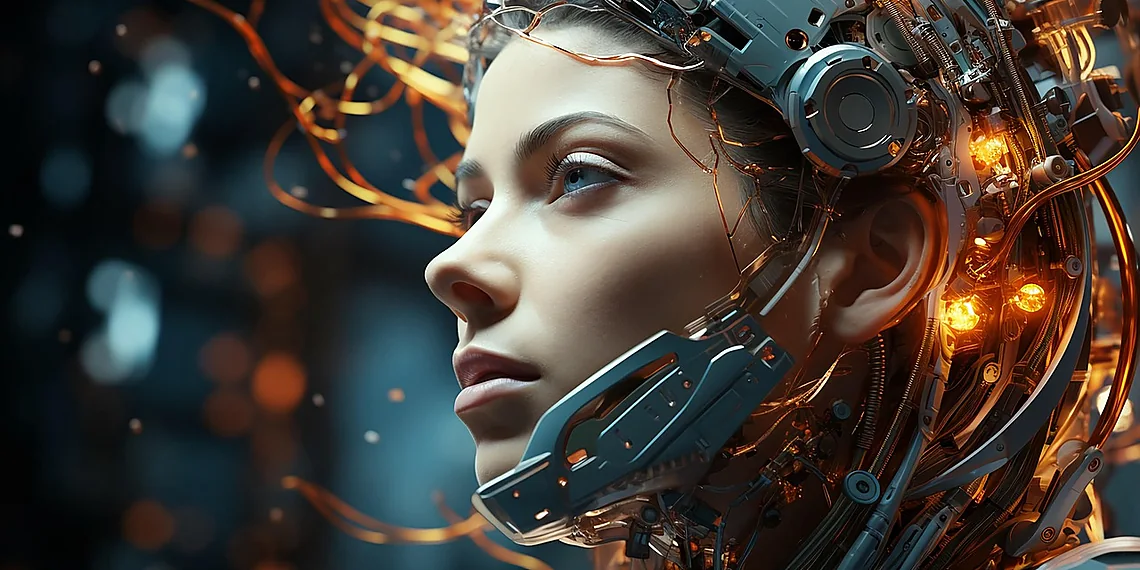

Imagine a future where robots seamlessly navigate bustling warehouses, delicately assemble intricate electronics, or even assist surgeons with unparalleled precision – that future is rapidly approaching thanks to breakthroughs in robotics and artificial intelligence. We’re already seeing incredible strides in robotic capabilities, from autonomous vehicles to collaborative factory workers, pushing the boundaries of what machines can achieve. However, as we demand more from these mechanical marvels, a significant hurdle emerges: enabling them to handle multiple tasks concurrently while maintaining stability and responsiveness. This presents a complex challenge that traditional control systems often struggle to overcome. The key to unlocking this next level of performance lies in a powerful combination – leveraging the adaptability of AI alongside the robustness of established control theory, ultimately leading to enhanced Robot Agility. By merging these disciplines, engineers are creating robots capable of learning and adapting to unpredictable environments with remarkable grace and efficiency, fundamentally changing how we interact with automated systems.
This new paradigm shifts away from pre-programmed routines towards intelligent, reactive behaviors that allow robots to respond dynamically to unforeseen circumstances. The integration of AI allows for continuous learning and optimization, while control theory provides the foundational structure necessary for safe and reliable operation. This synergy isn’t just about faster movements or stronger grips; it’s about creating robots that possess a level of dexterity and adaptability previously thought impossible.
The AI Learning Bottleneck
While artificial intelligence has made impressive strides in robotics, enabling machines to learn complex motor skills like performing a handstand or backflip, these successes often hit a wall when faced with more intricate scenarios. Training robots for single, isolated tasks is comparatively manageable; AI models can be trained on vast datasets of demonstrations and refine their movements through trial and error. However, the moment you ask a robot to chain together multiple actions – like executing a backward flip directly into a handstand – the process becomes exponentially more difficult, revealing a critical bottleneck in current AI approaches.
The core issue lies in how traditional machine learning algorithms handle sequential tasks. These systems typically learn each action independently. When attempting to combine them, they often suffer from what’s known as ‘catastrophic forgetting.’ This phenomenon occurs when training on a new task overwrites the knowledge gained from previous ones; the robot essentially forgets how to perform the earlier skill while trying to master the newer one. Imagine learning to ride a bike and then, in an attempt to learn to skateboard, completely losing your ability to balance – that’s analogous to what happens with many AI-powered robots.
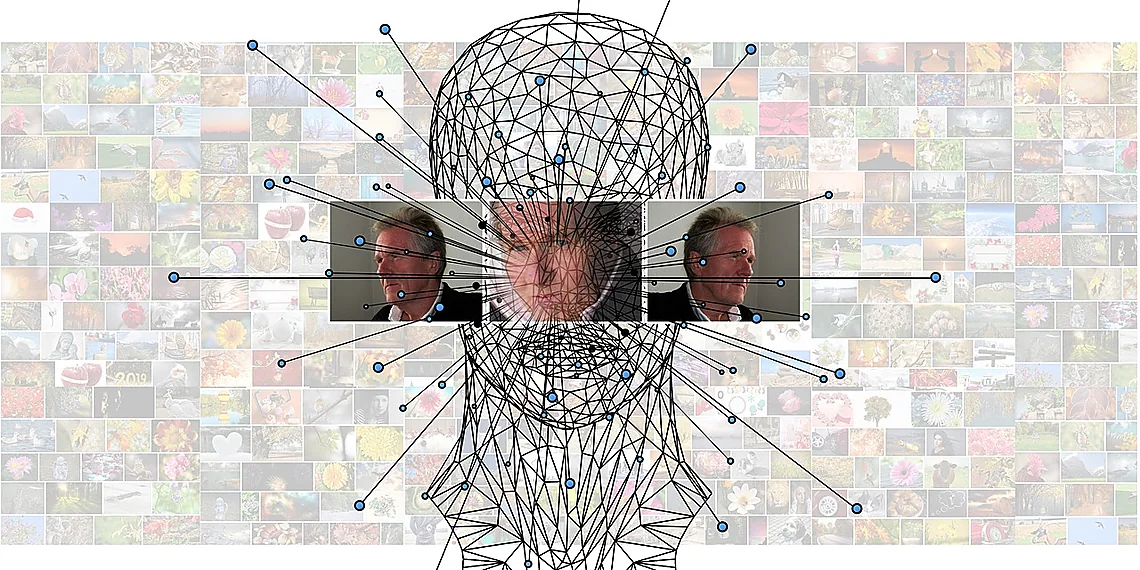
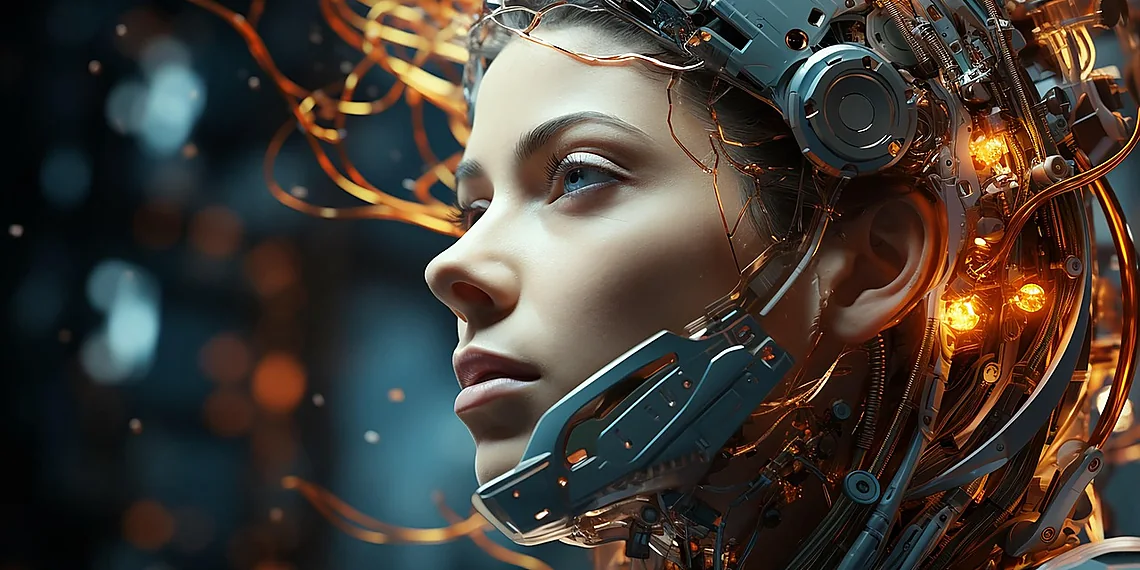
Relying solely on machine learning for complex robotic movements creates a fragile system susceptible to unexpected errors and requiring massive amounts of training data. Each new skill necessitates extensive retraining, making adaptation slow and expensive. Moreover, these models often lack the underlying understanding of physics and dynamics that allows humans to intuitively adapt their actions – they are essentially mimicking behavior without grasping *why* it works.
This limitation underscores why a purely AI-driven approach isn’t sufficient for achieving true robot agility. The next generation of robotics requires a more holistic solution, one that integrates the power of machine learning with foundational principles like control theory—a field focused on designing systems to achieve desired behavior through feedback and precise calculations – paving the way for robots capable of seamlessly transitioning between complex tasks.
Single Task vs. Multi-Task Challenges

Training robots to execute individual, complex actions like a backflip or handstand has seen considerable success using artificial intelligence techniques. These single-task demonstrations allow AI models to learn specific motor skills relatively efficiently through imitation learning or reinforcement learning. The robot observes examples of the desired behavior and iteratively adjusts its movements to replicate them, achieving impressive results in isolated scenarios. However, this approach falters significantly when attempting to chain these individual actions together into more sophisticated sequences.
The core issue lies in what’s known as ‘catastrophic forgetting.’ When a machine learning model learns a new task, it often overwrites or degrades the knowledge gained from previous tasks. Imagine teaching a robot to backflip and then immediately trying to teach it a handstand; the backflip training might be partially erased, forcing the robot to re-learn aspects of both actions. This makes sequential skill acquisition extremely challenging because each new addition can destabilize previously learned behaviors, requiring extensive retraining and potentially starting from scratch.
Relying solely on machine learning for complex robotic movements proves insufficient. While AI excels at pattern recognition and imitation, it lacks the inherent understanding of physics and control that traditional control theory provides. The combination of these two disciplines – leveraging AI’s learning capabilities alongside the robustness and predictability of control systems – is proving crucial to overcoming catastrophic forgetting and enabling robots to perform truly agile and versatile maneuvers.
Control Theory’s Resurgence
For decades, Artificial Intelligence has dominated headlines when discussing robotics advancements, particularly in areas like object recognition and path planning. However, achieving true ‘Robot Agility’ – that is, robots capable of complex, dynamic movements with grace and precision – has proven more challenging than initially anticipated. While AI excels at learning intricate motor skills like a single backflip or handstand, chaining these actions together into a fluid sequence often leads to instability and unpredictable results. The missing piece in this puzzle? A resurgence of control theory.
Control theory, a field rooted in engineering mathematics, provides the foundational principles for ensuring stability, precision, and predictability in dynamic systems. Think of it as the bedrock upon which safe and reliable robotic movements are built. Traditional control systems excel at maintaining desired states – keeping a robot balanced or precisely following a trajectory – but they often struggle to adapt to unexpected disturbances or learn new behaviors on their own. They’re excellent at what they do, but lack the inherent flexibility of AI.
The current breakthrough lies in bridging this gap: integrating control theory with AI learning techniques. This hybrid approach leverages the strengths of both disciplines. The control system provides a stable and predictable base – ensuring that fundamental movements remain reliable even under stress. Simultaneously, AI algorithms are used to learn how to adjust these controlled actions, adapting to unforeseen circumstances or optimizing for efficiency. This allows robots to not only execute complex sequences like backflips into handstands but also gracefully recover from unexpected pushes or changes in the environment.
Ultimately, this convergence of AI and control theory represents a critical step towards creating truly agile robotic systems – ones that are not just capable of impressive feats of athleticism, but also safe, reliable, and adaptable enough to operate effectively in real-world scenarios. Expect to see its influence expand across industries from manufacturing and logistics to healthcare and exploration as robots become increasingly integrated into our daily lives.
Bridging Stability & Adaptability

Traditional control theory has long been the bedrock of robotics, providing the mathematical framework for precisely dictating robot movements. These systems excel at ensuring stability – guaranteeing a robot won’t topple over or overshoot its target – and enabling predictable actions based on predefined parameters. Think of it as meticulously crafting a recipe; each step is carefully calculated to produce a consistent outcome. However, this rigidity also represents a significant limitation: traditional control struggles with unpredictable environments or unexpected disturbances.
The challenge arises when robots encounter scenarios outside their programmed constraints. A sudden gust of wind, an uneven surface, or even slight variations in object weight can throw a traditionally controlled robot off course. While AI, particularly machine learning, offers incredible adaptability and the ability to learn from experience, purely AI-driven systems often lack this fundamental stability. They might be able to *learn* a backflip, but ensuring that backflip is consistently safe and doesn’t result in a crash requires a more robust foundation.
The current breakthrough lies in bridging this gap – integrating the precision of control theory with the learning capabilities of AI. This hybrid approach leverages control theory to establish a stable base for movement, providing predictable and reliable actions. Simultaneously, AI algorithms are layered on top, allowing the robot to adapt its movements in real-time based on sensor data and learned experiences, effectively creating robots that are both agile *and* dependable.
The Hybrid Approach in Action
The true power of integrating AI and control theory shines when tackling complex robotic maneuvers requiring both precision and adaptability. While AI excels at learning individual skills – imagine teaching a robot a perfect backflip through reinforcement learning – it often struggles with chaining those skills together seamlessly. Control theory, on the other hand, provides the robust mathematical framework needed to ensure stability and accurate execution of movements, but typically requires painstaking manual tuning. The hybrid approach bridges this gap; AI learns the *what* (the desired motion), while control theory dictates the *how* (the precise motor commands to achieve it). This allows for a robot to not just perform individual feats, but to orchestrate them into fluid, dynamic sequences.
A compelling example of this hybrid approach in action comes from recent research at UC Berkeley involving quadruped robots. Researchers trained a robot to transition between a backward flip and a handstand – a maneuver previously considered exceptionally difficult due to the inherent instability involved. Using reinforcement learning to initially guide the robot’s exploration, they then integrated model predictive control (MPC), a sophisticated control theory technique. This MPC system constantly predicts the robot’s future state and adjusts motor commands in real-time to counteract disturbances and maintain balance. The result was a significant reduction in training time – from weeks of trial and error with AI alone to just days with the hybrid system – and vastly improved success rates, achieving nearly flawless transitions.
The benefits extend beyond simple demonstrations like acrobatic maneuvers. In manufacturing environments, this hybrid approach is enabling robots to perform more intricate assembly tasks with greater speed and accuracy. For example, a robotic arm equipped with AI-powered vision can identify and grasp oddly shaped parts, while MPC ensures the arm maintains precise positioning despite unexpected variations in part weight or external forces. Similarly, in healthcare, these advancements are paving the way for surgical robots capable of executing complex procedures with enhanced dexterity and stability, potentially minimizing invasiveness and improving patient outcomes. The ability to rapidly adapt to unforeseen circumstances – a dropped tool, an uneven surface – is crucial in these demanding environments.
Looking ahead, this hybrid AI-control theory paradigm represents a significant leap towards truly agile robots capable of operating effectively in unpredictable real-world scenarios. Future research will likely focus on further refining the interaction between AI learning and control systems, potentially incorporating techniques like imitation learning to accelerate training and exploring adaptive control strategies that automatically adjust to changing environmental conditions. The implications are profound; we’re moving beyond pre-programmed routines towards robots that can learn, adapt, and perform complex tasks with a level of sophistication previously only achievable by humans.
Real-World Demonstrations & Results
Researchers at UC Berkeley have demonstrated impressive results using a hybrid AI-control system to train quadrupedal robots, specifically their ‘Mini Cheetah’ platform. In one experiment, the robot was tasked with learning a complex sequence: a backward somersault followed immediately into a handstand. Using reinforcement learning guided by model-predictive control (MPC), the Mini Cheetah achieved this maneuver in approximately 20 hours of training – a significant reduction compared to traditional reinforcement learning alone, which could take hundreds of hours or even fail completely. The MPC framework provided stability and constraints during exploration, preventing catastrophic failures while the AI learned optimal strategies.
Quantifiable improvements were evident across several metrics. The hybrid approach resulted in a 5x faster learning rate for complex locomotion tasks compared to purely reinforcement learning methods. Furthermore, the resulting control policies exhibited higher accuracy and robustness; the Mini Cheetah consistently maintained balance during transitions between the somersault and handstand with significantly reduced wobble or deviation from the desired trajectory. The MPC component actively manages joint torques and ensures stability even when encountering unexpected disturbances in its environment.
Beyond academic demonstrations, these advancements have immediate implications for real-world applications. In manufacturing, agile robots trained using this hybrid approach could be deployed for intricate assembly tasks requiring dynamic movements and precise positioning. The healthcare sector is also seeing potential; imagine a robotic assistant capable of performing delicate procedures or providing mobility support with greater adaptability and safety than current solutions allow – the ability to learn complex sequences quickly and reliably is crucial for these applications.
Future Implications & Challenges
The convergence of AI learning and control theory promises a transformative future for robotics, particularly concerning robot agility. We can anticipate seeing robots capable of far more complex and nuanced movements than currently possible – moving beyond pre-programmed routines to dynamically adapting to unforeseen circumstances. Imagine warehouse robots seamlessly navigating cluttered spaces, construction bots precisely positioning heavy materials in challenging environments, or even surgical robots performing intricate procedures with unparalleled dexterity and responsiveness. The ability for a robot to learn and execute sequences of agile maneuvers, like chaining a backflip into a handstand, unlocks entirely new possibilities across numerous industries.
Beyond the immediate applications, this technology holds significant potential for advancing human-robot collaboration. Robots equipped with this level of agility can more intuitively understand and respond to human actions, leading to safer and more efficient collaborative workspaces. Think about assistive robots providing personalized care or manufacturing teams working alongside agile robotic partners that can anticipate needs and adapt to changing tasks in real time. This isn’t simply about automating existing processes; it’s about fundamentally reshaping how humans and machines interact and work together.
However, significant challenges remain before this vision becomes fully realized. The computational demands of training these complex control systems are substantial, requiring powerful hardware and efficient algorithms. Furthermore, the sheer volume of data needed to train a robot to perform diverse agile tasks can be prohibitive – generating sufficient real-world experience is often time-consuming and expensive. Research into techniques like simulation-to-real transfer learning and reinforcement learning with limited data will be crucial for overcoming these hurdles.
Looking ahead, future research should focus on developing more robust and generalizable control architectures that aren’t narrowly tailored to specific tasks. Exploring methods for incorporating human feedback directly into the learning process could also accelerate progress and lead to robots that are even more adaptable and intuitive. The ability to transfer learned skills across different robotic platforms – essentially allowing a robot to ‘teach’ another – represents a particularly exciting frontier in this rapidly evolving field.
Beyond Backflips: The Path Forward
The fusion of AI learning and control theory, as demonstrated by agile robot skill acquisition, promises to unlock capabilities far beyond isolated stunts. Imagine robots autonomously navigating dynamic construction sites, adapting their movements in real-time to avoid obstacles and collaborate with human workers – all without pre-programmed routines. Similarly, assistive robots could learn complex interactions tailored to individual user needs, seamlessly transitioning between tasks like fetching objects, providing physical support, and engaging in simple conversation, all while maintaining stability and safety.
Extending this approach to more intricate scenarios requires tackling significant hurdles. Autonomous navigation in unpredictable environments necessitates robust perception systems capable of accurately interpreting sensor data under varying conditions (lighting, weather, occlusions). Collaborative human-robot interaction demands sophisticated models of human behavior and intent, allowing robots to anticipate actions and react appropriately – a challenge that moves beyond simple motor control into the realm of social robotics.
Despite the exciting potential, practical implementation faces challenges. The computational cost associated with real-time learning and adaptation remains substantial, requiring powerful hardware and optimized algorithms. Furthermore, training these complex systems demands vast amounts of data—both simulated and real-world—which can be expensive and time-consuming to acquire. Future research will need to focus on techniques for efficient data generation, model compression, and robust performance in resource-constrained environments.
The convergence of artificial intelligence and refined control theory is undeniably reshaping the landscape of robotics, ushering in an era where machines can navigate complexity with unprecedented grace.
We’ve seen how advanced algorithms are moving beyond pre-programmed sequences to enable robots to adapt to unpredictable environments and react intelligently to unforeseen circumstances – a core element driving advancements in Robot Agility.
This isn’t just about faster movements; it’s about creating truly versatile robotic systems capable of performing intricate tasks in dynamic settings, from assisting surgeons to exploring hazardous terrain.
The implications extend far beyond industrial automation, promising breakthroughs in fields like healthcare, logistics, and even space exploration, where adaptability and resilience are paramount. The synergy we’ve explored demonstrates a pathway towards robots that can genuinely collaborate with humans and solve complex problems alongside us, not just for us. This represents a fundamental shift in how we interact with machines and what we expect them to achieve. Ultimately, this is about empowering robots to be more than simply tools; they become partners in progress. The future of robotics hinges on continued innovation at the intersection of these disciplines, pushing boundaries and redefining possibilities. “ ,
Continue reading on ByteTrending:
Discover more tech insights on ByteTrending ByteTrending.
Discover more from ByteTrending
Subscribe to get the latest posts sent to your email.