
Imagine peering into the vast cosmic ocean, not just searching for stars, but actively hunting for worlds orbiting them – that’s the reality of modern astronomy.
The discovery of exoplanets has exploded in recent years, transforming science fiction into breathtaking scientific achievement and revealing a universe teeming with possibilities.
But simply *finding* these distant planets is only the first step; truly understanding their atmospheres and compositions requires increasingly sophisticated analysis – and that’s where a subtle but critical detail often gets lost in the excitement: limb darkening.
Limb darkening, a phenomenon where the edges of stars appear dimmer than their centers due to how light escapes from different depths within the star’s atmosphere, significantly affects observations used to interpret exoplanet data. Ignoring this effect can introduce substantial errors into our understanding of planetary atmospheres and even lead us to misinterpret the very presence of certain molecules or compounds present on those worlds. It’s a crucial correction that shapes how we process and understand the signals from these distant realms, allowing for more accurate assessments of exoplanet data. The implications are profound – it’s about refining our view to see the universe with greater clarity.
The Transit Method & Its Limits
The transit method has revolutionized exoplanet detection, becoming the workhorse for missions like Kepler and TESS. The fundamental principle is remarkably simple: imagine observing a distant star – you’d typically see consistent brightness. However, if a planet passes directly between that star and us (a ‘transit’), it blocks a tiny fraction of the starlight, causing a subtle dip in observed brightness. This dimming is akin to seeing a minuscule shadow pass across the face of the sun; incredibly faint, but detectable with precise measurements. The depth of this dip reveals information about the planet’s size relative to its star – a deeper dip indicates a larger planet.
The success of this technique stems from its ability to identify planets even when we can’t directly image them. It doesn’t require resolving the faint light reflected by an exoplanet, which is incredibly challenging given the vast distances involved. Instead, it relies on measuring minute changes in brightness – a much easier task with modern telescopes and sensitive detectors. The sheer volume of data collected by transit surveys allows astronomers to sift through hundreds of thousands of stars, significantly increasing the odds of finding these tell-tale dips and thus uncovering new exoplanet candidates.
However, the transit method isn’t without its limitations. A simple dip in brightness doesn’t automatically confirm a planet; it could be caused by other phenomena like starspots or instrument errors. Furthermore, the shape of the light curve – the graph showing brightness over time – is more complex than a perfect rectangular dip. Factors such as ‘limb darkening,’ where the edges of a star appear dimmer than its center (because we’re viewing them through more of the star’s atmosphere), distort the transit signal. Accurately accounting for limb darkening and other stellar effects is crucial to extract meaningful exoplanet data.
Ignoring these complexities can lead to inaccurate size estimations or even false positives, highlighting why sophisticated data analysis techniques are essential. Correcting for limb darkening involves detailed modeling of the star’s atmosphere and carefully analyzing the shape of the transit curve. These corrections, while complex, unlock a far richer understanding of exoplanets – allowing us to move beyond simply detecting them to characterizing their properties with greater precision.
How We Find Exoplanets: The Transit Technique
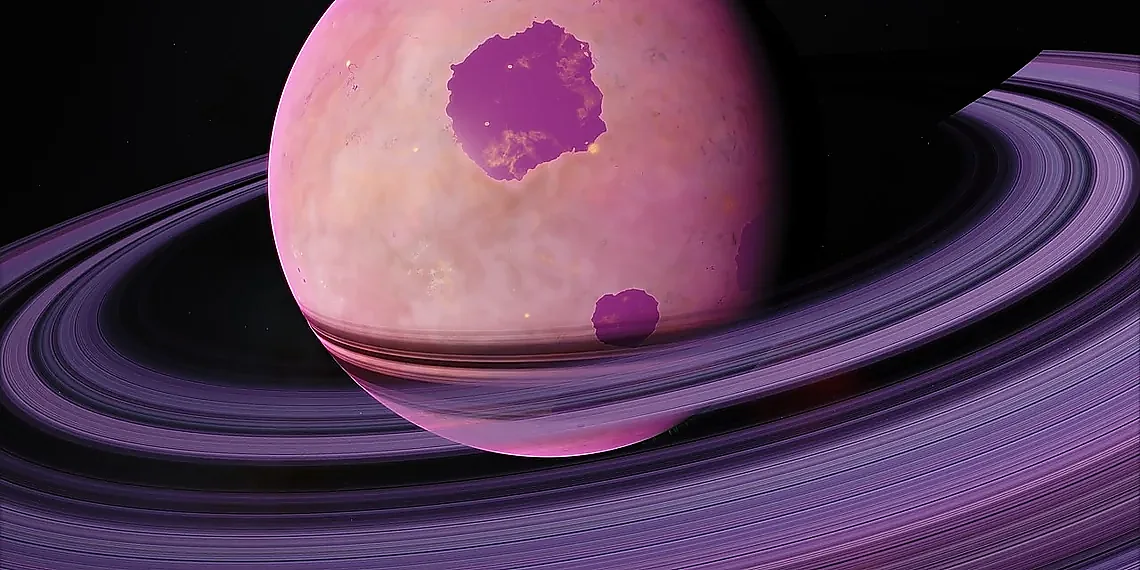
Imagine standing on a sunny day and noticing a tiny shadow briefly pass in front of the sun – that’s essentially how astronomers find many exoplanets! The ‘transit method,’ also known as transit photometry, relies on observing subtle dips in the brightness of a star. When an exoplanet passes directly between its star and Earth (an event called a ‘transit’), it blocks a tiny portion of the starlight, causing a slight decrease in overall brightness. Because planets are so much smaller than their stars, these dips are incredibly faint – often less than 1% of the total light.
Think of it like this: if our Sun had a planet the size of Earth orbiting it, that dip would be about the same as seeing the sun dim slightly when an ant crawls across its surface. Telescopes constantly monitor thousands of stars, precisely measuring their brightness over time. These measurements are then analyzed to look for repeating patterns of these tiny dips; each dip indicates a potential planet orbiting that star. The depth of the dip tells us roughly how large the planet is compared to the star – a deeper dip suggests a larger planet.
While remarkably effective, the transit method isn’t perfect. Factors like a star’s ‘limb darkening’ (the edges appearing dimmer than the center) can complicate these brightness measurements. Limb darkening makes it seem like the dips are shallower than they really are, potentially leading to inaccurate estimations of planetary size and orbital characteristics. Correcting for limb darkening and other stellar phenomena is crucial for obtaining accurate exoplanet data and truly understanding these distant worlds.
Understanding Limb Darkening
When we look for planets orbiting other stars – exoplanets – one of our most powerful tools is the transit method. This involves carefully measuring a star’s light over time, and looking for tiny dips in brightness that signal a planet passing in front of it. While simple in concept, accurately interpreting these dips, known as transit depths, isn’t always straightforward. A phenomenon called ‘limb darkening’ adds complexity to this process, and understanding it is crucial for getting the most out of exoplanet data.
So, what exactly *is* limb darkening? Imagine looking at a basketball from different angles. The edges appear darker than the center, right? Stars behave similarly. Limb darkening refers to the fact that the edge (or ‘limb’) of a star appears dimmer than its center. This isn’t because the edge is actually less bright in terms of energy output; it’s an effect of how we view light traveling through different depths within the star’s atmosphere. Light from the center travels a shorter, clearer path to us, while light from the limb has to pass through more layers – absorbing and scattering some of its intensity along the way.
This occurs because stellar atmospheres aren’t uniform; they have varying temperatures and densities at different depths. The cooler, denser outer layers absorb more light, especially towards the edge of the star. As a planet transits, it blocks slightly *more* light from the dimmer limb regions than from the brighter center. This makes the observed transit depth appear shallower than it would if the star’s brightness were uniform across its surface – essentially misleading us about the true size of the exoplanet.
Accounting for limb darkening is a vital step in refining our understanding of exoplanets and their characteristics. By precisely modeling this effect, astronomers can more accurately determine planetary sizes and orbital parameters from exoplanet data, leading to a sharper view of these distant worlds.
What Causes This ‘Dimming’?
When analyzing exoplanet data from transit observations, astronomers often encounter a phenomenon called ‘limb darkening.’ You might initially assume this refers to something about the planet itself – perhaps its atmosphere or surface features causing varying levels of dimming. However, limb darkening is actually an inherent property of stars! It describes how the apparent brightness of a star’s surface changes from the center towards its edge (the ‘limb’).
This effect arises because we see light from deeper within the star’s atmosphere when looking at the central regions compared to the edges. The outer layers of a star are cooler and less dense, so they emit less light. As you look closer to the limb, you’re essentially peering through more of this cooler, dimmer material. This means that the edge of the star appears intrinsically fainter than its center, creating the visual effect of ‘darkening’ towards the edges.
Imagine a simplified illustration: if you were observing a star from directly above its poles, you’d see the brightest part of its atmosphere. Moving to an oblique angle, like when we observe transiting exoplanets, you’re looking through more layers and seeing progressively dimmer regions at the limb. This subtle variation in brightness needs to be carefully accounted for when precisely measuring transit depths – the amount a star dims during a planet’s passage – to accurately determine planetary sizes.
The Breakthrough: Sharper Data Through Correction
The transit method remains the workhorse for exoplanet discovery; it’s elegantly simple: observe a star’s brightness and look for tiny dips indicating a planet passing in front. The depth of that dip reveals the relative size of the planet compared to its star – a crucial first step in understanding these distant worlds. However, this seemingly straightforward technique is fraught with subtle complexities. One such complexity stems from ‘limb darkening,’ where the edges of a star appear dimmer than its center due to how light escapes the star’s atmosphere at different angles. Traditionally, limb darkening has been accounted for, but often with simplified models that introduce inaccuracies into our calculations.
Recent research has yielded a significant breakthrough: vastly improved techniques for correcting limb darkening effects during exoplanet transit analysis. These advanced correction methods go beyond traditional approaches, employing more sophisticated mathematical models and leveraging higher-resolution stellar observations to achieve unprecedented accuracy in measuring the depth of transit events. The result? A substantially reduced margin of error when determining the size of an exoplanet relative to its host star.
The impact of this refined technique is truly remarkable. Preliminary results suggest a potential fivefold increase in the accuracy of exoplanet size estimations. To put that into perspective, a fivefold improvement means we can now differentiate between planets with incredibly subtle differences in size – distinctions previously obscured by measurement errors. This enhanced precision unlocks exciting new avenues for characterizing these worlds. It allows for more reliable inferences about atmospheric composition based on planetary radius, and crucially, brings us closer to accurately assessing the potential habitability of exoplanets – determining if they might harbor liquid water or other conditions conducive to life.
Ultimately, this advancement in limb darkening correction underscores the ongoing refinement of our tools for exploring the cosmos. While discovering exoplanets is relatively easy, truly *understanding* them requires meticulous data analysis and a relentless pursuit of greater precision. This new technique represents a vital step forward, promising sharper views and richer insights into the vast population of planets orbiting distant stars – pushing us closer to answering the fundamental question: are we alone?
Fivefold Accuracy Boost?

Recent research has demonstrated a significant improvement in the accuracy of exoplanet data analysis through refined limb darkening correction techniques. Limb darkening refers to the gradual fading of a star’s brightness from its center to its edge, an effect that subtly influences transit depth measurements – how much a planet dims a star’s light as it passes in front. Traditionally, these corrections have been simplified, introducing errors that can skew estimations of exoplanet sizes and atmospheric properties. The new method incorporates more sophisticated models accounting for the complex nature of stellar limb darkening.
The impact of this improvement is substantial: researchers are reporting a fivefold increase in accuracy when calculating transit depths. This seemingly small change has significant implications. A fivefold increase means that previously uncertain measurements now have a much smaller margin of error, allowing astronomers to more precisely determine the radius of an exoplanet. For example, it can differentiate between a planet slightly larger than Earth and one significantly bigger – distinctions critical for assessing habitability.
This enhanced accuracy unlocks new possibilities in characterizing exoplanet atmospheres. More precise size measurements combined with transit timing variations (slight shifts in when transits occur) allow scientists to better constrain the mass of an exoplanet. Knowing both the radius and mass allows for density calculations, which provide clues about composition – whether a planet is rocky, gaseous, or something else entirely. Ultimately, this breakthrough brings us closer to understanding if planets orbiting other stars could potentially harbor life.
Future Implications & Next Steps
The advancements in refining exoplanet data, as we’ve explored, represent a significant leap beyond simply identifying planets orbiting distant stars. While the transit method remains invaluable for discovery, the real scientific breakthroughs lie in extracting every possible detail from that dimming signal. This enhanced accuracy opens doors to probing exoplanet atmospheres – analyzing starlight filtered through their gaseous layers to identify potential biosignatures or clues about habitability. Furthermore, precise size measurements are crucial for determining planetary density, providing vital information about composition: is it a rocky world like Earth, a gas giant like Jupiter, or something entirely different? These details are foundational for building accurate models and understanding the diversity of planetary systems.
Looking ahead, missions like NASA’s Roman Space Telescope (formerly WFIRST) will be particularly well-suited to leverage these refined data analysis techniques. Roman’s wide-field infrared survey capabilities, combined with more precise transit measurements, promise an explosion in exoplanet discoveries and characterizations. The ability to correct for systematic errors – essentially cleaning up the ‘noise’ in the data – allows us to extract far more subtle signals that would otherwise be lost. This is especially critical when searching for smaller, potentially Earth-like planets orbiting closer to their stars, where transit dips are minimal.
The implications for the search for truly Earth-like planets are profound. Previously, many candidates were discarded due to uncertainties in size or orbital parameters. With these improved data analysis pipelines, we can revisit those previously dismissed possibilities and re-evaluate them with greater confidence. It’s entirely possible that several planets currently considered borderline habitable could be upgraded to prime targets for future atmospheric studies. The quest isn’t just about finding another Earth; it’s about understanding the range of conditions under which life might arise, and this refined data is our most powerful tool in that endeavor.
Ultimately, this work highlights a crucial point: scientific progress often comes not from groundbreaking new instruments alone, but from innovative ways to squeeze every ounce of information from existing data. As we continue to collect more exoplanet data – thanks to ongoing and future missions – the refinement of these analytical techniques will be paramount for unlocking the secrets of distant worlds and bringing us closer to answering the age-old question: are we alone?
Beyond Size: Unlocking Exoplanet Secrets
While refined measurements of exoplanet sizes are a significant step forward, they represent just the beginning of what’s possible with improved data. Knowing an exoplanet’s radius allows scientists to combine that information with mass estimates (often derived from radial velocity measurements) to calculate its density – a crucial factor in understanding its composition. A rocky planet like Earth will have a significantly different density than a gas giant like Jupiter, and these differences offer vital clues about formation processes and internal structure.
The real excitement lies in the potential to characterize exoplanet atmospheres. Precise size measurements are essential for accurately interpreting atmospheric transmission spectra – data gathered when starlight passes through an exoplanet’s atmosphere during transit. Subtle dips in light at specific wavelengths reveal the presence of different molecules, potentially including biosignatures indicative of life. More accurate planetary sizes will dramatically reduce noise and improve the signal-to-noise ratio in these observations, leading to more reliable atmospheric detections.
Future missions are poised to leverage this improved understanding of exoplanet data. The Nancy Roman Space Telescope, for example, is designed with a coronagraph that will directly image exoplanets orbiting distant stars. Combined with accurate size and density information gleaned from transit measurements, the Roman telescope’s observations will provide an unparalleled opportunity to identify Earth-like planets in habitable zones – significantly boosting our chances of finding worlds capable of supporting life.

The advancements we’ve explored offer a truly transformative perspective on our search for life beyond Earth, fundamentally altering how we approach exoplanet detection and characterization.
Previously obscured details are now coming into focus, revealing subtle atmospheric signatures and hinting at planetary compositions we could only dream of understanding before.
This refined ability to process and interpret exoplanet data promises not just more discoveries, but a deeper comprehension of the conditions necessary for habitability – potentially revolutionizing our place in the cosmos.
Imagine what future generations will uncover as these techniques are further honed and combined with even more powerful telescopes; the possibilities truly feel limitless at this juncture, filled with potential new worlds waiting to be revealed. The sheer volume of exoplanet data now available is a testament to human ingenuity and our relentless curiosity about the universe around us. We stand on the precipice of an era where understanding planetary systems beyond our own will become increasingly commonplace, expanding our knowledge in ways we can scarcely predict today..”,
Continue reading on ByteTrending:
Discover more tech insights on ByteTrending ByteTrending.
Discover more from ByteTrending
Subscribe to get the latest posts sent to your email.