
Imagine a vibrant, green landscape stretching across the rusty plains of Mars – rivers flowing, forests teeming with life, and a breathable atmosphere under a blue sky. For generations, this vision has captivated our imaginations, fueling countless works of science fiction and inspiring dreams of humanity’s expansion beyond Earth.
While once relegated to the realm of fantasy, the prospect of transforming Mars into a more habitable world is increasingly underpinned by tangible scientific progress; recent breakthroughs in robotics, genetic engineering, and atmospheric modeling are reshaping what we thought possible. We’re beginning to seriously consider the monumental task of Mars Terraforming.
This article dives deep into the complex reality behind this ambitious goal, exploring not only the potential roadmap – from initial atmospheric modification to establishing a self-sustaining biosphere – but also confronting the profound ethical questions that arise when considering such large-scale planetary engineering. It’s a journey through both the exciting possibilities and the critical considerations of reshaping an entire world.
The Roadmap to a Green Mars
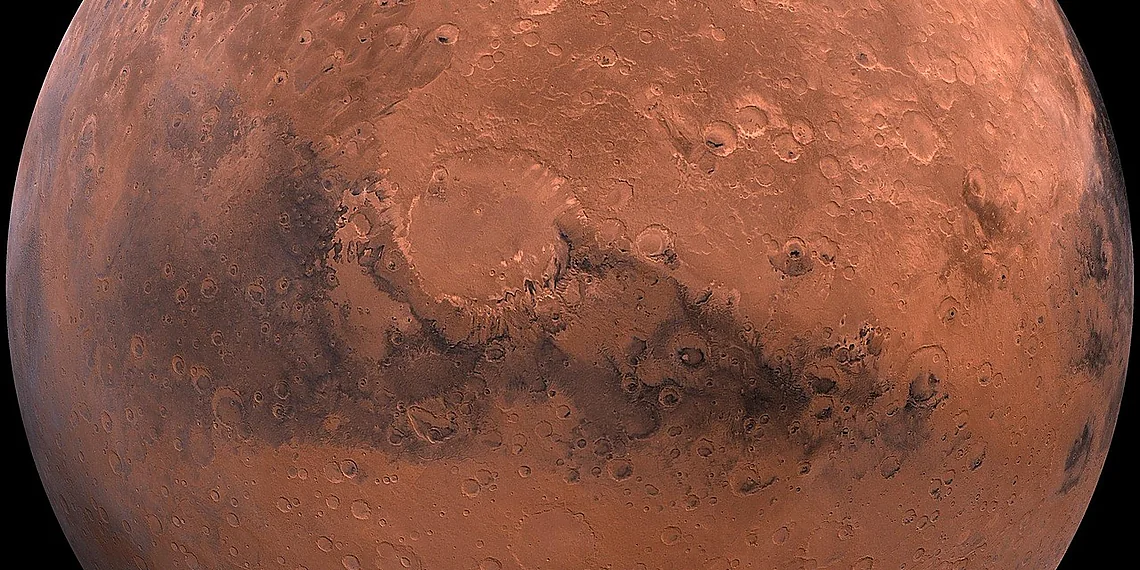
The journey to a green Mars isn’t a single leap, but rather a series of carefully orchestrated steps, each building upon the last. The initial and arguably most critical phase involves atmospheric thickening and warming. Currently, Mars possesses an extremely thin atmosphere – less than 1% of Earth’s – offering minimal protection from radiation and resulting in frigid surface temperatures averaging around -62°C (-80°F). Reversing this requires significantly increasing both the density and temperature. Proposed methods include releasing potent greenhouse gases like fluorinated compounds, which are far more effective at trapping heat than CO2. While such releases would require massive industrial infrastructure on Mars (or robotic precursors), recent advancements in in-situ resource utilization – extracting resources directly from the Martian environment – offer a glimmer of hope for generating these gases locally.
Another promising avenue involves deploying orbital mirrors, also known as solar shades or reflectors. These colossal structures, kilometers in diameter, could be positioned to focus sunlight onto the polar ice caps, sublimating frozen carbon dioxide and water vapor into the atmosphere. While the engineering challenges are immense – constructing and maneuvering such massive objects in space is a monumental task – ongoing research into lightweight, deployable mirror technology using materials like graphene promises to make this approach increasingly feasible. Furthermore, even relatively small increases in atmospheric density would provide some shielding from harmful solar radiation, enabling more robust robotic exploration and potentially paving the way for future human settlements.
Beyond simply adding gases to the atmosphere, maintaining a stable climate is paramount. Initial warming efforts might trigger runaway effects, leading to an unstable and unpredictable environment. Scientists are exploring feedback loops – processes where one change triggers another that amplifies or diminishes the initial effect – to better understand how Martian systems would respond to terraforming interventions. For example, the release of trapped methane from subsurface ice could significantly contribute to warming, but uncontrolled releases could also create dangerous atmospheric conditions. Sophisticated climate modeling and robotic probes designed to monitor these feedback mechanisms will be essential for ensuring a gradual and sustainable transformation.
Finally, introducing liquid water is crucial for supporting life as we know it. While evidence suggests the presence of subsurface ice reservoirs, establishing widespread surface water requires not only warming but also creating stable conditions that prevent rapid evaporation. The long-term success of Mars terraforming hinges on achieving this delicate balance – a gradual, controlled process supported by continuous monitoring and adaptation based on scientific data gathered from the Martian environment itself.
Atmospheric Thickening & Warming

A primary hurdle in Mars terraforming is the planet’s incredibly thin atmosphere – less than 1% of Earth’s. This low density offers minimal protection from solar radiation and contributes to frigid surface temperatures averaging around -62°C (-80°F). Increasing atmospheric pressure and raising the overall temperature are therefore foundational steps, essential for enabling liquid water on the surface and creating a habitable environment. Without these changes, any introduced life would struggle to survive.
Several methods have been proposed to achieve this warming and thickening. One prominent idea involves releasing potent greenhouse gases like fluorinated compounds (e.g., chlorofluorocarbons or perfluorocarbons) into the Martian atmosphere. These gases trap heat far more effectively than carbon dioxide, though their production would require significant industrial capacity – potentially on Mars itself or through asteroid mining. Another concept utilizes massive orbital mirrors to concentrate sunlight onto the polar ice caps, sublimating CO2 and water vapor and initiating a runaway greenhouse effect. The sheer scale of these mirrors presents engineering challenges involving lightweight materials and precise orbital control.
Current research focuses on mitigating some of these difficulties. Scientists are investigating methods for in-situ resource utilization (ISRU) to produce greenhouse gases using Martian resources, reducing the need for extensive imports from Earth. Studies into advanced mirror designs, including inflatable structures and self-replicating systems, aim to lower construction costs and complexity. Furthermore, simulations are being conducted to better understand the long-term atmospheric behavior of Mars under various terraforming scenarios, allowing for more refined strategies and minimizing unintended consequences.
Water Acquisition & Distribution
The most immediate hurdle in any Martian terraforming endeavor is securing a sufficient supply of water. While evidence strongly suggests the presence of vast quantities of subsurface ice, particularly at higher latitudes and near polar regions, accessing and distributing this resource presents significant engineering challenges. Robotic missions equipped with ground-penetrating radar and other detection tools are crucial for mapping these icy deposits with precision. Once located, methods for extraction could range from localized melting using concentrated solar energy to more ambitious schemes involving geothermal heat taps—though the latter introduces its own complexities related to Martian geology.
Beyond subsurface ice, the possibility of acquiring water via external sources like asteroids or comets warrants serious consideration. While the logistics are undeniably daunting – requiring precise orbital calculations and capture mechanisms – a single large asteroid could potentially deliver enough water to significantly alter Mars’ atmosphere and surface conditions. This approach necessitates developing advanced space-based resource utilization technologies capable of diverting and processing these celestial bodies, which remains decades away from practical implementation but is an area attracting increasing research investment.
Once extracted, distributing this precious resource across the Martian landscape poses another formidable task. Simply transporting water across the vast distances of Mars is energy intensive, demanding innovative solutions to minimize losses due to evaporation and leakage. Proposed methods include constructing extensive pipeline networks—a monumental undertaking in itself requiring specialized robotic construction crews—or utilizing automated vehicles capable of traversing varied terrains while delivering water to designated areas for melting or atmospheric release. The sheer scale of the operation highlights the need for a phased approach, prioritizing regions with favorable geological conditions for initial terraforming efforts.
Ultimately, any strategy for water acquisition and distribution must be economically viable and technologically feasible within a reasonable timeframe. Current estimates place the resource requirements for even partial terraforming at levels that would necessitate significant advancements in space launch capabilities and robotic automation to minimize costs and maximize efficiency. Continued research into novel extraction techniques, advanced materials for pipelines, and autonomous transport systems will be critical to transforming this ambitious vision from scientific speculation into a tangible possibility.
Unlocking Subsurface Ice Reservoirs
Robotic missions are crucial for identifying and accessing Mars’ vast reserves of subsurface ice. Ground-penetrating radar (GPR), like that deployed by the SHARAD instrument on the Mars Reconnaissance Orbiter, has already revealed extensive layers of ice buried beneath the Martian surface, particularly at mid-latitudes. Future missions could incorporate more advanced GPR systems alongside drills and spectrometers to precisely map ice deposits, determine their purity, and assess their depth. These probes would also analyze the surrounding regolith composition to understand potential contaminants or permafrost barriers that might hinder extraction.
Once located, melting subsurface ice presents its own engineering challenges. Focused microwave beams from orbiting satellites, or directed energy systems deployed on Mars’ surface, offer promising methods for localized melting. Alternatively, heat-producing chemical reactions could be employed in situ. The resulting water would then need to be transported across the Martian landscape – a significant logistical hurdle. Pipeline networks, while potentially vulnerable to damage from dust storms and micrometeorites, represent one option for large-scale water distribution. Automated robotic vehicles or even specialized ‘water trains’ are also being considered for more flexible, albeit slower, transport.
The sheer distance and challenging terrain of Mars necessitate innovative solutions for both ice extraction and water transportation. Maintaining a continuous supply chain across thousands of kilometers requires robust autonomous systems capable of self-repair and navigation. Furthermore, minimizing energy consumption during the melting and transport processes is paramount given limited power resources available on Mars. The development of efficient robotic infrastructure will be vital to any successful large-scale terraforming endeavor.
The Ethical Minefield
The prospect of a verdant Mars, teeming with life, sparks excitement and wonder. However, this ambition isn’t without profound ethical considerations – a minefield that demands careful navigation before we even consider large-scale terraforming projects. The debate boils down to a fundamental question: do we have the right to fundamentally alter another planet, potentially erasing its unique history and any secrets it holds? While technological advancements make Mars terraforming increasingly feasible, the moral implications are complex and require serious scrutiny.
One of the most significant concerns centers around the potential loss of Martian geological history. Terraforming processes – releasing greenhouse gases, introducing water, altering atmospheric composition – would irrevocably change the planet’s surface. Ancient riverbeds, unique mineral formations, and any evidence of past (or even present) microbial life could be buried or destroyed under layers of new sediment and vegetation. These features aren’t just aesthetically pleasing; they offer invaluable insights into the early solar system, planetary evolution, and potentially, the origins of life itself.
Proponents of prioritizing exploration argue that preserving Mars in its current state allows for more comprehensive scientific investigation. Robotic missions can continue to analyze Martian rocks and soil, searching for biosignatures without risking contamination or alteration. The argument isn’t necessarily against all future intervention; rather, it advocates for a cautious approach – thorough study *before* any transformative actions are taken. We must weigh the potential benefits of a terraformed Mars against the irretrievable loss of scientific knowledge.
Ultimately, the ethical debate surrounding Mars terraforming isn’t simply about whether we *can* do it, but whether we *should*. It forces us to confront our responsibility as stewards of the solar system and consider the long-term consequences of our actions on a planetary scale. The discussion requires input from scientists, ethicists, policymakers, and the public at large – ensuring that any future decisions are informed by both scientific possibility and moral imperative.
Erasing Martian History

Terraforming Mars, while offering the tantalizing prospect of a second habitable world, presents a profound ethical challenge: the potential erasure of its unique geological record. The processes involved – thickening the atmosphere, warming the surface, and introducing liquid water – would fundamentally alter the Martian landscape. For example, widespread introduction of water could dissolve or bury sedimentary layers containing evidence of past fluvial activity or ancient shorelines, effectively wiping away clues about Mars’ climate history. Similarly, biological activities introduced during terraforming, like plant root systems, could disturb subsurface features that might hold fossilized microbial life.
The scientific value of preserving this Martian record is immense. These geological formations and potential biosignatures offer invaluable insights into planetary evolution, the conditions necessary for life to arise, and possibly even the history of water in our solar system. Studying Mars ‘as is’ allows scientists to reconstruct its past environments without introducing terrestrial biases or interpretations. Prioritizing robotic exploration – detailed mapping, subsurface radar imaging, and sample return missions – provides a far more conservative approach, allowing us to gather data before potentially irreversible alterations are made.
The debate boils down to a fundamental conflict: the desire for human expansion versus the responsibility to preserve scientific heritage. Proponents of terraforming argue that the potential benefits for humanity outweigh the risks of losing geological information; however, critics contend that destroying evidence of past Martian life or unique formations is akin to demolishing an irreplaceable historical site on Earth. Finding a balance between exploration and eventual transformation requires careful consideration and international consensus – perhaps establishing ‘protected zones’ where terraforming is strictly prohibited.
Beyond the Green Dream – Future Considerations
While the grand vision of a fully terraformed Mars—a planet with breathable air, liquid water oceans, and a thriving biosphere—captures our imagination, the sheer scale of such an undertaking necessitates a realistic perspective. The roadmap developed by researchers highlights incredible possibilities, but also underscores that achieving complete planetary transformation is likely decades, if not centuries, away. Factors like establishing a global magnetosphere to shield Mars from solar radiation, releasing sufficient greenhouse gases to warm the planet substantially, and creating a self-sustaining ecosystem are monumental challenges requiring technological advancements we haven’t yet achieved.
The timeline for even incremental terraforming steps is daunting. Introducing organisms capable of converting Martian carbon dioxide into oxygen would be a slow process, potentially taking hundreds or thousands of years to significantly alter the atmosphere’s composition. Furthermore, uncertainties surrounding Mars’ geological history and its potential for harboring subsurface life complicate matters considerably; disrupting the planet’s natural state carries ethical implications we must carefully consider before embarking on such large-scale alterations.
Looking beyond full planetary terraforming, a more immediate and practical approach lies in ‘paraterraforming.’ This involves creating localized, habitable environments—enclosed domes, underground habitats, or even lava tube settlements—that offer controlled ecosystems independent of the harsh Martian environment. These enclosed systems allow for experimentation with different biomes, resource utilization strategies, and life support technologies, providing invaluable insights applicable to future terraforming efforts while minimizing potential harm to any existing Martian biosphere.
Ultimately, paraterraforming isn’t a compromise on the dream of transforming Mars; it’s an evolution. It allows us to establish a human presence and conduct vital research in a controlled setting, paving the way for more ambitious projects down the line. By focusing on these smaller-scale, contained environments, we can learn how to build sustainable ecosystems on another planet, understand the complexities of Martian resource utilization, and prepare ourselves for the truly transformative possibilities that might one day lie ahead.
Paraterraforming: A Stepping Stone?
While the grand vision of Mars terraforming – transforming the entire planet into an Earth-like environment – remains a long-term, incredibly complex endeavor, paraterraforming offers a potentially more achievable near-future solution for establishing human settlements. Paraterraforming involves creating localized, self-contained habitable environments within enclosed structures such as domes or underground habitats. These structures would provide controlled atmospheres, temperature regulation, and protection from radiation, effectively mimicking Earth’s conditions on a smaller scale.
The advantages of paraterraforming are numerous. It significantly reduces the initial environmental impact compared to planet-wide terraforming, minimizing disruption to any potential Martian microbial life or unique geological features. Furthermore, it allows for experimentation with different atmospheric compositions and ecological systems in a controlled setting, providing invaluable data that could inform future, larger-scale terraforming attempts if deemed feasible and ethical. Initial settlements could focus on resource utilization within the paraterraformed environments, reducing reliance on Earth resupply chains.
Although full planetary terraforming is likely decades or centuries away – requiring massive technological advancements and facing considerable ethical considerations – exploring paraterraforming strategies presents a pragmatic pathway toward establishing a sustainable human presence on Mars. These localized habitats not only offer immediate settlement possibilities but also serve as crucial testing grounds for technologies and ecological principles that could one day contribute to broader planetary transformation.
The journey through the possibilities of transforming Mars has revealed a landscape both exhilarating and complex, showcasing how far our scientific understanding has progressed while simultaneously highlighting the monumental challenges that lie ahead.
We’ve explored potential pathways – from atmospheric thickening to introducing microbial life – acknowledging that achieving a truly Earth-like environment is likely centuries, if not millennia, away, but the foundational research continues at an impressive pace.
The ethical considerations are equally profound; questions of planetary rights, potential indigenous Martian life (however unlikely), and the responsibility we bear as stewards of the cosmos demand careful scrutiny as we contemplate endeavors like Mars Terraforming.
While the technical hurdles remain significant, the sheer ambition of reshaping another planet speaks to humanity’s enduring drive for exploration and our innate desire to push the boundaries of what’s possible, inspiring future generations of scientists and engineers to dream bigger and reach further than ever before. The potential rewards are immense, but so too are the responsibilities we must embrace alongside them. Considering these factors is paramount as we look towards a future where interplanetary colonization becomes more than just science fiction, but a tangible goal within our grasp. Ultimately, shaping another world requires not only ingenuity but also deep reflection on what it means to be human and responsible inhabitants of the universe. Now, we want to hear from you – what are your thoughts on the ethical implications of terraforming Mars? Share your perspectives in the comments below; let’s continue this vital conversation.
Continue reading on ByteTrending:
Discover more tech insights on ByteTrending ByteTrending.
Discover more from ByteTrending
Subscribe to get the latest posts sent to your email.