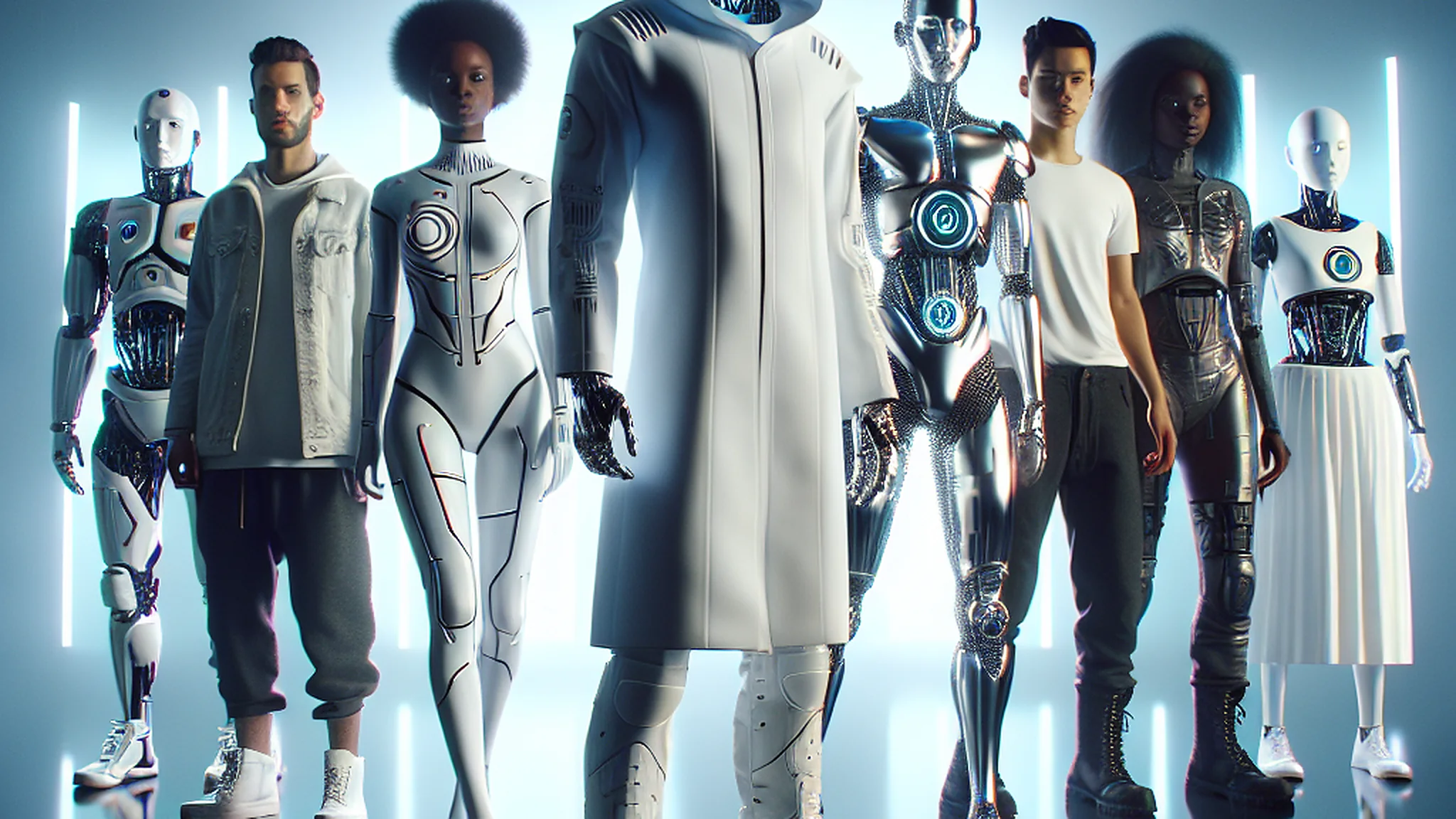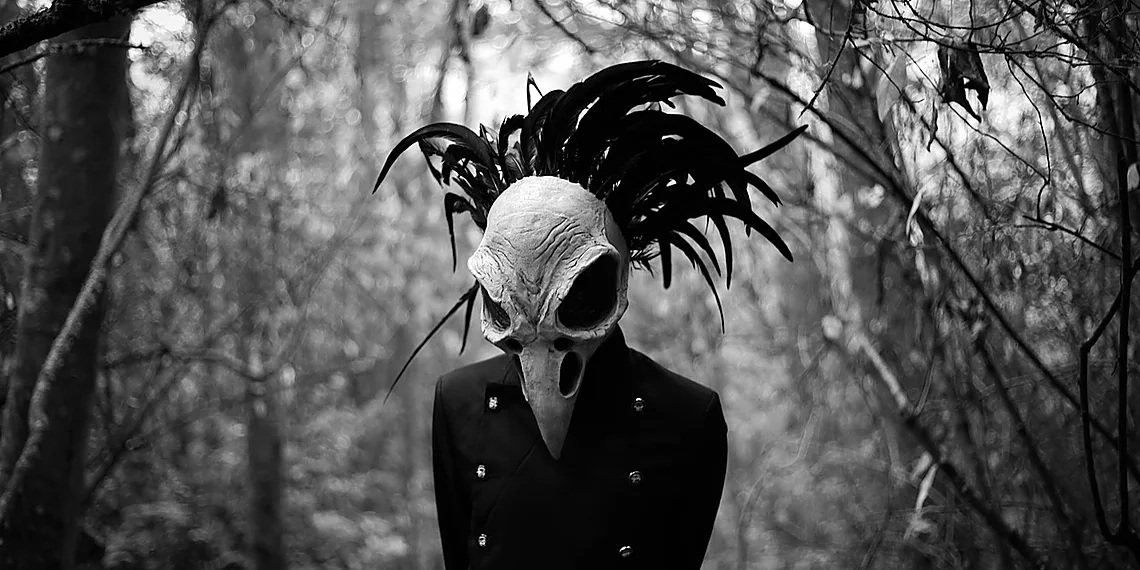
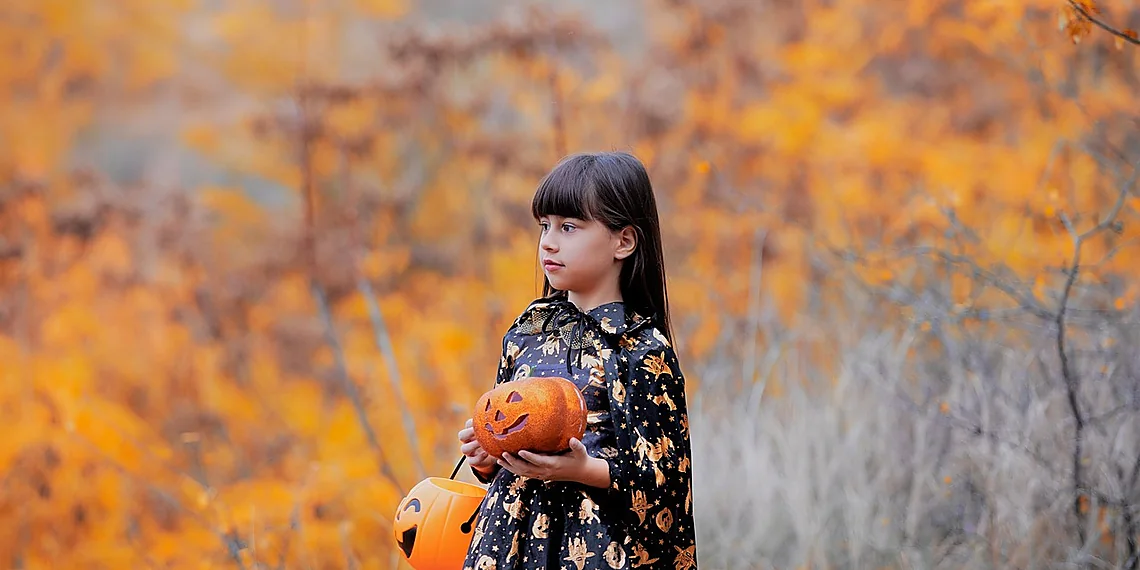
Halloween is just around the corner, and this year promises a truly unique twist on festive attire – we’re talking about costumes dreamed up by artificial intelligence.
Forget store-bought masks and predictable ensembles; imagine Halloween looks conjured from algorithms, each one a bizarre yet fascinating blend of digital imagination.
We dove into an experiment using a ‘tiny neural net,’ a simplified AI model designed to generate images without the benefit of vast internet training data – meaning no pre-existing knowledge of costumes or even people!
This limitation led to some wonderfully unexpected and delightfully strange results, showcasing the raw creativity (and occasional absurdity) that can emerge from constrained AI systems. Prepare for something genuinely different as we explore how this process unfolded and what spooky visions our little AI brought to life; get ready to see some truly unique AI Halloween Costumes in action.
The Magic Behind the Machine: Char-RNN Explained
Let’s dive into the engine powering these surprisingly spooky AI Halloween costumes: a Char-RNN, or Character Recurrent Neural Network. The beauty of this particular architecture lies in its elegant simplicity. Unlike many modern AI models that rely on massive datasets and cloud computing, a Char-RNN can run comfortably on a laptop – even one like mine! At its core, it’s a system designed to predict the next character in a sequence, learning solely from the text you feed it.
Think of it as a very sophisticated auto-complete. The network analyzes the preceding characters and assigns probabilities to which character is most likely to follow. For example, if it’s seen ‘H’ followed by ‘a’, it might strongly predict an ‘l’ next. This process repeats iteratively; the predicted character is added to the sequence, and the network then predicts *that* character’s successor. Crucially, and what makes this experiment so interesting, a Char-RNN doesn’t have access to external data or the vast knowledge base of the internet – its understanding is limited entirely to what it’s been trained on.
This self-contained nature has both advantages and disadvantages for costume generation. It means the AI isn’t influenced by pre-existing Halloween tropes or popular culture; instead, it generates truly unique (and sometimes delightfully nonsensical) combinations based purely on the patterns in its training data – a collection of text I provided myself. The lack of external context often leads to unexpected and creative results, far removed from standard costume ideas.
The ‘character-level’ aspect is key; instead of analyzing whole words or sentences like many language models, it deals with individual characters—letters, numbers, punctuation marks, even spaces. This allows it to generate text that can be grammatically incorrect but still maintain a certain stylistic consistency based on the original data. It’s this granular understanding of character sequences that makes generating novel costume descriptions possible, one character at a time.
What is a Character RNN?
At its core, a Character Recurrent Neural Network (Char-RNN) is a relatively simple type of neural network designed to predict the next character in a sequence. Imagine it as an incredibly sophisticated auto-complete for text – but instead of being programmed with rules, it learns patterns directly from data. It ‘reads’ a piece of text, analyzes the preceding characters, and then tries to guess what comes next. This prediction is based entirely on probabilities derived from its training data.
The ‘recurrent’ part is key: Char-RNNs have a ‘memory.’ As it processes each character, the network incorporates information from previous characters into its current calculation. Think of it like reading a sentence – you don’t just consider the last word to understand the meaning; you use context from everything that came before. This allows it to pick up on nuances in writing styles and generate text that has some semblance of coherence.
Crucially, Char-RNNs are entirely dependent on their training data. They have no inherent understanding of language or the world – they simply learn statistical relationships between characters. If you train one only on Shakespearean plays, it will try to write like Shakespeare! This lack of external knowledge is what makes these tiny networks so unique and sometimes delightfully unpredictable when generating creative content like our AI Halloween costumes.
Training the Tiny Terror: Data and Process
The core of these spooky costume creations lies in training a character-recurrent neural network (char-rnn), an older style of model known for its simplicity and ability to run on modest hardware. Unlike many modern AI systems that rely on massive datasets scraped from the internet, this particular network operates entirely offline, fed only data I’ve curated myself. This constraint—no access to external knowledge or broader context—is absolutely pivotal in shaping the results; it’s what gives these AI-generated costumes their unique and often delightfully bizarre character.
The dataset itself is a relatively small collection of text descriptions relating to Halloween: costume names, character attributes (think ‘ghostly,’ ‘spooky,’ ‘vampiric’), associated objects (‘pumpkin,’ ‘bat wings,’ ‘witch’s hat’) and even snippets of stories or phrases commonly used around the holiday. The choice to focus on this specific lexicon was intentional; I wanted to see what a model, completely devoid of external references, would conjure when prompted with Halloween-themed keywords. It’s less about replicating existing costume designs and more about exploring the AI’s internal representation of ‘Halloween’.
Because the network lacks any broader understanding of fashion trends or even visual representations, its output is heavily influenced by the statistical patterns within this limited dataset. If ‘ghostly’ frequently appears alongside ‘white sheet,’ for example, the model is likely to generate costume descriptions incorporating both elements. This can lead to some unexpected combinations and interpretations – a ‘robot vampire’ might emerge simply because those terms co-occurred in the training data, even if they don’t logically connect. The lack of external reference means it’s generating based purely on textual associations.
Ultimately, the limitations imposed by this offline training approach aren’t seen as drawbacks but rather as creative catalysts. They force the AI to generate costumes from a constrained perspective, resulting in outputs that are often surprising, whimsical and distinctly different from what you might find in a costume shop. It’s a fascinating demonstration of how even a tiny neural network, operating with limited data, can produce surprisingly imaginative—and sometimes wonderfully weird—results.
The Dataset: A Halloween Lexicon
The foundation for these AI-generated Halloween costume concepts lies in a custom dataset meticulously crafted to represent the spirit of the holiday. This isn’t a pre-existing, readily available collection; instead, it’s a compilation of approximately 500 text descriptions covering various costumes, characters (like vampires and witches), Halloween themes (haunted houses, pumpkin patches), and associated accessories (masks, capes). Each entry is structured to describe a costume or related element in concise, descriptive language – for example, ‘A shimmering mermaid tail with iridescent scales’ or ‘A friendly ghost wearing a top hat.’
The selection of this specific dataset was driven by the limitations of the char-rnn model and the desire to control its knowledge base. Because the network isn’t connected to the internet, it can only learn from what is directly fed into it. A broad, general text corpus would have resulted in unfocused and unpredictable outputs. Focusing on Halloween ensured that the AI’s ‘understanding’ – its ability to generate coherent sequences – remained within a defined thematic scope.
Crucially, the dataset’s size and composition significantly shape the generated costumes. The relatively small dataset means the AI is essentially memorizing patterns and phrases rather than developing a deep understanding of costume design principles. This results in outputs that often recombine elements from the training data in unexpected ways—a ‘friendly ghost’ might suddenly have a ‘shimmering tail,’ showcasing both the creativity and limitations inherent in this localized, offline learning process.
Costume Creations: The Results and Quirks
The results from my miniature char-rnn model’s Halloween costume generation were… unpredictable, to say the least. Because it operates entirely on a dataset I provided – a relatively small collection of text describing various costumes and concepts – its creativity is both charmingly limited and hilariously skewed. We’re not seeing sophisticated design ideas here; rather, we’re witnessing a fascinating glimpse into what happens when an AI’s knowledge base is deliberately constrained. Expect the unexpected; think ‘purple pirate robot’ or ‘dancing cactus astronaut.’ These aren’t necessarily *good* costume ideas, but they are certainly unique and offer a window into how these models interpret and recombine information.
One of the most striking quirks was the model’s tendency to combine seemingly disparate elements. It consistently favored alliteration (often leading to phrases like ‘sparkling spooky skeleton’) and frequently layered descriptors, resulting in costume concepts that were both verbose and delightfully bizarre. For example, one output suggested a ‘glowing golden goblin gardener,’ which sparked an image of a tiny goblin tending to luminous flowers while wearing oversized gardening gloves – a visual I hadn’t anticipated at all. The repetition of certain words like ‘shiny,’ ‘dark,’ and ‘purple’ also became noticeable patterns; it seems these terms held particular resonance within the training data.
The failures, arguably, were just as entertaining as the successes. Occasionally, the model would produce strings of nonsensical characters or abruptly stop mid-description, hinting at its struggle to maintain coherence. A particularly memorable attempt resulted in ‘fluffy…banana,’ which, while not a complete costume description, certainly captured the essence of the AI’s occasionally random output. These moments highlight the crucial role that vast datasets and sophisticated training techniques play in modern AI – a tiny network with limited data simply can’t conjure up sensible ideas consistently.
Ultimately, these AI-generated Halloween costumes aren’t about practicality; they are an exploration of creative constraint. They serve as a playful reminder of how much context and knowledge shape even the simplest AI models. While you probably won’t be donning a ‘rainbow ninja pineapple’ anytime soon, appreciating the process – and the amusingly nonsensical results – is what makes this experiment so rewarding.
From Neural Net to Costume Idea: Examples
One particularly striking output was “A sentient pumpkin patch, radiating warmth and autumnal despair.” This concept blends familiar Halloween imagery (pumpkins) with surprisingly evocative emotional descriptors (‘warmth,’ ‘autumnal despair’). The AI seems to be attempting a narrative, suggesting a scene rather than just an object. Another intriguing suggestion was “The Ghost of Lost Socks,” which is both delightfully specific and inherently humorous – a relatable modern monster born from laundry room woes.
Recurring themes in the generated costumes include animals (often with unusual attributes like ‘electric badger’) and combinations of natural elements (‘a weeping willow made of candy corn’). The AI’s limited data appears to be heavily skewed towards these categories, resulting in frequent re-mixing. We also saw a prevalence of personified objects – inanimate things given life and personality. For example, “A disgruntled scarecrow demanding better working conditions” showcases this tendency.
However, not all the creations were successes. Several suggestions devolved into strings of disconnected words or phrases like “purple rainbow sparkle ghost,” demonstrating the limitations of its understanding. These nonsensical outputs are arguably just as entertaining, highlighting the unpredictable nature of AI creativity when operating outside a vast, internet-trained context.
Beyond Halloween: The Potential of Tiny Models
While generating spooky Halloween costumes might seem like a fun novelty, the underlying technology—these tiny, self-contained neural networks—holds potential far beyond seasonal celebrations. These models, often referred to as char-RNNs in this context, operate locally and don’t rely on massive internet datasets or cloud computing power. This fundamentally changes how we approach AI creation; instead of outsourcing creativity to behemoth algorithms, we can foster personalized, resource-efficient tools right on our own devices.
The rise of enormous language models has undeniably driven impressive advancements in AI, but their size and reliance on vast data resources also present limitations. Training these models is expensive, energy-intensive, and often raises privacy concerns. Smaller models offer a compelling alternative: they’re faster to train, require significantly less computational power, and can be tailored for specific tasks with limited datasets—perfect for niche applications or when data sensitivity is paramount. Imagine AI assisting in personalized art generation, crafting unique musical compositions, or even generating custom code snippets – all without sending your data to a remote server.
The current limitations are also worth noting. These ‘tiny’ models don’t possess the breadth of knowledge or nuanced understanding of larger counterparts. They excel at mimicking patterns within their training data, but may struggle with complex reasoning or unforeseen scenarios. However, this localized nature is precisely where future innovation lies. We can envision a future where individuals and small teams build specialized AI tools for extremely specific creative tasks—generating unique fonts, designing custom game assets, or even creating personalized bedtime stories – all powered by these nimble, self-contained models.
Looking ahead, the focus will likely shift towards enhancing the capabilities of these smaller networks through innovative training techniques and architectural improvements. Combining them with other AI approaches could also unlock new possibilities. While they might not replace massive language models entirely, tiny models represent a crucial step toward democratizing AI creativity and empowering individuals to harness its potential in personalized and accessible ways – proving that sometimes, less really is more.
Why Small Models Matter
The current trend in artificial intelligence overwhelmingly favors massive, cloud-based models like GPT-4 or Gemini. These behemoths require enormous datasets and computational power to train, limiting accessibility and raising concerns about energy consumption. However, a growing movement champions ‘tiny’ AI – smaller neural networks that can be trained on limited data and run locally, often on personal devices. The Halloween costume generator featured in this article exemplifies the creative potential unlocked by these compact models, demonstrating they aren’t just for simple tasks.
The advantages of small models extend beyond resource efficiency. Privacy is a significant benefit; training data doesn’t need to leave your control, reducing exposure to security risks and compliance issues. Customizability also shines: you can fine-tune a tiny model on a specific dataset – like images of vintage Halloween decorations or a unique artistic style – to achieve highly personalized results that a large, generalized model simply couldn’t replicate. Imagine an AI trained solely on your family photos generating custom greeting cards, or one learning the nuances of a niche hobby.
While limitations exist—tiny models generally lack the broad knowledge and sophistication of their larger counterparts—they excel in scenarios demanding localized intelligence and creative generation within constrained environments. They offer a compelling alternative to cloud-based AI, particularly for individuals and organizations prioritizing privacy, resource efficiency, and bespoke functionality. As hardware continues to improve and techniques for efficient training evolve, we can expect to see even more innovative applications emerge from the world of ‘tiny’ AI.
We’ve witnessed firsthand how a relatively simple neural network, like our Char-RNN, can conjure surprisingly imaginative results when tasked with generating something as whimsical and culturally rich as costume designs.
The ability to craft unique visions – even quirky AI Halloween Costumes – using such a compact model underscores the power of accessible AI; it’s no longer confined to massive datasets or sprawling infrastructure.
This project highlights a fascinating trend: small, self-contained AI models are proving incredibly versatile for creative endeavors, opening doors for artists and hobbyists alike to explore generative design in new ways.
The beauty lies not just in the final designs themselves but also in the process – understanding how these networks learn patterns and then extrapolate them into something entirely novel is truly captivating. It’s a testament to what’s possible with even basic machine learning techniques when applied creatively, proving that you don’t need cutting-edge resources to build something remarkable and fun like AI Halloween Costumes .”,
Continue reading on ByteTrending:
Discover more tech insights on ByteTrending ByteTrending.
Discover more from ByteTrending
Subscribe to get the latest posts sent to your email.