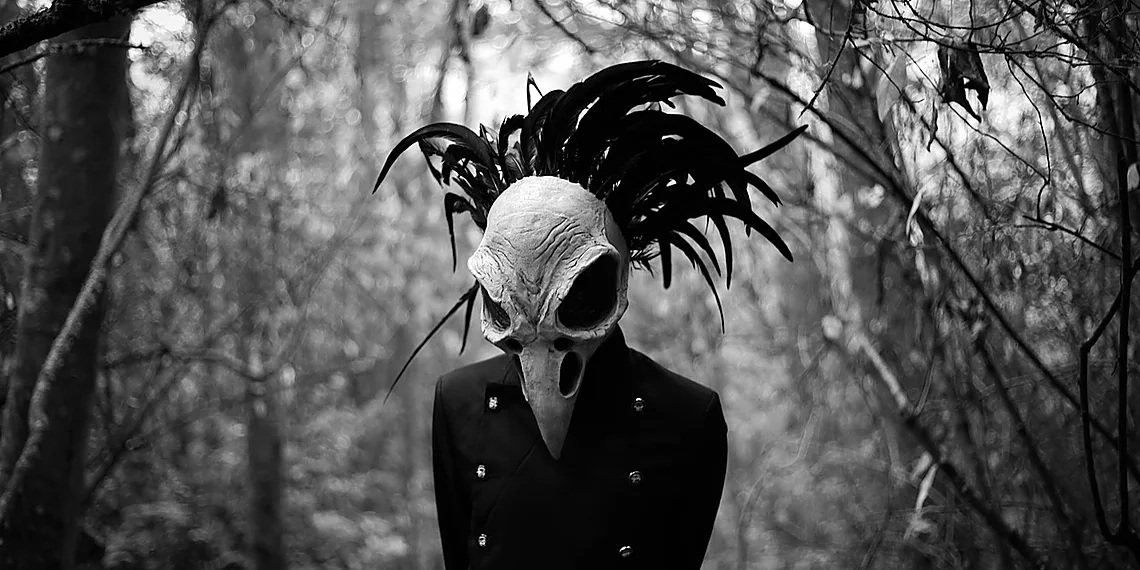



Halloween is just around the corner, and this year, forget store-bought outfits – we’re diving into a delightfully bizarre world where artificial intelligence designs your spooky season look! Imagine costumes conjured not from fabric and thread, but from algorithms and data. It sounds like something out of a sci-fi movie, but it’s rapidly becoming reality thanks to the power of generative AI. We’ve been experimenting with a surprisingly small neural network, feeding it prompts related to Halloween characters and aesthetics. The results? Truly unexpected and often hilarious designs – proving that even a ‘tiny net’ can generate big ideas. Prepare to be amazed by the creativity emerging from this intersection of technology and tradition as we explore the fascinating realm of AI Halloween Costumes. These aren’t your average ghost or witch; get ready for something completely new, born directly from the digital ether. It’s a playful look at how AI can spark inspiration and redefine what it means to dress up for Halloween.
$paragraph_end_marker$”]}“`json-format=true“`[{
The Unexpected Creativity of char-RNN
At the heart of these surprisingly imaginative AI Halloween costumes lies a technology called char-RNN – short for ‘character recurrent neural network.’ Now, that’s quite a mouthful! Essentially, it’s a type of artificial intelligence designed to predict what character will come next in a sequence. Imagine teaching a computer to finish your sentences, but instead of words, it’s working with individual letters and symbols. It does this by analyzing a large amount of text data – in my case, descriptions of previous Halloween costumes – and learning the patterns and relationships between those characters.
The ‘recurrent’ part is key. Unlike traditional neural networks that process information sequentially, char-RNNs have a kind of memory. They remember what they’ve seen before, allowing them to consider context when predicting the next character. So, if it sees ‘H’, it might predict ‘a’ based on its training data showing ‘H’ often precedes ‘a’ in costume descriptions. It builds up these probabilities over time, leading to surprisingly coherent – and occasionally bizarre – outputs.
Crucially, this isn’t some massive, state-of-the-art AI model trained on the entire internet. This is a relatively small network from around 2015 that runs comfortably on a modest laptop (even one covered in cat hair!). It learns entirely from scratch, based solely on the dataset I provide it – no connection to external knowledge or current trends. This limitation actually makes its creative output even more remarkable; it’s generating ideas based purely on the patterns it’s observed, without any understanding of what a ‘Halloween costume’ *is*.
Because char-RNN is fundamentally limited to mimicking learned patterns, the results aren’t truly ‘creative’ in the human sense. It’s not inventing entirely new concepts; instead, it’s remixing and recombining elements from its training data. However, the unexpected combinations and occasional nonsensical suggestions that arise demonstrate a fascinating ability for even a simple AI to generate novel – and often hilarious – ideas when pushed beyond its intended purpose.
What is char-RNN?
At its core, a recurrent neural network (RNN) is a type of AI designed to understand sequences – think sentences, song lyrics, or even lines of code. Unlike traditional neural networks that treat each input independently, RNNs have ‘memory.’ They consider the order of information, allowing them to recognize patterns and predict what comes next. The ‘char-RNN’ we’re using takes this a step further; it operates at the *character* level.
Instead of learning from entire words or phrases, char-RNN learns by predicting the next character in a sequence based on all the characters that came before. Imagine teaching it to write like Shakespeare: you feed it his plays, and it tries to guess what letter will follow ‘the’ – perhaps an ‘e,’ but maybe an ‘a’ depending on the context of the text. Over time, with enough training data, it internalizes these patterns and can generate new sequences that resemble the original.
Because char-RNNs learn directly from character frequencies and relationships, they don’t ‘understand’ meaning in any human sense. They are simply mimicking statistical probabilities within the training data. This limitation actually makes the Halloween costume generation so fascinating – it’s creating something seemingly creative based purely on pattern recognition, demonstrating a surprising ability to generate novel combinations even without explicit instructions or knowledge of what a ‘costume’ is.
From Data to Delight: The Costume Generation Process
The journey from raw data to surprisingly creative costume suggestions begins with the network’s ‘learning’ phase. This isn’t about teaching it *what* a Halloween costume is, but rather equipping it to mimic the patterns and structures found within existing descriptions. I fed my tiny recurrent neural network (char-rnn) a dataset of Halloween costume ideas from 2018 – think phrases like ‘zombie pirate’ or ‘glittering unicorn.’ The network meticulously analyzes this text, identifying common word pairings, sentence structures, and overall stylistic tendencies. It’s essentially learning to predict the next character in a sequence based on what it’s already seen. The choice of 2018 was somewhat arbitrary; it represented a readily available dataset, but naturally introduces a temporal limitation – current trends might be missed.
This training process is inherently iterative and experimental. Initially, the output is pure gibberish—a chaotic jumble of letters and nonsensical phrases. However, with each pass through the data, the network subtly refines its predictions, gradually producing sequences that resemble actual costume descriptions. It’s a fascinating blend of predictability and randomness; while it’s striving to reproduce familiar patterns, the inherent probabilistic nature of neural networks introduces an element of surprise. You never quite know what unexpected combinations will emerge from this digital mimicry.
Once trained (or at least after enough iterations to yield interesting results), the fun begins: generation. I seed the network with a starting character or phrase – perhaps just ‘a’ or ‘super’. The network then predicts the most likely next character, appends it to the sequence, and uses that extended sequence to predict *another* character. This process repeats countless times, building up a complete costume description from scratch. The resulting output is often delightfully bizarre, a testament to the power of pattern recognition even without any genuine understanding of Halloween or costumes.
The charm of this approach lies in its unexpected creativity. While constrained by the training data, the network can still produce novel combinations that I wouldn’t have conceived on my own. It’s not generating entirely original ideas—it’s remixing and reassembling existing ones—but the result is often surprisingly imaginative. And sometimes, it just produces pure chaos, a reminder that even sophisticated AI models are ultimately limited by the data they consume.
Training on Text: The Dataset & Process

The foundation for these AI-generated Halloween costumes lies in a text dataset containing descriptions of existing costumes. The neural network, specifically a character-recurrent neural network (char-RNN), doesn’t ‘understand’ what a costume *is*. Instead, it meticulously analyzes the patterns within this data – the sequence of words, punctuation, and even capitalization – to predict which characters are likely to follow each other. Think of it as learning grammar and style without grasping meaning; it’s imitating, not comprehending.
I chose a dataset compiled in 2018 for its readily available nature and relatively clean structure. It consists of several hundred descriptions, ranging from simple ‘witch’ to more elaborate ‘zombie cheerleader.’ The network essentially memorizes these sequences and then generates new text that adheres to the statistical patterns it has observed. This process is inherently iterative; initial outputs are often nonsensical or repetitive, requiring adjustments to training parameters and dataset refinement to produce more coherent results.
However, relying on a 2018 dataset introduces limitations. Costume trends evolve rapidly, and concepts popular in 2018 might seem dated or irrelevant now. Consequently, the AI’s generated costumes can reflect this temporal bias, producing ideas that are technically valid within the context of the training data but lack contemporary relevance. Furthermore, the network is constrained by the creativity present (or absent) in the original descriptions; truly novel concepts require a degree of extrapolation beyond what the dataset explicitly provides.
The Best (and Weirdest) AI-Generated Costumes
The results from this tiny recurrent neural network’s Halloween costume brainstorming have been, frankly, astonishingly weird – and that’s precisely what makes them so entertaining. Trained on a dataset from 2018 with no internet access, the char-rnn (a circa-2015 model!) has conjured up ideas ranging from the vaguely plausible to the utterly surreal. We’re not talking about sophisticated image generation here; this is text-based costume suggestions, and the network’s limitations are what fuel its creativity. Forget meticulously crafted superhero suits – prepare for ‘Jamm the Hedgehog wants you to keep those pipes flowing,’ a suggestion that somehow encapsulates both cute woodland creatures and vital infrastructure maintenance.
What’s particularly fascinating is observing *why* these combinations arise. The network isn’t understanding concepts like hedgehogs or plumbing; it’s identifying patterns in the language used within its training data and recombining them based on statistical probabilities. This leads to unexpected juxtapositions, because a word associated with ‘cute’ might statistically appear near words related to ‘industry’ – hence the bizarre but brilliant Jamm the Hedgehog suggestion. Other highlights include ‘A Sad Potato Riding a Unicorn’ and ‘Invisible Toast Wearing a Top Hat,’ each embodying that same delightful blend of randomness and linguistic mimicry.
The lack of real-world knowledge is key to the humor. A human might instinctively reject ‘Jamm the Hedgehog’ as an absurd costume, but the network doesn’t possess that filter. It simply sees a series of words it has learned to string together in a way that resembles a reasonable (to its limited understanding) suggestion. This highlights how even simple AI models can produce surprisingly creative outputs when freed from conventional logic – and provides a fascinating glimpse into the patterns they glean from their training data, even if those patterns are hilariously misapplied.
Ultimately, these AI-generated Halloween costumes aren’t about practicality; they’re about exploring the boundaries of what a small neural network can create. They serve as a reminder that creativity isn’t always born from deep understanding but can emerge from playful recombination and unexpected connections – even if those connections involve a hedgehog maintaining plumbing infrastructure.
Highlighting the Oddities
The charm of these AI-generated Halloween costumes isn’t in their practicality, but rather their delightful absurdity. The recurrent neural network, trained on a dataset of costume names, doesn’t *understand* what a ‘costume’ is or the concepts they represent. This lack of understanding leads to unexpected and often hilarious combinations. For example, one suggestion was ‘Jamm the Hedgehog wants you to keep those pipes flowing.’ It’s unclear where Jamm came from, why he’s a hedgehog, or what his plumbing responsibilities entail – but it’s undeniably memorable.
Another standout idea was ‘Captain Broccoli and His Space Slugs.’ The network seems to be randomly associating nouns with titles and fantastical elements. While ‘Captain Broccoli’ is amusing on its own (a vegetable superhero!), the addition of ‘Space Slugs’ elevates it to a level of surreal humor. These aren’t costumes you’d likely see at a party, but they spark creativity by demonstrating how AI can generate entirely novel concepts when freed from human constraints.
The network’s outputs reveal fascinating insights into its learning process. The phrases often contain fragments of the training data mashed together in illogical ways. It highlights that even simple neural networks can produce surprising and entertaining results simply by identifying patterns within a dataset, regardless of whether they truly ‘comprehend’ those patterns.
Beyond Halloween: The Potential of Tiny Neural Nets
While the immediate novelty lies in an AI conjuring up Halloween costume ideas – from ‘Jamm the Hedgehog’ to other delightfully quirky suggestions – this project hints at something far more significant: the untapped creative potential residing within surprisingly simple AI models. The fact that a relatively small, circa-2015 recurrent neural network (char-rnn) running on modest hardware can produce these results underscores a critical point – powerful and imaginative outputs aren’t solely dependent on massive datasets or computationally intensive architectures.
This experiment isn’t just about generating Halloween costumes; it’s a microcosm of how accessible creativity is becoming. The ability to train a model, even from scratch with limited resources, opens doors for individuals and small teams to explore generative AI without needing the infrastructure typically associated with cutting-edge research. It democratizes creative tools, allowing anyone with a laptop and some data to start experimenting with generating novel content.
Looking beyond Halloween, this approach demonstrates the versatility of these tiny neural nets. Imagine using similar models to generate unique character names for games, crafting intriguing story prompts for writers facing block, or even designing simple patterns for textiles. The principle remains the same: a model trained on a specific dataset can learn its underlying structure and produce variations within that framework – a process ripe with creative possibilities.
Ultimately, ‘AI Halloween Costumes’ serves as an engaging illustration of how much innovation can spring from unexpected places. It’s a reminder that while large language models dominate headlines, there’s still immense value and creative potential to be found in exploring smaller, more manageable AI tools – particularly when combined with a dash of playful experimentation.
Creative Sparks from Simple Models
The recent experiment using a small, recurrent neural network (char-rnn) to generate Halloween costume ideas highlights a key point about modern AI: impressive creativity doesn’t always require massive datasets or incredibly complex architectures. This model, originally developed around 2015 and running on standard hardware, learned solely from the text data provided – in this case, descriptions of existing costumes – without any internet connection or pre-existing knowledge. The results demonstrate that even relatively simple AI models can produce surprisingly novel and imaginative outputs when given a focused training set.
What’s particularly compelling is the accessibility of this approach. The dataset used was from 2018, showcasing that impactful creative tools can be built with resources readily available years ago. This lowers the barrier to entry for individuals and smaller teams interested in exploring AI-driven creativity, moving away from the perception that only large corporations with vast computational power can participate. It’s a reminder that innovation often arises not from scale, but from clever application of existing tools.
Beyond generating Halloween costume concepts – like ‘Jamm the Hedgehog,’ as seen in the article’s example – this same principle could be applied to other creative tasks. Imagine using similar models to generate names for fictional characters, brainstorm story prompts, or even develop unique marketing slogans. The potential lies in leveraging these ‘tiny nets’ to augment human creativity and explore new avenues of expression, proving that impactful AI applications can emerge from surprisingly simple beginnings.
The journey into generating AI Halloween Costumes has revealed a fascinating truth: even relatively small neural networks possess an incredible capacity for creativity, often exceeding initial expectations. We’ve seen firsthand how accessible these tools have become, democratizing the ability to explore and manipulate image generation in ways previously unimaginable. The playful results – from spectral pirates to robotic pumpkins – underscore that AI isn’t just about complex problem-solving; it’s a powerful medium for artistic expression and whimsical exploration. This project highlights only a tiny fraction of what’s possible, hinting at future advancements that could allow for even more nuanced control over style, detail, and thematic consistency. Imagine the possibilities as these models continue to evolve! The combination of accessible tools and expanding computational power means we are truly entering an era where anyone can experiment with AI-driven art. It’s been remarkable witnessing how easily unexpected and delightful results emerge when you simply ask a network to dream up some spooky seasonal looks. Don’t let this spark of inspiration fade – the world needs more creative explorations at the intersection of technology and imagination! We invite you now to delve into similar projects, whether it’s crafting your own unique AI Halloween Costumes or pursuing other avenues of generative art. Share your creations with us and join the growing community pushing the boundaries of what’s possible.
Your imagination is the only limit, so go forth and create!
Continue reading on ByteTrending:
Discover more tech insights on ByteTrending ByteTrending.
Discover more from ByteTrending
Subscribe to get the latest posts sent to your email.