



The generative AI revolution is here, reshaping industries and sparking unprecedented innovation across virtually every sector. We’re seeing everything from hyper-personalized marketing campaigns to groundbreaking drug discovery powered by sophisticated language models and image generators – but realizing this potential at scale isn’t as simple as deploying a few chatbots.
Rapid experimentation and iteration are core tenets of generative AI development, yet traditional DevOps practices often struggle to keep pace with the unique demands of these workloads. Managing model training pipelines, ensuring data quality for prompt engineering, monitoring hallucination rates, and maintaining responsible AI governance present entirely new operational hurdles.
This is where GenAIOps enters the picture: a crucial evolution of DevOps specifically tailored to address the complexities of generative AI lifecycle management. It’s about integrating specialized tools and processes that bridge the gap between development and operations for these advanced models, ensuring reliability, efficiency, and ethical deployment at scale.
Amazon Bedrock is rapidly emerging as a key enabler in this space, offering a fully managed service to build and deploy generative AI applications using leading foundation models. It simplifies access and streamlines workflows, but even with powerful platforms like Bedrock, mastering the operational nuances of generative AI remains paramount – and that’s where a strong GenAIOps strategy becomes indispensable.
The Shift to Generative AI Operations
The explosive growth and adoption of generative AI are fundamentally challenging established DevOps practices. While DevOps excels at streamlining the development and deployment of traditional software applications – focusing on code changes and predictable releases – generative AI workloads introduce a new layer of complexity that demands a more specialized approach. Managing these models isn’t simply about deploying code; it’s about orchestrating intricate interactions with massive language models, meticulously crafting prompts to achieve desired outputs, and constantly monitoring for unexpected behavior like model drift or even ‘hallucinations’. Traditional CI/CD pipelines struggle to account for the iterative experimentation inherent in prompt engineering and the unpredictable nature of generative AI’s responses.
The core difference lies in the operational considerations. With traditional software, you’re largely dealing with deterministic processes – a given input produces a predictable output based on code logic. Generative AI, however, relies heavily on probabilistic models trained on vast datasets. This introduces significant challenges around reproducibility, explainability, and control. Prompt engineering itself becomes an ongoing process of refinement and optimization, requiring constant experimentation and feedback loops that don’t easily fit within standard DevOps workflows. Furthermore, the cost implications associated with running these large models necessitate a focus on efficiency and resource management – aspects often overlooked in traditional deployments.
This is where GenAIOps emerges as a critical evolution. GenAIOps incorporates DevOps principles but extends them to specifically address the unique operational needs of generative AI. It’s not about replacing DevOps, but rather augmenting it with new tools, processes, and expertise focused on model monitoring (including prompt performance), data governance for training datasets, rigorous testing methodologies that account for creative outputs, and robust security measures to mitigate risks associated with potentially biased or harmful content generation. Ultimately, GenAIOps aims to bridge the gap between cutting-edge AI innovation and reliable, scalable operational execution.
Adopting Amazon Bedrock further necessitates a shift towards GenAIOps practices. While Bedrock handles much of the underlying infrastructure complexity, organizations still retain responsibility for prompt design, output validation, cost optimization, and ensuring responsible use of these powerful foundation models. Ignoring this specialized operational dimension risks undermining the potential benefits of generative AI – leading to unpredictable performance, escalating costs, and potentially even reputational damage. The next section will explore practical implementation strategies for different levels of generative AI adoption within a GenAIOps framework.
DevOps vs. GenAIOps: Key Differences
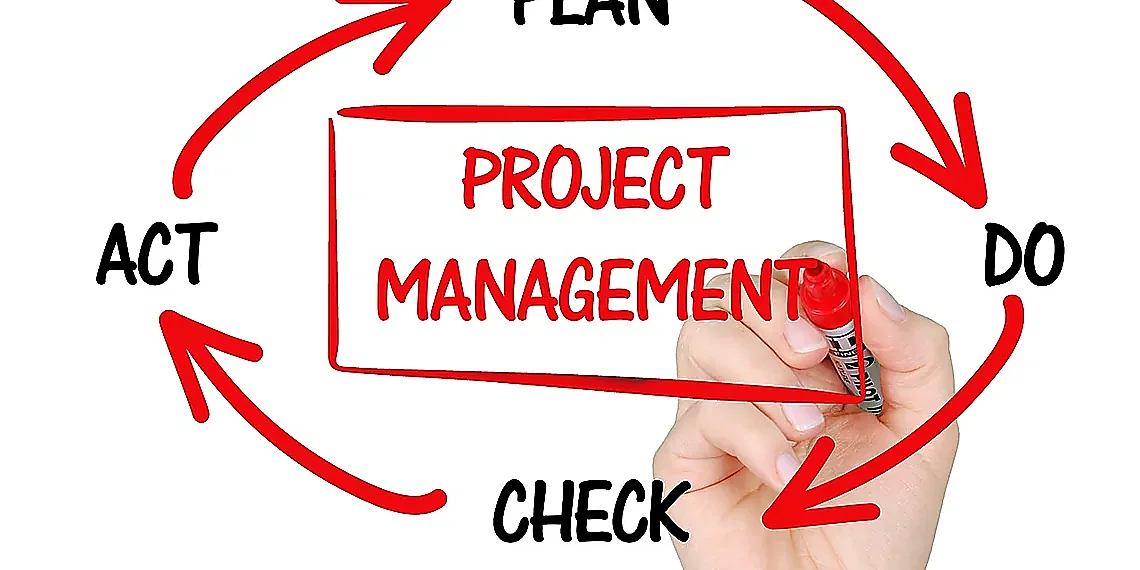
While DevOps principles remain foundational, managing generative AI models introduces complexities that necessitate a specialized approach – GenAIOps. Traditional DevOps focuses primarily on code deployment and infrastructure management; however, generative AI workflows involve intricate prompt engineering, iterative model fine-tuning, and continuous evaluation of output quality. These elements aren’t directly represented in traditional codebase deployments and require new tooling and processes to effectively monitor and control.
One key differentiator is the concept of ‘model drift.’ Unlike software applications where bugs are typically code-related and easily traceable, generative AI models can exhibit performance degradation due to shifts in input data or evolving user expectations. This requires continuous monitoring of model outputs for accuracy, relevance, and safety – a process often referred to as hallucination mitigation – which goes beyond standard application health checks. Prompt engineering itself becomes an operational concern; variations in prompts significantly impact results, demanding versioning and A/B testing strategies.
Furthermore, the consumption of foundation models through services like Amazon Bedrock introduces dependencies on external APIs and their associated limitations (rate limits, cost fluctuations). GenAIOps must incorporate observability into these external integrations to ensure reliable performance and optimize resource utilization. This holistic view encompasses not just infrastructure but also data pipelines, prompt libraries, model evaluation metrics, and the overall user experience.
Building a Foundation with Amazon Bedrock
Operationalizing generative AI can feel like navigating uncharted territory. Traditionally, deploying large language models (LLMs) involved significant infrastructure management overhead – from sourcing and fine-tuning models to handling scaling and security concerns. Amazon Bedrock changes that dramatically by offering a fully managed service providing access to leading foundation models from AI21 Labs, Anthropic, Cohere, Meta, and Stability AI. This abstraction removes the complexities of model deployment and maintenance, allowing your team to focus on building innovative applications powered by generative AI rather than wrestling with underlying infrastructure.
Bedrock’s core value proposition lies in simplifying GenAIOps. Instead of managing GPU clusters or dealing with intricate serving frameworks, you interact with Bedrock through a consistent API. This unified interface streamlines experimentation and development across different foundation models—easily swap between Claude 3 Opus and Cohere Command R for comparison without altering your application code significantly. The managed nature extends to essential operational aspects; Bedrock handles model scaling based on demand, ensuring responsiveness even during peak usage. It also provides built-in security controls and access management features, crucial for responsible AI development.
Beyond just providing access, Bedrock contributes directly to a more robust GenAIOps pipeline through its integrated capabilities. Its serverless architecture inherently reduces operational burden, while the platform’s observability tools offer insights into model performance and resource utilization – essential for identifying bottlenecks and optimizing efficiency. Security is paramount; Bedrock’s managed environment helps enforce data privacy and compliance regulations. Furthermore, features like prompt templates and retrieval augmented generation (RAG) integrations simplify complex workflows and enhance application functionality within a manageable GenAIOps framework.
Ultimately, Amazon Bedrock lowers the barrier to entry for generative AI adoption by decoupling model access from infrastructure management. This allows organizations of all sizes to rapidly prototype, iterate, and deploy generative AI applications without needing deep expertise in machine learning operations. By embracing Bedrock as a foundational element, teams can accelerate their GenAIOps journey and unlock the full potential of large language models.
Bedrock’s Role in GenAIOps Pipelines

Amazon Bedrock significantly streamlines GenAIOps pipelines by abstracting away much of the underlying infrastructure complexity typically associated with deploying and managing large language models (LLMs). Instead of needing to provision and scale model serving clusters, manage GPUs, or handle inference optimization, teams can leverage Bedrock’s managed service. This allows developers and operations personnel to focus on building applications and iterating on prompts, rather than wrestling with the intricacies of model deployment itself – a key differentiator for accelerating GenAI adoption.
Bedrock’s architecture incorporates essential operational features critical for robust GenAIOps practices. Security is paramount; Bedrock integrates seamlessly with AWS Identity and Access Management (IAM) and Amazon Virtual Private Cloud (VPC), enabling fine-grained access control and data isolation. Furthermore, it offers observability through integration with Amazon CloudWatch, providing metrics on model performance, request latency, and error rates. These capabilities enable proactive monitoring, troubleshooting, and optimization of generative AI applications.
The managed nature of Bedrock also simplifies versioning, A/B testing, and rollback procedures – vital components of a mature GenAIOps workflow. Teams can easily experiment with different foundation models or prompt engineering strategies without the overhead of managing separate deployments. This fosters faster iteration cycles and allows for data-driven decisions regarding model selection and application design, ultimately contributing to more reliable and efficient generative AI operations.
Implementing GenAIOps Practices
Implementing GenAIOps effectively requires a phased approach, tailored to your organization’s current generative AI adoption stage. We’ve categorized companies into three tiers: Experimentation, Pilot, and Production. At the Experimentation tier, focus is on exploration and rapid prototyping using foundation models like those available through Amazon Bedrock. Operational strategies here revolve around robust prompt engineering practices – version control of prompts, meticulous tracking of input parameters and outputs, and establishing clear guidelines for experimentation to ensure reproducibility and maintainability. Think of it as treating your prompts as code; they deserve the same level of scrutiny and management as any other software artifact.
Moving into the Pilot phase, you’re starting to integrate generative AI into more structured workflows, likely involving small user groups or specific business processes. This necessitates a shift from purely exploratory activities to more formalized monitoring and governance. Implement automated testing for prompt performance and output quality; begin tracking model drift (changes in input data distribution that degrade model accuracy). Bedrock’s APIs provide valuable metrics – latency, token usage – that should be integrated into your dashboards and alerting systems. Establishing clear ownership of prompts and models becomes crucial as the complexity increases.
Finally, at the Production tier, generative AI is a core component of your operations, supporting significant business functions and impacting many users. Here, GenAIOps matures into a fully automated lifecycle management system. This includes continuous model evaluation (using techniques like A/B testing), proactive drift detection with automated retraining pipelines, and robust security controls to protect sensitive data used in prompts and generated outputs. Infrastructure-as-Code principles become paramount for managing Bedrock resources efficiently, ensuring scalability, and enabling rapid rollbacks if issues arise. Automating prompt optimization – a continuous process of refining prompts for better performance and cost efficiency – is also essential at this level.
Across all adoption levels, a foundational element of GenAIOps is collaboration between data scientists, DevOps engineers, and security teams. Break down silos to ensure smooth model deployment and ongoing maintenance. Standardizing workflows, implementing automated pipelines, and establishing clear communication channels are crucial for success in scaling generative AI workloads effectively with Bedrock.
Adoption Levels & Operational Strategies
Organizations adopting generative AI typically fall into one of three tiers: Experimentation, Pilot, and Production. At the ‘Experimentation’ tier, the focus is on exploring capabilities and identifying potential use cases. Operational practices are largely informal, centered around individual developer exploration and rapid prototyping. This phase demands a strong emphasis on prompt engineering best practices; teams should meticulously document prompts used, track their performance (e.g., output quality, cost), and systematically test variations to understand the impact of different phrasing and parameters. Version control for prompts is crucial, even in this early stage.
Moving into the ‘Pilot’ tier involves integrating generative AI into limited-scope projects with defined objectives. Here, GenAIOps practices begin to formalize. This includes implementing basic monitoring of model performance (latency, error rates), establishing prompt libraries and reusable components, and introducing automated testing for prompt effectiveness and output consistency. Versioning becomes more structured, often incorporating metadata about the prompts’ intended use case and responsible engineer. Cost management also takes a higher priority, with teams tracking token usage and exploring optimization strategies.
Finally, at the ‘Production’ tier, generative AI is integrated into core business processes requiring high reliability and scalability. GenAIOps becomes deeply intertwined with existing DevOps pipelines. This necessitates robust automated testing (including adversarial attacks to ensure safety), comprehensive monitoring of model behavior in production, and continuous prompt optimization based on real-world feedback. Infrastructure as Code (IaC) principles are applied to manage Bedrock resources and model deployments, ensuring repeatability and consistency across environments. A/B testing different prompt versions live is standard practice.
Monitoring and Observability in GenAIOps
As generative AI models become increasingly integrated into business workflows through platforms like Amazon Bedrock, the need for robust monitoring and observability – a core component of GenAIOps – becomes paramount. Traditional application performance monitoring (APM) tools simply aren’t sufficient to capture the nuances of these complex workloads. While API latency remains important, focusing solely on that metric provides an incomplete picture of model health and user experience. A failure in prompt engineering or subtle drift in a foundation model can have far-reaching consequences, impacting everything from customer satisfaction to brand reputation.
The shift towards GenAIOps requires embracing new metrics tailored specifically for generative AI. Beyond standard latency measurements, critical indicators include prompt quality scores (assessing clarity and effectiveness), hallucination rates (quantifying the generation of factually incorrect or nonsensical content), output relevance (measuring alignment with user intent), and token usage/cost efficiency. Tracking these metrics necessitates leveraging specialized tools and techniques – such as automated evaluation pipelines using reference datasets, human feedback loops integrated into monitoring dashboards, and anomaly detection algorithms trained on model outputs – to proactively identify and address potential issues before they escalate.
Implementing effective GenAIOps observability isn’t just about collecting data; it’s about deriving actionable insights. This involves establishing clear baselines for key metrics, implementing alerting thresholds based on those baselines, and building comprehensive dashboards that visualize model performance across different dimensions (e.g., prompt types, user segments). Furthermore, integrating these observability practices into the development lifecycle – from prompt engineering to model deployment – ensures continuous improvement and proactively mitigates risks associated with generative AI adoption.
Ultimately, successful scaling of generative AI workloads using Bedrock hinges on a proactive and data-driven approach to monitoring and observability. By embracing GenAIOps principles and focusing on metrics that go beyond traditional application performance indicators, organizations can unlock the full potential of these powerful models while maintaining control over their reliability, safety, and cost efficiency. This foundation enables iterative refinement and builds confidence in the responsible deployment of generative AI solutions.
Key Metrics for Generative AI Health
Traditional application performance indicators like API latency and error rates are insufficient for truly understanding the health of generative AI systems powered by platforms like Amazon Bedrock. While those remain important, they don’t capture the nuances of model behavior crucial for maintaining quality and trust. Key new metrics focus on the *quality* of generated outputs. This includes prompt quality scores – evaluating prompts for clarity, completeness, and potential bias – as well as assessing output relevance to the intended task. A low prompt quality score might indicate a need to refine prompting strategies or training data.
Monitoring for model ‘hallucination’ is another critical area. Hallucinations refer to instances where a generative AI model produces outputs that are factually incorrect, nonsensical, or unrelated to the input prompt. Quantifying hallucination rates requires techniques like automated factual verification against trusted knowledge sources (e.g., using retrieval-augmented generation and comparing outputs with external databases) and human evaluation loops for qualitative assessment. Tools like Amazon SageMaker Ground Truth can assist in building these human feedback pipelines.
Tracking output relevance involves evaluating how well the generated content aligns with user expectations and business objectives. This can be achieved through a combination of automated metrics (e.g., semantic similarity scores comparing outputs to desired templates or reference texts) and user feedback mechanisms. Embedding models and vector databases are increasingly used to efficiently compare generated text against large corpora, enabling continuous assessment of relevance and identification of areas for model refinement. Furthermore, prompt engineering techniques like Chain-of-Thought prompting can be monitored for effectiveness in guiding the model towards more relevant responses.
The journey of integrating generative AI into production environments isn’t a sprint, but a marathon requiring careful planning and robust operational strategies.
We’ve seen how Amazon Bedrock simplifies model access and deployment, offering a powerful foundation for innovation, yet realizing its full potential demands more than just initial setup.
Successfully scaling these workloads necessitates a shift in mindset – embracing observability, automation, and proactive management to ensure reliability, cost-efficiency, and continuous improvement; this is where the emerging field of GenAIOps comes into play.
Ignoring the operational complexities inherent in generative AI can lead to unpredictable costs, performance bottlenecks, and ultimately, hinder your ability to deliver impactful solutions at scale – a problem GenAIOps directly addresses by providing frameworks for these challenges. It’s about bridging the gap between experimentation and production readiness, ensuring your models are not just clever, but consistently dependable and adaptable to evolving needs and data streams..”,
Continue reading on ByteTrending:
Discover more tech insights on ByteTrending ByteTrending.
Discover more from ByteTrending
Subscribe to get the latest posts sent to your email.