
For decades, we’ve pictured Mars as a desolate, rust-colored desert – a frigid world seemingly devoid of significant water ice, especially near its equator. Yet, recent data paints a strikingly different picture, revealing surprisingly large deposits of frozen water lurking just below the surface in regions we once considered barren. This discovery challenges our fundamental understanding of Martian climate history and presents a fascinating puzzle for planetary scientists. A key piece of this evolving narrative involves an unexpected connection: evidence suggests that ancient volcanic activity may have played a crucial role in depositing and preserving these equatorial ice sheets, giving rise to what some are now calling ‘Mars ice volcanoes.’ This article delves into the science behind this remarkable finding, exploring how volcanic processes could have sculpted and sustained these icy landscapes across millennia. We’ll unpack the geological evidence, examine the proposed mechanisms, and consider the implications for future Mars exploration and the search for past life.
The sheer volume of ice detected is astonishing, exceeding initial expectations and forcing a re-evaluation of Martian water distribution models. It’s not simply about the presence of ice; it’s about *where* that ice exists – right in the planet’s warmer equatorial zones, defying conventional wisdom. The prevailing theory now points to a complex interplay between volcanic eruptions, atmospheric conditions, and subtle shifts in Mars’ axial tilt over vast stretches of time. Understanding this process requires us to rethink how we view Martian volcanism itself, recognizing its potential influence beyond just lava flows and impact craters; it appears that ‘Mars ice volcanoes’ – structures where ice was deposited and possibly sculpted by volcanic activity – are a significant factor.
The Martian Ice Puzzle
For decades, our understanding of water ice distribution on Mars has been largely defined by the dramatic polar ice caps—vast reservoirs of frozen water that accumulate and sublimate with the changing Martian seasons. Missions like NASA’s Phoenix lander directly confirmed the presence of ground ice at Mars’ north pole, solidifying this picture and aligning with climate models predicting ice stability in these frigid regions. The south polar cap also contains significant quantities of both water ice and carbon dioxide ice, further reinforcing the established narrative: cold equals ice on Mars.
However, recent data from orbiting spacecraft has thrown a fascinating wrench into this seemingly simple equation. Scientists have detected telltale signals – specifically, hydrogen—in equatorial regions of Mars that strongly suggest buried deposits of water ice. The perplexing part? These areas are significantly warmer than the poles and generally considered too hot for stable water ice to exist on the surface or just below it. This discovery has ignited a flurry of research aimed at understanding how this ‘impossible’ ice could have formed and persisted.
The presence of equatorial hydrogen signals doesn’t definitively prove the existence of extensive, readily accessible ice deposits – it could be bound within minerals or dispersed in trace amounts. Nevertheless, these findings demand explanation and challenge our current models of Martian climate history. The mystery deepens when we consider that some of these regions show evidence of past volcanic activity, leading scientists to explore a potentially surprising link: Could ancient volcanoes have played a pivotal role in delivering water ice to the equator?
Where We Find Water on Modern Mars
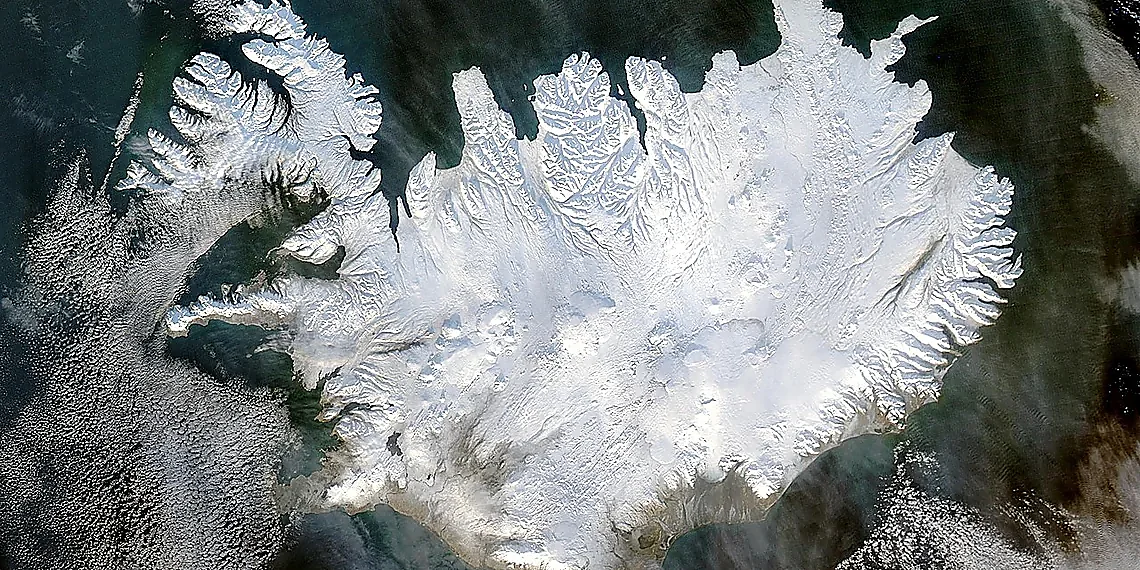
The most readily observable reservoirs of water ice on modern Mars are its polar ice caps. The north polar cap is a layered structure composed primarily of water ice, with a relatively thin seasonal carbon dioxide (CO2) ice layer forming in winter. The south polar cap has a more complex composition, featuring a permanent base of water ice covered by a thicker CO2 ice sheet that expands dramatically during the Martian winter. These polar ice caps represent significant quantities of frozen water and their existence is consistent with Mars’ current frigid climate – temperatures are simply too low for substantial ice to exist elsewhere on the surface.
Data from missions like the Mars Reconnaissance Orbiter (MRO) and Mars Express have extensively mapped these polar regions, confirming their composition and layering through observations in visible light, infrared spectroscopy, and radar sounding. The Phoenix lander famously directly observed subsurface water ice at its landing site near the north pole in 2008, providing unambiguous proof of its presence just below the surface. While these polar deposits are well understood, they don’t fully explain all the evidence for Martian water.
The relative simplicity of understanding ice distribution at the poles contrasts with recent discoveries hinting at buried ice closer to Mars’ equator. Using remote sensing techniques like neutron spectroscopy, instruments aboard orbiters have detected elevated hydrogen concentrations in equatorial regions, interpreted as potential subsurface ice deposits. These findings are surprising because these areas receive more sunlight and experience higher temperatures than the polar regions, making sustained surface ice highly unlikely.
Volcanic Activity & Atmospheric Change
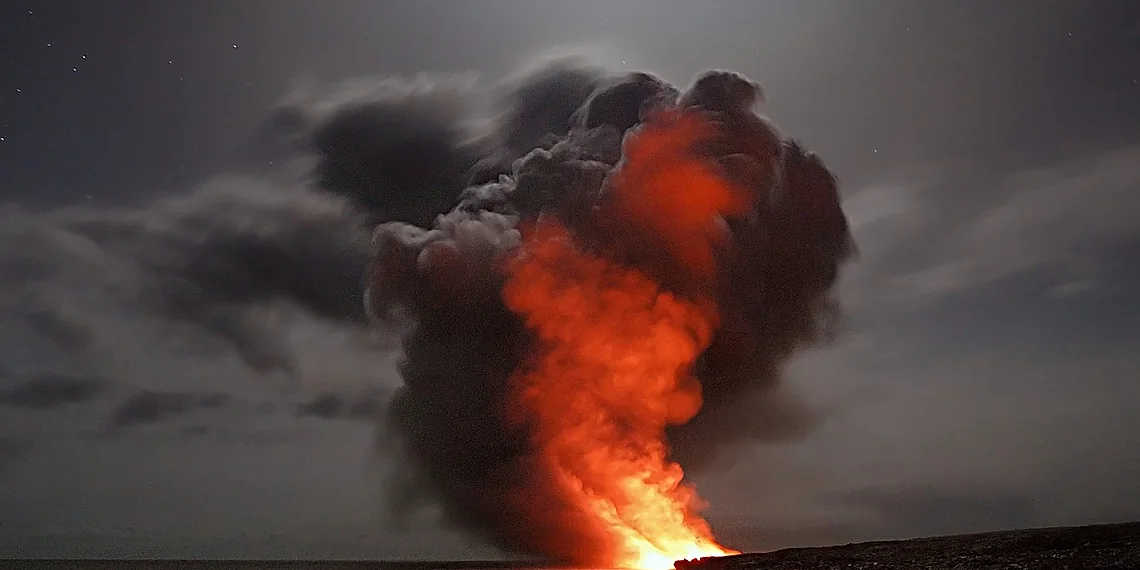
The surprising presence of potential ice deposits near Mars’ equator has baffled scientists accustomed to a cold, arid landscape. To understand how frozen water could exist in such an unexpected location, we need to rewind billions of years and consider the role of intense volcanic activity. Early Mars was volcanically active – much more so than it is today – releasing vast quantities of gases into its atmosphere. This wasn’t simply about lava flows; these eruptions also involved significant ‘outgassing,’ primarily carbon dioxide (CO2) and water vapor, which dramatically altered the planet’s climate.
The released CO2 acted as a greenhouse gas, trapping solar radiation and warming Mars significantly. This period of warmer temperatures allowed liquid water to flow across the surface, carving out riverbeds and lakes we see evidence of today. As Mars cooled – perhaps due to changes in its axial tilt or decreased volcanic activity – this water began to freeze and migrate towards higher latitudes. Over time, a substantial portion was transported toward the equator through various processes, including dust storms carrying ice crystals and seasonal cycles.
Crucially, these ancient volcanic eruptions didn’t just deliver water; they also influenced atmospheric pressure. A thicker atmosphere meant less of the deposited water would immediately sublimate (turn directly into gas) due to the lower temperatures at equatorial latitudes. This allowed some of it to remain in a solid state, buried beneath layers of dust and regolith. The combination of temporary warming from greenhouse gases allowing initial deposition at higher latitudes followed by atmospheric conditions preserving ice nearer the equator paints a plausible picture for these unexpected equatorial ice deposits.
Furthermore, geological evidence suggests that even after the main period of volcanic activity subsided, localized eruptions might have continued to release water vapor and contribute to ongoing climate fluctuations. These smaller-scale events could have periodically refreshed the ice deposits or facilitated their movement, ultimately explaining the hydrogen signals detected by current orbital probes – a tantalizing clue in our quest to unravel Mars’s watery past.
The Greenhouse Effect and Water Delivery
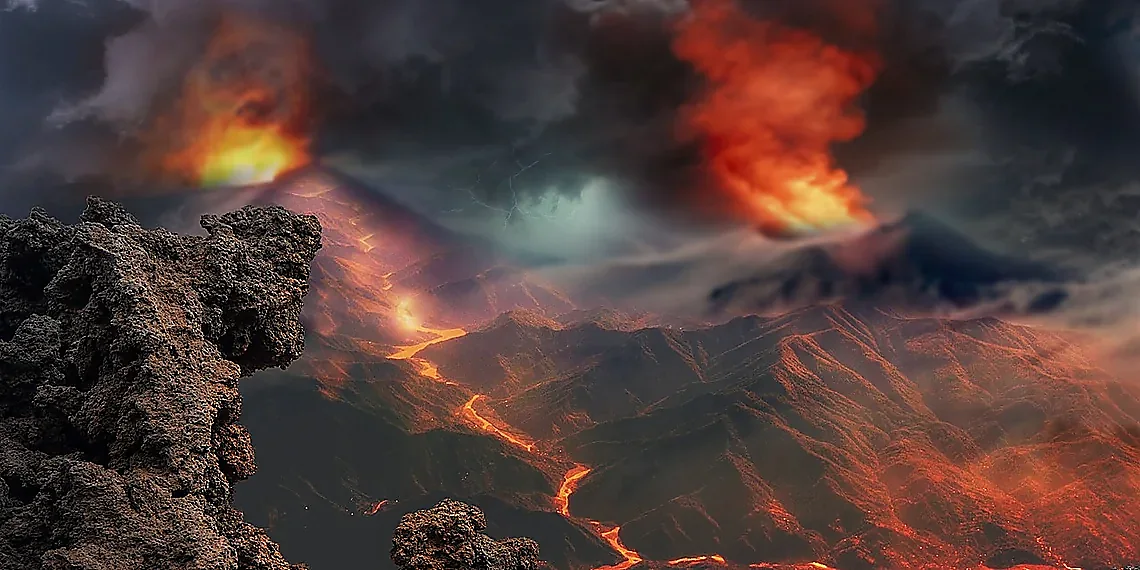
Early in its history, Mars experienced intense volcanic activity. These volcanoes weren’t just spewing lava; they were also releasing vast amounts of gases through a process called outgassing. Crucially, this included greenhouse gases like carbon dioxide (CO2) and water vapor. The release of these gases significantly thickened the Martian atmosphere, trapping solar radiation and leading to a period of warming.
This temporary warming effect had profound consequences for Mars’s surface. Liquid water, previously unable to exist due to the frigid temperatures, could then flow across the planet’s surface – evidenced by features like ancient riverbeds and lake basins. As the volcanic activity subsided and the atmospheric density decreased, much of this surface water froze and migrated towards the poles. However, some of the ice didn’t remain at the poles; it was transported to higher latitudes.
Over time, these higher-latitude ice deposits experienced further shifts due to subtle changes in Mars’ axial tilt and orbital dynamics (obliquity). This resulted in a slow but steady poleward migration of water ice. Eventually, some of this ice moved toward the equator, likely through a combination of sublimation, atmospheric transport, and redeposition, ultimately contributing to the surprising equatorial ice deposits detected by recent missions.
Evidence from Recent Observations
Recent observations have dramatically shifted our understanding of where water ice might exist on Mars. Data from orbiting spacecraft like the Mars Reconnaissance Orbiter (MRO) have revealed surprisingly strong hydrogen signals emanating from equatorial regions – areas far too warm for stable surface ice based on current climate models. These signals aren’t just faint whispers; they’re substantial enough to suggest significant quantities of subsurface water ice, a discovery that challenges conventional wisdom about Martian hydrology and raises intriguing questions about the planet’s past.
The detection of hydrogen is crucial because it’s a direct indicator of water – specifically, when combined with oxygen, it forms H2O. While these signals don’t definitively *prove* the presence of ice (hydrogen can exist in other forms), they strongly suggest that substantial quantities are locked away beneath the surface. Interpreting these signals isn’t straightforward; factors like dust content and variations in soil composition complicate the analysis. However, the sheer strength and geographical distribution of the hydrogen signatures point towards a non-trivial amount of water ice residing in locations where it shouldn’t logically exist.
A compelling hypothesis emerging to explain this equatorial ice is linked to ancient volcanic activity. Mars was once volcanically active, with massive eruptions that could have transported vast quantities of material across the planet’s surface. These volcanoes aren’t just responsible for shaping the Martian landscape; they may also have played a crucial role in burying water ice at lower latitudes. Volcanic eruptions could have released water vapor into the atmosphere, which then condensed and froze, eventually being trapped beneath layers of volcanic ash and debris – effectively creating protected pockets of ice that have persisted over billions of years.
The ‘Mars ice volcanoes’ theory suggests that these buried ice deposits aren’t uniformly distributed but are concentrated around areas with significant past volcanic activity. As lava flows cooled and subsided, they created sheltered environments where water could accumulate and freeze. This also explains why the hydrogen signals are often correlated with geological features indicative of ancient volcanism – providing a tangible link between subsurface ice and the planet’s fiery past.
Hydrogen Signals: A Clue to Buried Ice?
Data from orbiting spacecraft, particularly NASA’s Mars Reconnaissance Orbiter (MRO), have revealed surprisingly strong detections of hydrogen in shallow subsurface layers across several equatorial regions of Mars. These signals are detected through observations of neutrons emitted from the Martian surface; when these neutrons interact with hydrogen atoms, their energy changes, allowing scientists to infer its presence and concentration. While hydrogen can be found in various forms (bound within minerals or as water vapor), the observed signal strength and distribution strongly suggest a significant amount of subsurface water ice is present.
Interpreting these hydrogen signals isn’t straightforward. The abundance detected doesn’t always correlate with surface temperature, which would normally dictate ice stability; equatorial regions are generally too warm for stable ground ice to exist according to standard models. This discrepancy has led scientists to explore alternative explanations, including the possibility that the ice is shielded from solar radiation and sublimation by a layer of dust or rock. The depth of the detected hydrogen also varies, suggesting complex layering within the subsurface.
A compelling hypothesis links these unexpected ice deposits to past volcanic activity. Massive shield volcanoes like Syrtis Major and others across Mars released vast quantities of water vapor during their eruptions. This water could have condensed and frozen at higher latitudes before being transported towards the equator via atmospheric processes or buried by subsequent volcanic flows, creating pockets of ice shielded from the harsh surface conditions. Further investigation is needed to confirm this connection and fully understand how these ‘Mars ice volcanoes’ contributed to the planet’s hydrological history.
Implications for Future Exploration & Habitability
The presence of significant amounts of water ice at equatorial locations on Mars, potentially linked to ancient volcanic activity – a phenomenon we’re now understanding as ‘Mars ice volcanoes’ – dramatically alters the landscape for future exploration and our comprehension of Martian history. Previously, mission planning focused heavily on polar regions for accessing water resources, but accessible ice closer to the equator would revolutionize in-situ resource utilization (ISRU). Imagine astronauts having readily available water for drinking and oxygen production, or using it as a propellant source for return journeys – all without needing to transport vast quantities from Earth. This shifts mission architecture possibilities, potentially enabling larger habitats, more complex scientific experiments, and even establishing long-term Martian settlements.
This discovery also significantly impacts our understanding of Mars’s past habitability. The volcanic processes that likely delivered this equatorial ice suggest periods when the planet was warmer and wetter than we currently observe, with active volcanism creating conditions conducive to liquid water and potentially supporting microbial life. These regions could therefore represent prime targets for astrobiological investigations – locations where evidence of ancient Martian ecosystems might be preserved within layers of ice and volcanic deposits. The interplay between volcanic activity, ice deposition, and potential liquid water environments paints a far more dynamic and complex picture of Mars’s history than previously conceived.
The accessibility of equatorial ‘Mars ice volcanoes’ presents exciting opportunities but also necessitates careful consideration of ethical implications. While ISRU is crucial for sustainable Martian exploration, we must develop responsible practices to avoid depleting resources and potentially disrupting any extant subsurface life. Future missions should incorporate strategies for resource assessment, minimal environmental impact during extraction, and international collaboration to ensure equitable access and stewardship of these valuable assets. The potential rewards are immense, but a cautious and ethical approach is paramount.
Ultimately, the confirmation of widespread equatorial ice linked to volcanic activity transforms Mars from a seemingly barren desert into a planet with hidden reserves and a more complex geological narrative. It provides compelling new targets for robotic and human exploration, offering unprecedented opportunities to unravel the mysteries of its past climate, assess its potential for habitability, and pave the way for a sustainable future beyond Earth.
Resource Potential & Mission Planning
The recent detection of equatorial ice deposits on Mars, potentially linked to volcanic activity, presents a transformative opportunity for future human exploration. Water ice is an invaluable resource; it can be processed into drinking water, breathable oxygen via electrolysis, and rocket propellant (hydrogen and oxygen). Having readily accessible water at lower latitudes significantly reduces the mass that needs to be transported from Earth, lowering mission costs and increasing payload capacity for scientific equipment or habitats. Equatorial locations also offer more favorable conditions for landing sites and solar power generation compared to polar regions.
This discovery is likely to influence future mission planning in several ways. Target selection will prioritize areas with confirmed ice deposits, leading to potentially new rover and sample return missions focused on characterizing these resources and assessing their purity and accessibility. Furthermore, infrastructure development – such as automated water extraction and processing facilities – could become a key focus for early human missions. The presence of volcanically-derived ice also provides a unique window into Mars’ geological history; studying the composition and distribution of this ice may reveal information about past volcanic activity and climate conditions.
While the prospect of utilizing Martian resources is exciting, it’s crucial to consider potential ethical implications. Sustainable resource management practices will be necessary to avoid depleting these deposits and disturbing any potential microbial ecosystems that might exist within or around them. Establishing clear guidelines for resource utilization, akin to those developed for Earth’s natural resources, should be a priority as we move towards a more permanent human presence on Mars.
The revelation that volcanic activity, specifically the formation of what we’re now calling ‘Mars ice volcanoes,’ has significantly influenced the distribution of equatorial ice on Mars fundamentally alters our understanding of the planet’s climate history.
Previously considered a largely dry and arid region, Mars’ equator now appears to have been shaped by subsurface heat sources driving volatile transport and subsequent ice accumulation – a truly remarkable discovery.
This connection between volcanic processes and widespread ice deposits highlights the complex interplay of geological forces that sculpted the Martian landscape over billions of years; it’s a testament to how much we still have to learn about this fascinating world.
Future research will undoubtedly focus on refining models of subsurface heat flow, analyzing the composition of these icy features, and searching for additional evidence of past volcanic activity across Mars’ surface – perhaps even uncovering more examples of Mars ice volcanoes in unexpected locations. The possibility of liquid water involvement remains a tantalizing area for investigation as well, potentially impacting habitability assessments throughout Martian history. These findings underscore the importance of continued exploration and detailed analysis of data from orbiters and rovers alike, pushing the boundaries of our knowledge about planetary evolution across the solar system..”,
Continue reading on ByteTrending:
Discover more tech insights on ByteTrending ByteTrending.
Discover more from ByteTrending
Subscribe to get the latest posts sent to your email.