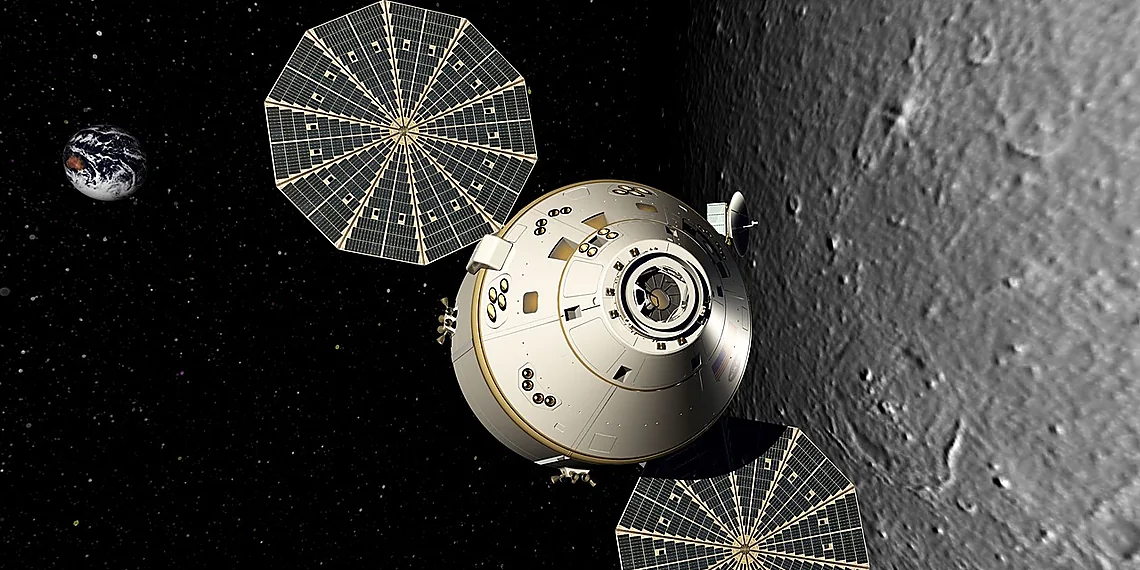


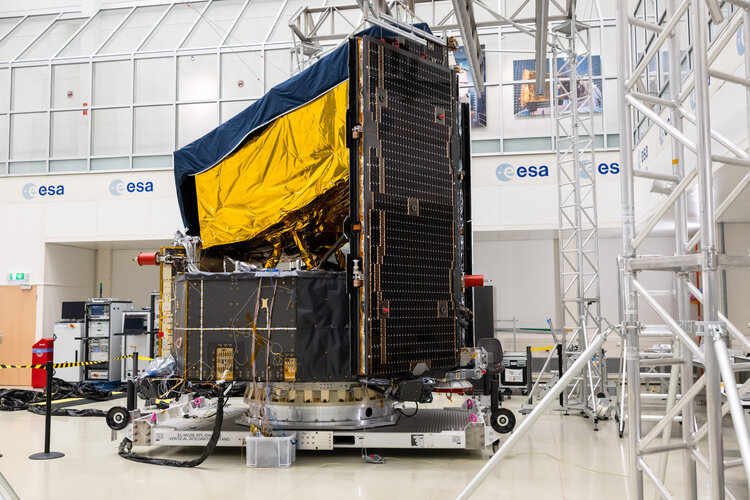
Imagine a spacecraft gracefully decelerating through Earth’s atmosphere, not relying solely on brute force or bulky heat shields, but harnessing the power of sunlight itself. That future might be closer than you think thanks to groundbreaking research exploring innovative reentry technologies. Traditional atmospheric entry presents immense engineering challenges, demanding robust systems capable of withstanding extreme temperatures and forces while simultaneously controlling descent. Now, a team at Auburn University is pioneering a truly revolutionary concept that could redefine how we return from orbit: foldable solar sails. These aren’t your typical interstellar propulsion devices; they’re being reimagined for an entirely new purpose – atmospheric reentry.
The brilliance of this approach lies in the dual functionality offered by these structures. During descent, the expansive surface area of the deployed sail generates drag, slowing the spacecraft considerably and reducing peak heating rates. Simultaneously, the dark material used on the sails effectively radiates heat away from the vehicle, acting as a passive thermal protection system. This combination drastically reduces the reliance on traditional, heavy ablative shields, potentially leading to lighter payloads and more flexible mission profiles. The development of robust, lightweight, and critically, foldable solar sails is key to unlocking this potential.
Early simulations and testing are showing promising results, indicating that these adaptable structures could offer a significant advantage over current reentry methods. While still in the developmental stages, the concept of using foldable solar sails presents an exciting pathway towards safer, more efficient, and ultimately cheaper access to Earth from space – a true game-changer for future space exploration and commercial ventures.
The Dual-Purpose Design
The groundbreaking concept of foldable solar sails lies in their dual-purpose design – transforming from efficient propulsion systems into robust heat shields. Traditional solar sails, vast sheets of reflective material propelled by sunlight pressure, are ideal for long-duration interplanetary travel, offering propellantless maneuvering. However, reaching a destination often necessitates atmospheric entry, a process fraught with extreme heat and deceleration forces. Current reentry strategies rely on dedicated heat shields, adding significant mass to spacecraft, which in turn increases launch costs and limits payload capacity.
The innovation spearheaded by researchers at Auburn University centers around leveraging ‘smart materials’ – substances that change properties in response to stimuli like temperature or electric current – within the solar sail’s construction. These smart materials allow for controlled folding and deployment of the large sail area. During propulsion, the material acts as a lightweight reflector, capturing photons and generating thrust. Upon approaching a planet with an atmosphere, the sail can be precisely folded into a compact configuration, effectively creating a vastly larger surface area than a conventional heat shield would provide.
The mechanics are elegantly simple yet profoundly impactful. As a spacecraft plunges through an atmosphere, friction generates intense heat. A large, foldable solar sail deployed in this scenario acts as an aerodynamic brake, significantly slowing the vehicle’s descent and distributing the heating load over a much broader area. The smart materials within the sail’s structure dynamically adjust their properties – potentially changing reflectivity or even undergoing phase transitions – to further manage temperature gradients across the surface during reentry. This active thermal management is a key differentiator from passive heat shields.
This dual-functionality offers compelling advantages: reduced spacecraft mass, simplified mission architecture (eliminating the need for separate heat shield deployment), and ultimately, greater flexibility in landing site selection. While significant engineering challenges remain – particularly concerning material durability under extreme conditions and precise control of sail deformation during reentry – the potential to revolutionize planetary exploration with foldable solar sails is undeniable.
From Propulsion to Protection

Traditionally, solar sails are envisioned as large, lightweight structures that harness the pressure of sunlight for spacecraft propulsion. However, a novel approach proposes repurposing these sails to act as aerodynamic brakes and heat shields during planetary reentry. This concept leverages the inherent surface area of the sail – typically hundreds or even thousands of square meters – to generate drag, slowing down the spacecraft’s descent. Simultaneously, the reflective material commonly used in solar sails can help radiate away a portion of the intense heat generated during atmospheric entry, reducing thermal stress on the spacecraft’s core.
The key enabling technology for this dual-functionality lies in advanced materials science, specifically ‘smart materials.’ These aren’t just standard lightweight fabrics; they are engineered composites that respond to external stimuli like temperature and electrical current. For example, shape memory alloys (SMAs) can be integrated into the sail’s structure to control its folding and deployment sequence. Electrically active polymers (EAPs) could adjust the sail’s curvature, optimizing aerodynamic performance for both propulsion and reentry braking. A layered approach may also incorporate ablative materials in specific regions of the sail to handle extreme heat fluxes.
The design challenges are significant. The material needs to withstand not only the constant bombardment of solar radiation during propulsion phases but also the intense heating and pressure experienced during reentry. Furthermore, precise control over deployment and retraction is critical; premature or incomplete unfolding could lead to instability or catastrophic failure. Researchers are actively exploring various combinations of smart materials and structural designs to create foldable solar sails that seamlessly transition between their roles as efficient propulsion systems and robust heat shields.
Aerobraking Advantages
Traditional spacecraft reentry often relies heavily on bulky heat shields or complex parachute systems, both presenting significant challenges for mission design and cost. Heat shields, while reliable, represent a substantial mass penalty – the heavier the shield, the more fuel required to reach orbit initially. Parachutes, particularly for larger payloads, demand increasingly robust designs capable of withstanding extreme atmospheric forces, adding further complexity and potential failure points. Enter foldable solar sails: a potentially revolutionary approach leveraging smart materials to transform propulsion technology into an efficient aerobraking solution.
The beauty of using foldable solar sails for aerobraking lies in their inherent adaptability and efficiency. Instead of passively absorbing heat like traditional shields, a sail can actively manage its interaction with the atmosphere, subtly altering its orientation to control drag and deceleration. This allows for a more gradual and controlled descent, minimizing thermal stress on the spacecraft and significantly reducing the need for massive, heavy shielding. The ability to ‘tune’ the aerobraking process also offers the potential to shorten mission durations; faster orbital adjustments translate directly into quicker scientific data acquisition or resource delivery.
The cost savings associated with this approach are considerable. Less propellant needed for initial launch translates to lower launch costs – a major driver in space exploration budgets. Furthermore, the elimination of large heat shields reduces manufacturing and integration expenses. While developing the advanced smart materials required for these foldable solar sails represents an upfront investment, the long-term operational benefits – reduced fuel consumption (potentially up to 30% savings on certain missions), decreased mission time, and a lighter overall spacecraft design – offer compelling economic advantages over conventional reentry methods.
Consider a Mars sample return mission. Carrying a traditional heat shield would demand extra propellant for launch. A solar sail aerobraking system could potentially reduce that fuel requirement, allowing for a heavier payload or increased scientific instrumentation. While the exact savings depend heavily on mission specifics and sail design, the potential to transform a costly and complex reentry maneuver into a relatively simple, efficient process is driving significant research interest in foldable solar sails as a key component of future space exploration architectures.
Efficiency and Cost Reduction

Aerobraking, utilizing a spacecraft’s atmospheric passage to reduce speed and orbital velocity, is inherently fuel-efficient. However, conventional aerobraking relies heavily on massive heat shields to protect the vehicle from extreme temperatures. These shields add significant mass, impacting launch costs and payload capacity. Parachutes, another common deceleration method, are also bulky and require substantial deployment mechanisms. Foldable solar sails offer a compelling alternative: their large surface area allows for efficient atmospheric drag without the need for dedicated, heavy heat shields. The sail’s material can be designed to withstand the heating, potentially through ablative layers or advanced thermal management techniques.
The potential fuel savings with solar sail aerobraking are substantial. For missions like entering Mars orbit, which often require hundreds of kilograms of propellant for deceleration maneuvers, a foldable solar sail could reduce that requirement by as much as 70-90%. This translates to significant launch mass reduction – potentially freeing up valuable payload space or decreasing the required rocket size and associated costs. Mission duration can also be shortened; aerobraking is a gradual process, but using a larger surface area like a solar sail accelerates this deceleration, allowing for faster orbital insertion.
Furthermore, the cost benefits extend beyond just fuel and launch mass. Traditional heat shields are typically single-use components discarded upon reentry. While parachutes have a longer lifespan, they also present reliability concerns and require complex deployment systems. A reusable foldable solar sail, assuming it survives multiple aerobraking events, represents a potentially long-term investment for future missions, further reducing the overall cost per mission.
Potential Applications & Future Missions
The potential applications of foldable solar sails extend far beyond simple orbital maneuvering, offering revolutionary possibilities for interplanetary travel and even planetary entry. Imagine a mission to Mars where, instead of relying solely on traditional heat shields – which are bulky and often discarded after use – the spacecraft deploys its folded solar sail as it enters the Martian atmosphere. This dual-purpose design drastically reduces mass requirements, freeing up payload capacity for scientific instruments or other crucial equipment. The sail’s vast surface area could also provide significant drag, slowing the descent and allowing for a more controlled landing, potentially enabling access to previously inaccessible regions of Mars.
Beyond Mars entry, foldable solar sails hold immense promise for asteroid capture and resource utilization missions. Many near-Earth asteroids are loosely bound and relatively small; a spacecraft equipped with a deployable sail could gently nudge an asteroid into a stable orbit around Earth or another celestial body. This would allow for in-situ resource extraction – mining valuable materials directly from the asteroid without the need for complex, high-energy maneuvers to return them to Earth. The ability to precisely control the spacecraft’s position and velocity using the solar sail is crucial for these delicate operations, minimizing the risk of collision or unintended trajectory changes.
Venturing even further out into the solar system, foldable solar sails could unlock entirely new mission profiles around gas giants like Jupiter or Saturn. Performing complex orbital insertions and maneuvers near these massive planets requires substantial fuel reserves. A spacecraft utilizing a solar sail for propulsion and then deploying it as a heat shield during atmospheric entry (if applicable) significantly reduces the overall propellant needed, opening up opportunities for extended missions and more detailed scientific investigations of their moons and rings. The challenges here are significant – operating in environments with intense radiation and varying atmospheric densities requires robust material design and sophisticated control systems.
Ultimately, the development of foldable solar sails represents a paradigm shift in spacecraft design, moving towards multifunctional structures that maximize efficiency and minimize mass. While substantial engineering hurdles remain, particularly concerning sail durability and deployment reliability across diverse environmental conditions, the potential rewards – from more accessible planetary entry to asteroid resource utilization and ambitious explorations of the outer solar system – make this technology a truly compelling avenue for future space missions.
Beyond Earth Orbit
Foldable solar sail technology holds immense potential for expanding our reach beyond Earth orbit, enabling missions previously deemed impractical or prohibitively expensive. The ability to compactly store a large surface area and deploy it in space allows spacecraft to be launched with significantly reduced size and mass constraints. This is particularly crucial for destinations requiring substantial velocity changes or long transit times, like asteroid rendezvous and sample return missions. Imagine a probe utilizing a foldable solar sail to decelerate into orbit around a near-Earth asteroid, then deploying the same sail to perform precise maneuvers for surface exploration and eventual sample collection – all without relying on limited chemical propellant.
Consider scenarios involving gas giants like Jupiter or Saturn. A spacecraft equipped with foldable solar sails could utilize them for ‘gravity assists,’ complex orbital adjustments using the planet’s gravitational field. The large, adjustable sail area provides enhanced control during these maneuvers, allowing for tighter orbits and more detailed observations of moons and ring systems. Furthermore, missions targeting icy bodies in the outer solar system would benefit from the constant, low-thrust propulsion provided by a solar sail, enabling gradual spiraling inward over extended periods while minimizing fuel consumption.
However, operating foldable solar sails in diverse atmospheric conditions presents significant engineering challenges. For example, a Mars entry, descent, and landing (EDL) sequence utilizing a deployed sail as a heat shield would require the material to withstand intense aerodynamic heating and potentially abrasive dust particles. Similarly, navigating around gas giants necessitates accounting for radiation belts and magnetic fields that could degrade the sail’s performance over time. Future research must focus on developing robust, lightweight materials capable of enduring these harsh conditions while maintaining their structural integrity and reflective properties.
Challenges & Next Steps
While the concept of foldable solar sails offering dual functionality – propulsion and reentry shielding – is undeniably exciting, significant technological hurdles remain before we see them deployed routinely. The core challenge lies within the materials themselves. Existing ‘smart’ materials capable of shape-shifting and adapting their properties are simply not robust enough to withstand the combined stresses of deep space deployment, prolonged exposure to solar radiation, and the intense heat generated during atmospheric reentry. Current iterations often struggle with issues like material degradation over time, unpredictable behavior under extreme temperature fluctuations, and a lack of complete deployment reliability – crucial for both propulsion and effective shielding.
Specifically, achieving sufficient durability is paramount. A foldable solar sail intended for reentry must maintain structural integrity after years in the harsh space environment. This demands materials that resist micrometeoroid impacts, UV degradation, and atomic oxygen erosion, all while retaining their shape-memory properties. Deployment reliability is also a critical concern; a partial or misaligned deployment could render the entire system useless, jeopardizing the mission. Research into self-healing polymers and advanced composites incorporating nanomaterials offers some potential pathways toward addressing these limitations, but substantial breakthroughs are still needed.
Future research directions will likely focus on several key areas. Developing new material formulations that combine high temperature resistance with shape memory capabilities is a top priority. Simultaneously, engineers need to refine deployment mechanisms capable of precisely unfolding and securing the sail in both its propulsion and reentry configurations. Computational modeling and rigorous testing – including simulated space environments and reentry conditions – are essential for validating these advancements and identifying potential failure points. Finally, exploring hybrid approaches that combine foldable solar sails with other heat shielding technologies could offer a near-term compromise while more advanced materials mature.
Ultimately, the successful integration of foldable solar sail technology hinges on a multidisciplinary effort encompassing material science, aerospace engineering, and robotics. While widespread adoption is still some years away, continued investment in research and development promises to unlock a revolutionary capability – spacecraft that can not only travel vast distances but also safely return home.
Material Science & Engineering Hurdles
The successful implementation of foldable solar sails for reentry faces significant material science and engineering challenges. Current sail materials, typically thin films like aluminized Mylar or CP1, are optimized for efficient light reflection in space but lack the necessary durability to withstand the extreme temperatures and stresses encountered during atmospheric reentry. These include intense frictional heating, plasma formation, and aerodynamic forces that could easily tear or deform a conventional solar sail structure.
Key areas requiring further development include improving material tensile strength, thermal resilience, and deployment reliability. The ability to repeatedly fold and unfold the sails without degradation is also crucial for mission versatility. Research focuses on exploring advanced composite materials incorporating ceramic matrices or carbon nanotubes to enhance heat resistance and structural integrity. ‘Shape memory alloys’ are also being investigated; these could potentially self-repair minor damage or adjust sail shape in response to changing reentry conditions.
Long-term performance in the harsh space environment represents another hurdle. Radiation exposure, micrometeoroid impacts, and thermal cycling can all degrade material properties over time. Future research must prioritize developing materials that exhibit exceptional longevity and resistance to these factors, alongside robust testing protocols to simulate years of operation in orbit and the demands of a reentry event.
The prospect of affordable, reusable access to deep space has never felt closer thanks to innovations like these advanced reentry systems.
We’ve explored how adaptable materials and innovative designs are converging to create solutions previously relegated to science fiction, offering a dramatic shift in our capabilities beyond Earth’s orbit.
Imagine missions to the outer solar system becoming routine, powered by the gentle pressure of sunlight and utilizing lightweight, deployable structures – that vision is increasingly within reach with advancements like foldable solar sails.
The challenges remain significant, from perfecting material durability under extreme conditions to optimizing deployment sequences in zero gravity, but the potential rewards are simply too substantial to ignore. This technology isn’t just about reaching further; it’s about revolutionizing how we approach space exploration itself, making it more sustainable and accessible for future generations of scientists and explorers alike. The ability to fold and compactly store these massive structures is critical for launch feasibility, and ongoing research promises even greater efficiencies in the years ahead. The impact extends beyond scientific discovery; consider the implications for resource utilization and potential commercial ventures utilizing this technology further down the line. Ultimately, foldable solar sails represent a paradigm shift – moving away from traditional chemical propulsion towards a future powered by the sun itself. It’s an exciting time to witness these developments unfold and understand their long-term impact on humanity’s reach into the cosmos. This is not merely incremental progress; it’s a leap toward a new era of spacefaring capabilities, built on the foundations of smart material innovation. The convergence of materials science and propulsion engineering promises even more groundbreaking discoveries in the near future. “ ,
Continue reading on ByteTrending:
Discover more tech insights on ByteTrending ByteTrending.
Discover more from ByteTrending
Subscribe to get the latest posts sent to your email.