

We’ve all been there – that exciting AI pilot project brimming with potential, meticulously crafted, and promising revolutionary results…only to stall out before it ever sees real-world use. The graveyard of abandoned AI initiatives is overflowing with these stories, a frustrating reality for businesses eager to harness the power of machine learning.
The leap from proof-of-concept to production can be brutal, often exposing hidden complexities around data management, infrastructure limitations, and operational inefficiencies that weren’t apparent in the controlled environment of a pilot. Many organizations find themselves struggling with these challenges, losing valuable time and resources while their AI investments remain unrealized.
Fortunately, there’s a proven methodology to navigate this transition successfully. AWS has developed a structured approach based on its Five V’s framework – Volume, Velocity, Variety, Veracity, and Value – that addresses the core issues hindering AI deployment at scale. This isn’t just theory; teams utilizing an AI Scaling Framework built around these principles have seen significantly improved success rates and dramatically accelerated time to production.
This article dives deep into how applying the AWS Five V’s provides a robust foundation for moving your AI projects from promising experiments to impactful, scalable solutions, ensuring you actually realize the transformative benefits everyone’s talking about.
The AI Pilot Problem & Why It Fails
The buzz around Artificial Intelligence is undeniable, yet a persistent problem plagues organizations: the failed AI pilot project. Countless hours and significant resources are poured into proof-of-concept initiatives that never see the light of production – languishing in notebooks or abandoned repositories. This isn’t due to a lack of technical talent or innovative ideas; it’s frequently a consequence of prioritizing technological possibilities over concrete business needs. Too often, AI projects begin with the question ‘What *can* AI do?’ rather than addressing the more critical inquiry: ‘What do we *need* AI to do?’ This technology-first approach leads to solutions that are technically impressive but ultimately lack relevance and fail to deliver tangible value.
This misalignment manifests in several common pitfalls. Teams build models solving interesting problems, only to discover those problems aren’t truly pressing for the business. Data availability proves a significant hurdle – data is either insufficient, inaccessible, or of poor quality. Integration with existing systems becomes a nightmare, revealing hidden technical debt and operational complexities. Furthermore, there’s often a lack of clear ownership and accountability once the pilot concludes, leaving the project to wither without proper handover to production teams. The result? A graveyard of promising AI prototypes and a growing skepticism towards future initiatives.
The root cause isn’t necessarily a flaw in the AI technology itself but rather a deficiency in the *process* used to bring it to life. Organizations need a structured framework that prioritizes business outcomes and operational sustainability from the outset, not as an afterthought. The traditional ‘build and see’ approach is simply too risky and inefficient for today’s demanding business environment. A shift towards disciplined planning, continuous validation, and iterative deployment – focusing on demonstrable value at each stage – is essential to bridge the gap between pilot and production.
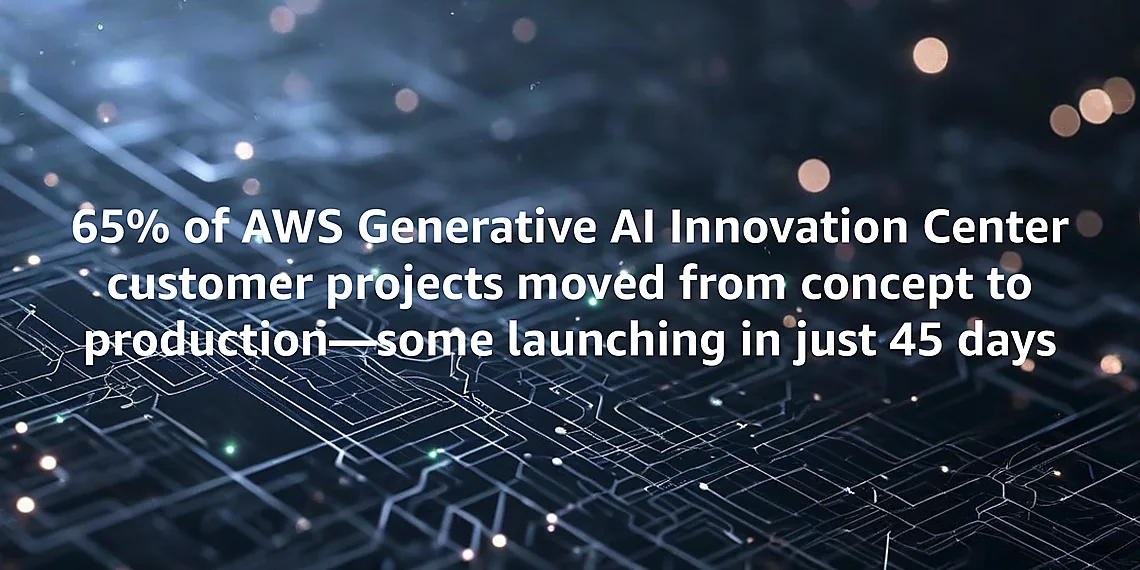
Fortunately, a methodology known as the Five V’s Framework—Value, Visualize, Validate, Verify, and Venture—is proving remarkably effective. This framework, recently adopted by many AWS Generative AI Innovation Center customers, has facilitated successful transitions from concept to production for 65% of projects, with some achieving launch in just 45 days. It emphasizes a business-first approach, ensuring that AI solutions directly address specific needs and deliver measurable results while establishing a foundation for long-term operational excellence.
Beyond ‘Can We?’ – The Focus Shift Needed

A surprisingly large number of AI initiatives begin with a technology-first mindset. Teams often start by exploring what’s possible with the latest AI models – ‘What can AI do?’ – rather than grounding their efforts in a clear understanding of business needs. This approach frequently results in impressive proof-of-concept demonstrations, but those demos rarely translate into tangible production systems. The excitement around cutting-edge technology overshadows a critical assessment of whether that technology actually solves a pressing business problem or delivers sufficient return on investment.
This ‘technology push’ often leads to the creation of AI solutions that are technically impressive but ultimately irrelevant or unsustainable. Resources – including engineering time, data science expertise, and budget – are consumed building something novel without a corresponding increase in business value. The lack of alignment between technical capabilities and strategic objectives is a primary driver of pilot project failure; organizations invest heavily only to see those projects abandoned after the initial excitement fades.
The shift needed isn’t about abandoning exploration of new AI capabilities, but rather prioritizing a ‘needs pull’ approach. Instead of asking ‘What can AI do?’, organizations should begin with ‘What do we need AI to do?’ This fundamental change in perspective ensures that any AI solution directly addresses a defined business problem, is aligned with strategic goals, and has a clear path towards sustainable production deployment.
Introducing the Five V’s Framework
The journey from a promising AI pilot to a robust production system is fraught with challenges. Many projects stall, consumed by technical complexities or failing to deliver tangible business value. To address this, AWS has developed the Five V’s Framework – an approach proven to significantly increase success rates in deploying generative AI solutions. This framework isn’t just about building *something*; it’s a structured methodology designed to ensure your AI initiatives are aligned with strategic goals and ultimately contribute to measurable business outcomes. It shifts the focus from simply exploring what AI *can* do, toward clearly defining what AI *needs* to do for your organization.
The framework progresses through five distinct phases: Value, Visualize, Validate, Verify, and Venture. Let’s begin with ‘Value,’ which demands a rigorous assessment of the business problem you’re trying to solve. This isn’t just about identifying an opportunity; it’s about quantifying the potential return on investment (ROI) – what tangible benefits will result from implementing this AI solution? Next comes ‘Visualize,’ where teams create visual representations of the proposed solution, outlining data flows, user interactions, and key components. These diagrams help everyone involved understand the scope and complexity of the project, fostering collaboration and identifying potential roadblocks early on.
Following visualization is ‘Validate,’ a crucial phase that involves testing core assumptions with real-world data. This isn’t about building a full prototype; it’s about focused experiments to prove out hypotheses – can this model actually perform as expected? For example, validating the accuracy of an AI-powered chatbot or assessing the feasibility of using generative AI for content creation. These early validation steps are instrumental in preventing significant wasted effort down the line by identifying fatal flaws before substantial resources are committed. This proactive approach saves time and money while ensuring alignment with business needs.
The final two phases, ‘Verify’ and ‘Venture,’ focus on operational readiness and controlled rollout. ‘Verify’ assesses system performance, scalability, security, and compliance – essentially, preparing the solution for production environments. Finally, ‘Venture’ involves a phased deployment, starting with limited user groups to gather feedback and refine the AI model before broader adoption. This iterative approach allows for continuous improvement and minimizes disruption while ensuring a smoother transition from pilot to full-scale production.
Deep Dive: Value, Visualize & Validate

The first critical step in the Five V’s Framework is defining ‘Value.’ This isn’t about brainstorming every possible AI application; it’s a rigorous process of identifying concrete business problems and quantifying the potential return on investment (ROI) for solving them with AI. Teams must clearly articulate what success looks like – increased revenue, cost reduction, improved efficiency, or enhanced customer satisfaction – and establish measurable key performance indicators (KPIs). Skipping this phase often leads to projects pursuing technically interesting but ultimately irrelevant solutions, consuming resources without delivering tangible business results.
Following Value comes ‘Visualize,’ which focuses on creating clear, low-fidelity representations of the proposed AI solution. This goes beyond simple wireframes; it involves mapping out user journeys, data flows, and potential integration points with existing systems. These visual aids allow stakeholders – from engineers to business leaders – to gain a shared understanding of the system’s functionality and identify potential roadblocks early on. By using diagrams, mockups, and process maps, teams can proactively address design flaws and ensure alignment before committing significant development effort.
The third phase, ‘Validate,’ is where assumptions are rigorously tested with data. This involves building minimal viable products (MVPs) or proof-of-concept models to assess the feasibility of the chosen approach and the availability of necessary data. Crucially, validation isn’t just about achieving a certain accuracy score; it’s about evaluating whether the solution addresses the identified business problem effectively and sustainably. Failures during this phase are invaluable learning opportunities, allowing teams to pivot quickly and avoid building solutions on flawed foundations – preventing wasted time and resources down the line.
From Verification to Venture – Launching with Confidence
The journey from a promising AI pilot to a fully functional production system is fraught with potential pitfalls. The ‘Verify’ phase acts as your final safety net, designed to rigorously test the solution’s operational readiness and ensure sustainable performance before broader deployment. This isn’t just about confirming accuracy; it’s about establishing robust monitoring systems – tracking everything from latency and throughput to cost and error rates – and implementing governance policies that address data security, bias mitigation, and ethical considerations. Think of this as building a comprehensive dashboard displaying the health of your AI system in real-time, allowing for proactive identification and resolution of issues before they impact end users.
Following verification comes the ‘Venture’ phase: a carefully orchestrated rollout designed to minimize disruption and maximize learning. We advocate for a phased approach – starting with a limited user group or specific geographic region – to observe performance in a live environment. This controlled venture allows you to gather invaluable feedback, identify unforeseen edge cases, and fine-tune your model without exposing the entire business to potential risks. Key Performance Indicators (KPIs) established during the ‘Value’ and ‘Validate’ phases are now actively monitored and compared against expectations; any deviations trigger immediate investigation and corrective action.
Risk mitigation is paramount throughout the Venture phase. Techniques like canary deployments – routing a small percentage of traffic to the new AI system while monitoring its performance relative to the existing solution – provide a low-risk way to assess stability and identify potential regressions. A/B testing can also be used to compare the AI-powered experience with the traditional one, providing quantitative data on user engagement and business impact. Having rollback plans in place is crucial; if unexpected problems arise, you must be able to quickly revert to the previous state without significant downtime or data loss.
Ultimately, the Verify & Venture phases represent a shift from experimental enthusiasm to operational responsibility. By embracing this structured approach, organizations can significantly increase their chances of successfully scaling AI solutions, realizing tangible business value while maintaining control and minimizing risk – as evidenced by the 65% success rate seen with AWS Generative AI Innovation Center customers leveraging the Five V’s Framework.
Verify & Venture: Ensuring Sustainable Operations
The ‘Verify’ phase is critical for establishing operational excellence before widespread deployment. It’s where teams focus intensely on monitoring system performance, implementing robust governance controls, and ensuring compliance with relevant regulations. This includes setting up comprehensive logging, automated alerts for anomalies, and detailed documentation of the AI model’s behavior and decision-making processes. The goal isn’t just about functionality; it’s about building a reliable and auditable system that can handle real-world data and user interactions consistently.
Following verification, the ‘Venture’ phase initiates a phased rollout to minimize potential disruption and allow for continuous learning. This approach typically begins with a small subset of users or a limited geographic region, gradually expanding as confidence grows. Key Performance Indicators (KPIs) are meticulously tracked throughout this phase – examples include model accuracy in production data, latency metrics, user adoption rates, cost per transaction, and feedback scores from initial users. These KPIs provide early signals for potential issues and inform iterative adjustments to the AI system.
A successful Venture relies on a ‘blinking yellow light’ approach: identifying critical thresholds that trigger automated rollbacks or manual intervention if performance deviates significantly from expectations. This proactive risk mitigation strategy allows teams to quickly address problems before they impact a wider audience. Furthermore, continuous feedback loops are established between users and the development team to ensure ongoing optimization and alignment with evolving business needs. The data gathered during Venture informs future iterations and strengthens the overall AI Scaling Framework.
Real-World Impact & Key Takeaways
The Five V’s Framework – Value, Visualize, Validate, Verify, and Venture – isn’t just theoretical; it’s a practical roadmap driving real-world impact for organizations looking to move beyond AI pilot projects. Across the AWS Generative AI Innovation Center, we’ve seen firsthand how this structured approach transforms aspirations into tangible results. In fact, 65% of our customer projects leveraging the framework have successfully transitioned from concept to production deployment – and remarkably fast, with some seeing launches in as little as 45 days. This rapid acceleration isn’t accidental; it stems directly from shifting focus away from simply exploring ‘what AI *can* do’ towards a more targeted question: ‘What specific business needs must AI address?’
Consider, for example, a retail client seeking to personalize product recommendations. Without the framework, their initial pilot project explored numerous generative AI models but lacked clear direction and measurable objectives. By applying Value first – clearly defining desired outcomes like increased click-through rates and average order value – we refocused efforts. Visualize then helped them map out the customer journey and identify key touchpoints for intervention. Validation led to rapid prototyping and A/B testing, while Verification ensured operational readiness and scalability. The result? A personalized recommendation engine deployed in just six weeks, yielding a 12% increase in click-through rates within the first month – a direct consequence of aligning AI development with concrete business goals.
Another anonymized success story involved a financial services firm aiming to automate claims processing. Their initial attempts were bogged down by data silos and inconsistent processes. Using the Venture phase of our framework, they systematically addressed these challenges, creating a unified data pipeline and establishing clear operational procedures for ongoing maintenance and improvement. This holistic approach not only accelerated deployment but also ensured long-term sustainability and reduced operational overhead – ultimately saving them an estimated $500,000 annually in processing costs. These examples highlight the framework’s power to deliver measurable business value beyond initial innovation.
Key takeaways for organizations embarking on their AI scaling journey are clear: prioritize defining business outcomes upfront (Value), embrace iterative prototyping and rapid feedback loops (Visualize & Validate), rigorously test for operational resilience (Verify), and plan proactively for ongoing maintenance and adaptation (Venture). The Five V’s Framework offers a repeatable, scalable methodology that moves beyond experimentation to deliver sustainable AI solutions—transforming potential into production-ready impact.
Success Stories: Speed & Measurable Results
Several AWS Generative AI Innovation Center clients have realized significant benefits by leveraging our AI Scaling Framework. One example involves a large retail organization seeking to personalize product recommendations. Using the Value phase to clearly define business objectives and the Visualize stage to map out user journeys, we rapidly prototyped and deployed a generative AI-powered recommendation engine in just 45 days. This accelerated deployment allowed them to quickly test and iterate on different approaches, resulting in a 12% increase in click-through rates compared to their previous system.
Another success story comes from a financial services firm aiming to automate customer support inquiries. By applying the Validate phase through A/B testing with real users, we refined the AI model’s accuracy and reduced reliance on human agents. This resulted in a 30% reduction in average call handling time and freed up valuable agent resources for more complex issues – representing an estimated $1.5 million annual cost savings.
A third anonymized case involved a manufacturing company struggling with predictive maintenance challenges. Through the Verify phase, focused on operational readiness and integration with existing systems, we developed a generative AI model that predicts equipment failures with 85% accuracy. This proactive approach minimizes downtime, reduces repair costs by an estimated 18%, and extends the lifespan of critical machinery – all achieved within a six-week timeframe thanks to the framework’s structured methodology.
The journey from a promising AI pilot project to reliable, production-ready deployment is rarely straightforward; it demands more than just clever algorithms and impressive demos.
Many organizations stumble at this critical transition, facing challenges like data bottlenecks, model drift, and operational inefficiencies that derail their initial enthusiasm.
That’s why adopting a structured approach – one built on principles of visibility, validation, velocity, value, and volume – is absolutely paramount for sustainable AI success.
We’ve outlined the Five V’s framework as a practical guide to navigate these complexities, emphasizing proactive planning and continuous optimization throughout your AI lifecycle. This isn’t about simply throwing more resources at problems; it’s about building a resilient and adaptable system using an effective AI Scaling Framework that anticipates future needs and ensures ongoing value creation. Successfully implementing this mindset can drastically improve your chances of realizing the full potential of your AI investments, moving beyond experimentation into impactful business outcomes. The shift requires cultural change as much as technical expertise, fostering collaboration between data scientists, engineers, and business stakeholders to ensure alignment from inception to operation.
Continue reading on ByteTrending:
Discover more tech insights on ByteTrending ByteTrending.
Discover more from ByteTrending
Subscribe to get the latest posts sent to your email.