


Revolutionizing Chip Cooling with Photonic Cooling
Modern high-performance chips represent remarkable feats of engineering, packing tens of billions of transistors onto a single piece of silicon. However, this density presents a significant challenge: heat management. If all these transistors operated simultaneously, the resulting heat buildup would create intense “hot spots,” reaching temperatures comparable to the surface of the sun. This predicament has led to the concept of dark silicon—a term describing the portion of a chip that must remain inactive to prevent overheating. Consequently, up to 80% of the transistors on advanced chips are often left unused, hindering performance and limiting potential. The quest for efficient cooling solutions is crucial, as we strive to unlock the full power of these sophisticated devices; photonic cooling offers a promising path forward.
Traditional Cooling Methods: Limitations & Challenges
For years, the industry has addressed this thermal bottleneck using conventional methods like larger fans and complex liquid cooling systems. However, these approaches are essentially temporary fixes. They function by removing heat from the chip’s surface, creating a thermal barrier that is increasingly difficult to overcome as power densities rise. Heat must first conduct through the silicon to reach the cooling plate, forming this bottleneck.
Understanding Thermal Bottlenecks
Today’s chips generate tens of watts per square millimeter in localized hot spots, and these hotspots appear sporadically during computation. Traditional air and liquid cooling struggle to precisely target these transient areas; instead, they attempt to cool the entire chip uniformly. This broad-spectrum approach is inefficient and ultimately insufficient for handling the extreme thermal loads of future generations of chips.
The Need for a Novel Approach
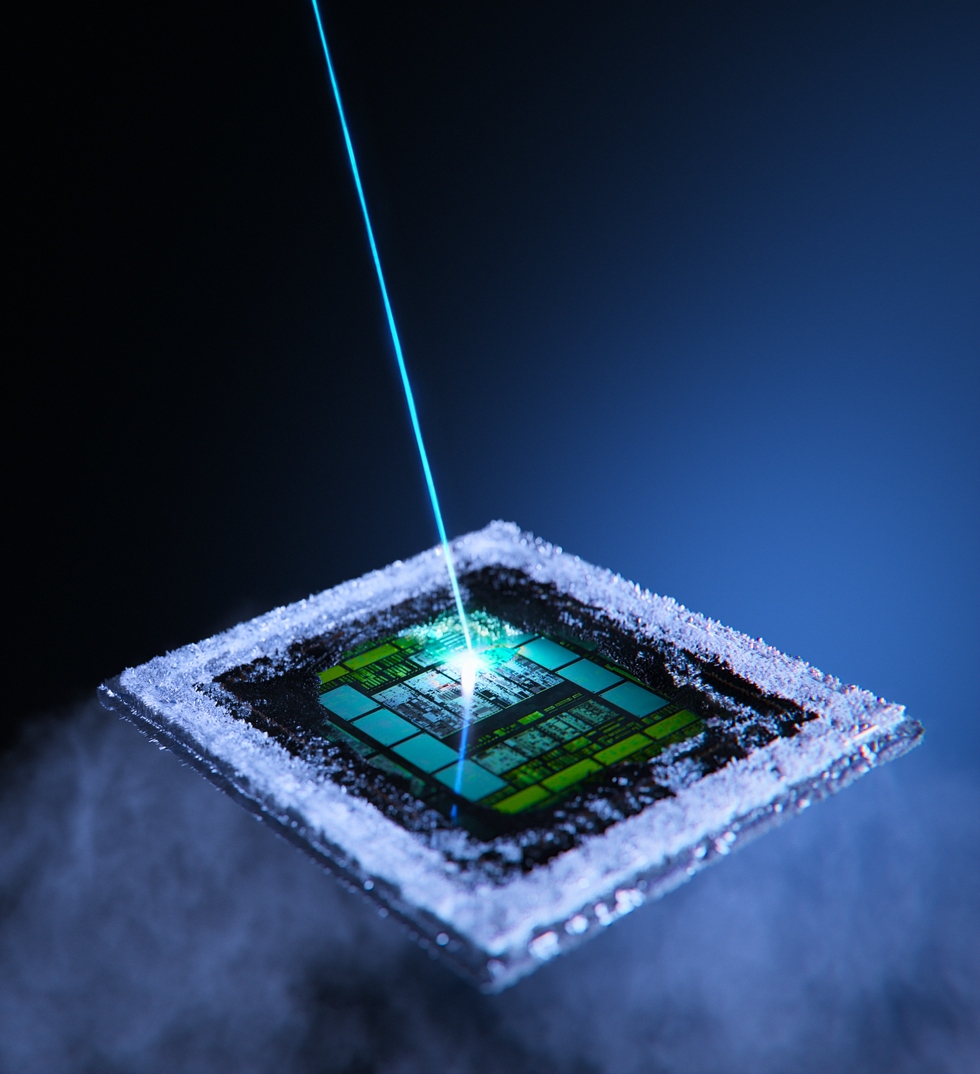
To truly address the challenges of dark silicon, a fundamentally different cooling strategy is needed—one that moves beyond simply removing heat. Maxwell Labs’ innovative technology offers this paradigm shift: converting heat directly into light and subsequently cooling the chip from within. This approach allows for targeted cooling of hotspots with laser-like precision, potentially enabling far greater transistor utilization and overall performance gains.
Photonic Cooling Explained: Harnessing Light to Remove Heat

The concept of using lasers for cooling might seem counterintuitive, as lasers are often associated with generating heat. However, under specific conditions, laser light can induce a cooling effect through a process called fluorescence. Fluorescence occurs when a material absorbs high-energy light and re-emits it at a lower energy level. Typically, this absorption of higher energy results in heating; however, by manipulating the material properties, we can achieve the opposite effect: absorbing low-energy photons and emitting higher-energy photons, thereby cooling down the material.
The Science Behind Fluorescence & Cooling
This luminescent process is responsible for the familiar glow of highlighter markers, coral reefs, and white clothes under black light. By carefully engineering materials that exhibit this reverse fluorescence behavior, Maxwell Labs’ photonic cooling technology can convert heat into photons, effectively removing thermal energy from the chip’s hotspots. Furthermore, this emitted light can potentially be captured and converted back into electrical power, creating a closed-loop system for enhanced efficiency.
Benefits & Future Implications of Photonic Cooling
The potential benefits of photonic cooling extend far beyond simply preventing overheating. By eliminating the thermal bottleneck, we can unlock the full computational potential of modern chips, effectively shrinking the dark silicon problem. This allows for a significant increase in transistor density and performance without compromising reliability. Moreover, the ability to target hotspots with precision opens up possibilities for advanced chip architectures and novel computing paradigms.
In conclusion, photonic cooling represents a transformative approach to thermal management in high-performance chips. As transistors continue to shrink and power densities increase, innovative solutions like this will be essential for realizing the full potential of future computing technologies. Maxwell Labs’ work on photonic cooling promises to usher in a new era of efficient and powerful electronics.
Source: Read the original article here.
Discover more tech insights on ByteTrending.
Discover more from ByteTrending
Subscribe to get the latest posts sent to your email.