



The race to build practical, fault-tolerant quantum computers is one of the most exciting technological pursuits of our time, promising breakthroughs across fields like medicine and materials science.
However, a significant hurdle remains: maintaining the incredibly delicate quantum states – qubits – that power these machines. These states are easily disrupted by even minuscule amounts of heat, leading to errors and limiting computational potential.
Scaling up quantum computers means increasing the number of qubits, which inherently generates more heat, creating a vicious cycle that has stymied progress for years; traditional cooling methods simply aren’t cutting it at larger scales.
Now, researchers at MIT have unveiled an ingenious solution poised to revolutionize the field: a novel photonic cooling method that offers unprecedented control and efficiency in managing qubit temperatures. This innovative approach leverages light to extract heat from quantum processors, representing a major leap forward in addressing this critical challenge – effectively achieving what’s known as quantum cooling .”,
The Quantum Cooling Bottleneck
Building practical, scalable quantum computers is an incredibly complex engineering challenge, and one of the most significant hurdles lies in cooling them to near-absolute zero. While we often hear about the computational power of qubits, maintaining their delicate quantum states – superposition and entanglement – requires an environment virtually free from thermal noise. This need for extreme cold isn’t just a matter of convenience; it’s fundamental to preventing errors that would render calculations meaningless. Specifically, trapped-ion quantum computers, currently among the leading contenders for building fault-tolerant systems, are particularly sensitive to these temperature fluctuations.
Trapped-ion qubits leverage individual ions (charged atoms) suspended and controlled by electromagnetic fields. The internal energy levels of these ions represent the qubit states. However, any heat – even minuscule amounts – causes these ions to vibrate, blurring their quantum properties and leading to decoherence: the loss of that crucial superposition and entanglement. Imagine trying to build a precise clock while the gears are constantly shaking; similarly, thermal noise introduces errors into quantum computations, making reliable results impossible without robust cooling mechanisms.
The challenge isn’t just about achieving low temperatures – it’s also about efficiently removing heat generated by the control lasers and electronics used to manipulate the ions. These systems inevitably produce waste heat that can quickly overwhelm the cryogenic environment. Traditional cooling methods are often bulky, complex, and limit the density of qubits on a single chip, hindering scalability. The recent breakthrough described in our featured article addresses this bottleneck by exploring a novel photonic technique which promises more targeted and efficient heat extraction, paving the way for denser and potentially more powerful trapped-ion quantum computers.
Ultimately, overcoming the ‘quantum cooling’ problem is critical to realizing the full potential of quantum computing. While significant progress has been made, innovations like the one highlighted here represent vital steps towards building fault-tolerant, scalable systems that can tackle real-world problems currently beyond the reach of even the most powerful classical computers.
Why Trapped Ions Need to Chill Out

Trapped-ion quantum computing represents one promising avenue for achieving fault-tolerant quantum computation. In this approach, individual ions (charged atoms) are suspended and controlled using electromagnetic fields, acting as qubits – the fundamental units of quantum information. These ions possess properties like spin that can exist in superposition states (both 0 and 1 simultaneously), enabling complex calculations beyond the capabilities of classical computers. The precision with which these ions are manipulated and their states measured is paramount for accurate computation.
However, a significant challenge lies in maintaining the stability and coherence of these qubits. Qubits are incredibly susceptible to environmental noise – primarily thermal vibrations – that can disrupt their delicate quantum states. This ‘decoherence’ leads to errors in calculations; essentially, the qubit ‘collapses’ out of its superposition before it can contribute meaningfully to the computation. To combat this, trapped-ion systems must operate at extremely low temperatures, typically just above absolute zero (around 10 millikelvins), far colder than even outer space.
Thermal noise introduces random fluctuations in the ions’ motion and energy levels, directly impacting their quantum state. These fluctuations cause the qubits to lose coherence, making it difficult to perform complex quantum algorithms reliably. The new cooling technique described elsewhere aims to mitigate this issue by more efficiently removing heat from these systems, paving the way for larger, more stable, and ultimately more powerful trapped-ion quantum computers.
Photonic Cooling: A New Approach
Traditional methods of cooling trapped ions, essential components in many quantum computer designs, often rely on lasers that can inadvertently disturb the delicate quantum states these ions hold – a major hurdle to building larger, more stable quantum computers. Now, researchers at MIT have pioneered a revolutionary approach dubbed ‘photonic cooling,’ using precisely tuned light instead. This novel technique represents a significant leap forward by offering a gentler and potentially more scalable solution for managing the extreme cold required for reliable quantum computation.
The core of photonic cooling lies in the interaction between trapped ions and carefully crafted photons. Imagine each ion as vibrating with tiny amounts of heat energy; these vibrations, if left unchecked, degrade the quantum information they hold. The MIT team’s method involves sending photons – particles of light – at specific frequencies that slightly lower the vibrational energy of the ions. Crucially, unlike many laser-based cooling methods, this process doesn’t require strong interactions with the ions themselves, minimizing disruption to their fragile quantum states and allowing for more precise control.
The advantages extend beyond gentler operation. Traditional laser cooling often faces limitations in scaling up due to the complexity of managing numerous beams precisely across a large array of ions. Photonic cooling promises a simpler architecture; it’s theoretically easier to generate and direct the necessary photons, paving the way for denser and more complex trapped-ion quantum computer systems. This simplified approach could be instrumental in overcoming current scalability bottlenecks within the field.
This research, supported by the National Science Foundation (NSF) and conducted at MIT’s Research Laboratory of Electronics, School of Engineering, Schwarzman College of Computing, and Lincoln Laboratory, highlights a crucial advancement in quantum computing hardware. By mitigating the challenges associated with cooling these systems, the team has brought us closer to realizing the full potential of trapped-ion quantum computers – a critical step towards unlocking their transformative capabilities.
How Light Can Cool Quantum Systems
Quantum systems, like individual ions used in quantum computers, are incredibly sensitive to heat. Even tiny amounts of thermal energy can disrupt their delicate quantum states, leading to errors in calculations. Traditional cooling methods often involve lasers that can also jostle the ions and degrade their coherence – essentially, messing with the very thing you’re trying to preserve. Photonic cooling offers a gentler alternative: instead of directly blasting the ions with heat-removing energy, it uses precisely tuned photons (particles of light) to extract heat in a way that minimizes disturbance.
The process works by carefully selecting photons with energies slightly *lower* than the ion’s internal vibrational modes. When an ion vibrates and emits a photon, it loses kinetic energy – essentially getting cooler. Crucially, these emitted photons are absorbed by a surrounding medium (like a specially designed optical cavity), preventing them from re-interacting with the ions and warming them back up again. This ‘matched absorption’ ensures that the cooling process is one-way, efficiently removing heat without introducing unwanted forces or altering the ion’s quantum state.
Think of it like carefully siphoning water out of a container – you don’t need to shake or disrupt the entire system to lower its level. The MIT team has demonstrated this photonic cooling technique can achieve significantly lower temperatures than previous methods, opening up new possibilities for building more stable and scalable trapped-ion quantum computers. This advancement is a vital step towards realizing the full potential of quantum computing by allowing for longer coherence times and reducing error rates.
Scalability & Future Implications
The most exciting aspect of this new ‘quantum cooling’ method isn’t just its efficiency; it’s what it unlocks in terms of scalability for trapped-ion quantum computers. Current systems often rely on bulky, complex setups to cool individual ions to their near-absolute zero operating temperatures – a significant barrier to integrating them into larger, more practical processors. This photonic approach, using light to precisely control and cool the ions, offers a pathway towards miniaturization. Imagine moving away from room-sized cryogenic infrastructure to something that can be integrated directly onto a silicon chip alongside the quantum circuits themselves; this dramatically reduces size, cost, and complexity.
The ability to integrate cooling directly with ion traps opens doors for ‘chip-scale’ quantum computing – a long-sought goal. This means leveraging existing microfabrication techniques, already refined over decades in the semiconductor industry, to build increasingly complex quantum processors on a single chip. We’re talking about potentially stacking multiple layers of qubits, interconnecting them with high fidelity, and building entire quantum systems that resemble modern computer chips but harness the power of quantum mechanics. This moves us beyond the proof-of-concept stage towards something genuinely manufacturable.
The implications extend far beyond just making quantum computers smaller. Scalability is directly linked to computational power; more qubits, cooled efficiently and precisely, means tackling increasingly complex problems currently intractable for even the most powerful classical supercomputers. Potential applications span a vast range – from materials discovery and drug design, where simulating molecular interactions is crucial, to optimizing logistics and financial modeling with unprecedented accuracy. Furthermore, this improved cooling fidelity should also lead to longer coherence times for qubits, meaning they maintain their quantum state for longer periods, enhancing the reliability of calculations.
While challenges remain in fully realizing chip-scale quantum computing, this breakthrough represents a significant stride forward. The research team’s approach provides a compelling blueprint for future development and paves the way for collaboration between quantum physicists and microfabrication engineers – a crucial convergence needed to translate these theoretical advances into tangible technological breakthroughs that can ultimately reshape industries.
Towards Chip-Scale Quantum Computing
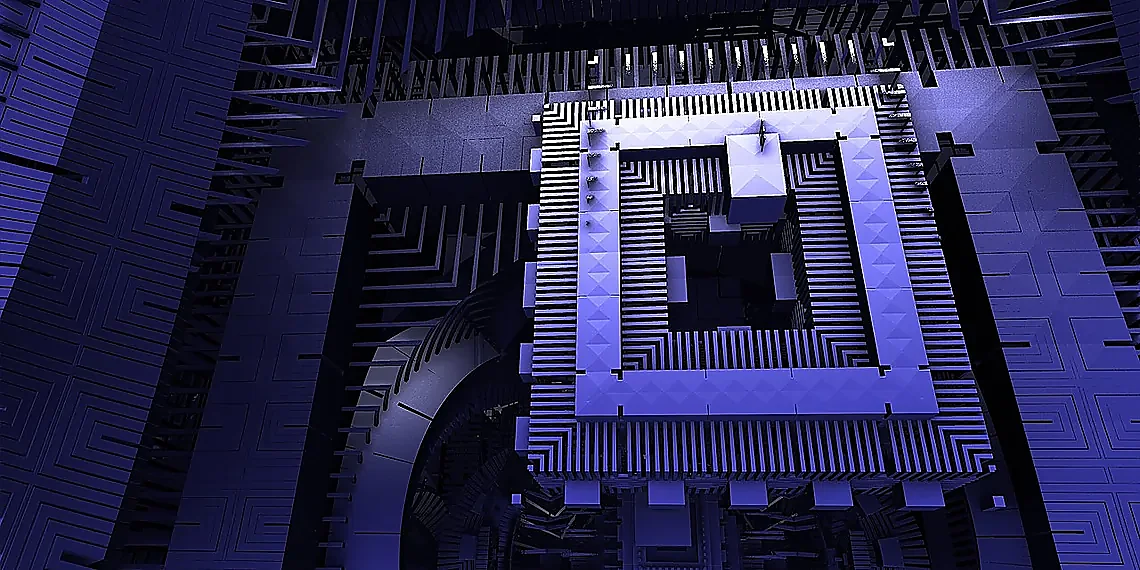
The recent breakthrough in quantum cooling, utilizing a novel photonic technique, holds immense promise for integrating trapped-ion quantum computers with standard microfabrication processes. Traditional methods of cooling these ions often involve complex setups and bulky equipment, hindering their integration into compact chip designs. This new approach, however, leverages precisely shaped light to cool individual ions without requiring extensive external infrastructure. Critically, the photonic elements used are compatible with existing semiconductor manufacturing techniques, meaning they can be directly patterned onto silicon chips alongside the ion traps themselves.
This compatibility is a game-changer for scalability. It opens the door to building quantum processors comprised of hundreds or even thousands of qubits on a single chip – a necessary step towards achieving fault-tolerant quantum computation and tackling complex problems currently intractable for classical computers. The ability to fabricate these cooling systems alongside the qubit arrays simplifies assembly, reduces size and power consumption, and ultimately lowers the cost associated with creating advanced quantum hardware. Researchers anticipate this will accelerate the transition from laboratory prototypes to commercially viable quantum computing solutions.
The potential applications are vast. Beyond tackling scientific challenges in fields like drug discovery and materials science, chip-scale quantum computers could revolutionize areas such as financial modeling, logistics optimization, and artificial intelligence. The enhanced cooling capabilities directly contribute to improved qubit coherence times – the duration for which qubits maintain their quantum state – leading to more accurate and reliable computations across all these domains.
Beyond the Lab: Challenges & Next Steps
While this new quantum cooling technique represents a significant leap forward for trapped-ion quantum computers, scaling it beyond the lab presents considerable hurdles. The current method, relying on precisely tuned light pulses to extract heat from individual ions, is exquisitely sensitive to photon loss and requires remarkably stable control systems. Maintaining these conditions across larger arrays of qubits – essential for performing complex calculations – will demand substantial engineering innovation. Furthermore, the efficiency of the cooling process itself isn’t yet perfect; researchers are actively working on minimizing energy losses during photon extraction and refining the laser pulses used.
The MIT research team is keenly aware of these limitations and has outlined a clear roadmap for future development. Immediate priorities include investigating strategies to mitigate photon loss within the microchip environment, potentially through improved optical cavity designs or novel materials that better trap light. Simultaneously, they are exploring ways to simplify the control system architecture, aiming to reduce complexity without sacrificing performance. This involves developing more automated calibration procedures and incorporating feedback loops to compensate for environmental fluctuations.
Beyond these immediate refinements, the team is also considering alternative cooling approaches as complementary strategies. While photon-based cooling offers unique advantages for trapped ions, other techniques like sympathetic cooling (using a different species of atom) are being investigated alongside it. The ultimate goal isn’t necessarily to find one ‘perfect’ solution but rather to build a toolkit of cooling methods that can be tailored to specific quantum computer architectures and application requirements.
Looking further ahead, the researchers envision integrating this improved quantum cooling system directly onto advanced microchip platforms, paving the way for more compact and energy-efficient quantum computers. This integration will require close collaboration between physicists, electrical engineers, and materials scientists, pushing the boundaries of nanoscience and nanotechnology to achieve truly scalable and practical quantum computing capabilities.
What’s Next for Quantum Cooling?
While the recent breakthrough in quantum cooling using photons offers a promising path for improving trapped-ion quantum computer scalability, significant limitations remain. One primary challenge is photon loss during transmission; each photon carries a tiny amount of heat away, and any lost photons diminish the cooling effect. Furthermore, precisely controlling the laser pulses used to generate and manipulate these photons requires extremely complex and stable control systems, adding substantial overhead in terms of both hardware and operational expertise. Scaling this approach to cool larger numbers of qubits will necessitate innovative solutions to minimize photon losses and simplify system management.
Current research efforts are focused on several avenues to address these challenges. Scientists are exploring techniques like photonic crystal cavities to trap photons and increase their interaction with the ions, thereby reducing loss. Advanced feedback control systems and integrated optics are also being developed to streamline the cooling process and make it more robust against environmental noise. Another key area of investigation involves optimizing the wavelengths and pulse shapes used in the photon-mediated cooling process to maximize efficiency.
Beyond this photonic approach, researchers continue to investigate alternative quantum cooling methods. These include techniques leveraging other forms of interaction between qubits, such as mechanical resonators or direct coupling between ions via vibrational modes. While these methods face their own distinct challenges, they represent crucial diversification in the quest for efficient and scalable quantum cooling solutions necessary for building practical quantum computers.
The recent strides in manipulating materials at near-absolute zero temperatures represent a monumental leap forward, effectively dismantling long-held limitations within the quantum realm.
This breakthrough isn’t merely an incremental improvement; it fundamentally alters our approach to stabilizing qubits and enhancing their coherence times, crucial elements for building practical quantum computers.
The ability to achieve incredibly precise temperature control opens doors to previously unimaginable computational possibilities, allowing researchers to explore more complex algorithms and tackle problems currently intractable for even the most powerful supercomputers.
Specifically, advancements in techniques like quantum cooling are becoming increasingly vital as we push towards larger qubit counts and more intricate quantum circuits; maintaining stability at these scales is exceptionally challenging without such innovations. These developments promise a future where quantum computers can reliably process information with unprecedented speed and accuracy. This research paves the way for significant progress across fields from drug discovery to materials science, marking a turning point in technological advancement. It’s truly an exciting time to witness the evolution of this transformative technology. The implications extend far beyond theoretical physics, impacting industries we are only beginning to imagine. We’re entering a new era where previously impossible calculations become reality, all thanks to these fundamental breakthroughs in temperature control and qubit stability. The potential for disruption is immense, and the future looks brighter than ever before. Staying abreast of these developments will be key to understanding the unfolding technological revolution. We encourage you to remain engaged with the rapidly evolving landscape of quantum technology – subscribe to our newsletter, follow us on social media, and delve deeper into the fascinating world of qubits and beyond.
Continue reading on ByteTrending:
Discover more tech insights on ByteTrending ByteTrending.
Discover more from ByteTrending
Subscribe to get the latest posts sent to your email.