

When my home office began experiencing frequent power outages during the stormy season, I realized I urgently needed backup power for my essential work setup. Running a desktop PC alongside a laptop and other devices during these outages—which could last anywhere from one to three days—demanded a substantial amount of energy storage. After carefully calculating my power requirements, I determined that I’d need a power station with approximately 1500Wh battery capacity and a 3000W power inverter capable of handling the startup surge from all my equipment.
Understanding the Cost Savings & DIY Motivation Behind Building a Power Station
Commercial portable power stations with these specifications typically cost upwards of $2,000. That represents a considerable investment! The desire to significantly reduce expenses and engage in a hands-on project motivated me to explore the possibility of building my own solution. While numerous online tutorials offered guidance throughout the process, many seemed overly complex or utilized components that were difficult to source.
Component Selection: Batteries, BMS, and Inverter for Your Power Station
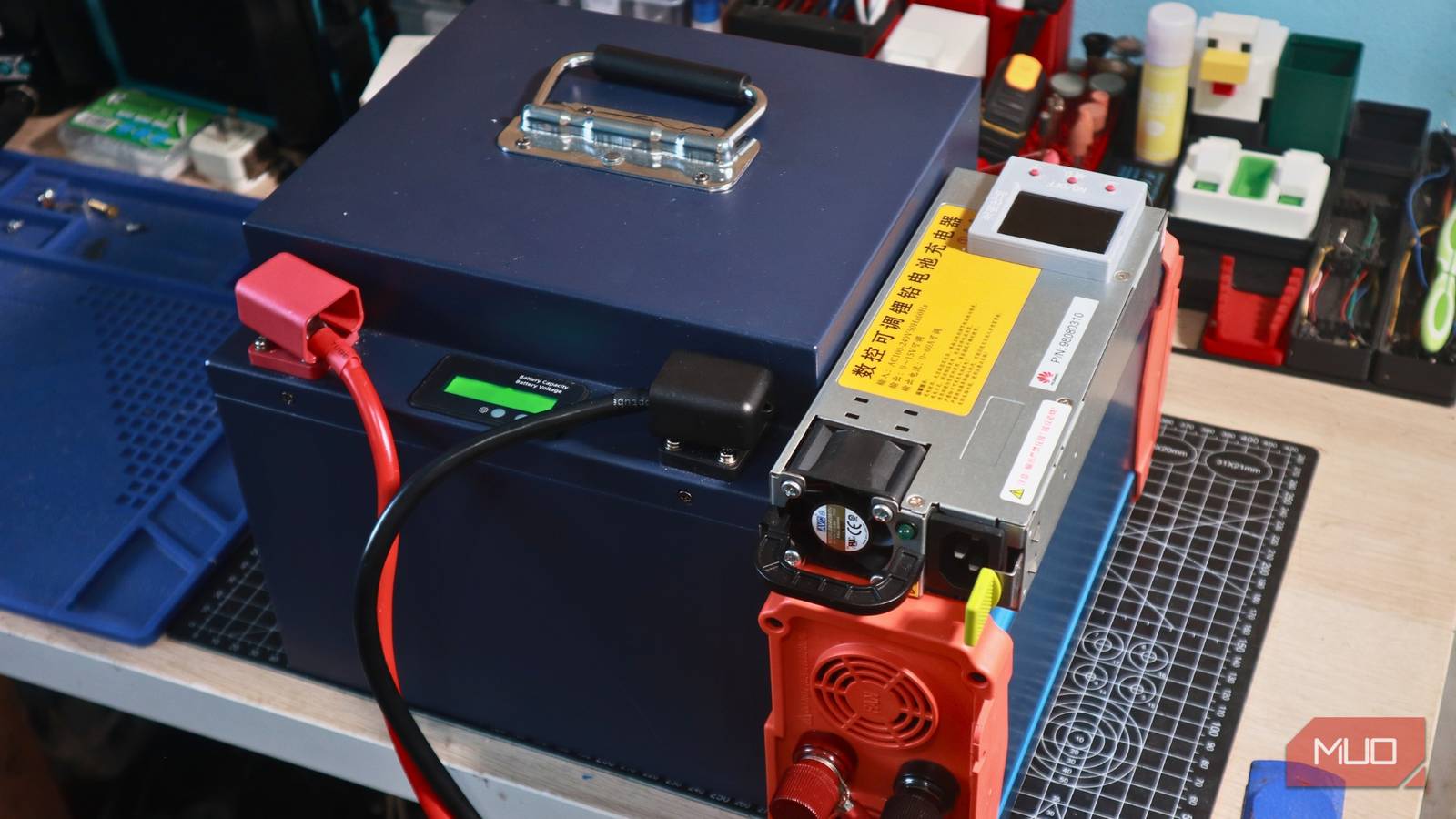
The battery pack forms the very core of any reliable power station. I opted for 12 x 3.2V lithium iron phosphate (LiFePO4) cells to achieve a total capacity of roughly 1500Wh when combined in series and parallel configurations. LiFePO4 batteries offer enhanced safety features and an extended lifespan compared to standard lithium-ion alternatives. Furthermore, sourcing these individual cells from AliExpress proved to be a cost-effective strategy—approximately $400 for the cells alone.
//Example Calculation (simplified) //12 Cells @ 3.2V = ~38.4V nominal
//Total Capacity: Approximately 1500Wh
A Battery Management System (BMS) is absolutely essential for safety, meticulously balancing the cells and protecting them from potential overcharge or discharge situations. I selected a BMS specifically designed for LiFePO4 batteries, ensuring its current rating exceeded my inverter’s requirements. The inverter itself converts DC battery power to AC power suitable for standard household appliances; I opted for a 3000W unit with pure sine wave output, guaranteeing compatibility with sensitive electronic devices.
The Build Process: Assembly and Enclosure of the DIY Power Station
The assembly process involved carefully soldering the cells together in parallel strings before connecting these strings in series to achieve the desired voltage. Precision and meticulous attention to detail are paramount during this phase; incorrect wiring could potentially lead to a catastrophic failure. Consequently, thorough double-checking is crucial.

Subsequently, I mounted both the BMS and inverter onto a sturdy plywood enclosure. Adequate ventilation is vital to prevent overheating; therefore, I incorporated multiple vents along with cooling fans powered directly by the battery itself. A DC-DC charger was also integrated for recharging from either solar panels or a standard wall outlet.
Addressing Challenges & Lessons Learned in Building Your Own Power Station
The most significant challenge encountered during this project was effectively managing heat dissipation, particularly when operating the inverter under high load conditions. Initially, the inverter ran noticeably warm; therefore, I needed to add additional ventilation and even install heatsinks to mitigate the issue. Another valuable lesson learned: always meticulously double-check your wiring diagrams before commencing any soldering work! A single miswired connection can render the entire project utterly useless.
- Prioritize Safety: While LiFePO4 batteries are inherently safer than other lithium chemistries, they still necessitate careful handling.
- Ventilation is Paramount: Providing adequate airflow prevents overheating and significantly extends component lifespan.
- Ensure Component Compatibility: Always verify that the BMS and inverter are appropriately rated for your battery’s voltage and current specifications to ensure optimal performance of your power station.
Despite these challenges, I successfully built a 1500Wh portable power station for approximately $1,200—roughly half the cost of an equivalent commercial unit. This provides reliable backup power during outages and allows me to work remotely with increased confidence.
This project wasn’t solely about saving money; it was also a deeply rewarding learning experience, significantly expanding my understanding of electrical systems and DIY electronics—and demonstrating the advantages of building your own power station.
Source: Read the original article here.
Discover more tech insights on ByteTrending.
Discover more from ByteTrending
Subscribe to get the latest posts sent to your email.