

The Future of the Grid: Simulation-Driven Optimization
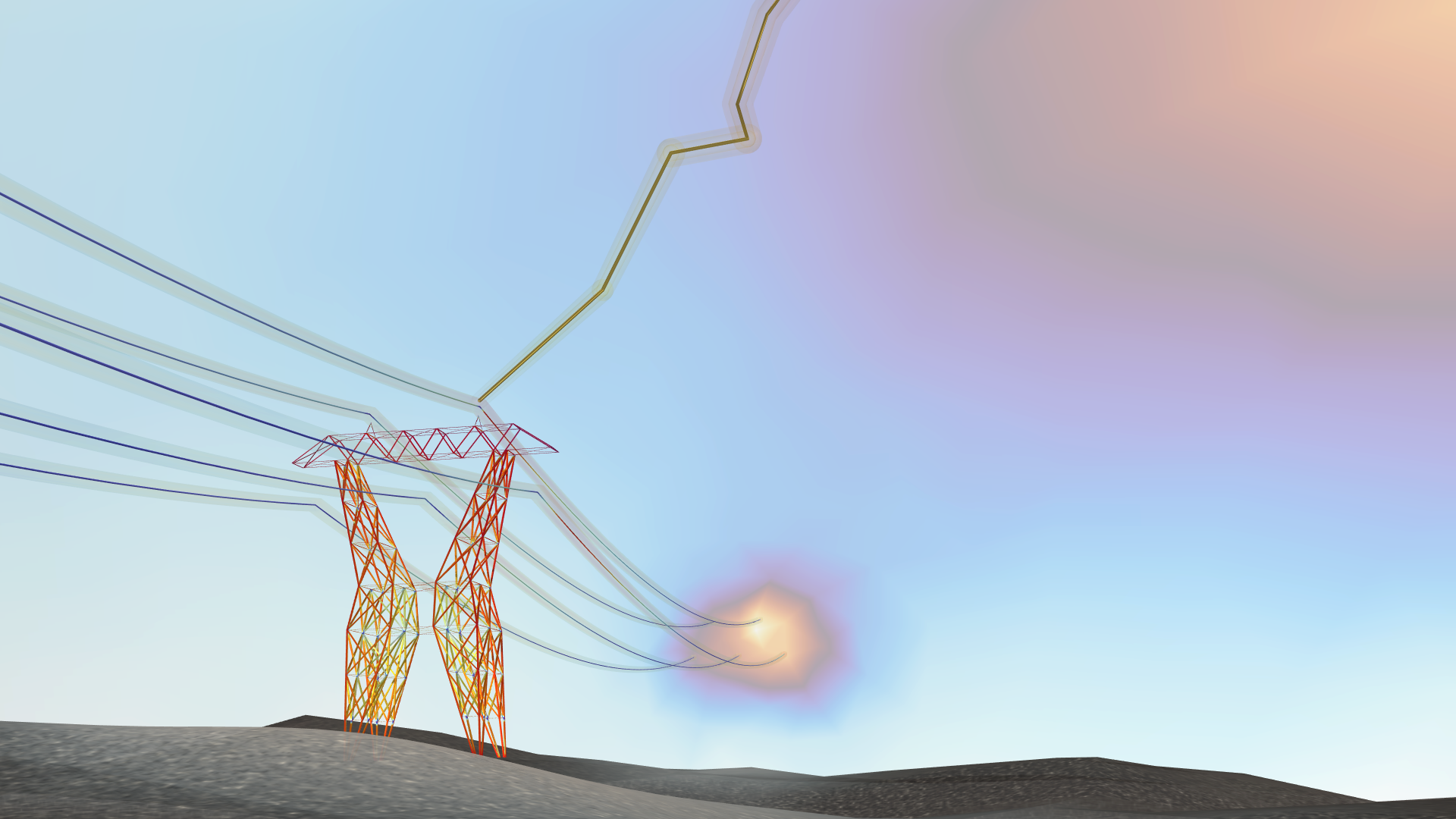
The electrical grid stands at a critical juncture, facing increasing demands for reliability and the integration of renewable energy sources. Consequently, simulation software is becoming indispensable in optimizing power grid designs, bolstering resilience, ensuring efficient distribution, and facilitating the seamless incorporation of alternative energy technologies like fusion and renewables. This approach offers a crucial advantage by enabling engineers to analyze complex interactions within the grid – all through a unified modeling environment.
Designing for Resilience: Component Interactions & Multiphysics Modeling
When designing critical infrastructure components such as transformers, transmission lines, and high-voltage cables, multiphysics electromagnetic field analysis is paramount for ensuring safety and performance. For example, thermal behavior plays an equally vital role; heat dissipation and resulting thermal stress significantly influence component lifespan and overall efficiency. Therefore, engineers must also consider structural and acoustic simulations to predict and mitigate issues such as transformer vibration and noise – factors directly affecting longevity.
Analyzing High-Voltage Systems
High-voltage transmission lines present unique challenges, necessitating detailed electric breakdown and corona discharge analyses. Simulation helps predict potential failure points by evaluating insulator designs and minimizing energy loss. Notably, one manufacturer utilizes COMSOL Multiphysics® to develop magnetic couplings—a friction-free power transfer alternative now found in wind turbines and numerous other applications.
Preventing Magnet Demagnetization
Furthermore, these simulations consider material temperature dependence and nonlinear hysteresis curves to prevent permanent magnet demagnetization. As a result, this virtual prototyping significantly reduces development costs and accelerates the process for meeting varied customer requirements, ultimately contributing to improved overall grid resilience.
Digital Twins & Simulation Apps: Transforming Grid Management
Beyond individual component design, digital twins are revolutionizing how power grids are managed. A digital twin represents a high-fidelity virtual replica of a physical asset, continuously updated with real-time data. Consequently, this allows for predictive maintenance, enhanced reliability, and optimized performance across the entire spectrum – from power sources to distribution systems and energy storage solutions. The ability to simulate these complex interactions is transforming grid operations.
Empowering Field Technicians
Simulation apps built on multiphysics models are empowering even non-specialist engineers with valuable insights. For instance, one organization developed an app for cable fault analysis. This allows field technicians to input parameters and receive immediate assessments – a substantial improvement over traditional physical tests that can be time-consuming and may miss subtle indicators of failure. Consequently, this brings the power of simulation directly to where it’s needed most.
Expanding Horizons: Nuclear Solutions & Future Potential
The application of simulation extends significantly into the realm of nuclear energy, playing a vital role in designing generator circuit breakers (GCBs). These GCBs are crucial for reliable electricity generation, ensuring they perform flawlessly even after prolonged periods of inactivity. In addition, the design of complex systems like tokamak fusion reactors benefits immensely from simulation to withstand extreme heat fluxes and plasma disruptions, which is absolutely essential.
Looking ahead, the development of next-generation power grid systems requires safe, efficient, and affordable testing methods. Therefore, multiphysics simulation technology will continue to play a vital role in driving future innovations. It allows engineers to anticipate and analyze interactions within devices while simultaneously improving existing infrastructure to meet the evolving demands of modern energy systems.
Source: Read the original article here.
Discover more tech insights on ByteTrending.
Discover more from ByteTrending
Subscribe to get the latest posts sent to your email.