Unveiling Distorted Galaxies: Webb’s Early Gravitational Lens Images
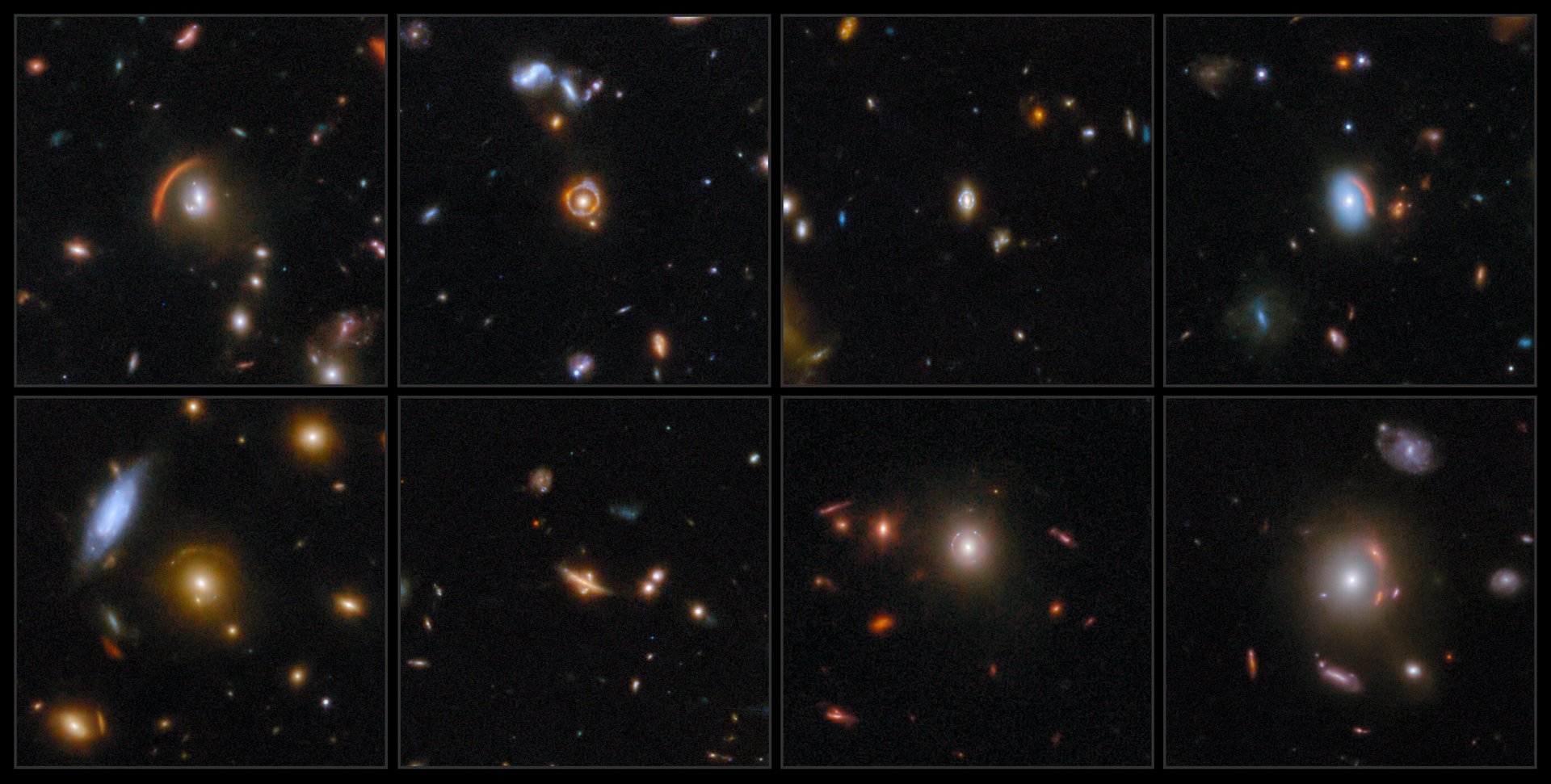
The James Webb Space Telescope (JWST) continues to unveil breathtaking images of the universe, and its recent observations of gravitational lensing are particularly captivating. This month’s ESA/Webb Picture of the Month showcases eight remarkable instances of this phenomenon, providing astronomers with an unprecedented view into distant galaxies.
Understanding the Science Behind Gravitational Lensing
What is Gravitational Lensing?
The concept of gravitational lensing was initially theorized by Albert Einstein as a consequence of his theory of general relativity. Massive objects, like galaxies or galaxy clusters, possess immense gravity that doesn’t just attract matter; it actively warps the fabric of spacetime itself. For example, light from distant quasars can be bent and magnified, creating multiple images.
Imagine spacetime as a vast sheet – when you place a massive object (representing a galaxy cluster) on that sheet, it creates a noticeable dip. Light, traveling through spacetime, naturally follows this curvature. Consequently, when light from a distant galaxy passes near a massive foreground object, its path bends, creating the “lens” effect we observe.
- Einstein’s Prediction: A key theoretical prediction arising from general relativity.
- Spacetime Distortion: Massive objects significantly distort spacetime.
- Light Deviation: Light originating from distant galaxies follows the warped path, appearing distorted to observers here on Earth.
How Does Gravitational Lensing Work?
The degree of light bending depends directly on the mass of the lensing object and the proximity of the background galaxy. Furthermore, the alignment between the source galaxy, the lens object, and the observer is crucial for this effect to be noticeable. While rare, when these conditions align perfectly, we can observe spectacular arcs and multiple images of the same distant galaxy.
The Significance of Gravitational Lensing in Astronomical Research
Why Study Distorted Galaxies?
Gravitational lensing isn’t merely a visually striking phenomenon; it’s an invaluable scientific tool for astronomers. The magnification effect allows us to study distant galaxies that would otherwise be too faint to observe, offering insights into the early universe and galaxy evolution.
- Magnification Power: It magnifies the light from incredibly distant galaxies, enabling detailed studies that wouldn’t be possible otherwise. This is particularly vital when observing extremely faint objects located at vast cosmic distances.
- Multiple Image Formation: In certain scenarios, a single background galaxy can produce multiple images due to different light paths bending around the lens. This provides crucial data for understanding the mass distribution within the lensing object and its surrounding dark matter halo.
- Probing Early Galaxy Evolution: Gravitational lensing allows astronomers to observe galaxies that formed in the universe’s infancy, providing valuable insights into their early formation and evolution processes. The JWST’s infrared capabilities are essential for these observations because light from those early galaxies has been redshifted into the infrared spectrum.
- Mapping Dark Matter Distribution: Since dark matter also exerts gravitational influence, studying gravitational lensing patterns aids in mapping its distribution across the universe – a critical step in understanding cosmic structure formation.

Future Directions and JWST’s Role
The James Webb Space Telescope’s exceptional resolution and infrared sensitivity are revolutionizing our understanding of gravitational lensing. The recently released images showcase the telescope’s remarkable ability to resolve intricate details within these distorted galaxies, revealing structures previously hidden from view.
Looking ahead, astronomers plan to leverage JWST’s capabilities for even more groundbreaking discoveries. Notably, they intend to:
- Discover New Lens Systems: Intensively search the sky for additional instances of gravitational lensing.
- Analyze Exoplanet Atmospheres: Employ gravitational lensing techniques to analyze the atmospheres of planets orbiting distant stars, searching for biosignatures.
- Refine Early Universe Models: Further refine our understanding of galaxy formation and evolution in the very early universe by leveraging these powerful observational tools.
The study of gravitational lensing, amplified by JWST’s capabilities, opens a new window into the cosmos, enabling us to peer further back in time and unravel the mysteries surrounding the universe’s origins.
Source: Read the original article here.
Discover more tech insights on ByteTrending.
Discover more from ByteTrending
Subscribe to get the latest posts sent to your email.