

Imagine a universe teeming with vibrant galaxies, swirling islands of stars and cosmic dust, each a testament to creation’s boundless energy. Now picture that same universe slowly, relentlessly stripping those galaxies bare, not through sudden cataclysm but through an insidious, drawn-out process – a death by a thousand cuts. It’s a chilling prospect, one astronomers are increasingly uncovering as they peer deeper into the cosmos. We often think of galactic collisions or supernova explosions as the primary agents of destruction in the universe, but there’s a quieter, more persistent threat at play. This phenomenon, which we call galaxy starvation, is reshaping our understanding of how galaxies evolve and ultimately meet their end.
For years, scientists have observed galaxies appearing strangely faint, lacking the bright, active star formation you’d expect. It seemed as if something was systematically siphoning off their fuel – gas and dust – vital for creating new stars. The culprit? Supermassive black holes lurking at the centers of these galaxies, acting like cosmic vacuum cleaners, slowly but surely consuming the material that would otherwise birth new generations of stars. This isn’t a dramatic implosion; it’s a gradual fading, a slow starvation of galactic proportions.
Recently, a team led by Pablo Pérez-González made a groundbreaking discovery that sheds even more light on this process. Their observations revealed a particularly stark example of galaxy starvation, offering unprecedented detail about how these black holes exert their influence and effectively choke the life out of their host galaxies. We’ll delve into the specifics of Pablo’s galaxy and what it teaches us about the universe’s most subtle, yet powerful, destroyers.
Meet Pablo: The Ancient ‘Dead’ Galaxy
Meet Pablo. No, not a person – a galaxy. And Pablo isn’t just any galaxy; he’s an ancient relic, one of the oldest “dead” galaxies astronomers have ever encountered. Discovered peering back over 10 billion years into cosmic history, Pablo represents a crucial snapshot of galactic evolution in the early universe, a time when the cosmos was still undergoing dramatic transformations. His existence challenges conventional wisdom about how galaxies form and evolve, offering us a unique opportunity to understand the processes that shaped the structures we see today.
What makes Pablo so remarkable is his profound quiescence – he’s essentially stopped forming new stars. While most galaxies are bustling hubs of stellar birth and death, Pablo has been eerily silent for billions of years. Finding galaxies like him is exceptionally rare; they’re fossils from an earlier epoch, providing invaluable clues about the conditions that prevailed when the universe was just a fraction of its current age. Their existence suggests that star formation wasn’t always as rampant as we might assume, and that mechanisms existed to abruptly halt it.
Pablo’s age alone (over 10 billion years) immediately places him in a special category. He formed during an era when the universe was still relatively young and chaotic, witnessing some of the earliest galaxy mergers and the distribution of primordial elements. Studying his properties – his composition, shape, and overall structure – allows us to piece together how galaxies evolved from these early conditions into the diverse population we observe today. Each ancient, quiescent galaxy like Pablo is a precious data point in our ongoing quest to map the history of the cosmos.
The fact that Pablo hasn’t been ripped apart by his central supermassive black hole is also significant. Contrary to popular depictions, galaxies aren’t always violently consumed by these behemoths; sometimes, they’re slowly starved. This new research suggests a more subtle process: the black hole, through its gravitational influence and energy output, gradually suppresses gas accretion, effectively choking off the fuel needed for star formation – a phenomenon we’ll explore further in subsequent sections.
A Fossil of the Early Universe
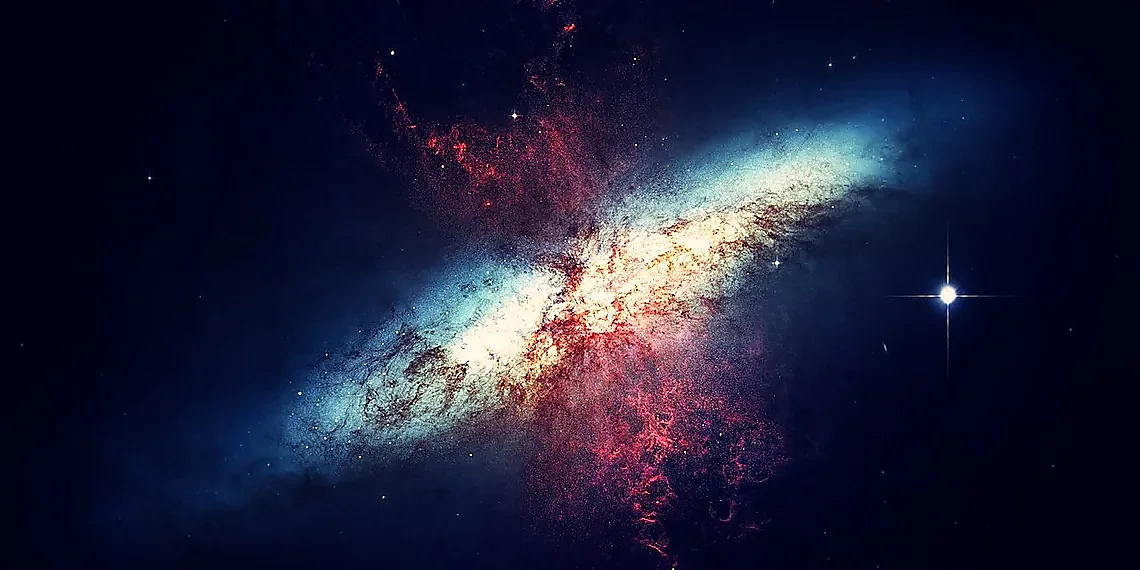
Pablo, formally known as SPT0615-JD, is an exceptionally ancient galaxy, estimated to be over 10 billion years old. This places its origin within the first few billion years after the Big Bang, making it a true fossil from the early universe. Its light has traveled for billions of years to reach us, offering a glimpse into conditions and galactic structures that existed long before our own Milky Way formed.
What makes Pablo particularly intriguing is its remarkably quiescent state – it’s essentially ‘dead,’ meaning star formation within it has largely ceased. Most galaxies at this epoch were actively forming stars; finding one so early in the universe that has already exhausted its gas reserves and entered a period of dormancy challenges our understanding of galactic evolution. It suggests processes capable of halting star formation operated much earlier than previously thought.
The discovery of Pablo, and other similar ancient, quiescent galaxies, is significant because it provides crucial data points for refining cosmological models. These ‘dead’ galaxies help astronomers understand how galaxies evolved from the chaotic early universe into the more structured systems we observe today, and shed light on the role supermassive black holes play in shaping galactic fate – often through a slow starvation process rather than dramatic destruction.
The Black Hole’s Slow Strangulation
For years, the prevailing narrative surrounding supermassive black holes and galaxies has often depicted a dramatic scene: a galactic maelstrom ripped apart by gravitational forces as material spirals into the abyss. While that certainly *can* happen in some instances, recent observations of exceptionally old, ‘dead’ galaxies are revealing a far more insidious process – galaxy starvation. Instead of tearing galaxies asunder, these colossal black holes can slowly and methodically stifle star formation over billions of years, effectively choking off a galaxy’s ability to renew itself.
The mechanism behind this galactic strangulation lies in the accretion disk that surrounds a supermassive black hole. As gas and dust are pulled towards the black hole, they form a swirling vortex – the accretion disk – which heats up intensely due to friction. This incredibly hot material emits powerful radiation, primarily X-rays and ultraviolet light. This intense radiative feedback then acts as an interstellar ‘wind,’ sweeping away the cool gas clouds that would otherwise collapse under gravity to form new stars. It’s not a sudden explosion but a gradual depletion of resources.
Crucially, this ‘choking off’ effect isn’t simply about consuming all the available gas. It’s about preventing it from *reaching* the regions where star formation occurs. The black hole acts as a central regulator, effectively creating a barrier that blocks the fuel supply to the galaxy’s stellar nurseries. The energy released by the accretion disk ionizes and heats the surrounding interstellar medium, making it too hot for gas clouds to coalesce into stars. This process can continue for eons, turning vibrant, star-forming galaxies into the faint, ‘dead’ relics observed today.
This discovery fundamentally shifts our understanding of galaxy evolution. It suggests that many seemingly quiescent black holes are actively shaping their host galaxies in subtle but profound ways – not through violent destruction, but through a slow, pervasive suppression of star formation. The identification of these starved galaxies provides invaluable insights into the complex interplay between supermassive black holes and the galaxies they inhabit, challenging our models and prompting us to re-evaluate how these cosmic behemoths influence the universe’s grand design.
Accretion and Star Formation Shutdown
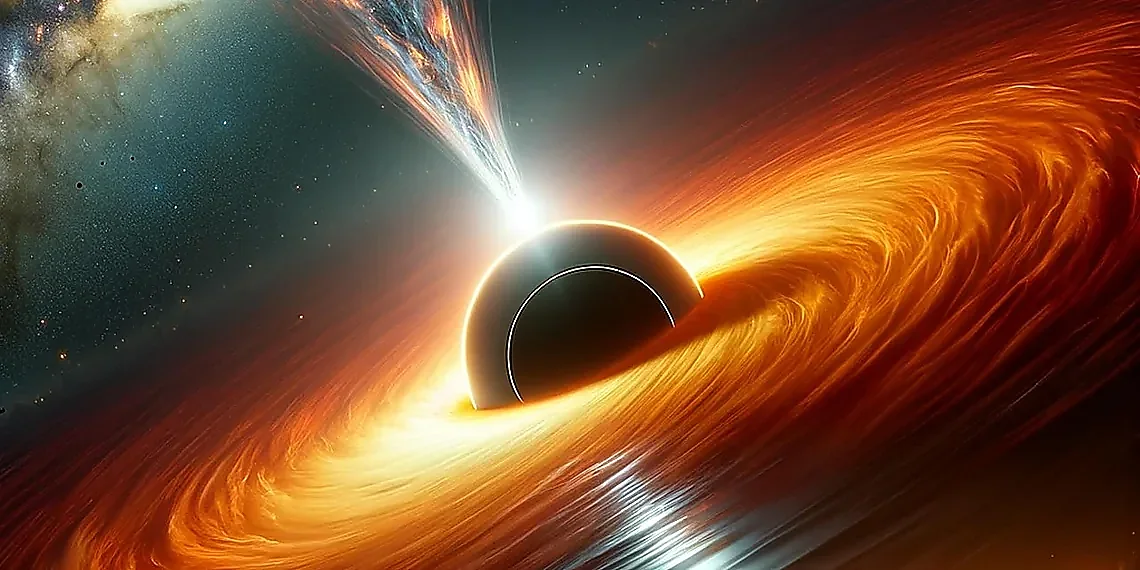
The process of ‘galaxy starvation’ hinges on the interplay between a central supermassive black hole and the surrounding gas reservoir that fuels star formation. As material falls towards a black hole, it doesn’t simply disappear; instead, it forms an incredibly hot, swirling disk known as an accretion disk. This disk radiates vast amounts of energy across the electromagnetic spectrum, including powerful X-rays and ultraviolet radiation.
This intense radiation creates a ‘photoevaporation’ effect. The photons emitted from the accretion disk heat up and ionize the surrounding gas clouds – essentially stripping them of their electrons. This ionization process drastically reduces the ability of that gas to cool and collapse under gravity, which is essential for forming new stars. Think of it like trying to build a house with materials that constantly evaporate; the building blocks are simply unavailable.
Furthermore, the accretion disk generates powerful outflows – jets of material propelled outwards at near-light speed. These outflows physically sweep away remaining gas and dust, preventing them from ever reaching the galaxy’s star-forming regions. This combination of photoevaporation and outflow effectively ‘chokes off’ the fuel supply for new stars, leading to a gradual decline in stellar birth rates and transforming an actively star-forming galaxy into a quiescent, or ‘dead,’ one.
Beyond Pablo: Implications for Galactic Evolution
The discovery that a supermassive black hole can slowly starve a galaxy, rather than violently ripping it apart, fundamentally alters our understanding of how galaxies evolve and eventually meet their end. Previously, the narrative surrounding galactic death often centered on dramatic collisions or active galactic nuclei (AGN) outbursts – events characterized by intense radiation and powerful jets tearing material from the galaxy’s core. This new evidence, however, paints a picture of a more insidious process: a gradual decline fueled not by destruction but by deprivation. The observed ‘dead’ galaxy, one of the oldest identified so far, serves as a stark example of this starvation scenario, suggesting that this might be a surprisingly common fate for galaxies across the universe.
This shift in perspective has significant implications for cosmological models and our understanding of galactic lifecycle. If starvation is a more prevalent mechanism than previously believed, it means we’ve likely underestimated the number of galaxies quietly fading away over cosmic time. It also necessitates a re-evaluation of how black holes influence their host galaxies – moving beyond the assumption that they are always destructive forces. Black holes can act as regulators, effectively choking off star formation and leading to a gradual dimming, rather than an explosive demise. This challenges the idea that all ‘dead’ galaxies experienced catastrophic events; some may simply have been starved into quiescence.
Looking ahead, future research will focus on identifying more examples of these starvation-induced galactic declines, searching for subtle signs in distant galaxies and refining our observational techniques to detect the faint signals of dying stars. Detailed simulations are also crucial – we need models that accurately represent the interplay between black hole growth and star formation suppression over billions of years. Furthermore, investigations into the environments surrounding these ‘starved’ galaxies will be vital; understanding how their interactions with other structures influenced their fate could unlock even deeper insights into the mechanisms driving galaxy evolution.
Ultimately, this discovery underscores the complexity of galactic evolution and highlights the importance of challenging established paradigms. The concept of ‘galaxy starvation’ isn’t just about a single observed phenomenon; it represents a broadening of our understanding – acknowledging that death can come in many forms, not all of them violent or dramatic. It’s a testament to how much we still have to learn about the vast and ever-evolving universe.
Rethinking Galaxy Death Scenarios
For years, astronomers envisioned galactic death as primarily violent events – collisions with other galaxies or dramatic bursts of star formation followed by rapid decline. The discovery of an exceptionally old and ‘dead’ galaxy, however, alongside observations linking its quiescence to a steadily growing supermassive black hole, is forcing a significant re-evaluation of these scenarios. Instead of catastrophic disruption, this research suggests that many galaxies might simply ‘starve’ – gradually losing their gas supply due to the relentless gravitational pull of a central black hole, which prevents new star formation.
The mechanism at play involves the black hole’s accretion disk and powerful outflows. As matter spirals into the black hole, it heats up and emits intense radiation, generating energetic jets that sweep through the galaxy, pushing away gas clouds necessary for ongoing star birth. This slow but constant depletion of stellar material can effectively halt a galaxy’s evolution over billions of years, leading to its observed ‘dead’ state – characterized by minimal or no new stars forming.
Future research will focus on identifying more galaxies exhibiting this ‘starvation’ process and refining models to better understand the interplay between black hole growth and galactic gas dynamics. Spectroscopic observations aimed at mapping the distribution of gas within these quiescent galaxies, along with detailed simulations incorporating black hole feedback mechanisms, promise to shed further light on how common galaxy starvation truly is and its overall contribution to the cosmic landscape.
Future Observations & Unanswered Questions
The discovery of Pablo and other ‘dead’ galaxies highlights a significant gap in our understanding of galactic evolution, and future observations promise to shed considerable light on this phenomenon. Next-generation telescopes like the James Webb Space Telescope (JWST) are already providing unprecedented infrared views, allowing us to peer through dust clouds that previously obscured these distant galaxies. The Roman Space Telescope, with its wide field of view and ability to survey vast areas of the sky, will be instrumental in identifying more galaxies exhibiting signs of starvation – helping us determine just how common this process truly is. These observatories will enable detailed spectroscopic analysis, revealing the chemical composition of gas within these starved galaxies and potentially uncovering subtle signatures of past star formation that ceased long ago.
Specifically, JWST’s infrared capabilities are poised to reveal whether pockets of cold, dense gas still exist within Pablo’s halo – regions where new stars *could* form if conditions were right. Roman will also help us map the distribution of dark matter around these galaxies, which may provide clues about how their initial growth was affected by the black hole’s influence. By comparing Pablo and similar galaxies to actively star-forming counterparts, we can begin to construct a more complete picture of how black holes transition from facilitating galaxy growth to ultimately choking it off – understanding precisely at what point the balance shifts.
Despite these promising avenues for future research, significant mysteries remain. We still don’t fully grasp the mechanisms by which black holes exert their ‘starvation’ influence. Is it solely through the ejection of gas via powerful outflows, or are there other more subtle processes at play, such as suppressing gas accretion onto the galaxy itself? Furthermore, the precise relationship between black hole growth and star formation quenching remains unclear; does the black hole’s activity directly trigger the cessation of star birth, or is it merely a consequence of an already declining galactic environment?
Ultimately, unraveling the secrets of galactic starvation requires a multi-faceted approach. Combining observations from different telescopes across the electromagnetic spectrum – from radio waves to X-rays – will be crucial. Theoretical models also need to evolve to accurately simulate the complex interplay between black holes and their host galaxies. The ongoing exploration promises not only to illuminate the fate of galaxies like Pablo but also to refine our understanding of how galaxies, including our own Milky Way, have evolved over cosmic time.
Next-Generation Telescopes: A Deeper Look
The James Webb Space Telescope (JWST) is already revolutionizing our understanding of early galaxies, but its capabilities will be further enhanced by upcoming observatories such as the Nancy Roman Space Telescope (Roman). Roman, with its wide-field survey capability, will identify far more galaxies experiencing ‘starvation’ – those whose star formation has been quenched due to the influence of a central black hole. Unlike traditional telescopes that focus on individual objects, Roman’s ability to scan vast swathes of the sky will allow astronomers to statistically assess how common this starvation process is across cosmic time and different galactic environments.
Specifically, observations from JWST and Roman promise to provide unprecedented detail about galaxies like Pablo. We can expect higher-resolution infrared images that will reveal faint stellar streams and dust structures within these starved galaxies, potentially mapping the remnants of past star formation activity. Furthermore, spectroscopic analysis – breaking down light into its component colors – can measure the chemical composition of gas in these galaxies, providing clues about how black hole feedback affects gas enrichment and depletion over billions of years.
Despite these advancements, significant mysteries remain. We still need to understand precisely how much energy a black hole needs to exert to effectively starve a galaxy, and what role active galactic nuclei (AGN) play versus more subtle, less energetic mechanisms. Future observations aim to connect the observed properties of starved galaxies – like Pablo – with detailed simulations of black hole growth and feedback processes, ultimately painting a clearer picture of how these cosmic giants shape the evolution of their host galaxies.
The implications of our findings regarding galactic starvation are profound, fundamentally reshaping how we understand the life cycles of galaxies across the cosmos. We’ve seen firsthand how these seemingly insatiable black holes can, paradoxically, choke off the very star formation that fuels their host galaxy’s brilliance. This intricate dance between a galaxy and its central behemoth highlights the delicate balance required for galactic evolution, demonstrating that growth isn’t always about accretion; sometimes it’s about suppression. The process of galaxy starvation is far more complex than previously imagined, involving feedback loops and interactions we are only beginning to unravel. Future observations with increasingly powerful telescopes promise even deeper insights into these cosmic relationships, potentially revealing entirely new mechanisms at play. Imagine the discoveries yet to come as we continue to probe these galactic nurseries and their ravenous inhabitants! The universe is full of surprises, and this research underscores just how much more there is to learn about the grand tapestry of space and time. We hope this exploration into galaxy starvation has sparked your curiosity and appreciation for the dynamic processes shaping our universe. To delve further into the fascinating world of black holes and galactic evolution, we’ve compiled a selection of resources below – explore them and continue your journey through the cosmos!
Learn more about supermassive black holes at NASA’s website: [link to NASA Black Holes page]
Discover the latest research on galaxy evolution from ESA: [link to ESA Galaxy Evolution page]
For a visually stunning exploration, check out this interactive simulation of black hole accretion: [link to Interactive Simulation]
Continue reading on ByteTrending:
Discover more tech insights on ByteTrending ByteTrending.
Discover more from ByteTrending
Subscribe to get the latest posts sent to your email.