


cagent is a new open-source project from Docker that makes it simple to build, run, and share AI agents, without writing a single line of code. Instead of writing code and wrangling Python versions and dependencies when creating AI agents, you define your agent’s behavior, tools, and persona in a single YAML file, making it incredibly straightforward to create and share personalized AI assistants.
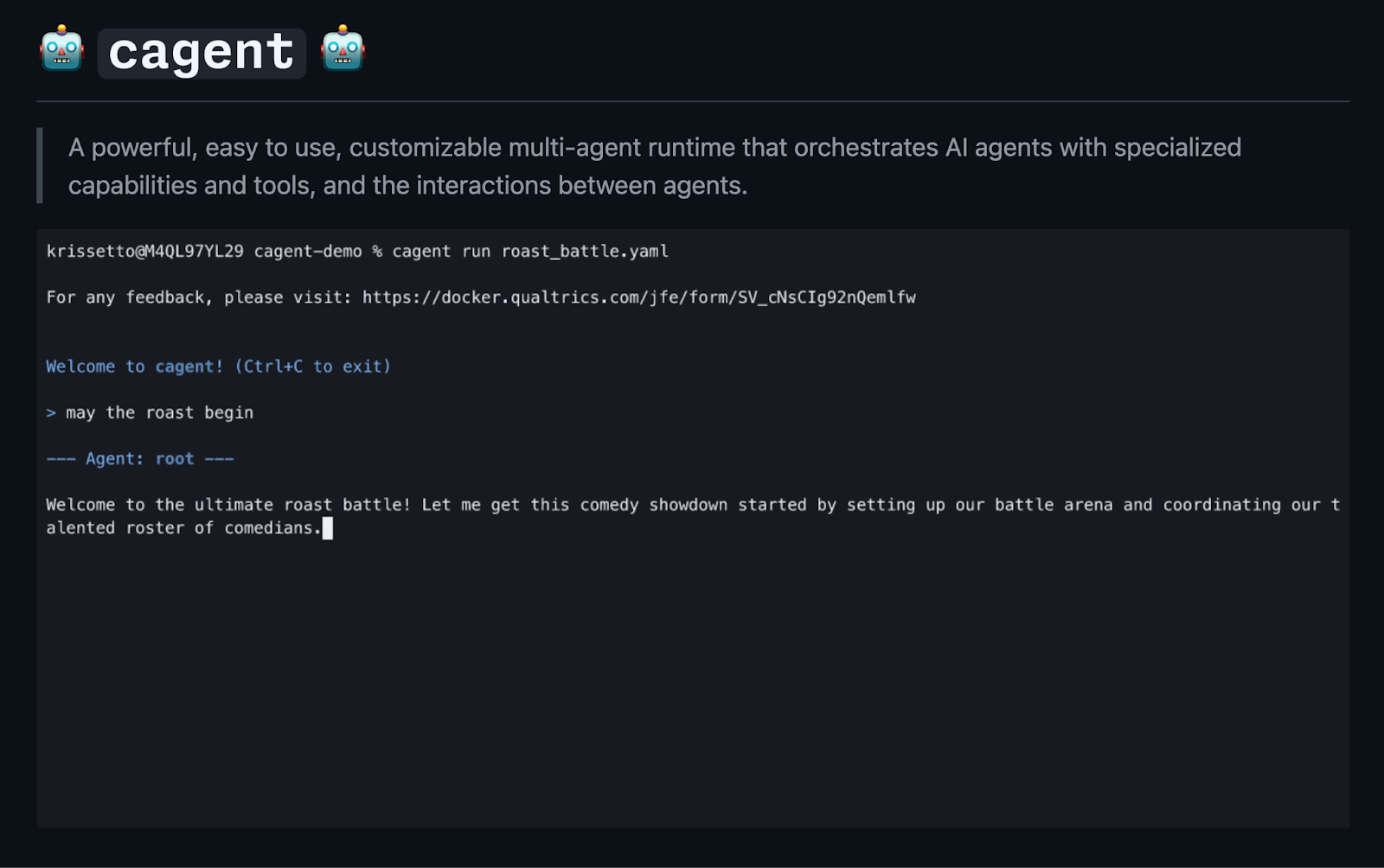
Figure 1: cagent is a powerful, easy to use, customizable multi-agent runtime that orchestrates AI agents with specialized capabilities and tools, and the interactions between agents.
cagent can use OCI registries to share and pull agents created by the community, so not only can you elegantly solve the agent creation problem, but also the agent distribution problem. Let’s explore what makes cagent special and examine some real-world use cases.
What is cagent?
At its core, cagent is a command-line utility that runs AI agents defined in cagent.yaml files. The philosophy is simple: declare what you want your agent to do, and cagent handles the rest. Several features contribute to its ease of use.
Declarative Simplicity
Defining models, instructions, and agent behavior within a single YAML file provides a declarative and simple approach. This “single artifact” methodology makes agents portable, easy to version, and readily shareable.
Flexible Model Support
cagent offers flexibility by avoiding vendor lock-in; you’re not tied to a specific provider. You can run remote models or even local ones using Docker Model Runner, which is particularly beneficial for maintaining privacy and control.
Practical Use Cases for cagent
Having used cagent for several weeks, I’d like to share two practically useful agents that have streamlined my workflow.
A GitHub Task Tracker
While integrating AI with task tracking solutions isn’t revolutionary, it’s surprisingly useful and demonstrates cagent’s capabilities in a real-world scenario. For developers, GitHub issues provide a convenient to-do list. Although the user experience might not be perfect, it becomes less important as we leverage AI to create and manage those issues.
I have a GitHub repository (github.com/shelajev/todo) with enabled issues, allowing an agent to create, list, and close issues directly.
Conclusion
cagent represents a significant advancement in simplifying AI agent development and distribution. By abstracting away the complexities of coding, dependency management, and deployment, it empowers users to concentrate on defining agent behavior and integrating them into their workflows. The declarative approach, combined with flexible model support, powerful tool integration, and multi-agent capabilities, opens up numerous possibilities for automating tasks, enhancing productivity, and building intelligent systems. As the community continues to grow and contribute, we can expect even more exciting innovations and use cases related to cagent.
Source: Read the original article here.
Discover more tech insights on ByteTrending.
Discover more from ByteTrending
Subscribe to get the latest posts sent to your email.