

Every year, the Berkeley Artificial Intelligence Research (BAIR) Lab graduates some of the most talented and innovative minds in artificial intelligence and machine learning. These BAIR graduates have each expanded the frontiers of AI research and are now ready to embark on new adventures in academia, industry, and beyond. Their expertise is highly sought after by leading organizations.
These exceptional individuals bring with them a wealth of knowledge, fresh ideas, and a drive to continue contributing to the advancement of AI. Furthermore, their work at BAIR, ranging from deep learning, robotics, and natural language processing to computer vision, security, and much more, has contributed significantly to their fields and has had transformative impacts on society.
This website is dedicated to showcasing these accomplished BAIR graduates, making it easier for academic institutions, research organizations, and industry leaders to discover and recruit from the newest generation of AI pioneers. Here, you’ll find detailed profiles, research interests, and contact information for each graduate. We invite you to explore the potential collaborations and opportunities these individuals present as they seek to apply their expertise and insights in new environments.
Join us in celebrating the achievements of BAIR graduates‘ latest PhD cohort. Their journey is just beginning, and the future they will help build is bright!
Exploring the Research Areas of BAIR Graduates
The research conducted by BAIR graduates spans a wide spectrum of AI disciplines. Many focus on foundational aspects like deep learning and reinforcement learning, while others tackle complex problems in robotics and natural language processing.
Deep Learning Innovations
Several recent BAIR graduates have made significant contributions to the field of deep learning. For example, some are developing novel architectures for neural networks that improve efficiency and performance. In addition, others are focusing on explainable AI (XAI), aiming to make these complex models more transparent and understandable. Consequently, this allows researchers and practitioners to trust and debug them effectively. As a result, advancements in deep learning continue to shape numerous industries.
Robotics and Autonomous Systems
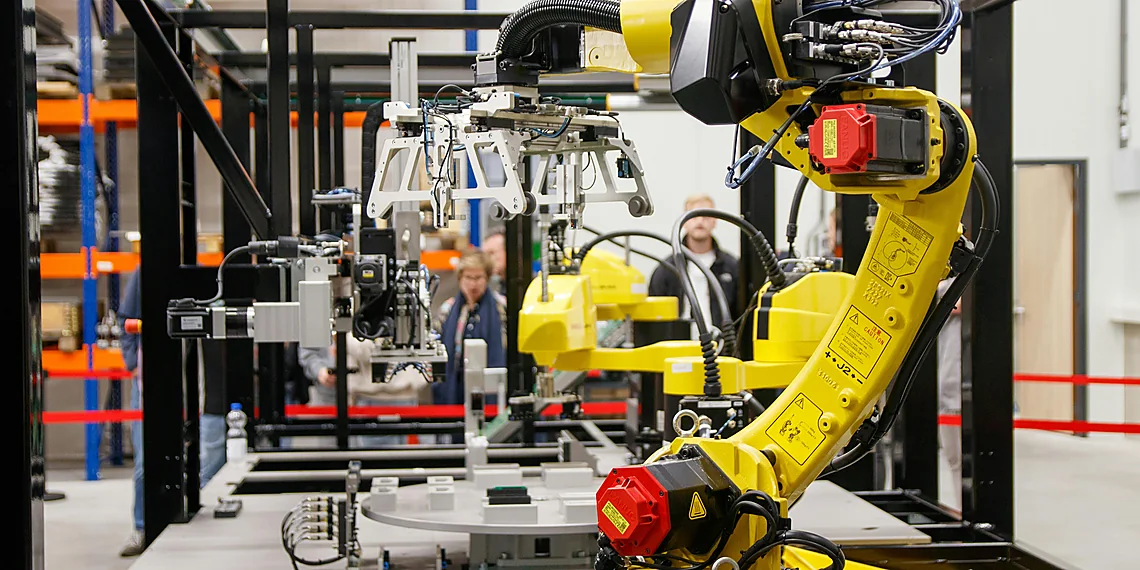
A substantial number of BAIR graduates are pushing the boundaries of robotics and autonomous systems. Their work involves developing algorithms for robot perception, planning, and control. Furthermore, they’re exploring new approaches to reinforcement learning for training robots to perform complex tasks in dynamic environments. Notably, these advancements have implications for applications ranging from warehouse automation to healthcare assistance.
Natural Language Processing Advances
BAIR graduates are also at the forefront of natural language processing (NLP) research. They’re working on improving machine translation, text generation, and sentiment analysis. Moreover, they’re developing new techniques for understanding and responding to human language in a more nuanced way. Therefore, these contributions are essential for creating more effective conversational AI systems.
Career Paths of BAIR Graduates
The skills and knowledge gained at BAIR prepare BAIR graduates for a diverse range of career paths. Many pursue positions in research labs within major tech companies, while others join startups or launch their own ventures. Consequently, they are highly sought after by organizations across various sectors.
Academia and Research
A significant portion of BAIR graduates choose to continue their academic careers as professors or researchers at universities worldwide. They often establish their own research groups and mentor the next generation of AI scientists. Furthermore, this allows them to contribute to fundamental advancements in the field.
Industry Roles
Many BAIR graduates find rewarding careers in industry roles such as machine learning engineers, data scientists, and research scientists. They apply their expertise to solve real-world problems and develop innovative AI products. For example, these professionals are contributing to advancements in self-driving cars, personalized medicine, and financial technology.
Success Stories of Recent BAIR Graduates
Let’s examine a few specific examples of recent BAIR graduates and their accomplishments. Abdus Salam Azad’s work on environment generation for reinforcement learning has garnered significant attention from the robotics community. Meanwhile, Alicia Tsai’s research into deep implicit models is pushing the boundaries of generative modeling.

Abdus Salam Azad
Email: salam_azad@berkeley.edu
Website: https://www.azadsalam.org/
Advisor(s): Ion Stoica
Research Blurb: My research interest lies broadly in the field of Machine Learning and Artificial Intelligence. During my PhD I have focused on Environment Generation/ Curriculum Learning methods for training Autonomous Agents with Reinforcement Learning. Specifically, I work on methods that algorithmically generates diverse training environments (i.e., learning scenarios) for autonomous agents to improve generalization and sample efficiency. Currently, I am working on Large Language Model (LLM) based autonomous agents.
Jobs Interested In: Research Scientist, ML Engineer

Alicia Tsai
Email: aliciatsai@berkeley.edu
Website: https://www.aliciatsai.com/
Advisor(s): Laurent El Ghaoui
Research Blurb: My research delves into the theoretical aspects of deep implicit models, beginning with a unified
Looking Ahead for BAIR Graduates
The future looks incredibly bright for BAIR graduates. As AI continues to transform industries and reshape society, their expertise will be invaluable. Furthermore, they are well-positioned to lead the charge in developing innovative solutions to some of the world’s most pressing challenges. In addition, the continued success of these individuals reflects the strength and dedication of the BAIR program.
We encourage you to connect with these talented individuals and explore the exciting possibilities that lie ahead. Their contributions will undoubtedly shape the future of AI for years to come!
Source: Read the original article here.
Discover more from ByteTrending
Subscribe to get the latest posts sent to your email.