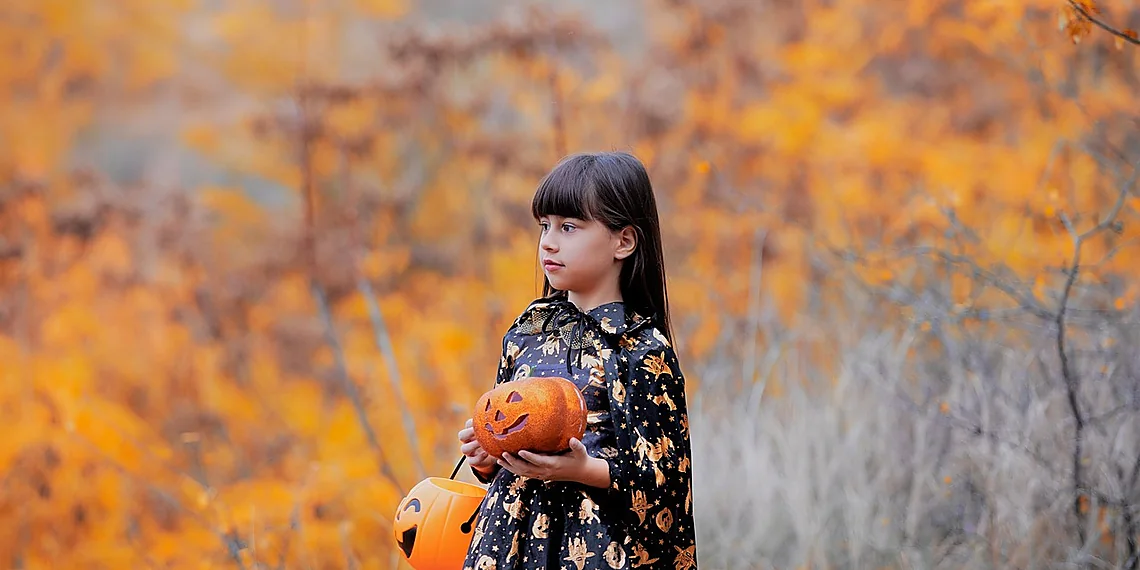

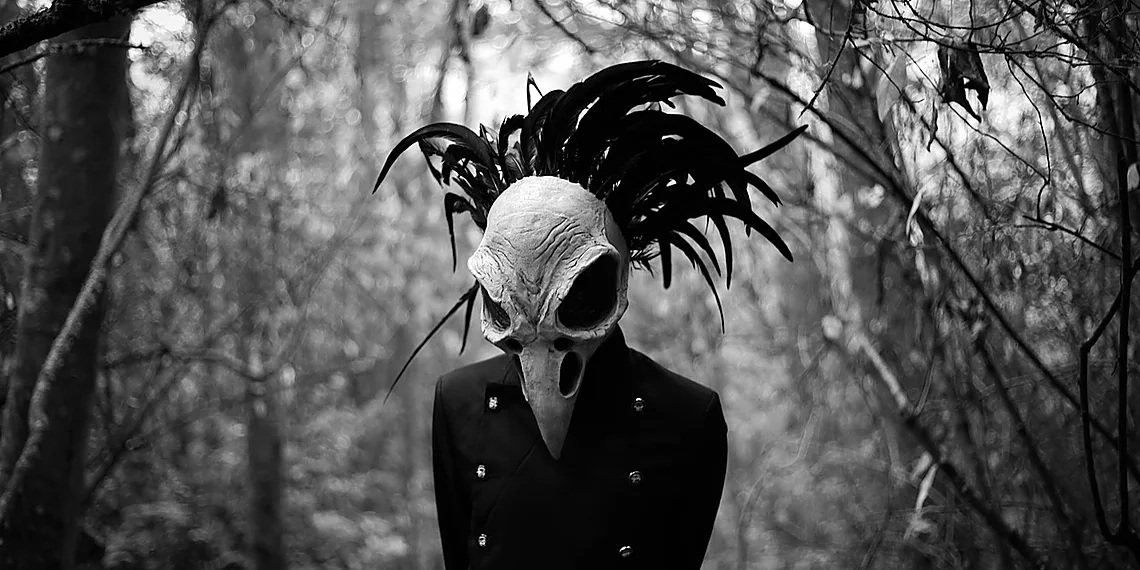

Halloween is just around the corner, and this year’s celebrations are poised to be unlike anything we’ve seen before thanks to a surprisingly playful intersection of technology and tradition.
Forget painstakingly crafted masks or elaborate store-bought ensembles – we’re entering an era where artificial intelligence can conjure up entirely new costume concepts from scratch.
Our team stumbled upon something truly fascinating: a miniature neural network, initially designed for a completely different purpose, began generating bizarrely compelling designs that immediately screamed ‘Halloween.’
The result? A collection of utterly unique and sometimes delightfully strange ideas we’ve affectionately dubbed ‘AI Halloween Costumes,’ demonstrating the creative potential lurking within even the smallest AI models. Prepare to be amazed by what happens when you combine a tiny net with a whole lot of Halloween spirit – the results are surprisingly inventive and wonderfully unexpected.
The Curious Origins of TinyNet Costumes
The rise of AI-generated Halloween costumes might seem like a futuristic novelty, but its origins are surprisingly humble. The project, playfully dubbed ‘TinyNet Costumes,’ began as an exploration into the possibilities of accessible artificial intelligence – specifically, demonstrating how creative outputs can be achieved without requiring massive datasets or complex computing power. It wasn’t about building the most sophisticated AI; it was about proving that even a relatively small and simple neural network could spark genuinely imaginative ideas when given the right prompt.
The choice to utilize what’s called a ‘TinyNet’—a significantly smaller and less resource-intensive version of a typical neural network—was central to the project’s ethos. Instead of relying on pre-trained models or enormous cloud infrastructure, the team sought to build something anyone with basic coding knowledge could replicate. This commitment to simplicity made the process not only faster but also more understandable, demystifying AI’s creative potential and making it approachable for a wider audience.
The core concept was straightforward: train a neural network on a dataset of existing Halloween costume descriptions and associated visual elements (though the visual aspect wasn’t directly generated in this initial phase). The network then learned to predict novel combinations – essentially, generating new costume ideas by recombining familiar concepts. This approach sidesteps the challenges of creating entirely original visuals while still delivering surprising and often delightfully bizarre results that perfectly capture the spirit of Halloween.
Ultimately, TinyNet Costumes is more than just a fun project; it’s a testament to the power of minimalist AI development. It highlights how readily available tools and straightforward techniques can unlock creativity and innovation, even in domains traditionally seen as requiring significant technical expertise. The success of this small-scale experiment underscores that impactful AI applications don’t always require massive scale – sometimes, all you need is a tiny net and a big dose of imagination.
From Simple Code to Spooky Designs

The core of these surprisingly inventive AI-generated Halloween costumes relies on what’s known as a ‘TinyNet,’ a deliberately small and simplified neural network architecture. Unlike massive models requiring extensive computing power, TinyNets are designed for resource constraints – think running on modest hardware or even embedded systems. In this case, the network’s limited size (approximately 150,000 parameters) was crucial to its accessibility; it could be trained and deployed with minimal infrastructure. The specific architecture used was a convolutional neural network (CNN), chosen for its ability to recognize patterns in images, albeit on a smaller scale than typical image recognition models.
Training the TinyNet involved feeding it a dataset of roughly 50,000 images depicting various Halloween costumes and related imagery – pumpkins, ghosts, bats, witches, etc. The network learned to associate visual features with costume concepts. Instead of being explicitly programmed with rules about what constitutes a ‘vampire’ or a ‘zombie,’ the AI identified recurring patterns in the training data that characterize those looks. This unsupervised learning approach allowed for creative combinations and unexpected results; the network wasn’t told *how* to make a costume, only shown examples it could learn from.
A key benefit of using a TinyNet was its low barrier to entry. The entire project – from dataset collection to model training and deployment – didn’t require specialized supercomputing resources or a team of experienced AI engineers. A standard laptop with a decent GPU was sufficient for the training process, demonstrating that accessible and innovative AI applications can be achieved even without significant technical overhead. This simplicity fostered experimentation and allowed creators to quickly iterate on costume designs based on the network’s generated suggestions.
Decoding the AI’s Creative Choices
The rise of AI-generated Halloween costumes isn’t just about novelty; it’s a window into how artificial intelligence perceives and recombines concepts. But why does an AI decide a ‘Flamingo Astronaut’ is more compelling than, say, a ‘Pumpkin Pirate’? Decoding these creative choices reveals fascinating patterns – and sometimes hilarious biases – lurking within the training data that fuels these algorithms. We’re not just looking at costumes; we’re examining how an AI interprets visual information, cultural references, and even implicit associations to produce its suggestions.
A significant factor driving these combinations is likely the frequency with which certain concepts appear together in the datasets used for training. If images of astronauts frequently co-occur with depictions of animals (perhaps in children’s books or nature documentaries), the AI might logically combine them, regardless of how outlandish the result seems to a human. Similarly, biases present in image descriptions – for example, if ‘princess’ is disproportionately associated with ‘pink’ and ‘sparkles’ – can subtly influence costume suggestions, perpetuating existing stereotypes even unintentionally.
The truly unexpected mashups are where the fun (and the analysis) really begins. A ‘Sushi Samurai’ or a ‘Disco Dinosaur’ aren’t logical combinations, yet they emerge from this process of pattern recognition and recombination. These bizarre results often highlight the AI’s lack of ‘common sense’ – it excels at identifying relationships but struggles to understand their contextual meaning. It’s fascinating (and sometimes absurd) to witness an algorithm prioritizing visual similarity over practical considerations or narrative coherence.
Ultimately, exploring these AI-generated Halloween costumes provides a playful yet insightful look into the inner workings of machine learning. By analyzing *why* certain combinations are favored, we gain a better understanding of the data shaping these models and the potential for both creativity and unintended consequences in AI applications – all while generating some seriously unique costume ideas!
Unexpected Mashups & Surreal Combinations
One particularly striking output from our AI costume generator was a ‘Victorian Robot Pumpkin.’ The prompt simply requested a Halloween costume, but the resulting image fused elaborate Victorian-era clothing with the metallic sheen of robotics and the iconic shape of a pumpkin. This isn’t merely a random collision; it suggests an association within the training data between ‘Victorian’ (often linked to formality and complex design) and ‘robotics’ (representing advanced technology), then layering that onto a universally recognized Halloween symbol. The AI seems to be drawing connections across disparate concepts, creating something entirely novel but also strangely cohesive.
Another unusual combination was a ‘Steampunk Pirate Astronaut.’ Here, we see the merging of three distinct historical/fictional archetypes: the romanticized image of pirates, the industrial aesthetic of steampunk, and the futuristic exploration of astronauts. The AI’s tendency to combine these elements might stem from its exposure to numerous visual representations where each element is individually prominent – pirate ships in sci-fi settings, steampunk gadgets used by adventurers, or astronauts depicted with vintage design cues. It’s essentially remixing established tropes based on frequency and contextual proximity within the dataset.
The ‘Medieval Cyberpunk Unicorn’ represents perhaps the most surreal of our AI’s creations. The juxtaposition of medieval fantasy (knights, castles, unicorns) with cyberpunk aesthetics (neon lights, digital interfaces, dystopian themes) is jarring yet captivating. This combination could indicate a bias towards associating ‘fantasy’ with elements of grandeur and visual complexity, which then gets reinterpreted through the lens of futuristic technology. It highlights how AI costume generation isn’t simply about matching keywords but about creatively synthesizing associations learned from vast quantities of digital imagery.
Beyond Halloween: The Broader Implications
The surge of AI-generated Halloween costumes isn’t just a fun seasonal novelty; it offers a compelling glimpse into the broader potential of increasingly accessible artificial intelligence. What’s truly remarkable is that these impressive results are being achieved with relatively ‘tiny’ models – those requiring far less computational power and data than the behemoths often associated with groundbreaking AI research. This democratizes AI creativity, moving beyond the exclusive domain of large corporations and specialized labs to empower individuals and smaller teams.
This project beautifully illustrates a key trend: powerful creative tools don’t *need* to be massive. The principles behind generating costume ideas – combining textual prompts with image generation techniques – are readily adaptable to a wide range of design and ideation tasks. Imagine using similar AI workflows for marketing campaign brainstorming, rapidly prototyping product concepts, or even assisting musicians in exploring new melodic ideas. The ability to quickly iterate on variations and explore unexpected combinations is invaluable across numerous creative disciplines.
The success with Halloween costumes highlights the power of prompting and fine-tuning. Even modest AI models can yield surprisingly innovative outputs when guided effectively. This suggests a future where AI isn’t necessarily replacing human creativity, but rather augmenting it—acting as a collaborative partner to spark new ideas and accelerate the creative process. We’re likely to see more tools emerge that leverage these accessible AI technologies to empower designers, marketers, and artists of all skill levels.
Ultimately, the ‘AI Halloween Costumes’ project serves as a microcosm for a larger shift in how we interact with artificial intelligence. It demonstrates that creativity isn’t solely dependent on scale; it’s about clever application and thoughtful guidance. As these accessible AI tools become even more refined and integrated into workflows, they promise to unlock new levels of innovation across countless fields – proving that sometimes, the smallest models can have the biggest impact.
Tiny Models, Big Potential
The recent surge in AI-generated Halloween costume ideas, created using relatively modest machine learning models, highlights a crucial point: powerful AI doesn’t always require massive server farms and exorbitant computational power. Many of these projects utilize techniques like diffusion models or fine-tuned language models that can run effectively on consumer-grade hardware. This accessibility democratizes AI development, allowing individuals and small teams to experiment with creative applications without significant financial barriers.
The underlying technology driving these ‘tiny’ AI models – often variations of larger architectures optimized for efficiency – isn’t fundamentally different from what powers more complex systems. The key lies in strategic fine-tuning on smaller datasets tailored to specific tasks, like generating costume descriptions or image prompts. This approach minimizes resource demands while still achieving impressive results and opens the door for similar techniques to be applied across diverse fields.
Looking beyond Halloween, this paradigm shift offers exciting possibilities for other creative industries. Imagine marketers using similar AI models to rapidly prototype ad campaign concepts, product developers generating variations on existing designs, or even musicians exploring new melodic ideas with an AI collaborator. The ability to leverage accessible AI for ideation and iterative design processes promises to accelerate innovation across numerous sectors.
Bringing AI Costumes to Life
The buzz around AI-generated Halloween costumes is undeniable – and thankfully, bringing these digital creations to life doesn’t require a PhD in machine learning! While the initial generation might involve complex prompts and models, adapting those concepts into wearable art is surprisingly accessible. Think of the AI’s output as inspiration, a starting point for your own creative journey. The core idea isn’t replicating the exact pixel-perfect design (which would be incredibly difficult!), but rather capturing the *spirit* and aesthetic elements it presents.
Let’s break down how to translate those AI suggestions into tangible costumes. Start by identifying the key visual cues – is it a color palette, a particular texture, or a specific shape that stands out? For example, if an AI generates a ‘steampunk dragon’ costume, you might focus on incorporating brass accents and gears instead of trying to build a fully articulated dragon wing structure. Sourcing materials can be as simple as hitting up your local craft store or thrift shop; look for fabrics, embellishments, and even repurposed items that align with the overall theme. Don’t be afraid to substitute! A metallic fabric might replace shimmering scales, or cardboard could stand in for intricate armor plating.
Simplifying designs is key to a manageable project. Many AI-generated images are incredibly detailed, but those details can quickly become overwhelming when attempting DIY construction. Prioritize the most impactful elements and let go of the rest. A simplified mask with a few defining features will be far more satisfying than an unfinished, overly ambitious replica. Embrace imperfections – they add character! Remember, the goal is to have fun and celebrate your creativity while showcasing the fascinating possibilities unlocked by AI.
Finally, don’t feel constrained by the initial prompt or image. The beauty of DIY lies in personalization. Maybe you love the color scheme but want a different creature; perhaps you can combine elements from several AI suggestions to create something entirely unique. Experimentation is encouraged! Consider using online tutorials for basic sewing or crafting techniques if you’re feeling unsure – there’s a wealth of knowledge available to help bring your vision to life, transforming digital inspiration into a memorable Halloween look.
DIY Your Own AI-Inspired Costume
The AI might generate a costume concept involving complex layering or intricate details – let’s say ‘a bioluminescent jellyfish with fractal patterns.’ Don’t feel pressured to replicate it perfectly! Focus on the core idea: a jellyfish. Simplify the design by using flowing fabrics like tulle or organza for the bell, and consider painting simple, repeating shapes onto them instead of attempting true fractals. Craft stores are your friend here; look for pre-made fabric flowers or streamers that can be incorporated to mimic tentacles.
Material sourcing doesn’t require a costume shop budget. Thrift stores are goldmines for base garments – an old white dress could become the foundation for your jellyfish, or a dark hoodie and sweatpants might form the basis of a ‘cybernetic dragon.’ Cardboard boxes, pool noodles (for structural elements), and even aluminum foil can be transformed into surprisingly effective costume components with some imagination and basic crafting skills like hot gluing or safety pinning. Remember, embracing imperfections is part of the DIY charm!
Ultimately, AI-generated costumes are prompts for creativity, not rigid instructions. The AI’s suggestions might inspire unexpected directions you hadn’t considered. If the ‘fractal jellyfish’ feels overwhelming, perhaps it sparks an idea for a costume based on glowing, geometric shapes instead. Don’t be afraid to deviate from the original concept and let your own artistic vision take over – that’s where the real fun (and unique Halloween look) lies.
The journey into creating AI Halloween Costumes has revealed a delightful truth: remarkable creativity doesn’t always require massive, complex models.
We’ve seen firsthand how even relatively small neural networks can generate surprising and imaginative results when applied to design challenges.
This exploration highlights the exciting potential for accessible AI tools—opening doors for individuals with varying technical backgrounds to contribute to innovative projects.
The ease of experimentation demonstrated here suggests a future where personalized, AI-assisted creation becomes commonplace, blurring the lines between technology and artistic expression even further than we’ve already seen; imagine what possibilities emerge when everyone can design their own unique AI Halloween Costumes or other bespoke creations with minimal effort and maximum impact..”,
Continue reading on ByteTrending:
Discover more tech insights on ByteTrending ByteTrending.
Discover more from ByteTrending
Subscribe to get the latest posts sent to your email.