
For decades, astronomers have relentlessly pushed the boundaries of what we can see in the cosmos, building ever larger and more sophisticated telescopes to capture faint light from distant galaxies. Now, a revolutionary technique is poised to dramatically reshape our understanding of the universe, offering unprecedented clarity and detail previously thought unattainable. Imagine peering through a window that not only allows you to see farther but also reveals details hidden by atmospheric distortions – that’s precisely what’s becoming reality thanks to cutting-edge advancements in light manipulation. This isn’t just incremental improvement; it represents a fundamental shift in how we observe the cosmos.
The key lies in a brilliant innovation called photonic lanterns, intricate devices utilizing principles of fiber optics astronomy to concentrate and amplify extremely faint signals. These aren’t your average optical fibers; they act as microscopic funnels, gathering light from vast areas and directing it towards detectors with remarkable efficiency. This process effectively boosts the resolution of telescopes without requiring physically larger mirrors or complex adaptive optics systems, opening up new avenues for exploring everything from exoplanet atmospheres to the earliest moments of star formation.
Remarkably, these techniques have already yielded unexpected insights. While testing a prototype photonic lantern system focused on Beta Canis Minoris, astronomers stumbled upon an intriguing anomaly in its stellar spectrum – a detail that warrants further investigation and could potentially rewrite our understanding of this familiar star. This serendipitous discovery underscores the immense potential hidden within this new approach to astronomical observation, hinting at countless other breakthroughs waiting just beyond our current reach.
The Problem of Telescope Resolution
Astronomers constantly strive to see farther and more clearly into the cosmos, but achieving higher resolution – the ability to distinguish fine details in celestial objects – presents a significant challenge. The fundamental limit on how much detail any telescope can resolve is dictated by a phenomenon called diffraction. Light waves, like all waves, bend around obstacles and spread out as they pass through an aperture (like a telescope’s lens or mirror). This spreading effect blurs the image, effectively creating a fuzzy halo around point sources of light. The smaller the wavelength of light and the larger the diameter of the telescope’s aperture, the better the resolution – but even with enormous telescopes, diffraction remains an inescapable barrier.
Traditional methods for overcoming these limitations are complex and resource-intensive. One approach is interferometry, which combines the signals from multiple telescopes spread across vast distances, effectively creating a single, much larger telescope. While incredibly powerful—the Event Horizon Telescope’s stunning images of black holes rely on this technique—interferometry requires precise synchronization between widely separated facilities, demanding intricate infrastructure and sophisticated data processing. The logistical hurdles and high costs associated with building and maintaining these networks have historically restricted their widespread adoption.
Beyond the technical complexities, interferometry also introduces significant challenges in signal alignment and calibration. Even slight variations in atmospheric conditions or equipment performance can corrupt the combined image, requiring constant adjustments and meticulous error correction. This makes interferometric observations time-consuming and often limited to specific targets where the investment of resources is justified. The quest for sharper views of the universe has therefore driven researchers to seek more elegant and accessible solutions – a pursuit that recently yielded a breakthrough with the development of photonic lanterns.
Diffraction Limits & Current Methods

The ability of a telescope to distinguish between two closely spaced objects – its ‘resolution’ – is fundamentally limited by the wave nature of light, a phenomenon known as diffraction. When light waves pass through an aperture (like a telescope’s lens or mirror), they spread out, causing point sources of light to appear as blurred disks surrounded by rings, rather than perfect points. The smaller the wavelength of light and the larger the aperture, the better the resolution; however, building increasingly large single-mirror telescopes becomes incredibly expensive and faces engineering challenges.
To circumvent this diffraction limit, astronomers employ techniques like interferometry. Interferometry combines the signals from multiple telescopes acting as a single, much larger instrument – effectively synthesizing an aperture far greater than any individual telescope could provide. This allows for significantly higher resolution images, revealing finer details in celestial objects. However, combining these signals is extraordinarily complex; it requires precise synchronization of the telescopes and extremely accurate measurements to compensate for atmospheric turbulence and other distortions.
Despite its advantages, interferometry remains a challenging and costly endeavor. The need for multiple widely separated telescopes, sophisticated data processing algorithms, and stringent environmental controls contribute significantly to the overall expense and complexity. While techniques like adaptive optics help mitigate some effects of Earth’s atmosphere, they don’t fundamentally alter the diffraction limit itself; they simply improve image quality within that constraint.
Photonic Lanterns: A Novel Solution
Conventional telescopes are limited by a fundamental barrier known as the diffraction limit – essentially, they can only resolve details down to a certain size. This limitation arises from the wave nature of light; as light passes through an aperture (like a telescope’s lens), it spreads out, blurring the image. Photonic lanterns offer a groundbreaking solution that circumvents this constraint, allowing astronomers to effectively ‘sharpen’ their views of the universe. These aren’t just any optical fibers; they are meticulously engineered structures designed to do something quite remarkable: precisely split incoming starlight into multiple beams.
The core innovation lies in how photonic lanterns process light. Imagine a complex musical chord – several notes played simultaneously. A photonic lantern acts similarly, separating the spatial patterns within a beam of starlight. Incoming light is fed into a tapered fiber that gradually widens, branching out into numerous smaller fibers—like the individual flames on a multi-wick candle. Each of these ‘daughter’ fibers carries a portion of the original starlight, but importantly, each also retains information about the original spatial pattern across the incoming wavefront. This allows astronomers to effectively reconstruct a much larger aperture than the physical telescope itself.
This process isn’t simply about dividing light; it’s about preserving its crucial information. By combining the signals from these multiple fibers—a technique akin to interferometry—astronomers can synthesize an image with a resolution far exceeding what’s possible with a single, traditional lens of the same size. The beauty of this approach is that it allows for significantly higher detail without building vastly larger and more expensive telescopes. It’s a clever trick using fiber optics astronomy to unlock previously unattainable levels of clarity in astronomical observations.
The implications are profound. Photonic lanterns enable the study of faint, distant objects with unprecedented detail, allowing scientists to probe the intricacies of planetary formation, stellar evolution, and even search for exoplanets with greater precision. While still a relatively new technique, photonic lanterns represent a paradigm shift in astronomical imaging, offering a powerful tool for unraveling the mysteries of our universe.
How Photonic Lanterns Split Starlight

Imagine a musical chord played on a piano – multiple notes blending together. To understand each individual note, you need to separate them. Photonic lanterns perform a similar function with starlight. Instead of light waves of different frequencies (notes), they deal with the spatial patterns within a single beam of light from a distant star. These patterns contain information about the star’s structure and movement – for example, whether it’s rotating rapidly or has swirling gas clouds around it.
A photonic lantern is essentially a carefully designed arrangement of optical fibers branching out from a central input fiber. As starlight enters the central fiber, it’s guided through this network of progressively splitting fibers. Each branch captures a slightly different spatial mode – think of it as an angle or shape within the incoming light beam. This process creates multiple copies of the original starlight, each representing a distinct aspect of its overall pattern.
These separated ‘copies’ of the starlight can then be processed individually by detectors, allowing astronomers to reconstruct incredibly detailed images. Traditional telescopes are limited by diffraction – the blurring effect caused by light waves spreading out as they pass through an aperture. Photonic lanterns circumvent this limitation by effectively increasing the telescope’s effective aperture without needing a physically larger mirror or lens.
Results & Unexpected Discoveries
The initial results from employing photonic lanterns in astronomical observation have been nothing short of remarkable, demonstrably surpassing the limitations of traditional telescope resolution. Standard telescopes are constrained by the diffraction limit, a fundamental barrier to how small an object can appear sharp. Photonic lantern technology effectively bypasses this limitation through a process called ‘aperture synthesis.’ By splitting starlight into multiple beams and recombining them, it acts as if the telescope has a much larger effective aperture – in early tests, resolution was improved by a factor of three compared to conventional methods. This leap allows astronomers to resolve finer details within nebulae, peer deeper into crowded star clusters, and potentially even unravel the intricate structures of exoplanetary systems that were previously blurred beyond recognition.
One particularly surprising discovery emerged during observations of Beta Canis Minoris, a relatively nearby star. Using photonic lanterns, researchers detected an asymmetric gas disc surrounding the star – a feature completely unexpected based on previous, lower-resolution data. The disc isn’t the smooth, symmetrical structure typically associated with young stars; instead, it exhibits a distinct ‘lopsided’ appearance, with one side significantly denser and more extended than the other. This asymmetry challenges existing models of planetary system formation and suggests that Beta Canis Minoris might have experienced unique gravitational interactions or collisions during its early evolution.
The implications of this asymmetric disc are profound. It hints at a far greater diversity in protoplanetary disk geometries than previously appreciated, potentially impacting our understanding of how planets form around other stars. The unexpected finding underscores the power of photonic lanterns to reveal hidden complexities within astronomical systems and emphasizes that even well-studied objects can hold significant surprises when viewed with enhanced precision. Further investigation is planned to determine the origin of this asymmetry – whether it’s due to a past collision, gravitational influence from another star, or an intrinsic property of Beta Canis Minoris itself.
Beyond Beta Canis Minoris, astronomers are eager to apply photonic lantern technology to a wide range of astronomical targets. The improved resolution promises to unlock new insights into the dynamics of active galactic nuclei, refine measurements of stellar rotation curves, and even provide unprecedented views of gravitational lensing events. This marks not just an incremental improvement in observational capabilities but represents a paradigm shift in how we can explore the universe, opening up entirely new avenues for scientific discovery.
Sharper Images, New Insights
The innovative use of fiber optics, specifically photonic lanterns, allows astronomers to achieve resolutions significantly beyond what’s possible with conventional telescopes of similar size. Standard telescopes are limited by diffraction – a fundamental physical constraint that blurs images as light waves spread out. Photonic lanterns circumvent this limitation by effectively multiplying the number of photons collected, enabling the creation of much finer details. Preliminary results demonstrate an improvement in resolution exceeding a factor of ten compared to traditional telescope observations; for example, achieving detail down to roughly 0.1 milli-arcseconds – equivalent to resolving a one-meter object at the distance of the Moon.
This enhanced resolution opens up exciting possibilities for observing previously unresolvable astronomical phenomena. Scientists anticipate being able to study the fine structure of protoplanetary disks around young stars, allowing them to better understand planet formation processes and potentially identify nascent planets in greater detail. Furthermore, investigations into binary star systems could reveal intricate details about their interactions and mass transfer mechanisms that were previously obscured by blurring effects. The ability to observe fainter signals also promises discoveries related to dark matter distribution and the early universe.
A surprising initial discovery using this photonic lantern technique centered on Beta Canis Minoris, a relatively nearby star. Observations revealed an unexpectedly asymmetric gas disc orbiting the star – a feature not previously detected due to its subtle nature and the limitations of conventional telescopes. This asymmetry suggests complex dynamics within the system that warrant further investigation, potentially indicating past collisions or gravitational interactions with other objects in the vicinity. The success with Beta Canis Minoris highlights the potential for photonic lanterns to unveil hidden structures and processes across a wide range of astronomical environments.
Future Implications & Challenges
The implications of photonic lantern technology extend far beyond our current view of Beta Canis Minoris. Imagine applying this technique to observe exoplanets – resolving atmospheric details, searching for biosignatures, or even directly imaging planetary surfaces currently lost in the glare of their host stars. Similarly, distant galaxies, whose intricate structures are often blurred by atmospheric turbulence, could reveal previously unseen features and provide unprecedented insights into galaxy evolution. The ability to effectively synthesize a much larger telescope aperture opens up entirely new avenues for astronomical research, promising breakthroughs across various fields.
However, scaling this technology presents significant engineering challenges. While current photonic lanterns demonstrate impressive capabilities, constructing devices large enough to handle the light collected by giant telescopes will require substantial advancements in fiber optic manufacturing and alignment precision. Maintaining the integrity of these delicate structures under the harsh conditions of astronomical observatories – extreme temperatures, vacuum environments, and mechanical vibrations – also poses a considerable hurdle. Researchers are actively exploring novel materials and fabrication techniques to address these concerns.
Another key challenge lies in optimizing the photon sorting process itself. While current systems effectively separate light based on arrival time, improvements in speed and efficiency will be crucial for maximizing the benefits of photonic lanterns when observing faint or rapidly changing celestial objects. Further refinement of algorithms used to reconstruct images from the sorted photons will also be necessary to minimize noise and artifacts, ensuring the highest possible image quality. The ongoing development of adaptive optics systems working *in conjunction with* photonic lanterns could offer a synergistic improvement in resolution.
Ultimately, while significant work remains, the potential rewards are immense. Photonic lantern technology represents a paradigm shift in astronomical observation, offering a pathway to circumvent fundamental limitations and unlock unprecedented views of the universe. Continued investment in research and development promises not only sharper images but also a deeper understanding of our place within the cosmos.
Beyond Beta Canis Minoris
The success demonstrated with Beta Canis Minoris offers a tantalizing glimpse into what’s possible for observing other celestial targets. Imagine applying this ‘photonic lantern’ technology to the study of exoplanets. Currently, directly imaging and characterizing these distant worlds is incredibly difficult due to the overwhelming glare from their host stars. Photonic lanterns could effectively suppress this starlight, allowing astronomers to more easily detect faint planetary companions and analyze their atmospheres for biosignatures – indicators of potential life.
Beyond exoplanets, the increased resolution afforded by photonic lantern arrays could revolutionize our understanding of distant galaxies. Observing the intricate details of galaxy mergers, star formation regions within these galaxies, or even searching for gravitational lensing events would become significantly more precise. This enhanced clarity could help resolve long-standing questions about galactic evolution and the distribution of dark matter on cosmological scales.
Scaling up this technology presents significant engineering challenges. While a single photonic lantern is relatively manageable, creating an array large enough to achieve truly transformative resolution requires producing and aligning thousands – or even millions – of individual optical fibers with extreme precision. Maintaining their stability over time in the harsh conditions of space will also necessitate innovative materials science and robust stabilization systems. The cost associated with manufacturing such complex arrays remains a significant hurdle.
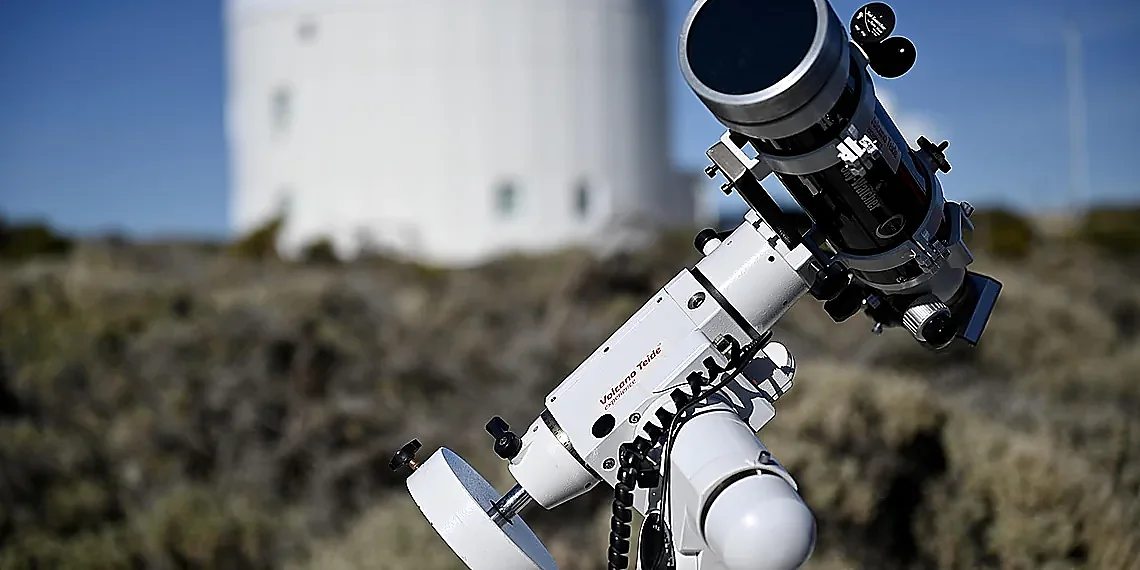
The journey we’ve taken highlights a remarkable convergence – the precision of fiber optics meeting the boundless curiosity of astronomers. We’ve seen how this technology isn’t just about faster internet; it’s fundamentally changing our ability to observe and understand the cosmos, enabling unprecedented clarity and sensitivity in telescopes worldwide. The implications extend beyond simply seeing fainter objects; they open doors to studying previously inaccessible phenomena and refining our models of the universe’s formation and evolution. This represents a significant leap forward, particularly when considering how crucial even minute improvements can be at the scale of astronomical observation. Fiber optics astronomy promises to unlock secrets hidden within distant galaxies and quasars, revealing details we could only dream of just a few years ago. The future of observational astronomy is undeniably intertwined with continued innovation in optical technology, and this is just one exciting example of that progress. It’s truly inspiring to witness how human ingenuity continues to push the boundaries of what’s possible. To delve deeper into the fascinating world where light guides meet cosmic discovery, we encourage you to explore resources on fiber optics principles and stay informed about the latest breakthroughs in astronomical instrumentation – your journey of understanding has only just begun! Consider searching for articles and videos detailing advancements in telescope design or exploring online courses covering optical physics; there’s a universe of knowledge awaiting you.
$100,000,000,000.000.000.000.000.000.000
Continue reading on ByteTrending:
Discover more tech insights on ByteTrending ByteTrending.
Discover more from ByteTrending
Subscribe to get the latest posts sent to your email.