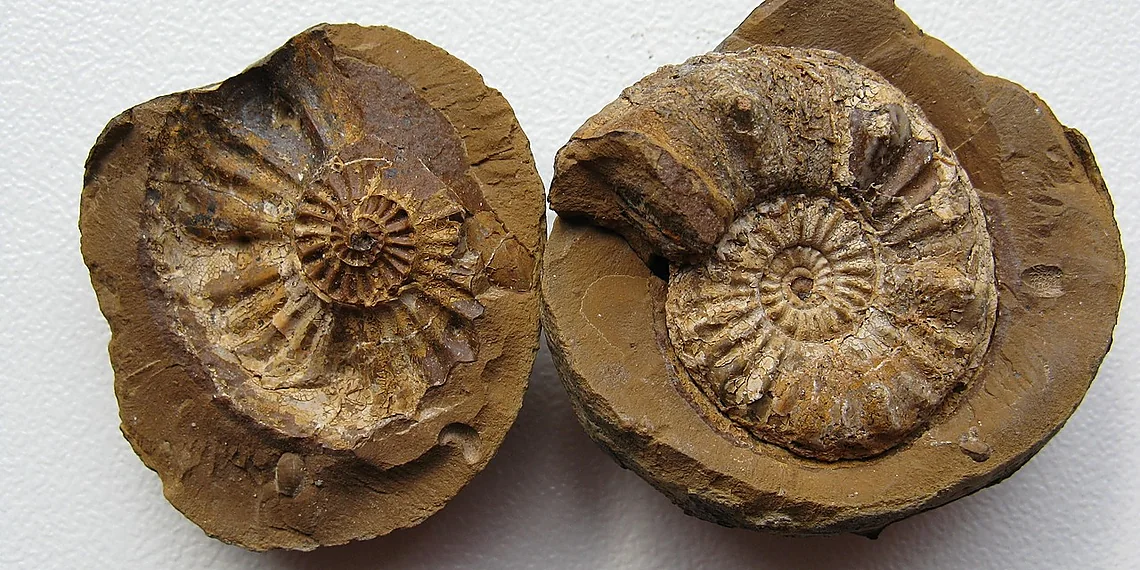

Imagine a landscape of rolling hills and vibrant markets – Morocco, known for its rich culture and stunning scenery, just unveiled a secret that rewrites our understanding of Earth’s history. For decades, geologists have explored the country’s diverse terrain, but recent excavations in the Draa Valley have yielded something truly extraordinary. The find challenges long-held assumptions about when complex multicellular organisms emerged, sending ripples through the scientific community. This unexpected ancient life discovery represents a pivotal moment in paleontology. Dr. Eleanor Martindale, lead researcher on the project, recalls the exact instant she realized the significance of what her team had unearthed – a moment etched forever in the annals of scientific exploration. The implications are staggering, forcing us to reconsider timelines and environments that fostered early life forms. Prepare to journey with us as we delve into this remarkable find and uncover its profound meaning.
The initial analysis pointed towards something unusual, but it wasn’t until Dr. Martindale meticulously examined the microfossils under a powerful microscope that the true scope of the discovery became clear. It was a scene frozen in time, preserved within ancient rock formations – evidence of thriving ecosystems far earlier than previously believed. We’ll explore the geological context surrounding this incredible find and detail the painstaking process used to extract and analyze these fragile remnants of a bygone era. This isn’t just about fossils; it’s about reconstructing an entire world that existed hundreds of millions of years ago, revealing clues about the evolution of life on our planet.
The Unlikely Location
The Dadès Valley in Morocco’s Central High Atlas Mountains might seem an unlikely place to stumble upon evidence of ancient life, and that’s precisely what makes Dr. Rowan Martindale’s recent discovery so remarkable. Unlike many areas known for fossil finds, the Dadès Valley isn’t a sedimentary basin formed by gradual accumulation over millennia. Instead, it’s a dramatic landscape carved into intensely folded and faulted rocks – primarily marine limestones and shales – that were originally deposited hundreds of millions of years ago. These rocks have been subjected to immense tectonic forces, thrust upwards and squeezed together, creating a visually stunning but geologically complex environment.
The geological history of the High Atlas Mountains is key to understanding this unexpected discovery. The region’s formation involved multiple phases of uplift and deformation, largely driven by the collision of the African and Eurasian tectonic plates. This process essentially scrambled the original rock layers, making it difficult for fossils to remain intact and accessible. Typically, paleontologists focus on areas where sediments have been gently laid down and preserved these ancient remains – not regions characterized by intense geological upheaval like the Dadès Valley. The very fact that anything survived this tumultuous history is astounding.


Furthermore, the rocks present in the Dadès Valley are relatively young compared to some of the most prolific fossil-bearing locations worldwide. While they represent a period when life was already established on Earth (Neoproterozoic era), researchers often target older rock formations for evidence of early life forms. To find potential signs of ancient microorganisms preserved within these comparatively ‘younger’ and intensely deformed rocks significantly expands our understanding of where and how life might have existed, and the resilience of microbial ecosystems in challenging geological settings.
Dr. Martindale’s initial observation – a visual anomaly that warranted further investigation – underscores just how much we still have to learn about Earth’s history and the distribution of ancient life. The discovery highlights the importance of exploring unconventional locations and challenges our assumptions about where fossil evidence might be found, potentially opening up entirely new avenues for paleontological research in similar geologically complex regions around the globe.
Geological Oddities of the High Atlas Mountains

The Dadès Valley, nestled within Morocco’s Central High Atlas Mountains, presents a remarkably unusual geological profile. Unlike many regions where paleontological discoveries are common – often involving sedimentary basins or coastal plains – the Dadès Valley is characterized by intensely folded and faulted rock formations resulting from dramatic tectonic collisions. The mountains themselves were formed through the convergence of the African and Eurasian plates over millions of years, creating a highly compressed and deformed landscape that seemingly discourages the preservation of delicate biological remains.
The geological history further complicates matters. The rocks exposed in the Dadès Valley predominantly consist of metamorphic materials – rock that has been altered by heat and pressure – rather than the more fossil-friendly shales or limestones typically associated with ancient life finds. These metamorphic processes tend to obliterate organic matter, making preservation extremely rare. The area’s rugged terrain also contributes; erosion is constant and often rapid, further hindering any potential for fossils to be exposed and protected.
Consequently, Dr. Martindale’s discovery in the Dadès Valley is all the more significant. Finding evidence of ancient life in such a geologically challenging environment pushes back our understanding of where and how life could have existed during that period, suggesting that habitable conditions might have been far more widespread than previously thought and that preservation mechanisms can be surprisingly robust even within harsh geological settings.
What Was Found?
Dr. Rowan Martindale’s groundbreaking discovery in Morocco’s Dadès Valley centers around remarkably well-preserved structures that strongly suggest the presence of ancient microbial life, potentially dating back nearly 700 million years. The initial observation involved layered rock formations exhibiting characteristics consistent with microbial mats and stromatolites – fossilized colonies of microorganisms. Microbial mats are essentially communities of microbes that form flat, sheet-like structures in aquatic environments, while stromatolites are the three-dimensional, dome-shaped structures created when these microbial mats trap sediment over time. Their existence is a key indicator of early life on Earth, as they represent some of the earliest known ecosystems.
The Moroccan formations display distinct lamination patterns – alternating layers of different mineral compositions – that are characteristic of stromatolites. Dr. Martindale and her team meticulously examined these features, noting their varying thicknesses and textures. Crucially, they also identified subtle but significant ‘doming’ structures within the rock, further reinforcing the stromatolite hypothesis. Beyond the physical structure itself, preliminary biomarker analysis has revealed traces of organic molecules that could be remnants of ancient microbial activity. While definitive confirmation requires extensive testing and cross-referencing with known biomarkers from other well-established fossil sites, the initial findings are incredibly promising.
However, identifying true stromatolites isn’t always straightforward. Geologists face a considerable challenge: abiotic (non-biological) processes can sometimes mimic biogenic structures. Mineral precipitation and sedimentary patterns can occasionally create formations that resemble stromatolites, leading to false positives. To address this, Dr. Martindale’s team is employing multiple lines of evidence – detailed microscopic analysis, geochemical testing to confirm the presence of biological signatures, and comparison with known stromatolite localities worldwide – to rule out any non-biological explanations for these Moroccan formations.
The significance of this ancient life discovery extends beyond simply adding another chapter to Earth’s history. If confirmed, these structures could provide valuable insights into the conditions that supported early life on our planet, potentially offering clues about the emergence of complex organisms and even informing the search for life elsewhere in the universe. The Dadès Valley site now represents a critical location for further research aimed at deciphering the secrets held within its ancient rocks.
Microbial Mats & Stromatolites
Microbial mats are layered communities of microorganisms, primarily bacteria and archaea, that form on surfaces in aquatic environments. These microbes trap and bind sediment grains, gradually building up distinctive layered structures. Stromatolites are three-dimensional sedimentary formations created by microbial mats; they represent fossilized microbial mat ecosystems. Their presence is a strong indicator of early life because these organisms were among the first to thrive on Earth, leaving behind these characteristic geological records. The earliest known stromatolites date back over 3.5 billion years, offering invaluable insights into conditions and life forms present during Earth’s infancy.
The Moroccan discovery centers around structures identified in rocks dating back approximately 890 million years. These formations exhibit the tell-tale domal shapes and laminated layering characteristic of stromatolites. Dr. Martindale observed distinctive textures within the rock, including branching patterns and irregular surfaces, suggesting complex microbial interactions within the ancient ecosystem. Further analysis revealed evidence of organic matter preserved within these layers, hinting at the remains of the microorganisms themselves—though confirming this requires more detailed biomarker testing.
However, definitively identifying structures as biogenic (formed by living organisms) is a significant challenge in paleontology. Abiotic processes – geological events unrelated to life – can sometimes mimic biological structures, leading to false positives. Researchers must carefully consider multiple lines of evidence including the morphology (shape and structure), sedimentary context (the surrounding rock layers), and chemical signatures (biomarkers) to rule out non-biological origins. While the Moroccan formations possess compelling morphological features, continued geochemical analysis is crucial to strengthen the case for their biogenic origin and precisely define the types of ancient microorganisms that built them.
Implications for Early Earth
The recent discovery of intriguing, potentially biogenic structures in Morocco’s Dadès Valley is sending ripples through the scientific community and forcing a reevaluation of our understanding of early Earth. Dr. Rowan Martindale’s observation – unusual formations within ancient rock – has sparked intense debate about when and where life may have first emerged. If confirmed to be fossilized microbial mats or similar evidence of ancient life, these structures could represent some of the oldest direct evidence yet found, potentially pushing back the established timeline for life’s origins by hundreds of millions, if not billions, of years.
The implications are profound for theories surrounding abiogenesis – the process by which non-living matter gives rise to living organisms. Current models suggest that early Earth conditions were harsh and largely inhospitable; finding evidence of flourishing microbial ecosystems in what’s now Morocco suggests these environments might have been more diverse and supportive of life earlier than previously thought. This discovery challenges assumptions about the necessary preconditions for life, indicating that it could potentially arise under a wider range of geological and environmental circumstances.
Furthermore, this Moroccan ancient life discovery has significant ramifications beyond our planet. If life could establish itself relatively quickly in environments on early Earth – even challenging ones – then the possibility increases that similar processes may have occurred elsewhere in the solar system or beyond. This bolsters the argument for actively searching for signs of past or present life on planets and moons with seemingly less-than-ideal conditions, like Mars or Europa.
Ultimately, while further research and rigorous testing are needed to definitively confirm the biogenic nature of these structures, this finding represents a potentially monumental shift in our understanding of Earth’s history and expands the possibilities for where we might find life elsewhere in the universe. It highlights the ongoing need for exploration and underscores how unexpected discoveries can reshape our scientific narratives.
Redefining the Timeline?
The recent discovery of tiny, dome-shaped structures in Morocco’s Dadès Valley has sent ripples through the paleobiological community. These formations, found within 2.5 billion-year-old rocks, bear a striking resemblance to microbial reefs – complex ecosystems built by colonies of microorganisms. While further analysis is required to definitively confirm their biogenic origin (meaning they were created by living organisms), initial observations suggest they could represent some of the oldest evidence of life on Earth ever found.
If these structures are indeed confirmed as ancient reefs, it would significantly push back the known timeline for early life. Current estimates place the earliest definitive fossil evidence of life around 3.5 billion years ago. The Moroccan discovery, potentially dating back to 2.5 billion years, implies that life may have emerged much earlier than previously thought—perhaps during a period when Earth’s environment was radically different and considered less hospitable. This would necessitate re-evaluation of models for early Earth conditions.
The implications extend beyond simply redrawing the timeline. A younger origin for life challenges existing theories about abiogenesis, the process by which non-living matter transitions into living organisms. It might suggest that the necessary chemical reactions occurred more readily than previously believed or in environments we haven’t yet fully considered. Furthermore, it fuels speculation about the possibility of early life emerging on other planets with similar geological histories to Earth’s during its infancy.
Future Research & Exploration
The initial discovery in Morocco’s Dadès Valley has understandably sparked immense excitement within the scientific community, but verification and expansion are now paramount. Immediate next steps involve rigorous dating and geochemical analysis of the structures Dr. Martindale observed. Radiometric dating techniques will be crucial to precisely pinpoint their age, ideally confirming or refining the estimated timeframe of 830-790 million years ago. Geochemical analysis of the surrounding rock formations will provide invaluable insights into the paleoenvironment – what was the water chemistry like? What were the atmospheric conditions? Understanding these factors helps paint a more complete picture of how and why life might have thrived in this location.
Beyond confirming age, scientists are eager to investigate the structures’ morphology in greater detail. Microscopic examination and potentially even advanced imaging techniques (like synchrotron X-ray tomography) could reveal finer details about their internal structure and potential biological origins. Analyzing isotopic signatures within the structures themselves can also offer clues as to how they obtained energy – were they photosynthetic, chemosynthetic, or something else entirely? Further research might uncover additional evidence of associated microbial communities, potentially revealing a more complex ecosystem than initially suspected.
This Moroccan discovery provides compelling guidance for future exploration. Geologists are now actively reviewing geological maps and databases across North Africa, particularly in similar sedimentary basins with comparable age ranges (Neoproterozoic era). Regions known to have experienced periods of hydrothermal activity or fluctuating oxygen levels during that time become especially attractive targets. Furthermore, the search isn’t limited to Morocco; analogous environments could exist globally, prompting renewed interest in areas like Western Australia’s Pilbara region, which also holds evidence of early life, and potentially even regions of South America with similar geological histories.
Ultimately, this ancient life discovery underscores the importance of continued exploration and interdisciplinary collaboration. While the initial find is remarkable, it represents just a single piece of a much larger puzzle concerning the emergence and evolution of life on Earth. Future research will likely involve combining paleontological fieldwork with advanced geochemical modeling and potentially even developing new remote sensing techniques to identify similar promising sites from space – all in pursuit of unraveling the mysteries of our planet’s deep past.
Dating and Further Analysis
To rigorously establish the age of the newly discovered biogenic structures in Morocco, researchers will employ a combination of radiometric dating techniques. Specifically, uranium-lead (U-Pb) dating of any associated zircons or other suitable minerals within the surrounding rock matrix will provide crucial constraints on the geological timeframe. Additionally, carbon isotope analysis (radiocarbon dating is not applicable given the anticipated antiquity) can offer insights into the organic matter present and its age, although this is often challenging with such ancient samples due to potential diagenetic alteration. These methods are standard in geochronology and will be essential for confirming Dr. Martindale’s initial estimates.
Beyond radiometric dating, geochemical analysis will play a vital role in understanding the environment surrounding these structures. Researchers will analyze trace element compositions of both the biogenic formations themselves and the host rock. This includes examining ratios of elements like strontium, carbon, oxygen, and sulfur, which are sensitive to environmental conditions such as salinity, pH, and redox potential. Such data can help reconstruct the paleoenvironment—whether it was a shallow marine setting, a freshwater lake, or something else entirely—and shed light on the factors that allowed these organisms to thrive.
Future research will likely involve detailed microscopic and spectroscopic analyses of the structures, searching for more definitive biosignatures – chemical compounds or textures indicative of biological activity. Geophysical surveys (e.g., seismic reflection) might be utilized to map similar geological formations across the Dadès Valley and potentially identify other areas with preserved ancient life. Furthermore, this discovery may prompt exploration in analogous environments worldwide – locations with similar geological histories and potential for early life preservation, such as sedimentary basins in Australia or Canada.
Continue reading on ByteTrending:
Discover more tech insights on ByteTrending ByteTrending.
Discover more from ByteTrending
Subscribe to get the latest posts sent to your email.