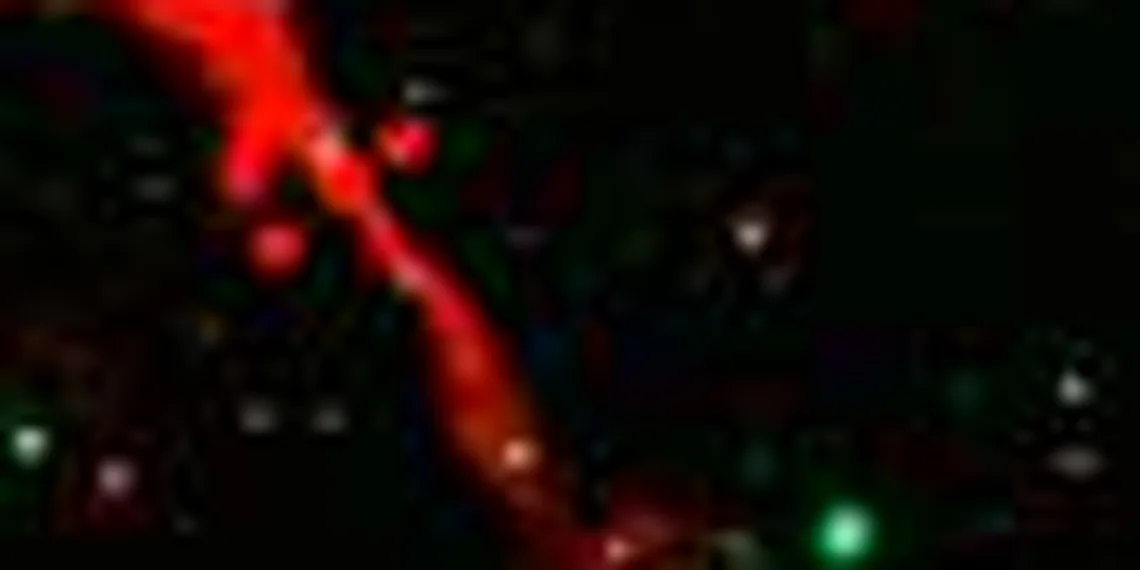



The universe is full of surprises, but few recent discoveries have been as delightfully bizarre as what the James Webb Space Telescope has revealed – a collection of galaxies resembling platypuses swimming through cosmic currents. These aren’t just pretty pictures; they represent something fundamentally different from our current understanding of galaxy formation and evolution. Initial observations are sparking intense debate among astronomers worldwide, prompting us to rethink established models.
The James Webb Space Telescope, with its unprecedented infrared capabilities, is revolutionizing how we observe the cosmos, peering through dust clouds to reveal hidden structures and distant objects previously invisible to other telescopes. This breakthrough technology has allowed scientists to identify a unique class of galaxies, nicknamed ‘Platypus galaxies’ due to their distinctive elongated shapes and trailing features – characteristics not commonly seen in typical galactic formations.
These unusual Webb galaxies present a captivating puzzle: how did they form with such peculiar morphologies? Their existence challenges existing theories about galaxy mergers and star formation processes, potentially indicating that the early universe was even more dynamic and chaotic than we previously imagined. Understanding these ‘Platypus’ galaxies promises to unlock crucial insights into the evolution of our own Milky Way and the broader structure of the universe.
Decoding the ‘Platypus’ Galaxies
The James Webb Space Telescope continues to deliver astonishing discoveries, and a recent find has astronomers scratching their heads in the best possible way. A team at the University of Missouri, sifting through the telescope’s extensive archive data, identified a peculiar group of galaxies they’ve playfully dubbed ‘Platypus’ galaxies – a name reflecting their unusual and somewhat bizarre appearance. These Webb galaxies represent a truly novel combination of characteristics never before observed in such a concentrated sample, prompting scientists to re-evaluate existing theories about galactic formation and evolution.
What makes these ‘Platypus’ galaxies so distinctive? Unlike the typically spiral or elliptical shapes we associate with galaxies, they exhibit highly distorted morphologies. Imagine a galaxy stretched and pulled into asymmetrical structures – some possess long, trailing arms extending at odd angles, while others appear fragmented and unevenly distributed. Even more surprising is their star formation activity; these galaxies are churning out stars at rates far exceeding what’s expected given their mass and composition. This rapid, widespread star birth seems disconnected from the usual triggers we observe in standard galactic evolution scenarios.
The unusual morphology of these Webb galaxies isn’t just about aesthetics – it speaks to a complex history likely involving significant gravitational interactions or perhaps even mergers with smaller satellite objects that haven’t fully integrated. The asymmetrical structures suggest a chaotic past, potentially defying the orderly processes typically assumed to govern galaxy development. Furthermore, the high star formation rates imply either an exceptionally rich supply of gas and dust fueling these stellar nurseries, or a fundamentally different mechanism at play in how stars are born within them.
Ultimately, the discovery of ‘Platypus’ galaxies highlights the vastness of what we still don’t know about the universe. These Webb galaxies present a cosmic puzzle that challenges our current models and underscores the power of advanced telescopes like James Webb to reveal unexpected phenomena and drive scientific progress. Further observation and analysis are crucial to understanding their origin, evolution, and whether they represent a rare anomaly or a more common – but previously overlooked – phase in galactic development.
Unusual Morphology & Star Formation

The ‘Platypus’ galaxies, so named for their resemblance to the Australian mammal, exhibit strikingly unusual morphologies not commonly observed in galaxies formed through standard hierarchical merging processes. These galaxies are characterized by highly distorted shapes – often displaying elongated tidal tails, asymmetric spiral arms, and a general lack of rotational symmetry. Unlike many galaxies which appear relatively smooth and organized from afar, Platypus galaxies present a chaotic appearance with visible clumps and irregularities in their stellar distribution. Webb’s infrared capabilities allow astronomers to peer through dust clouds that would obscure these features at other wavelengths, revealing the full extent of their structural disarray.
A particularly perplexing aspect of the ‘Platypus’ galaxies is their surprisingly high star formation rates given their irregular structures. Traditional galactic evolution models predict a decline in star formation following significant merging events – the gravitational interactions that often lead to distorted shapes. However, these galaxies are actively forming stars at a pace comparable to much larger, more regularly shaped spiral galaxies. This suggests either an ongoing and unusually efficient process of gas accretion or a fundamentally different mechanism driving star birth within these peculiar systems.
The discovery of ‘Platypus’ galaxies poses a significant challenge to current models of galactic evolution. Their unique combination of distorted morphology and high star formation rates doesn’t easily fit into existing frameworks that describe how galaxies form and evolve over cosmic time. Astronomers are now investigating various hypotheses, including the possibility of minor mergers involving gas-rich dwarf galaxies or unusual interactions with dark matter halos, to explain these unexpected features and refine our understanding of galaxy assembly in the early universe.
The Webb Telescope Advantage
The discovery of what astronomers are playfully calling ‘Platypus Galaxies’ – so named for their unique, duck-billed appearance – wouldn’t have been possible without the revolutionary capabilities of the James Webb Space Telescope (Webb). Unlike previous telescopes like Hubble, which primarily observe in visible light, Webb is designed to peer deeper into the universe using infrared vision. This isn’t just about seeing further; it’s about seeing *differently*. Visible light gets scattered and absorbed by cosmic dust clouds, effectively hiding vast amounts of star formation and galactic structure. Webb’s infrared capabilities allow us to pierce through this veil, revealing details previously hidden from view.
To truly appreciate the significance of Webb’s contribution, consider what Hubble could not do. While Hubble has provided invaluable data over decades, its visible light observations only offer a partial picture. The ‘Platypus Galaxies’ exhibit features like extended star formation regions and peculiar galactic structures that are heavily obscured in visible wavelengths. Webb’s infrared sensors detect the heat emitted by these newly forming stars and dust, allowing astronomers to map their distribution with unprecedented clarity. This is akin to being able to see through fog – suddenly, previously invisible landscapes become apparent.
The sensitivity of Webb’s instruments also plays a crucial role. Not only can it *see* infrared light that’s hidden by dust, but it can detect incredibly faint signals from these distant galaxies. The ‘Platypus Galaxies’ are relatively small and far away, making them exceptionally difficult to observe with any previous technology. Webb’s advanced detectors pick up the subtle glow of their stars and gas, enabling astronomers to analyze their composition and dynamics in a way that was simply not feasible before.
Ultimately, the identification of these unusual ‘Platypus Galaxies’ serves as a powerful demonstration of Webb’s transformative potential. It underscores how shifting our perspective – moving beyond visible light into the infrared realm – can unlock entirely new chapters in our understanding of the universe and its evolution. The ongoing analysis of Webb’s data promises to yield many more surprising discoveries, further revolutionizing our view of cosmic history.
Beyond Visible Light: Infrared Reveals Hidden Details
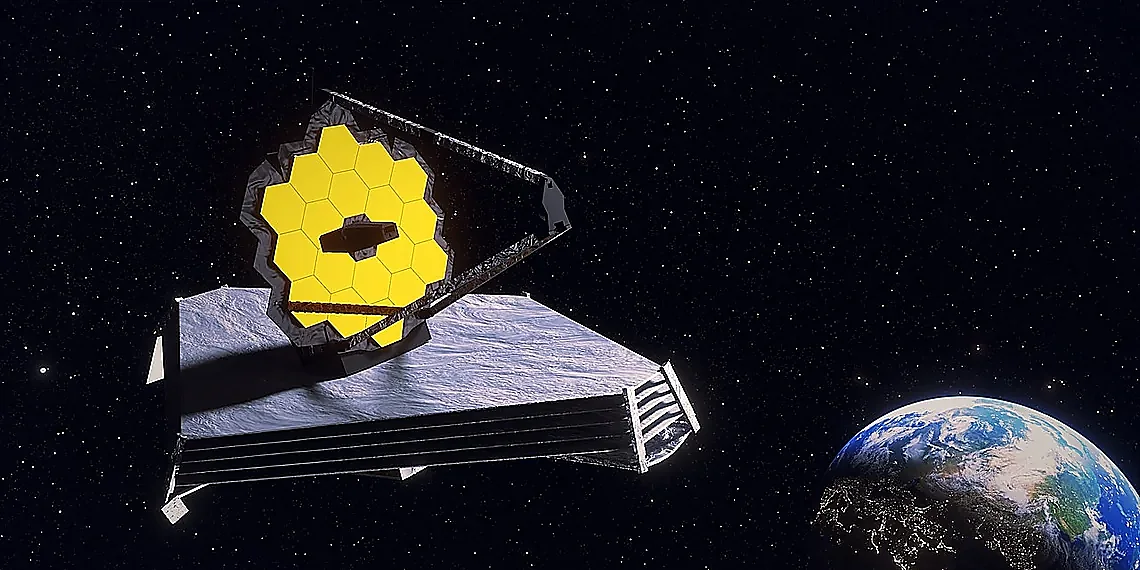
Visible light telescopes, like the venerable Hubble Space Telescope, are fundamentally limited by dust. Interstellar dust – tiny grains of matter scattered throughout galaxies – absorbs and scatters visible light, effectively obscuring what lies behind it. This means that many regions of star formation and galactic structures within distant galaxies remain hidden from view. While Hubble revolutionized our understanding of the universe, its ability to peer through these dusty veils was severely restricted, leaving vast areas of cosmic real estate unexplored.
The James Webb Space Telescope (JWST), however, operates primarily in the infrared spectrum. Infrared light has longer wavelengths than visible light, allowing it to penetrate dust clouds with significantly less obstruction. This ‘infrared vision’ allows JWST to see right through the obscuring dust and reveal previously hidden details within galaxies – features that would be completely invisible to telescopes like Hubble. The newly discovered ‘platypus’ galaxies are a prime example; their unusual structures were only revealed thanks to Webb’s ability to peer past the cosmic dust.
Consider this: Hubble observes with wavelengths roughly between 200 and 1,100 nanometers. JWST’s primary instruments operate from about 600 nanometers to 28 micrometers – a vast expansion into infrared territory. This difference in wavelength is what allows Webb to detect the faint light emitted by stars forming within dusty regions, revealing galactic structures previously shrouded in darkness and providing an unprecedented look at the early universe.
Scientific Implications & Future Research
The identification of these ‘platypus’ galaxies – so named for their unusual combination of features including a central bulge, spiral arms, and tidal tails – presents profound implications for our understanding of galaxy evolution. Current models often posit that galaxies form through hierarchical merging, where smaller galaxies coalesce over time to build larger structures. The observed characteristics of these Webb galaxies, however, defy simple explanations based on this established paradigm. Their morphology suggests a complex history potentially involving multiple merger events occurring in unexpected sequences or with uniquely shaped progenitor galaxies – scenarios not readily predicted by existing simulations.
This discovery strongly hints that our current understanding of galactic formation might be incomplete and requires refinement. The presence of such distinct structures challenges the assumption that galaxy evolution follows a universally predictable path. It’s plausible that these ‘platypus’ galaxies represent just the tip of the iceberg, with a larger population of similarly unusual galaxies lurking in the distant universe, obscured by dust or simply overlooked due to their atypical appearance. Further investigation is needed to determine if these are truly rare anomalies or indicative of previously underestimated pathways in galactic development.
Future research will focus on several key areas. Spectroscopic analysis using Webb’s advanced instrumentation can reveal details about the stellar populations and chemical composition within these galaxies, providing further clues about their formation history. High-resolution simulations incorporating novel merger scenarios are crucial to attempt recreating the observed morphology of the ‘platypus’ galaxies. Additionally, dedicated surveys targeting regions where similar structures might reside will be vital for statistically assessing their prevalence in the cosmos.
Ultimately, this finding underscores the transformative power of the James Webb Space Telescope and its ability to unveil previously hidden aspects of the universe. The ongoing analysis of Webb’s vast data archive promises to continue challenging our assumptions and reshaping our knowledge about how galaxies – and indeed, the entire cosmic landscape – evolved over billions of years. These Webb galaxies serve as a potent reminder that there’s still much to learn about the grand narrative of the cosmos.
Rewriting Galactic Evolution?
The newly discovered ‘platypus’ galaxies, observed by the James Webb Space Telescope, present a significant challenge to current models of galactic formation and merger events. These galaxies exhibit an unusual morphology – possessing a central bulge characteristic of older, more evolved galaxies but also displaying extended, disorganized star-forming regions typically associated with smaller, irregular galaxies. Existing simulations often predict that such features arise from major mergers between large galaxies, processes which should leave behind distinct tidal tails and other easily identifiable merger remnants. The lack of these expected signatures in the ‘platypus’ galaxies suggests our understanding of how galaxies assemble may be incomplete.
The existence of these atypical galaxies forces astronomers to reconsider established theories about galactic evolution. One possibility is that they represent a population of galaxies formed through less common, or previously unknown, merger pathways – perhaps involving minor mergers occurring over extremely long timescales and in highly specific environmental conditions. Alternatively, the observed morphology could be a result of unusual gas accretion events or internal processes within the galaxy itself, leading to localized star formation without significant disruption to the central bulge. New theoretical models incorporating these possibilities are now being developed to better explain their existence.
Given the relatively small sample size currently identified – and the fact that Webb’s observations only scratch the surface of available data – astronomers speculate that a much larger population of ‘platypus’ galaxies may exist, previously undetected due to their faintness or unusual orientation. Future research will focus on expanding the search using deeper Webb telescope observations, as well as exploring other wavelengths to better characterize their stellar populations and gas content. These efforts could reveal whether these galaxies are truly rare anomalies or represent a more common, but overlooked, stage in galactic evolution.
The Search Continues
The initial discovery of what’s been playfully dubbed ‘Platypus’ galaxies – so named due to their peculiar, duck-billed appearance – has ignited a frenzy of activity within the astronomical community. Now, researchers are embarking on an ambitious project: systematically scouring the James Webb Space Telescope’s vast data archive for more examples of these unusual Webb galaxies. This isn’t a casual glance; it involves meticulously analyzing enormous datasets and developing automated algorithms to flag potential candidates exhibiting similar characteristics – a combination of features previously thought unlikely to coexist in a single galaxy.
Identifying these rare objects presents significant challenges. The ‘Platypus’ galaxies are faint and subtle, requiring careful analysis to distinguish their unique morphology from other galactic structures. Furthermore, the sheer volume of data generated by Webb is staggering, demanding sophisticated computational tools and a dedicated team of astronomers. The University of Missouri team’s initial findings have provided crucial clues for refining these search parameters, but much work remains to be done in establishing definitive criteria for classifying future candidates as true ‘Platypus’ galaxies.
Beyond simply expanding the sample size, scientists are eager to understand *why* these galaxies exist. Follow-up observations using Webb, including longer exposure times and different filter combinations, are planned to probe the internal structure and composition of known ‘Platypus’ galaxies in greater detail. These observations will seek to unravel their formation history – were they formed through unusual mergers? Do they harbor unique populations of stars or gas clouds? Understanding these factors promises to reshape our understanding of galaxy evolution.
The search for ‘Platypus’ galaxies highlights the power of Webb’s unprecedented infrared capabilities to reveal hidden cosmic secrets. While this particular hunt focuses on a specific morphological type, it also serves as a template for exploring other anomalies within the universe. Astronomers are now actively leveraging similar data-mining techniques to identify previously unseen types of objects and phenomena – potentially ushering in a new era of discovery driven by systematic analysis of Webb’s extensive archive.
Expanding the Sample: A Cosmic Census
Following the initial discovery of what astronomers have nicknamed ‘Platypus’ galaxies – characterized by their peculiar, duck-like shapes – researchers are now undertaking a systematic search through the James Webb Space Telescope (Webb) data archive to identify similar objects. This effort involves meticulously examining vast swathes of infrared imagery captured during Webb’s early survey phases, looking for galaxies exhibiting that unique combination of features: a central bulge surrounded by a distinct, flattened disk and often, evidence of recent mergers or unusual star formation patterns. The goal is to establish whether these ‘Platypus’ galaxies are truly rare anomalies or represent a previously unappreciated population in the early universe.
Identifying these rare Webb galaxies presents significant challenges. The sheer volume of data requires automated search algorithms and careful visual inspection by astronomers, making the process time-consuming and computationally intensive. Furthermore, distinguishing true ‘Platypus’ galaxies from other unusual galactic structures or artifacts introduced during image processing demands rigorous analysis and verification. Despite these hurdles, preliminary searches have already revealed several candidate objects warranting further investigation, suggesting that a small but potentially significant population of similar galaxies exists within Webb’s observational reach.
Future observations are planned to characterize the selected candidates in greater detail. These follow-up studies will utilize Webb’s spectroscopic capabilities to determine their chemical composition, redshift (distance), and star formation history – crucial data for understanding their origin and evolution. Researchers also hope that continued archival searches, combined with future targeted observing campaigns, will reveal even more ‘Platypus’ galaxies and perhaps uncover new classes of unusual cosmic objects, further refining our understanding of galaxy formation in the early universe.
The discovery of these ‘Platypus’ galaxies, formally known as interacting systems exhibiting peculiar morphologies, represents a fascinating deviation from our established understanding of galactic evolution.
These unusual structures challenge existing models and highlight the complexity inherent in how galaxies merge and transform over cosmic timescales – particularly when considering the influence of dark matter halos.
The Webb telescope’s unparalleled infrared capabilities have been absolutely instrumental in revealing these previously obscured details, allowing us to witness a stage of galactic interaction rarely observed with such clarity; truly remarkable Webb galaxies are now being unveiled.
While we’ve made significant strides in deciphering the initial puzzle presented by these platypus formations, countless questions remain about their formation history and ultimate fate – prompting further investigation and theoretical refinement across the astrophysics community. The potential for unraveling even more cosmic secrets is immense as Webb continues its observations of the universe’s deepest reaches, promising a golden age of astronomical discovery. Future studies will undoubtedly focus on similar systems to refine our models and uncover more hidden wonders within the cosmos, building upon this groundbreaking work regarding these unique galactic pairings. We are only at the beginning of understanding what James Webb can reveal about galaxy formation and evolution, with many more surprises surely awaiting us around every corner of the observable universe.
Continue reading on ByteTrending:
Discover more tech insights on ByteTrending ByteTrending.
Discover more from ByteTrending
Subscribe to get the latest posts sent to your email.