

The search for life beyond Earth has captivated humanity for decades, traditionally focusing on planets orbiting distant stars – exoplanets. But what if we’ve been looking at just one side of the coin? A new frontier in astrobiology is emerging: the possibility of moons orbiting those exoplanets, celestial bodies potentially harboring conditions suitable for life. These hypothetical objects are known as exomoons, and their existence dramatically expands our understanding of where habitable environments might exist in the cosmos. The sheer complexity of planetary systems suggests that exomoons could be far more common than we currently appreciate, representing a vast untapped resource in the quest to find another Earth. Detecting these faint companions presents an extraordinary technological challenge, pushing the boundaries of current observational capabilities. Current methods struggle immensely with separating the signal of an exomoon from its host planet and star, making definitive confirmation incredibly difficult. Scientists are actively developing innovative approaches to overcome these hurdles, a key area being advancements in exomoon detection techniques. The potential rewards – discovering a truly alien world teeming with life – make this pursuit undeniably worthwhile, promising breakthroughs that could reshape our place in the universe.
Imagine a moon orbiting an exoplanet, bathed in reflected light from both its parent planet and its host star. The gravitational interactions between these bodies are incredibly subtle and complex, creating a
wobble” that’s exceptionally difficult to isolate amidst the noise of distant stellar systems. While we’ve confirmed thousands of exoplanets, evidence for exomoons remains elusive, largely due to their tiny size and vast distance. This lack of definitive detections hasn’t dampened enthusiasm; instead, it has spurred a wave of ingenuity focused on developing new instruments and analytical methods tailored specifically for this challenging task.
The Exomoon Challenge
Finding moons around planets orbiting other stars—exomoons—represents one of the most significant challenges in modern astronomy. While we’ve confirmed thousands of exoplanets, spotting their potential satellites proves remarkably difficult. The primary reason stems from sheer scale: exomoons are incredibly small and faint compared to the planets they orbit, which themselves are already tiny points of light against the vastness of space. They’re essentially trying to find a pebble orbiting a firefly, all at immense distances.
The technical hurdles are substantial. Current detection methods rely heavily on observing subtle changes in a planet’s transit—the slight dimming that occurs when it passes between its star and Earth. Exomoons would induce minuscule variations *on top* of these transits, far below the current sensitivity limits of most telescopes. Past attempts to identify exomoon candidates, like the initially promising Kepler-1625b system (now deemed a false positive), highlight just how easily such signals can be misinterpreted or masked by stellar noise and instrumental errors.
Beyond size and faintness, proximity poses another problem. Exomoons are incredibly close to their host planets, meaning their signal is essentially lost in the planet’s glare. This makes isolating any subtle transit variations exceptionally challenging. Even with future generations of telescopes, advanced techniques will be crucial – techniques like precisely measuring gravitational wobbles or utilizing powerful interferometry to effectively combine the light from multiple telescopes.
Despite these difficulties, the potential rewards are immense. Exomoons represent a fascinating frontier in astrobiology. Their environments could harbor liquid water and potentially even life, shielded by the planet’s atmosphere and benefitting from tidal heating – internal heat generated by gravitational interactions. Confirming their existence would not only expand our understanding of planetary system formation but also significantly broaden the scope of where we might find habitable worlds beyond Earth.
Why Are Exomoons So Elusive?

Detecting exomoons presents an extraordinary challenge due to their incredibly small size compared to planets, and consequently, their faintness. Even large exomoons would reflect significantly less light than the gas giants they orbit, making direct imaging extremely difficult. Furthermore, these potential moons are situated very close to their host planet, which itself is already a dim object at vast distances from Earth. The planet’s glare completely overwhelms any signal an exomoon might produce, essentially hiding it in plain sight.
Previous attempts at exomoon detection have largely relied on transit timing variations (TTV) and subtle gravitational wobbles of the host planet – methods used to discover many exoplanets. However, these techniques require incredibly precise measurements and are highly sensitive to stellar noise and other confounding factors. The initial excitement surrounding what appeared to be an exomoon orbiting Kepler-1625b proved false; detailed analysis revealed it was likely a signal artifact or a previously unknown star in the system.
The difficulty isn’t just about instrument sensitivity, but also about disentangling the complex gravitational interactions within multi-body systems. Any slight perturbation caused by an exomoon is masked by the planet’s own movements and the effects of other planets in the system. Despite these hurdles, the potential reward – discovering a potentially habitable world orbiting a gas giant – fuels continued research and development of novel detection techniques.
The Kilometric Baseline Interferometer
The search for exomoons—moons orbiting planets beyond our solar system—has been frustratingly fruitless, despite decades of dedicated observation. Current detection methods struggle due to the incredibly faint signals these distant objects emit and their proximity to much brighter host planets. However, a groundbreaking new technology, the Kilometric Baseline Interferometer (KBI), promises to overcome this challenge and finally unlock the secrets of exomoon environments. The KBI represents a radical shift in observational strategy, moving beyond the limitations of traditional single-dish telescopes.
At its core, the KBI leverages the power of interferometry on an unprecedented scale. Instead of relying on a single large telescope, it utilizes multiple telescopes spread across vast distances – potentially hundreds or even thousands of kilometers apart. These telescopes simultaneously observe the same target and their data is then combined to effectively function as one enormous telescope with a resolution far exceeding what any individual instrument could achieve. Think of it like combining many smaller mirrors to create a single, much larger mirror; this dramatically increases the ability to resolve incredibly fine details.
The key advantage of such an expansive baseline lies in its ability to distinguish the subtle light variations caused by an exomoon’s orbit from the overwhelming glare of its host planet. Previous attempts have been hampered by ‘confusion,’ where the signal from the exomoon is lost within the noise generated by the much brighter planet. The KBI’s high resolution allows astronomers to isolate and analyze these faint signals, offering a pathway to characterize exomoon atmospheres – potentially revealing clues about their habitability and even signs of life.
This innovative approach opens up entirely new possibilities for exomoon detection and characterization. While still in the conceptual design phase, the KBI holds the potential to revolutionize our understanding of planetary systems beyond our own, allowing us to finally confirm the existence – and study – these elusive celestial bodies.
How It Works: A Revolutionary Approach
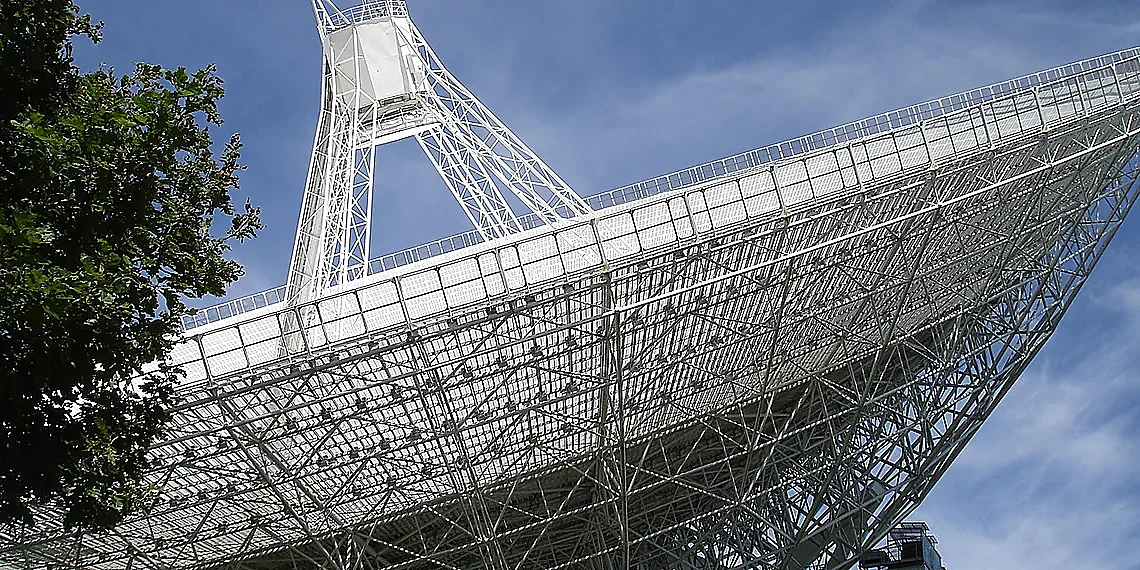
Current telescopes are limited in their ability to observe very faint objects at great distances, which is precisely what’s needed for exomoon detection. Exomoons are incredibly small compared to the planets they orbit, and those planets are already difficult to spot orbiting distant stars. Detecting a moon around one of *those* requires an unprecedented level of sensitivity. A kilometric baseline interferometer (KBI) offers a radical solution: it combines data from multiple telescopes spread across vast distances – potentially hundreds or even thousands of kilometers apart – to effectively act as a single, gigantic telescope.
Think of it like this: imagine trying to hear someone whisper at the edge of a stadium. One person might struggle, but if you had hundreds of people listening and combined their input, that whisper would become much clearer. A KBI does something similar with light. By precisely synchronizing observations from widely separated telescopes, scientists can use techniques called interferometry to synthesize an extremely large aperture – far larger than any single telescope could ever be built. This dramatically increases the resolving power and sensitivity of the instrument.
The key benefit is a significant boost in angular resolution – essentially, how well the system can distinguish between closely spaced objects. With improved resolution, tiny variations in light caused by an exomoon’s transit across its planet’s face (a potential detection method) become much more apparent. This overcomes the limitations of traditional telescopes and opens up the exciting possibility of finally confirming the existence – and characterizing – these elusive celestial bodies.
Potential for Discovery
The development of a ‘kilometric base’ telescope array offers an unprecedented opportunity to revolutionize our understanding of planetary systems beyond our own, and most excitingly, opens up the potential for exomoon detection. While planets have become relatively common discoveries in recent years, moons orbiting those planets – exomoons – remain elusive. The sheer difficulty of detecting such small bodies at vast distances has previously hampered progress. However, this new technology promises to overcome these limitations, potentially revealing a hidden population of worlds ripe for further study and even the possibility of harboring life.
The implications of successful exomoon detection are profound. Many scientists believe that certain exomoons could be *more* habitable than their host planets. Their orbital stability, shielded from intense stellar flares by the planet they orbit, and the potential for liquid water beneath icy surfaces make them intriguing candidates in the search for extraterrestrial life. Imagine a world with a stable climate, protected from harmful radiation, and possessing an ocean – all thanks to its unique relationship within a planetary system. This new detection method could unlock access to these potentially habitable environments.
The proposed ‘kilometric base’ has a reach of approximately 652 light-years, encompassing a significant portion of our galaxy. Within this range, the technology could identify exomoons around a multitude of known and yet-to-be-discovered planets. Beyond simply confirming their existence, detailed observations of these moons – their size, mass, composition, and atmospheric properties – could provide invaluable insights into planetary formation, tidal forces, and the prevalence of water in distant systems. Ultimately, this represents a giant leap forward in our quest to answer one of humanity’s most fundamental questions: are we alone?
Beyond Earth: The Promise of Habitable Moons
The prospect of finding life beyond Earth often focuses on exoplanets – planets orbiting stars other than our own Sun. However, exomoons, moons orbiting those exoplanets, present a compelling alternative habitat. Their orbits around a planet already in orbit around a star offer an intriguing stability not always found with planets directly orbiting stars. This ‘double orbit’ can result in more consistent temperatures and less extreme climate variations compared to many exoplanets, increasing the likelihood of liquid water – a crucial ingredient for life as we know it.
Furthermore, exomoons circling gas giants could be shielded from harmful stellar flares and radiation by their host planet. Gas giant planets possess thick atmospheres that can absorb much of this energy, creating a more benign environment for any potential surface water or atmosphere on the exomoon itself. The presence of a substantial ocean beneath an icy crust is also a possibility, potentially providing a stable liquid water environment even if the surface conditions are less than ideal.
The technology proposed by Winterhalder and colleagues utilizes radio astronomy techniques to detect subtle gravitational ‘wobbles’ in exoplanets, revealing the presence of orbiting moons. This capability would extend out to approximately 652 light-years, a significant volume of space allowing for an extensive search for these potentially habitable worlds. Confirmation of even a single habitable exomoon would revolutionize our understanding of planetary formation and significantly broaden the possibilities for finding life beyond Earth.
Future Implications & Challenges
The path to definitive exomoon detection isn’t paved overnight; it’s a decades-long endeavor requiring substantial investment and unprecedented technological innovation. Winterhalder and his team’s proposed kilometric base interferometer, while offering the most promising route currently envisioned, represents an enormous engineering challenge. Realistically, even with dedicated funding and international collaboration, deployment is unlikely before the 2040s or later. This timeline accounts for the extensive design, construction, testing, and calibration phases necessary for such a complex instrument – processes that often encounter unforeseen delays and require iterative refinements. While smaller-scale, indirect detection methods like transit timing variations (TTV) and gravitational microlensing continue to be explored, their sensitivity remains limited, offering only probabilistic hints rather than conclusive proof of exomoon existence.
Beyond the sheer scale of construction, several key scientific and technological roadblocks remain. Precisely synchronizing signals from hundreds or even thousands of individual antennas across vast distances presents a monumental data processing challenge. Furthermore, differentiating the faint signal of an exomoon from the overwhelming noise generated by its host planet’s atmosphere – and other cosmic sources – will demand extraordinarily precise measurements and sophisticated algorithms. The stability and accuracy of these instruments over extended observation periods are also paramount; even minute drifts can corrupt the data and mask potential signals. Addressing these challenges will necessitate advancements in areas like quantum metrology, adaptive optics, and high-performance computing.
The broader impact of successful exomoon detection would revolutionize our understanding of planetary system formation and habitability. Exomoons, particularly those orbiting gas giants within habitable zones, could potentially harbor liquid water oceans and thus, the conditions necessary for life – vastly expanding the number of potential havens for extraterrestrial life beyond what we currently estimate based solely on exoplanets. This would fundamentally shift our perspective on where to focus future searches for biosignatures and redefine our understanding of planetary diversity. Furthermore, studying the orbital dynamics and composition of these moons could provide invaluable insights into the processes that shape planetary systems throughout the galaxy.
Roadblocks and Realities
The proposed kilometric baseline interferometer represents an extraordinary engineering challenge. Constructing such a large, precisely synchronized network of telescopes – potentially spanning thousands of kilometers – demands advancements in areas like adaptive optics, phased array signal processing, and space-based construction techniques. The estimated cost is substantial, likely requiring international collaboration and decades of development effort. While initial simulations suggest feasibility, translating these concepts into a fully functional observatory remains a significant hurdle, with potential setbacks anticipated at every stage from component fabrication to orbital deployment.
Current projections place the first operational exomoon detection interferometer realistically beyond 2050, although smaller-scale precursor missions could begin demonstrating key technologies within the next two decades. These preliminary steps might involve deploying smaller arrays in Earth orbit or utilizing lunar platforms for enhanced stability and reduced atmospheric interference. The timeline is heavily dependent on continued investment in foundational research and development across multiple scientific and engineering disciplines; a shift in priorities or budget cuts could easily delay progress.
It’s also crucial to acknowledge that the interferometer isn’t the only avenue for exomoon detection. Transit timing variations (TTV) – subtle shifts in a planet’s orbit caused by the gravitational tug of an orbiting moon – remain a viable, albeit challenging, method. Furthermore, future space telescopes with enhanced coronagraphy capabilities could potentially directly image larger exomoons reflecting light from their host planets. While these alternative approaches offer complementary possibilities, the interferometer remains uniquely positioned to provide the highest sensitivity for detecting smaller and more distant exomoon systems.
The search for habitable worlds has always been a defining quest of our time, and recent advances are dramatically reshaping that landscape.
While exoplanet discoveries continue at an astonishing pace, the potential existence of exomoons orbiting those planets opens up entirely new avenues for exploration and significantly expands the realm of possibilities when considering life beyond Earth.
The challenges in achieving reliable exomoon detection are considerable, requiring innovative techniques and next-generation telescopes, but overcoming these hurdles promises a profound shift in our understanding of planetary system formation and stability.
Imagine worlds bathed in reflected light from giant planets, potentially possessing stable climates and liquid water – the conditions we associate with life as we know it. The implications for astrobiology are staggering, suggesting that habitable zones might be far more expansive than previously imagined, thanks to the orbital dynamics influenced by exomoons’ presence around gas giants beyond our solar system. The potential for discovering biosignatures on these distant moons is a truly exciting prospect driving scientists forward today. This ongoing research presents an opportunity to fundamentally alter our place in the cosmos and redefine what we consider ‘habitable.’”,
Continue reading on ByteTrending:
Discover more tech insights on ByteTrending ByteTrending.
Discover more from ByteTrending
Subscribe to get the latest posts sent to your email.