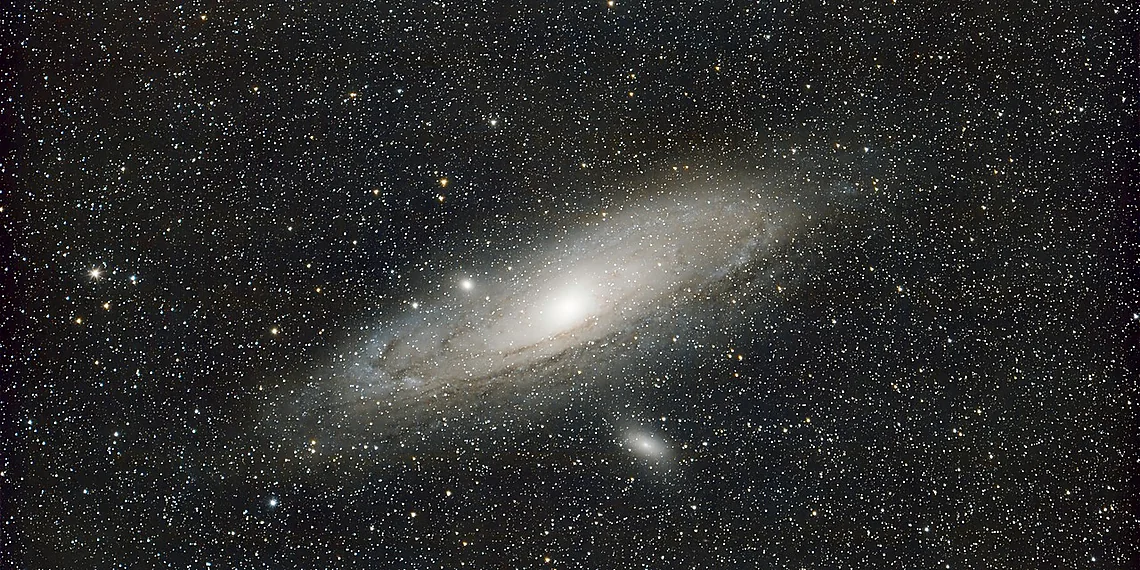



Imagine a universe where the most powerful particle accelerator isn’t built by human hands, but forged in the heart of colliding galaxies – an arena of unimaginable scale and energy.
Here on Earth, we build particle colliders like the Large Hadron Collider to smash atoms together at incredible speeds, revealing the fundamental building blocks of reality and unlocking secrets about how our universe works; these experiments help us understand forces and particles beyond what we can observe directly.
Scientists are now exploring a truly mind-bending concept: the possibility that nature itself provides such colossal accelerators, potentially in the form of what we’re calling ‘black hole colliders’.
These aren’t your average black holes; they’re behemoths residing at the centers of merging galaxies, and when these galactic giants collide, their central black holes spiral inwards, creating a cosmic dance of gravitational fury that could generate energies far exceeding anything achievable in our labs – offering a unique window into dark matter and other mysteries.
The Quest for Dark Matter & Particle Colliders
The universe holds secrets beyond our current grasp, and chief among them is dark matter. Observations across the cosmos – from the unexpectedly fast rotation of galaxies to the bending of light around massive objects (gravitational lensing) – consistently point to the existence of a substance that doesn’t interact with light, making it invisible to telescopes. This ‘dark’ matter accounts for roughly 85% of all matter in the universe, and understanding its nature is crucial to completing our picture of how galaxies formed, evolved, and ultimately, how the cosmos itself operates. Despite decades of searching, we remain largely clueless about what dark matter *is*, leaving a profound gap in our fundamental knowledge.
For years, scientists have attempted to unveil these mysteries using traditional particle colliders like the Large Hadron Collider (LHC) at CERN. These machines smash particles together at incredibly high speeds, recreating conditions similar to those that existed shortly after the Big Bang – potentially allowing us to glimpse new, exotic particles, including dark matter candidates. However, creating collisions energetic enough to produce these elusive particles is immensely challenging and expensive, requiring massive infrastructure and years of dedicated research. The LHC has pushed the boundaries of what’s possible, but its energy levels still have limitations.
The problem isn’t simply about more power; it’s also about the types of interactions we can probe. Standard particle colliders rely on controlled environments and specific collision parameters. This limits our ability to explore a wide range of possibilities for dark matter’s behavior, particularly if it interacts very weakly with known particles or through forces beyond the Standard Model of physics. We need new approaches—and that’s where the idea of ‘black hole colliders’ enters the picture, offering a radically different avenue to potentially unlock these cosmic secrets.
Why We Need to Find Dark Matter

The universe is full of mysteries, but few are as perplexing as dark matter. Observations over decades consistently demonstrate that the visible matter – stars, planets, galaxies – accounts for only about 5% of the total mass-energy content of the cosmos. The remaining ~95% is comprised of dark energy (roughly 68%) and dark matter (~27%). Dark matter doesn’t interact with light or other electromagnetic radiation, rendering it invisible to telescopes, yet its gravitational effects are undeniable.
Some of the most compelling evidence for dark matter comes from galactic rotation curves. Stars at the edges of galaxies orbit much faster than predicted by the visible mass alone; they should be flung outwards! This suggests a significant amount of unseen mass – dark matter – is providing the extra gravity to hold them in place. Similarly, gravitational lensing, where massive objects warp spacetime and bend light around them, reveals far more gravitational influence than can be accounted for by visible matter. These effects are observed across vast cosmic distances, consistently pointing towards the existence of this elusive substance.
Despite these strong lines of evidence, we still know very little about dark matter’s fundamental nature. Is it composed of Weakly Interacting Massive Particles (WIMPs), axions, sterile neutrinos, or something entirely different? Traditional particle colliders like the Large Hadron Collider attempt to create and detect dark matter particles through high-energy collisions, but so far, these efforts have been unsuccessful – highlighting the need for potentially novel approaches to probe its existence.
Black Holes as Natural Accelerators
The pursuit of understanding dark matter has long been a cornerstone of modern physics, demanding increasingly powerful particle colliders like the Large Hadron Collider (LHC). But what if nature already provides a solution – colossal, naturally occurring ‘black hole colliders’ capable of generating energies far beyond our current technological reach? The idea hinges on the interactions of supermassive black holes at the centers of galaxies. These behemoths, millions or even billions of times the mass of our sun, don’t simply sit still; they orbit each other, gradually spiraling inwards towards a cataclysmic merger.
As two supermassive black holes approach one another, the gravitational forces become absolutely staggering. The space around them warps and distorts, and matter swirling in accretion disks – vast reservoirs of gas and dust – is pulled into incredibly tight orbits. These orbits aren’t gentle; particles within those disks are accelerated to relativistic speeds—a significant fraction of the speed of light—due to the intense gravitational gradients. It’s this extreme acceleration that’s key: as these particles interact, they collide with energies potentially dwarfing even the LHC’s capabilities, offering a natural laboratory for probing physics at previously inaccessible scales.
The mechanics are complex but fundamentally rely on the conservation of angular momentum. As the black holes lose energy through gravitational waves (ripples in spacetime), they spiral closer together, transferring that energy to the surrounding material and accelerating particles within the accretion disks. Furthermore, the relativistic jets – powerful beams of plasma ejected from near the black hole’s poles—could act as further conduits for particle acceleration, effectively scattering and boosting energies across vast distances. Detecting these high-energy particle signatures emanating from actively merging galaxies is a primary focus of current research.
While definitively proving that ‘black hole colliders’ are generating dark matter signals remains a significant challenge (due to the faintness and complexity of these events), the theoretical possibility is incredibly exciting. It offers a potential cosmic shortcut, bypassing decades – perhaps even centuries – of collider development and offering unparalleled opportunities to unravel some of the universe’s deepest mysteries.
How Black Hole Mergers Create Energy
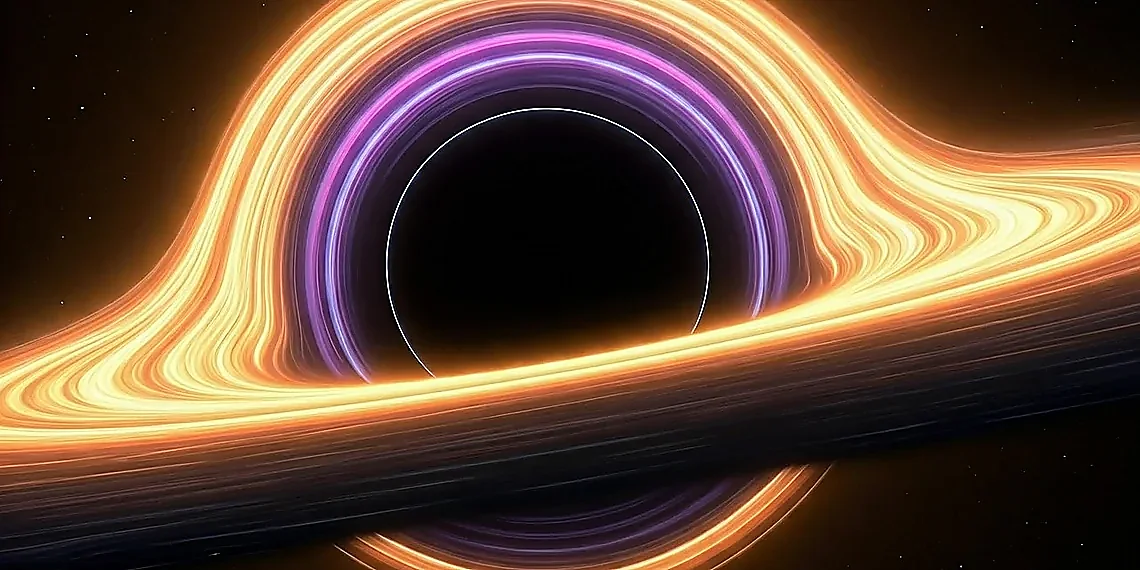
When two black holes spiral towards each other, they don’t simply bump into one another. The immense gravitational forces between them cause a dramatic acceleration, pulling them closer at increasingly high speeds – relativistic speeds approaching the speed of light. This orbital dance generates powerful gravitational waves, ripples in spacetime itself, as energy is continuously radiated away. As the black holes get closer, this process intensifies, leading to a rapid increase in velocity and an extraordinary concentration of energy.
The final merger event is incredibly violent. The two black holes coalesce into a single, larger black hole, releasing a tremendous burst of gravitational waves – the most energetic events observed in the universe. Crucially, during these mergers, particles orbiting the black holes are caught up in this chaotic environment. They experience extreme acceleration due to the fluctuating gravitational fields and relativistic speeds involved.
This acceleration can theoretically propel particles to energies far exceeding those achievable by human-built particle colliders like the Large Hadron Collider (LHC). While we don’t directly observe these accelerated particles, theoretical models suggest they could be responsible for producing exotic phenomena or even creating new particles – potentially offering a glimpse into dark matter and other fundamental mysteries of the universe.
A Cosmic Shortcut to Discovery?
The quest to understand dark matter, one of the universe’s greatest mysteries, often involves pushing the boundaries of human ingenuity – building increasingly powerful particle colliders like the Large Hadron Collider (LHC). But what if we could harness a naturally occurring phenomenon to achieve even greater energies? Enter ‘black hole supercolliders,’ a mind-bending concept suggesting that merging supermassive black holes might provide a cosmic shortcut to unlocking dark matter’s secrets and revealing physics beyond our current Standard Model.
Unlike the LHC, which requires immense engineering and resources to reach its energy levels, black hole mergers are colossal events occurring naturally across the cosmos. When two supermassive black holes – millions or even billions of times the mass of our sun – spiral towards each other and collide, they release gravitational waves carrying unimaginable amounts of energy. These collisions can potentially probe energy scales far beyond what’s currently achievable with human-built colliders. This dramatically higher energy allows scientists to investigate heavier particles and phenomena that are simply inaccessible through traditional methods.
The implications for dark matter research are profound. Many theoretical models predict that dark matter particles interact weakly, requiring extremely high energies to trigger these interactions and make them detectable. Black hole supercolliders could provide the very environment needed to observe these elusive signals, potentially revealing the nature of dark matter directly. Moreover, the extreme conditions created during a black hole merger might also expose new fundamental forces or particles not accounted for in the Standard Model – offering a glimpse into physics beyond our current understanding.
While observing and interpreting data from such cosmic events presents significant challenges, ongoing gravitational wave observatories like LIGO and Virgo are steadily improving their sensitivity. As we refine our ability to detect and analyze these black hole mergers, the possibility of using them as ‘natural particle colliders’ grows increasingly compelling – offering a tantalizing prospect for accelerating breakthroughs in dark matter research and expanding our knowledge of the universe’s deepest mysteries.
The Advantages of Natural Collisions
Human-built particle colliders, like the Large Hadron Collider (LHC), achieve incredibly high energies by accelerating particles to near light speed before smashing them together. However, even the LHC’s impressive capabilities are dwarfed by the energy released during the merger of supermassive black holes. These cosmic events involve objects millions or billions of times more massive than our sun colliding at relativistic speeds. The kinetic energy alone involved in such a merger vastly exceeds anything we can currently replicate on Earth; estimates suggest energies trillions of times higher than those achievable by the LHC, opening up a window to explore previously inaccessible physics.
The primary advantage of these ‘black hole colliders’ lies in their ability to probe significantly higher energy scales. The Standard Model of particle physics, while remarkably successful, is known to be incomplete – it doesn’t account for dark matter or dark energy, nor does it fully explain phenomena like neutrino masses. Higher energies allow scientists to test the limits of existing theories and search for new particles and interactions that might exist beyond our current understanding. This includes the possibility of directly observing processes related to dark matter production or decay.
While we cannot ‘build’ black hole colliders, astronomers can observe these events using gravitational wave detectors like LIGO and Virgo. Analyzing the gravitational waves emitted during a merger provides information about the masses and properties of the colliding black holes. Further theoretical work is needed to determine precisely what signatures would reveal evidence of new physics arising from these extreme collisions – for example, identifying unusual patterns in the gravitational wave signal or observing secondary emissions that could indicate particle production.
Challenges & Future Prospects
The prospect of harnessing ‘black hole colliders’ to probe dark matter is undeniably exciting, but significant hurdles stand in the way. Observing these events presents an astronomical challenge; black hole mergers are incredibly rare, and even when they occur, the resulting particle showers – if they exist as predicted – would be faint and difficult to distinguish from background noise. Current gravitational wave detectors like LIGO and Virgo are revolutionary, but their sensitivity is still limited. Detecting the subtle signals associated with potential dark matter interactions requires a massive leap in observational capabilities.
Looking ahead, next-generation gravitational wave observatories, such as Einstein Telescope and Cosmic Explorer, promise to significantly improve detection rates and frequency range. These instruments will be far more sensitive than current detectors, allowing us to observe mergers involving smaller black holes located further away – potentially increasing the likelihood of witnessing events producing detectable particle showers. Furthermore, combining gravitational wave data with observations across the electromagnetic spectrum (radio, optical, X-ray) would provide a much richer picture, helping to disentangle genuine dark matter signals from astrophysical foregrounds.
Beyond improved detectors, advancements in computational techniques are also crucial. Analyzing the vast datasets generated by these observatories requires sophisticated algorithms and machine learning models. AI could play a vital role in identifying subtle patterns within gravitational wave data and correlating them with potential particle interactions. The sheer volume of information necessitates automated analysis pipelines capable of sifting through noise to extract meaningful signals – this is where techniques like deep learning will become indispensable.
Ultimately, realizing the full potential of black hole colliders as dark matter probes demands a sustained commitment to both observational and theoretical research. While the path forward is challenging, the possibility of unlocking fundamental secrets about the universe’s missing mass makes it a pursuit worth undertaking – offering a potentially transformative shortcut in our quest to understand dark matter’s nature.
Observational Hurdles and Technological Needs
The rarity of black hole mergers presents a significant observational hurdle. While gravitational wave detections have confirmed their existence, these collisions are exceptionally infrequent across cosmic distances. The vast majority of supermassive black holes reside in the centers of galaxies billions of light-years away, making even relatively close mergers exceedingly rare to observe. Furthermore, the particle showers predicted from ‘black hole colliders’ – the intense bursts of energy and potentially new particles resulting from these collisions – are likely incredibly faint and fleeting, requiring extremely sensitive detection methods.
Detecting these particle showers is further complicated by the fact that they would be buried within a background of cosmic microwave radiation and other astrophysical phenomena. Current telescopes, even those designed for high-energy observations, lack the sensitivity and resolution to isolate these signals definitively. Distinguishing genuine signatures from noise requires unprecedented precision, demanding improvements across multiple wavelengths – gamma rays, neutrinos, and potentially even exotic particles not yet directly detected.
Looking ahead, next-generation gravitational wave detectors like Einstein Telescope and Cosmic Explorer are crucial for increasing the detection rate of black hole mergers and providing more precise location data. Simultaneously, advancements in wide-field gamma-ray telescopes and neutrino observatories will be essential to capture potential particle showers associated with these events. Combining multi-messenger astronomy – integrating information from gravitational waves, electromagnetic radiation, and neutrinos – offers the best hope for unlocking the secrets held within black hole colliders and potentially revealing clues about dark matter.
Continue reading on ByteTrending:
Discover more tech insights on ByteTrending ByteTrending.
Discover more from ByteTrending
Subscribe to get the latest posts sent to your email.