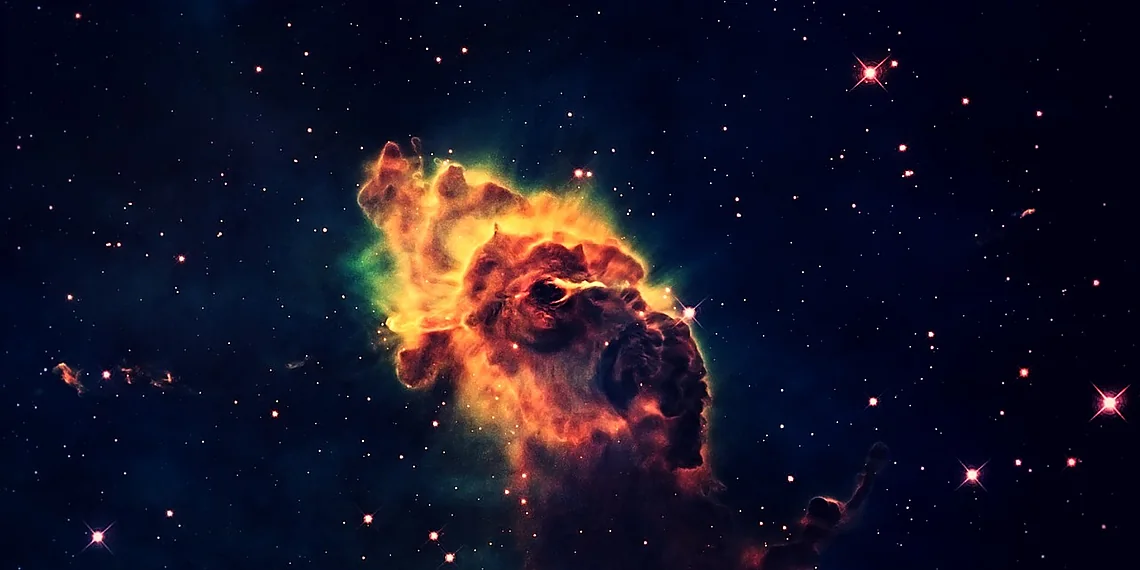


Imagine a cosmic nursery, swirling with gas and dust, where new suns are born – it’s a spectacle of immense power and breathtaking beauty. For decades, astronomers have peered into these stellar cradles, striving to unravel the mysteries of how stars ignite. Now, thanks to the unparalleled resolution of the Atacama Large Millimeter/submillimeter Array (ALMA), we’re gaining an unprecedented glimpse into this fundamental process, revealing details previously hidden from view. This new data is revolutionizing our understanding of starbirth and offering incredible insights.
While studying smaller stars helps us understand our own solar system’s origins, the birth of massive stars holds a key to unlocking some of the universe’s biggest secrets. These behemoths are responsible for scattering heavy elements throughout galaxies, shaping their evolution, and even triggering supernova explosions that seed new generations of stars and planets – essentially, they play an outsized role in cosmic history.
ALMA’s latest observations are focusing on a particularly dynamic region where we observe intense massive star formation. The images reveal intricate details within collapsing gas clouds, showing how these structures fragment into smaller clumps, each destined to become a new star. This detailed view is allowing scientists to test and refine existing theories about the complex physics driving this process.
The Challenge of Massive Star Birth
The birth of a star is generally considered a beautiful and awe-inspiring process, but forming massive stars—those behemoths hundreds of times more massive than our Sun—presents a truly formidable challenge to the universe. Unlike their smaller siblings, which can gradually accrete material over extended periods, massive stars require an incredibly rapid and efficient intake of gas and dust. This is because they generate immense radiation pressure, an outward force that threatens to blow away the very cloud from which they’re forming. Think of it like trying to build a giant sandcastle while constantly battling hurricane-force winds – the material simply wants to escape.
The theoretical hurdles surrounding massive star formation have long perplexed astronomers. Existing models struggled to explain how such dense, stable clumps of gas could actually form and collapse under gravity when faced with this intense radiation pressure. Previous observations often suffered from limitations; it was difficult to resolve the fine details within these collapsing clouds, hindering our ability to understand the fragmentation process – the way a large cloud breaks down into smaller, star-forming cores. This made confirming or refuting theoretical predictions extremely difficult and left many questions unanswered about how these cosmic giants truly come into existence.
One key problem lies in achieving sufficient accretion rates. To combat radiation pressure, a massive protostar needs to be surrounded by an exceptionally dense envelope of gas that constantly feeds it material. However, maintaining this density while simultaneously allowing the star to grow rapidly is a delicate balancing act. Earlier observations often lacked the resolution needed to see these crucial details within the cloud and trace the flow of gas – like trying to understand a complex machine without being able to see its inner workings.
The new research leveraging data from ALMA (Atacama Large Millimeter/submillimeter Array) is particularly significant because it provides an unprecedentedly detailed view into these star-forming regions. By resolving the intricate structure of collapsing gas clouds, scientists are finally beginning to unravel the mechanisms that allow massive stars to overcome these fundamental obstacles and blaze into existence – shedding light on one of astronomy’s most enduring mysteries.
Why Big Stars Are So Rare (and Hard to Study)

The formation of massive stars – those exceeding eight times the mass of our Sun – presents a significant challenge in astrophysics. Unlike the relatively straightforward process of solar-mass star birth, which proceeds through gradual accretion of material from a surrounding molecular cloud core, forming a star with tens or even hundreds of solar masses demands incredibly efficient and rapid accumulation of gas and dust. This efficiency is hampered by several factors, most notably radiation pressure. As a massive star grows, the energy it radiates outward exerts a powerful force that pushes away the very material needed to fuel its growth, creating a self-limiting scenario.
Overcoming this radiation pressure requires exceptionally dense and cold molecular gas clouds, as well as mechanisms that allow for rapid accretion without significant fragmentation into smaller stars. Early theoretical models struggled to explain how such efficient accretion could occur, often predicting an overabundance of massive stars compared to what is observed in galaxies. Previous observational data, particularly at lower resolutions, blurred the details of these star-forming regions, making it difficult to discern individual protostars and understand the fragmentation processes at work.
Prior observations lacked the ability to resolve the complex structures within high-mass star-forming regions sufficiently well to confirm or refute various theoretical models. For example, determining whether a massive clump was collapsing as a single entity or fragmenting into multiple stars was often impossible. The recent work utilizing ALMA’s exceptional resolution addresses this limitation by providing unprecedented views of these early stages of massive star formation, allowing scientists to directly observe the interplay between accretion and fragmentation.
ALMA’s Breakthrough: Seeing Fragmentation at Multiple Scales
For years, understanding precisely *how* massive stars are born has remained a significant challenge in astrophysics. The process is incredibly complex, involving the gravitational collapse of vast clouds of gas and dust – but the details of this collapse, particularly how these huge structures fragment into smaller, star-forming cores, have been largely obscured by low resolution observations. That’s where the Atacama Large Millimeter/submillimeter Array (ALMA) has fundamentally changed the game. ALMA’s exceptional high resolution and unprecedented sensitivity allowed researchers to peer through the dense dust clouds that previously hid these crucial fragmentation processes, revealing a level of detail never before seen in massive star-forming regions.
The key advancement enabling this breakthrough lies in ALMA’s ability to observe millimeter and submillimeter wavelengths. These wavelengths are less affected by scattering from interstellar dust than visible light, allowing for clearer views into the heart of these stellar nurseries. Moreover, ALMA’s multiple antennas working together provide a virtual telescope with an aperture equivalent to 16 kilometers, achieving spatial resolution down to fractions of an arcsecond – enough to distinguish individual clumps and fragments within the larger cloud structures. This high angular resolution, combined with ALMA’s remarkable sensitivity, is what made observing these subtle fragmentation events possible.
The recent observations led by researchers from Yunnan University, SHAO, and NAOJ specifically targeted a massive star-forming region, meticulously mapping its structure in detail. They were able to identify a hierarchy of collapsing structures: large ‘parent clumps’ breaking down into smaller, intermediate fragments, which then further fragment into even more compact cores – some destined to become individual stars or binary systems. This ‘multiscale fragmentation’ demonstrates that the process isn’t simply a single collapse, but a cascade of collapses happening at different sizes and timescales within the same cloud.
Prior observations often only showed the largest-scale structures, leaving astronomers with incomplete models of massive star formation. ALMA’s data provides concrete evidence supporting theoretical predictions about fragmentation cascades and allows researchers to test these models against real observational data. This new understanding will be invaluable for refining our simulations of stellar birth and ultimately unraveling the mysteries surrounding how massive stars – so critical to galactic evolution – come into existence.
Unveiling the Multiscale Puzzle

The formation of massive stars – those exceeding eight times the mass of our Sun – remains a significant puzzle in astrophysics. A key aspect of this process is ‘multiscale fragmentation,’ which describes how large, dense gas clouds initially collapse under gravity. This initial collapse doesn’t result in a single star; instead, the cloud fragments into progressively smaller clumps. Each of these clumps then undergoes its own gravitational collapse, ultimately forming individual stars or small stellar systems. Understanding this hierarchical fragmentation process is crucial to explaining the observed distribution and properties of massive stars.
Recent observations using the Atacama Large Millimeter/submillimeter Array (ALMA) have provided unprecedented detail into this multiscale fragmentation. A team from Yunnan University, SHAO, and NAOJ focused on a region known as IRAS 05342+2401, revealing an intricate network of dense gas structures. ALMA’s exceptional resolution – its ability to distinguish fine details – allowed them to observe clumps as small as a few astronomical units (AU), the size of our solar system, within larger cores spanning hundreds of AU. They identified numerous fragments exhibiting distinct velocity signatures, indicating independent collapse and potential future star formation.
The team’s analysis showed that the initial cloud mass breaks down into several dense filaments, which then further fragment into smaller condensations. These observations are particularly remarkable because previous telescopes lacked the sensitivity and resolution to resolve these smaller-scale structures within such massive, distant regions. The data strongly supports theoretical models of multiscale fragmentation and provides valuable constraints for refining simulations of massive star birth.
What This Means for Star Formation Theories
The breathtaking detail revealed by ALMA’s observations of these high-mass star-forming regions is forcing astronomers to re-evaluate long-held assumptions about how truly enormous stars are born. Traditional models often depicted massive star formation as a relatively smooth, gradual process – gas collapsing and slowly accreting onto a central protostar. However, the observed fragmentation patterns, where vast clouds appear to be breaking apart into numerous smaller clumps *before* significant stellar cores form, suggest a much more chaotic and rapid initial phase. This challenges the notion of monolithic collapse and points towards a scenario involving significantly enhanced turbulence and potentially more complex interactions between gas dynamics and magnetic fields than previously considered.
Specifically, the high resolution of ALMA allows us to directly witness the early stages of this fragmentation – a period often obscured by dust and distance. The observed clump sizes and separation distances are smaller than predicted by many standard accretion models, implying that turbulence plays a far more dominant role in shaping the initial conditions for star formation. This isn’t simply about increased velocity; it suggests a fundamentally different architecture to these collapsing clouds, with intricate networks of filaments and dense cores forming much earlier in the process. Magnetic fields, which were thought to primarily regulate collapse, now appear to be interacting with this turbulent environment in more complex ways, potentially channeling material towards specific regions.
The implications for stellar evolution are also significant. If massive stars form from a multitude of smaller fragments that later coalesce – as these observations increasingly suggest – it could explain some of the observed peculiarities of their initial masses and rotation rates. The fragmentation process might lead to a distribution of protostellar cores with varying masses, resulting in a wider range of final stellar sizes than predicted by models assuming a single, continuous collapse. Furthermore, understanding how turbulence influences accretion can help us better predict the formation of binary or multiple star systems, which are common among massive stars.
Moving forward, researchers will need to incorporate these new insights into sophisticated simulations that accurately model the interplay between gravity, turbulence, and magnetic fields within these dense molecular clouds. Refining our models requires not only higher resolution observations but also a deeper understanding of the physical processes driving fragmentation – including potentially previously underestimated effects like radiative feedback from early protostellar objects. This work underscores ALMA’s continued importance in pushing the boundaries of our knowledge about massive star formation and ultimately, the origins of the most luminous objects in the universe.
Refining Our Understanding of Accretion and Turbulence
The Atacama Large Millimeter/submillimeter Array (ALMA) has provided unprecedented detail on the early stages of massive star formation, revealing intricate patterns of fragmentation within dense molecular clouds. These observations challenge the traditional view that large gas reservoirs collapse relatively smoothly to form single, massive stars. Instead, ALMA data consistently shows regions fragmenting into numerous smaller clumps – far more than previously anticipated based on simpler gravitational collapse models. The observed structure suggests a complex interplay between gravity, turbulence, and magnetic fields during this critical phase.
The high degree of fragmentation implies that turbulence plays a significantly larger role in regulating the accretion process than was initially thought. While gravity drives the overall collapse, turbulent motions appear to create localized density enhancements which then further fragment. Furthermore, researchers are re-evaluating the influence of magnetic fields; stronger or more complex field configurations might be necessary to explain why fragmentation isn’t even *more* prevalent, effectively acting as a form of pressure support against gravitational collapse. The observed mass spectrum of these fragments also provides crucial data points for testing and refining theoretical models.
Current models of massive star formation are undergoing revision to incorporate these ALMA findings. These revisions often involve increased sophistication in simulations that account for both supersonic turbulence – which is now demonstrably a key factor – and the complex interplay between magnetic fields and ionized gas. Future work will likely focus on characterizing the physical conditions within these fragments, such as temperature and density profiles, to better understand how they evolve into individual stars or potentially merge to form more massive objects.
Future Directions: Peering Deeper into Starbirth
The current observations from ALMA, while groundbreaking, represent just the first step in unraveling the complexities of massive star formation. Future research is poised to delve even deeper, focusing on refining our understanding of the precise physical conditions driving fragmentation within these dense molecular clouds. One key area will be utilizing higher angular resolution and sensitivity – improvements already planned for ALMA’s upgrades – to resolve smaller-scale structures and trace the chemical evolution surrounding nascent stars with unprecedented clarity. This includes observing a wider range of spectral lines, allowing us to map temperature gradients, velocity fields, and abundance distributions within the collapsing gas.
Beyond ALMA’s enhancements, next-generation telescopes promise transformative capabilities. The ngVLA (next generation Very Large Array), for example, will offer vastly improved spatial resolution and sensitivity across a wider range of frequencies, enabling us to observe multiple fragmentation events simultaneously and track their evolution in three dimensions. Combining these observations with detailed simulations will be crucial; comparing the simulated outcomes with actual observational data can help constrain theoretical models and reveal which physical processes are most important for massive star formation. Specifically, disentangling the roles of turbulence, magnetic fields, and radiative feedback remains a significant challenge.
This ongoing work on massive star formation isn’t just about understanding how individual stars like those within our own galaxy come to be; it has profound implications for cosmology. The initial mass function (IMF) – the distribution of stellar masses in a population – is a fundamental property of galaxies, and its origin remains one of astronomy’s biggest mysteries. By precisely characterizing the fragmentation processes that govern star formation, we can begin to explain why massive stars are relatively rare compared to lower-mass stars, providing crucial insights into galaxy evolution and the chemical enrichment of the universe.
Ultimately, a comprehensive picture of massive starbirth requires a multi-wavelength approach. Combining ALMA’s millimeter observations with data from infrared telescopes like JWST (James Webb Space Telescope) will allow us to observe both the cold gas and dust responsible for star formation and the warm, newly formed stars themselves. This combined perspective is essential for connecting the initial conditions of molecular clouds to the final stellar populations we observe in galaxies across cosmic time.
The Next Generation of Telescopes and Their Promise
The groundbreaking research highlighting massive fragmentation, as observed by ALMA, underscores the need for continued and enhanced observational capabilities in astronomy. Recognizing this, significant upgrades to the Atacama Large Millimeter/submillimeter Array (ALMA) are already planned. These include increased baseline lengths which will improve angular resolution, allowing astronomers to resolve finer details within star-forming regions and better distinguish between individual protostars embedded within dense molecular clouds. Further improvements in sensitivity will also enable detection of fainter emission signals from these early stages of stellar evolution.
Beyond ALMA’s upgrades, future observatories promise even more revolutionary insights into massive star formation. The next Generation Very Large Array (ngVLA), currently under development, is poised to provide unprecedented spatial resolution and sensitivity at millimeter wavelengths across a broad range of frequencies. This will allow for detailed mapping of the gas kinematics and chemistry surrounding protostars, revealing how material flows onto these forming stars and influences their evolution. Such observations are crucial for understanding the processes that govern the formation of the most massive stars in our galaxy.
Ultimately, these advancements will contribute to a more complete picture of starbirth, addressing fundamental questions about the origin of stars and planetary systems. By combining detailed observations with sophisticated theoretical models, scientists can refine their understanding of how dense molecular clouds collapse, fragment, and ultimately give rise to the diverse population of stars we observe today – from low-mass suns like our own to behemoths hundreds of times more massive.

The data from ALMA continues to reshape our understanding of how stars are born, revealing intricate details previously hidden within dense molecular clouds. We’ve witnessed firsthand the remarkable process of fragmentation – a crucial step in the creation of stellar nurseries. These observations provide compelling evidence for models suggesting that even incredibly massive stars don’t simply coalesce from uniform gas; instead, they emerge through this complex and dynamic fragmentation process. Understanding these initial stages is vital because it directly impacts our knowledge of galactic evolution and the distribution of elements throughout the universe. The sheer scale of these structures, particularly when considering episodes of massive star formation, underscores the power of ALMA’s capabilities to peer into some of the most distant and obscured regions of space. This research isn’t just about observing pretty pictures; it’s about refining our theoretical frameworks and ultimately piecing together a more complete picture of the cosmos. To delve deeper into these fascinating discoveries and explore the technology behind them, we strongly encourage you to visit the Atacama Large Millimeter/submillimeter Array (ALMA) website and learn about its ongoing projects. There are also numerous other incredible observatories pushing the boundaries of astronomical knowledge – take some time to discover their contributions too! We’d love to hear your thoughts on these findings; what surprised you most, and how do you think future observations might further illuminate this process? Share your perspectives in the comments below!
Let’s keep the conversation going – what questions do you have about starbirth, or other astronomical phenomena?
Continue reading on ByteTrending:
Discover more tech insights on ByteTrending ByteTrending.
Discover more from ByteTrending
Subscribe to get the latest posts sent to your email.